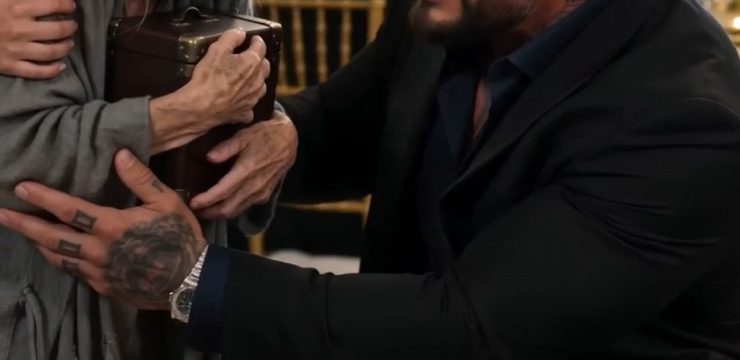
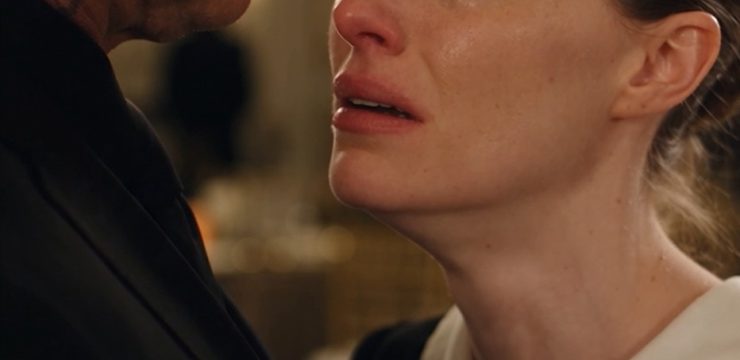
There are moments in life when a cruel joke becomes the greatest gift someone never meant to give. This is one of those stories — and it will stay with you long after you finish reading it.
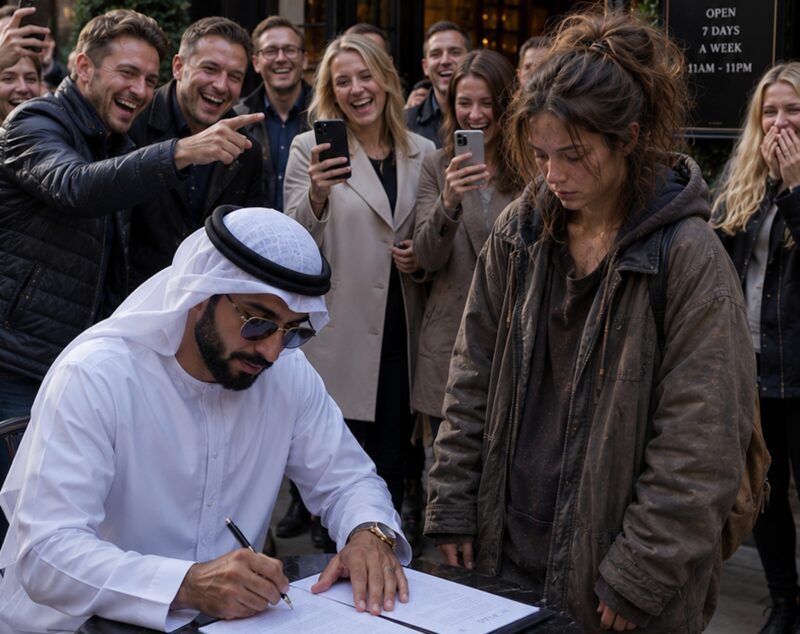
The young sheikh had everything money could buy. Dozens of companies bearing his name, sprawling villas along coastlines, imported cars that cost more than most people earn in a lifetime, and a restaurant in the heart of the city that had once turned heads and filled pages in local magazines. But wealth, when it comes without struggle, has a strange way of hollowing a person out. The sheikh no longer felt anything when he spent money. Not excitement. Not pride. Not even satisfaction. He was restless, bored, and increasingly entertained only by the discomfort of others.
His weekend ritual was sacred in its own twisted way. He and his equally wealthy friends would gather, drink, laugh, and dream up new ways to amuse themselves at someone else’s expense. Bets were made. Pranks were staged. The more humiliating, the louder the laughter.
On one particular afternoon, standing outside his restaurant — the one that had been quietly bleeding money for years — the sheikh made a bold declaration.
“I bet I can sell this place to the very first person I see today. One dollar. That’s all I’ll charge.”
His friends erupted. They thought it was absurd. They thought it was perfect. They pulled out their phones, ready to capture every second.
The first person who appeared on the sidewalk was a young woman. Her clothes were worn thin, her backpack fraying at the edges, her steps slow and heavy. She had been living without a roof over her head for months, cast out of her own home, surviving on whatever small work or kindness came her way. She was not looking for charity. She was simply walking.
The sheikh called out to her with the confidence of a man who had never once been told no.
“Would you like to buy this restaurant? One dollar.”
She stopped. Looked at him. Looked at the building. Looked back at him.
“Are you making fun of me?”
“I’m completely serious,” he said, his voice already curling with amusement.
She reached into her pocket slowly, almost reverently, and pulled out a single crumpled dollar bill. It was the last one she had.
The sheikh’s friends were already in stitches. Some were laughing so hard they could barely hold their phones steady. Documents were produced, signatures were scrawled, and then — with deliberate theatrical contempt — the sheikh tossed the entire folder at her feet. Papers scattered across the sidewalk.
“Congratulations,” he announced loud enough for the small crowd that had gathered. “You are now the proud owner of a restaurant that nobody wants.”
Laughter rippled through the onlookers. Some pointed. Some recorded. His friends clapped him on the back like he had just done something brilliant.
The young woman bent down quietly. She gathered every single page. She brushed the dust off with her palm, smoothed the edges, and stood back up. She looked at the restaurant sign for a long, still moment. And then, in a voice barely above a whisper, she said two words.
“Thank you.”
The sheikh was already walking back to his car.
She arrived the very next morning before anyone else. With almost no money and no one to help her, she started cleaning. Floors were scrubbed. Windows were washed until they caught the light. She looked at the restaurant’s heavy, expensive furniture — the kind designed to impress rather than welcome — and made a decision. She sold what she didn’t need and used that money to begin again. The dining room, stripped of its pretension, became something warmer. Something real.
Word reached her about an elderly chef, a man who had spent decades cooking in celebrated kitchens before quietly retiring. She tracked him down and sat across from him with nothing to offer but honesty.
“I can’t pay you much right now,” she told him. “But if people fall in love with this place again, I will share everything fairly.”
He looked at her for a moment, then smiled and said yes.
Together, they rebuilt the menu from the ground up. No more elaborate dishes designed to confuse. No more portions that looked better than they tasted. Instead — generous servings, honest flavors, food that reminded people of their mothers’ kitchens and Sunday afternoons. The young woman stood at the door herself every single day, greeting guests by name, asking how their food was, thanking them for coming as if each visit was a personal kindness to her.
And people noticed. They told their friends. Reviews appeared online, glowing and genuine. Tables that once sat empty night after night were suddenly impossible to reserve. A line began forming outside the door — and it didn’t stop growing.
The sheikh had no particular reason to drive down that street again. But one afternoon, he did. And when his eyes landed on the building that used to be his, he told his driver to stop immediately.
He stood on the sidewalk, motionless, watching. Dozens of people waited outside in a line that stretched along the full length of the block. He heard fragments of conversation drifting past him.
“Best chef in the entire city, I’m telling you.”
“I waited an hour and it was worth every minute.”
He walked inside. Every seat was taken. The kitchen was alive with sound and scent. And behind the counter, composed and radiant, stood the same young woman — now dressed neatly, speaking with warmth to the customers around her.
When she saw him, she walked over without hesitation.
“Welcome. We’re fully booked this evening. There should be a table available in about forty minutes if you’d like to wait.”
The sheikh stood in the middle of the room he used to own and said quietly, “I never imagined anything like this was possible.”
She smiled — not triumphantly, not bitterly. Just peacefully.
“You gave me a chance,” she said. “Even if that wasn’t what you intended. I simply chose not to waste it.”
Some people laugh at what they don’t understand. And some people build empires out of the wreckage others leave behind.