They Sat Me By The Kitchen Doors And Called Me “A Mistake.” What Nobody At That Gala Knew Was Exactly Who I Was — Or Why The General Was About To Walk Straight Past Her Table To Find Mine.
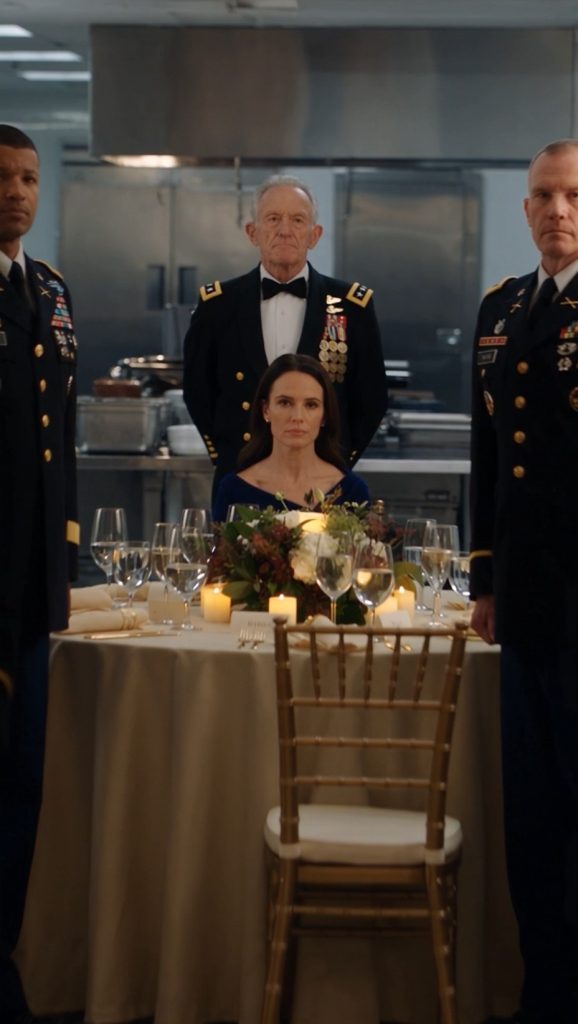
“You’re in the wrong seat.”
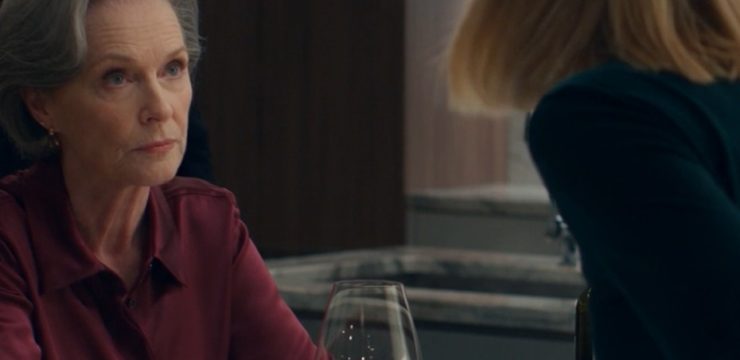
Margaret Hayes looked up from table one and found Lieutenant Colonel Vanessa Stone standing beside her chair.
Vanessa’s smile was polished, but her voice carried enough contempt to silence the two officers sitting nearby.
Margaret rested one hand on the cream-colored invitation beside her plate.
“I don’t believe I am.”
Vanessa glanced toward the place card in front of Margaret.
Then she looked at Margaret’s simple navy dress, modest pearl earrings, and inexpensive black shoes.
Her expression changed almost imperceptibly.
“This table is reserved.”
Margaret lifted the invitation and held it toward her.
“My name is printed here.”
Vanessa accepted the card without sitting down.
She read it once, then checked the place card again.
Margaret watched her eyes move between the two matching names.
The lieutenant colonel could have ended the exchange immediately.
Instead, she placed the invitation flat against the table.
“The planning staff probably made an error.”
Margaret remained still.
Around them, silverware stopped moving.
A brigadier general across the table looked uncomfortable, but said nothing.
Margaret asked quietly, “What kind of error?”
Vanessa gave her another slow inspection.
Her gaze lingered on Margaret’s dress.
Then it moved toward the decorated uniforms surrounding table one.
“This table is for distinguished guests.”
Margaret’s fingers rested beside her untouched water glass.
“And I’m not one?”
A young captain at the neighboring table lowered his eyes.
Vanessa offered a small smile.
It carried no warmth.
“There are other seats available.”
She picked up Margaret’s place card before anyone could react.
Margaret followed the movement with her eyes.
Vanessa turned toward the rear of the ballroom.
A row of tables stood near the swinging kitchen doors.
Servers moved through them carrying trays.
“Table eighteen should be more comfortable.”
The implication reached every person listening.
Margaret did not raise her voice.
“Near the kitchen?”
Vanessa shrugged.
“It’s still inside the ballroom.”
Someone behind Margaret gave an awkward cough.
Another guest studied his napkin.
Margaret looked around table one.
Nobody met her eyes for more than a second.
She slowly pushed her chair backward.
The legs scraped across the polished floor.
That sound felt louder than the orchestra.
Margaret stood.
Vanessa stepped aside.
“Thank you for understanding.”
Margaret picked up her invitation.
She left the silverware untouched.
Her water glass remained full.
She followed Vanessa across the ballroom.
Every step exposed her to another cluster of curious faces.
Some guests pretended not to notice.
Others watched openly.
Margaret noticed all of them.
She had spent enough years around military families to recognize disciplined silence.
Sometimes discipline meant respect.
Sometimes it meant cowardice wearing good posture.
Vanessa reached table eighteen and placed Margaret’s card beside an empty chair.
“There.”
Margaret looked at the table.
It sat only a few yards from the kitchen entrance.
The scent of roasted chicken drifted through the swinging doors.
A server nearly collided with another waiter nearby.
Vanessa adjusted the card until it faced outward.
“You should have everything you need here.”
Margaret studied her.
“Everything?”
Vanessa’s smile returned.
“Dinner, a clear view of the stage, and plenty of room.”
Margaret glanced toward the stage.
From table eighteen, several floral arrangements partially blocked the podium.
She could barely see the military band.
She looked back at Vanessa.
“That sounds generous.”
Vanessa’s smile tightened.
“I try.”
Margaret sat down.
Vanessa waited another second.
Perhaps she expected embarrassment.
Perhaps she expected an argument.
Margaret gave her neither.
That seemed to bother Vanessa most.
“Enjoy the evening, Mrs. Hayes.”
Margaret unfolded her napkin.
“I intend to.”
Vanessa walked away.
Only after she disappeared did Margaret release a slow breath.
Her hands remained steady.
That surprised her.
Her heart had begun pounding the moment Vanessa touched the place card.
Not from fear.
From memory.
Margaret knew exactly how humiliation worked.
It rarely began with shouting.
Usually, it arrived through small permissions.
Someone decided where you belonged.
Someone else remained silent.
A third person looked away.
Soon, an entire room accepted the decision.
A young server approached her table.
His name tag read ETHAN.
He appeared no older than twenty-two.
“Ma’am, can I get you some water?”
Margaret looked at the untouched place setting.
“Yes, please.”
He filled her glass.
Then he leaned slightly closer.
“I saw what happened.”
Margaret gave him a faint smile.
“You and half the ballroom.”
His cheeks reddened.
“That wasn’t right.”
Margaret looked toward table one.
Vanessa had already returned.
She was laughing with two colonels.
“What would you have done?”
Ethan hesitated.
“I don’t know.”
“That’s an honest answer.”
He straightened.
“I’m sorry.”
“You don’t owe me an apology.”
He glanced toward Vanessa.
“Somebody does.”
Margaret almost smiled.
“Bring me coffee later.”
“Yes, ma’am.”
“Strong.”
Ethan nodded.
“Very strong.”
He moved toward another table.
The doors at the far end of the ballroom opened before the coffee ever arrived.
Not the kitchen doors. The main ones. The tall gold-trimmed ones that stayed closed until someone important needed them open.
An aide in dress blues stepped through first, scanning the room with the particular urgency of a man who has been told not to be late. Behind him came four security personnel, and behind them, unmistakable even from across the ballroom, General Harold Voss.
The orchestra faltered mid-phrase and recovered. Conversation dimmed the way it does when a room senses rank before it understands why.
Vanessa Stone rose from table one with the practiced grace of someone who had rehearsed this exact moment in her head a hundred times. She smoothed her jacket. She lifted her chin. She took one step forward to greet him.
General Voss did not look at her.
His eyes moved past table one, past the colonels, past the brigadier general who suddenly found his water glass fascinating, and swept the room until they landed on table eighteen — on the flowers blocking the stage, on the swinging kitchen doors, on the woman in the navy dress sitting alone with her napkin folded in her lap.
Something in his face changed. Not surprise. Recognition, and beneath it, something closer to grief.
He walked. Not toward table one. Past it, close enough that his shoulder nearly brushed Vanessa’s, and he never slowed.
Vanessa turned, confusion breaking through her composure for the first time all evening. “General Voss, sir, we have your table prepared—”
He didn’t stop walking. “I’ll sit where I choose, Colonel.”
The words landed flat and final, and the room heard every syllable of them.
He crossed the length of the ballroom in a silence so complete that the click of his boots against marble seemed to count down the seconds. Guests at table one stared. Guests at table two craned their necks. By the time he reached table eighteen, half the room had abandoned any pretense of not watching.
He stopped in front of Margaret Hayes and came to something that looked very much like attention.
“Mrs. Hayes.” His voice, when he finally used it, had gone soft in a way that didn’t match the uniform. “Forgive me. I was held up at the gate.”
Margaret set down her napkin. Her hands were steady, but something behind her eyes had gone bright and careful, the way eyes get when a person is deciding whether to let themselves feel something in public.
“You didn’t need to come all this way to find me, Harold.”
“I would have crawled.” He pulled out the chair beside her without waiting for permission, without looking once toward the abandoned seat at table one that still bore his name in gold script. “Colonel Reyes told me you’d been seated. I assumed there’d been a mix-up. I didn’t expect—” He glanced toward the kitchen doors, toward the flowers blocking the podium, and his jaw tightened. “I didn’t expect this.”
Across the ballroom, Vanessa Stone had not moved. She stood frozen at table one, one hand still resting on the back of the chair she’d assumed the general would fill, watching him fold his six-foot frame into a folding chair beside the woman she’d exiled to the worst table in the room.
The brigadier general beside her finally spoke, quiet enough that only those close by could hear. “Vanessa. Do you know who that is?”
“She’s a guest,” Vanessa said, but her voice had lost its certainty. “Some spouse who got sat wrong.”
“That,” the brigadier general said slowly, “is Margaret Hayes. Widow of Colonel James Hayes. She runs the Hayes Foundation — the one that funds half the scholarship program this dinner exists to celebrate. She is not a spouse who got sat wrong, Colonel. She is the reason there is a stage at all.”
Vanessa’s face drained of color in stages, like watching a light dim room by room.
Ethan arrived at table eighteen at that exact moment, coffee cup trembling faintly on its saucer, and found himself suddenly serving two of the most important people in the building. He set the cup down with exaggerated care and did not trust himself to speak.
Margaret thanked him quietly before turning back to the general. “Harold, don’t make a scene. I’m fine where I am.”
“You are not fine where you are,” he said, and for the first time his voice carried enough weight that nearby tables actually stopped pretending not to listen. “James would have taken this building apart floor by floor if someone treated you this way, and he isn’t here to do it. So I will.”
He stood, turned toward the stage, and signaled to the event coordinator hovering near the wings. Words passed between them too quiet to carry, but the response was immediate — two staff members moved to the podium and began repositioning the floral arrangements that had blocked Margaret’s view, and a third crossed to table eighteen with a fresh place setting for the general himself, right there beside her, in full view of the entire ballroom.
“You’re going to sit at table eighteen,” Margaret said, something almost amused threading through the disbelief in her voice. “Near the kitchen.”
“I’m going to sit wherever you are,” he said simply. “That was true when James was alive. It didn’t stop being true when he wasn’t.”
For a moment neither of them said anything else. The orchestra found its footing again and eased into something slow, and the ballroom, sensing the story was not yet finished but understanding enough of the shape of it, gradually returned to its own conversations — quieter now, glancing often toward table eighteen.
Later, when the general rose to give his remarks, he set his prepared notes face-down on the podium and spoke instead about a woman who had spent thirty years married to the Army before she ever became a widow of it, who had built a foundation out of grief because she refused to let her husband’s death mean nothing, and who had been seated tonight, he said, at the best table in the room — because wherever Margaret Hayes sat, that became the table that mattered.
He did not name Vanessa Stone. He didn’t need to. Every eye in the ballroom had already found her, and she sat through the applause with her hands folded so tightly in her lap that her knuckles had gone white, understanding with total clarity that whatever career she’d imagined for herself had just ended in a room full of witnesses, felled by nothing but her own certainty about who deserved a good seat.
After the speeches, after most of the room had drifted toward the dance floor, Margaret found Ethan clearing glasses near the kitchen doors.
“You said somebody owed me an apology,” she said.
He straightened, startled that she’d remembered. “I meant it.”
“I know you did.” She pressed something into his hand — a card, plain and cream-colored, with a phone number written on the back in blue ink. “The foundation funds scholarships for students working their way through school in service jobs. Call that number Monday. Tell them Margaret sent you.”
He stared at the card, then at her, unable to find words that felt big enough.
“You didn’t have to do that,” he finally managed.
“No,” Margaret agreed, glancing once more toward table one, now empty, Vanessa long gone. “But somebody decided, a long time ago, that kindness only counts when it’s owed. I’ve spent most of my life proving that wrong.”
She walked back toward the general, toward the dance floor, toward the warm gold light spilling across a room that had, in the space of one evening, remembered exactly where she belonged — and this time, nobody moved her seat again.