The restaurant charge appeared on my phone only minutes after I’d been told there was no dinner.
For a few seconds, I just stared at the screen. My son had canceled our family evening because his wife was supposedly sick—yet nearly four thousand dollars was already beginning to move through my credit card at the very restaurant where we were meant to meet.
I didn’t call him back.
I put on my coat.
Wesley had sounded distracted when he phoned, like canceling on his mother was one more small task squeezed between meetings.
“Cora isn’t feeling well. We’ll reschedule.”
“Of course,” I’d said softly.
Mothers become skilled at making disappointment sound harmless.
Afterward, my kitchen felt unnaturally quiet. Beyond the windows, Blue Springs looked exactly the same as always—trim lawns, HOA notices tucked into mailboxes, large SUVs carrying grocery-store platters toward neighborhood gatherings.
Everything outside looked perfectly ordinary.
Then my phone lit up.
Pending charge. Willow Creek.
My card.
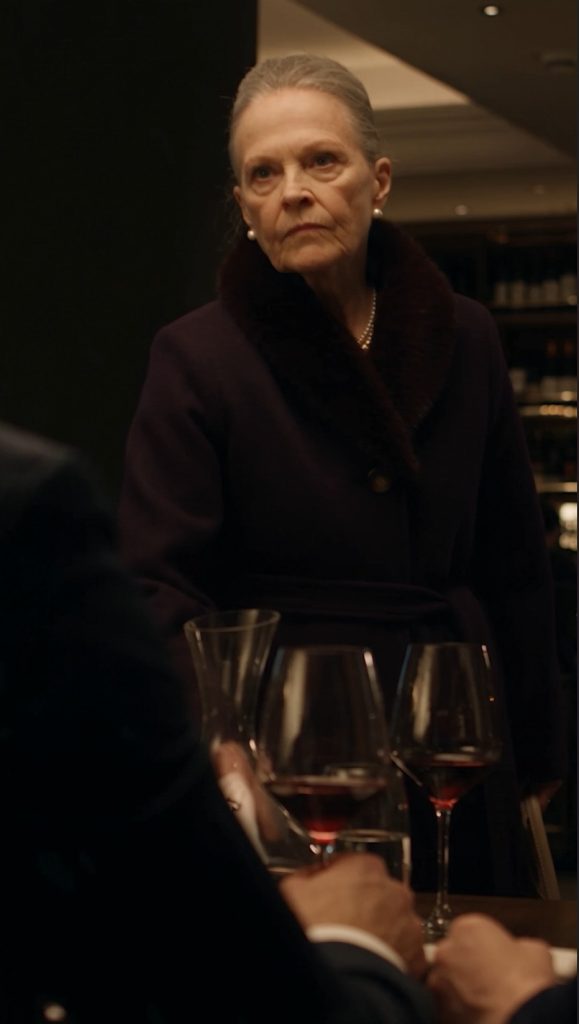
Willow Creek wasn’t the kind of restaurant people wandered into for a casual meal. White tablecloths. Linen napkins. Bottles of wine expensive enough to make people lower their voices when ordering.
And somehow, my card was there.
Paying for the dinner Wesley had just told me wasn’t happening.
I grabbed my purse and drove.
The parking lot told me almost everything before I reached the door.
Wesley’s SUV.
My daughter’s car.
And another vehicle I recognized immediately.
I stayed behind the wheel for several seconds, listening to the heater hum while cold light spilled across the parked cars. Seeing them lined up together hurt more than the charge on my phone.
Then I went inside.
The hostess smiled.
“Good evening.”
I smiled back.
“Could I have a table near the window?”
I didn’t ask for my family.
From that table, I could see them perfectly.
Wesley was laughing.
Cora, supposedly too sick for dinner, looked completely fine. My daughter sat beside them, smiling as plates passed from hand to hand and wine filled their glasses.
Then I noticed the empty chair.
My chair.
They hadn’t canceled dinner.
They had canceled me.
I expected anger to hit me.
Instead, something colder settled inside my chest.
Clarity.
Another bottle arrived. Then an elaborate platter. Someone lifted a glass and toasted to “family” while the woman paying for the evening sat barely ten feet away.
Invisible.
I kept listening.
At first, only fragments reached me.
“Spring.”
“Listing.”
Then the name of a place I knew only because people mentioned it when discussing where older adults might live.
A quiet laugh followed.
“It’ll be easier once everything’s finalized.”
My fingers tightened around the strap of my purse.
They almost never said my name.
They didn’t have to.
Slowly, the pieces aligned.
This wasn’t simply a dinner I had been excluded from.
I was part of the conversation.
Part of their plans.
Just not in any way I had agreed to.
Something was supposed to happen in spring. Something involving a listing. Something about my future that apparently could be arranged without the inconvenience of asking me first.
And tonight’s celebration?
That was still going onto my card.
Inside my purse, my fingertips brushed against a plain envelope.
I had brought it from home.
There was nothing dramatic about it. No ribbon. No speech prepared. Just something I had finally decided I was ready to place in front of them.
I rose from the table.
No shouting.
No furious phone call.
No scene.
I simply walked across the restaurant while they kept talking.
Wesley saw me first.
His smile disappeared.
Cora followed his stare, and the color shifted in her face.
Then my daughter turned around.
By the time I reached the table, nobody was laughing anymore.
I placed the envelope beside the remains of the lavish dinner they had expected me to finance.
Silence spread across the table.
I looked at Wesley.
Then at Cora.
Then at my daughter.
Finally, I looked at the empty chair they had deliberately left without me.
My son swallowed.
“Mom…”
I raised one hand.
Then I leaned closer, looked him directly in the eyes, and said the sentence I had been holding back all night.
Every fork stopped.
Nobody moved.
And the instant Wesley understood what I had decided, the fear on his face told me their carefully arranged future had just begun to collapse.
Nobody at that table was prepared for what came next. 👇
Wesley reached for the envelope.
I put two fingers on it before he could touch it.
“No,” I said. “You don’t get to open anything of mine without permission anymore.”
His hand stopped in midair.
The server returned with the bill, but I turned toward her first.
“Please ask your manager to remove my card. It was used without my authorization.”
Cora’s chair scraped the floor.
“Don’t do this here.”
I looked at her.
“You chose here.”
Wesley leaned closer. “Mom, you’re misunderstanding what you heard.”
“Then explain the listing.”
His jaw tightened.
“Explain spring. Explain the place you’ve been discussing for me to live. Explain why my credit card is paying for a celebration I was lied to about.”
My daughter lowered her eyes.
Wesley looked at her, and that tiny movement told me enough.
The manager arrived. I showed him the bank alert and confirmed I had never authorized the charge. He took the bill away and said it would be reversed while the table arranged another payment.
Only then did I slide the envelope toward Wesley.
“Now you can read it.”
He opened it.
The first page revoked every financial authority I had ever given him for emergencies. The second notified my bank, attorney, and anyone handling my property that Wesley no longer had permission to act for me.
His face changed as he read.
“You went to a lawyer?”
“Small charges started appearing months ago. Things I never bought. I wanted to believe they were mistakes.”
Cora stared at him.
“My attorney also found inquiries connected to my address. A property valuation. Information requested from a senior community. Someone was preparing my life for a decision I never made.”
Wesley’s voice hardened.
“I was trying to get ahead of things.”
“Things?”
“You’re alone in that house.”
“I am not incompetent.”
“I didn’t say that.”
My daughter spoke so quietly I almost missed it.
“He told them you were getting forgetful.”
Wesley turned toward her.
“Stop.”
She looked up, tears shining in her eyes.
“No. I should have stopped before tonight.”
She told me Wesley had already spoken with a realtor, sent photographs of my house, and asked how quickly it could be listed. He had spoken to the retirement community as though my move were nearly settled.
Cora pressed her palms against the tablecloth.
“We thought once you saw the place—”
“You thought I’d be grateful?”
She looked away.
The manager returned.
My charge was reversed.
The new bill sat between them.
Three thousand eight hundred and sixty-two dollars.
Wesley reached for his wallet.
His first card was declined.
The payment terminal made a soft sound.
Cora finally paid.
I expected satisfaction.
Instead, I felt tired.
Justice did not feel like winning. It felt like standing among broken pieces and deciding what no longer belonged in my hands.
Wesley pushed the papers back.
“So what now? You cut me off because we were worried about you?”
I folded them carefully.
“This is not punishment. This is the end of you confusing access with ownership.”
His expression hardened.
“You wouldn’t have half of what you have if Dad hadn’t—”
He stopped.
Too late.
My daughter covered her mouth.
I looked at my son.
Then I made the choice I had feared.
“I filed a formal fraud report with the bank this afternoon. Every unauthorized charge will be reviewed. Tomorrow, my attorney will notify the realtor and the retirement community that no one speaks for me. If you signed my name anywhere, that becomes a legal matter.”
Wesley stilled.
That was the moment his power broke.
Not when his card failed.
Not when the papers appeared.
When he understood that being my son would no longer shield him from consequences.
He stood so fast his chair tipped backward.
“You’d do that to me?”
I didn’t move.
“You already did it to me.”
Then my daughter stood.
She did not follow him.
She came to my side.
Wesley stared at her, then walked out alone.
Cora remained, pale and shaken.
At the door, she turned.
“I knew lying to you was wrong,” she said. “I told myself we were helping because that was easier than admitting what we were doing.”
Then she left.
My daughter and I stood beside the empty chair.
Finally, she whispered, “There’s something else.”
My stomach tightened.
She took out her phone.
“I need you to know why the charge hit tonight.”
I stared at her.
“When Wesley gave the server your card information, I asked her to run it early.”
“What?”
“I knew your bank alerts come through immediately.”
Her voice cracked.
“I wanted you to see it.”
I remembered her smiling when I arrived.
Laughing.
But I also remembered how often she had glanced toward the entrance.
“I was scared to call you,” she said. “Wesley kept saying you’d misunderstand, that everything had to be finalized first. I went along with too much.”
“But tonight I realized if the papers were finished before you knew, we might never undo it. So I made sure your card was charged while we were still here.”
I sat in the chair they had left empty for me.
Not because I had finally been invited.
Because I chose it.
My daughter crouched beside me.
“I should have told you directly.”
“Yes,” I said.
She flinched.
“You are going to have to earn back what you broke.”
She nodded.
“I know.”
It was the first honest thing anyone had given me all night.
The weeks that followed were messy.
The realtor withdrew everything when told I had never authorized a sale. The retirement community closed the inquiry. The bank reviewed the charges.
Wesley repaid every disputed amount and was permanently removed from my accounts, my emergency documents, and every role that allowed him to make decisions for me.
Cora sent a letter instead of calling.
She did not ask me to forgive her. She admitted that convenience had become entitlement, and entitlement had become something uglier.
I kept the letter.
My daughter came every Sunday.
At first, we barely spoke.
She brought coffee. I made soup. Sometimes the kitchen clock did most of the talking.
Trust returned in smaller ways.
She stopped defending herself before I asked and accepted when I said no. One afternoon, she handed me copies of every message Wesley had sent about the house.
“I kept them because you might need them,” she said.
Then, after a pause, “And because I never want to pretend again that I didn’t know enough to do better.”
Months later, Wesley came to my door.
He carried only an envelope confirming the last disputed amount had been repaid.
“I thought taking care of you meant deciding for you,” he said, staring at the porch boards. “Then I started thinking that because I could access things, I deserved to.”
He looked up.
“I don’t know when concern became greed. But it did.”
I let the silence sit between us.
“I love you,” I said. “But love does not restore authority.”
He nodded.
“I know.”
I did not invite him inside that day.
But I did not close the door while he was still speaking.
By spring, the house was still mine.
No listing sign. No moving truck. No room waiting for me in a place someone else had chosen.
Instead, daffodils opened along the back fence.
One Sunday evening, my daughter arrived with a pie. Wesley came later, after asking first.
That mattered.
We ate at my old dining table.
No expensive wine or white linen.
Just roast chicken, warm bread, and the quiet clink of ordinary silverware.
Cora was not there. She and Wesley were living separately, trying to understand what remained of their marriage without making me the problem that held them together.
Near the end of dinner, my daughter looked toward the chair beside me.
“Do you know why I kept looking at the door that night?”
I already knew, but I let her say it.
“I was waiting for you.”
For months, I had remembered that dinner as the night my family erased me.
Now I understood one part differently.
Someone at that table had been frightened enough to betray me and still desperate enough to leave a trail back to the truth.
It did not erase what she had done.
Healing was learning to look at the scar without mistaking it for an open wound.
When dinner ended, Wesley gathered the plates without being asked.
My daughter wrapped the leftover pie.
I stood at the sink, looking into the dark window at my reflection, surrounded by the warm reflections of my children moving quietly behind me.
The house was still mine.
My life was still mine.
My daughter came beside me and slipped her hand into mine.
Behind us, Wesley set the last plate on the counter and waited.
I squeezed her fingers once.
Then I turned back toward the table, where every chair was filled only because I had chosen who belonged there.