The garden party had been going beautifully — white linens catching the afternoon breeze, crystal glasses catching the light, laughter moving softly between tables like music. It was the kind of afternoon that felt untouchable, the kind that wealthy men build entire lives to protect.
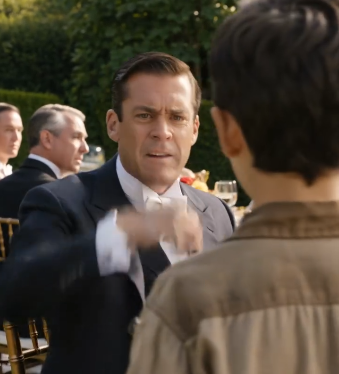
And then a boy walked in holding a photograph, and everything untouchable came crashing down.
The guests looked from the man’s face to the child standing at the garden’s edge, then back again. Nobody moved. Nobody dared speak. The air itself seemed to hold its breath.
Only the boy stood completely still, clutching a small wooden flute so tightly his knuckles had gone pale. He looked about ten years old, with dark eyes that carried something too heavy for a child his age — a kind of quiet determination that didn’t belong at a garden party.
“Where did you get this?” the man whispered.
“My mother kept it,” the boy said, his voice steady and clear. “She told me that if you ever looked at me like I was nothing… I should give it to you.”
A silence fell over the garden so deep it almost hurt to breathe.
The man looked at the boy again. Really looked this time. Not at the photograph, not at the crowd watching him, but at the child standing before him with lifted chin and trembling lips.
The eyes. The mouth. The way his jaw tightened when he was trying not to cry.
His own reflection stared back at him from a smaller, harder life.
“Your mother’s name,” the man said, his voice cracking at the edges. “Tell me her name.”
The boy swallowed once.
“Marina.”
The name hit him somewhere deep and irreversible, like a blade finding the one place still soft enough to wound.
He had spent years searching for Marina after his family told him she had run off with another man. He had written letters that went unanswered, made calls that went unreturned. Eventually, as the silence stretched long enough, he had done what grief demands: he believed the story they gave him, buried the pain somewhere quiet, and built the polished, elegant life now sitting frozen around him.
But the boy shook his head slowly, like he had known this part was coming.
“She never ran away,” he said softly. “She got sick. She told me your family made sure your letters never reached her. That she waited for you until she couldn’t wait anymore.”
The man’s chair scraped hard across the stone patio as he pushed back from the table.
Around him, guests sat frozen with expressions caught somewhere between shock and sorrow. No one reached for their wine. No one whispered to their neighbor.
The boy reached into his pocket one more time. His small hands unfolded a worn piece of hospital paper slowly, carefully, the way someone handles something they’ve been protecting for a long time.
At the top of the paper was Marina’s name.
Below it: a line marked urgent surgery needed, the ink faded but the words still sharp.
And under the section for emergency contact, written in handwriting that looked exhausted and trembling, she had left only four words:
The man with the summer song.
No phone number. No address. Just that. As if she still believed, even then, that those words would find their way home to him.
The man’s eyes filled so quickly he didn’t have time to look away. The composure he had spent decades perfecting dissolved in an instant.
He dropped to his knees right there on the stone, beside the child who carried his face and his lost love’s eyes, and he didn’t care who was watching. All the wealth, all the control, all the carefully managed distance he had built around his heart — none of it mattered in that moment. None of it was real compared to this.
He reached toward the boy with open hands, and for just a second it seemed like the wound of thirty years might actually begin to close.
But before he could speak, a sharp sound cut through the silence.
A wineglass hitting the stone. Shattering.
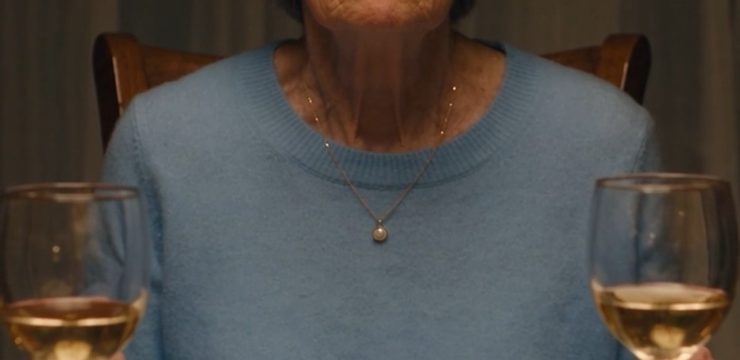
At one of the guest tables, an older woman had risen so suddenly she had knocked it over without noticing. She stood completely upright now, perfectly still, her eyes locked on the photograph in the boy’s hands.
The boy turned toward her.
The man turned toward her too.
And his blood ran cold in his chest.
Because the woman standing there — the one staring at that photograph like she had come face to face with the ghost of something she had buried long ago — was his mother.
She had been there the whole time. Sitting among the guests. Watching the scene unfold. Watching the lie she built walk back into the garden on the legs of a ten-year-old boy holding a flute and a hospital paper and a dead woman’s last hope.
The photograph didn’t lie. The boy’s face didn’t lie. The handwriting on that worn hospital page didn’t lie.
Only she had. For decades. With precision and without remorse — until this exact moment, when the truth arrived at a garden party dressed in a child’s quiet dignity and refused to leave.
The afternoon light still caught the crystal glasses. The white linens still moved in the breeze. But nothing in that garden would ever feel untouchable again.
Some lies don’t stay buried. Some loves don’t either.
And sometimes, the reckoning walks in slowly, clutching a wooden flute, with his father’s eyes and his mother’s courage — and he doesn’t say a word until the moment is exactly right.