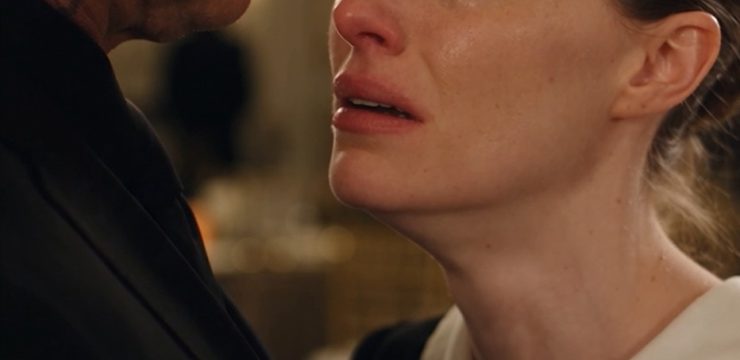
The military ID should have belonged to a dead man. But it had been used just yesterday.
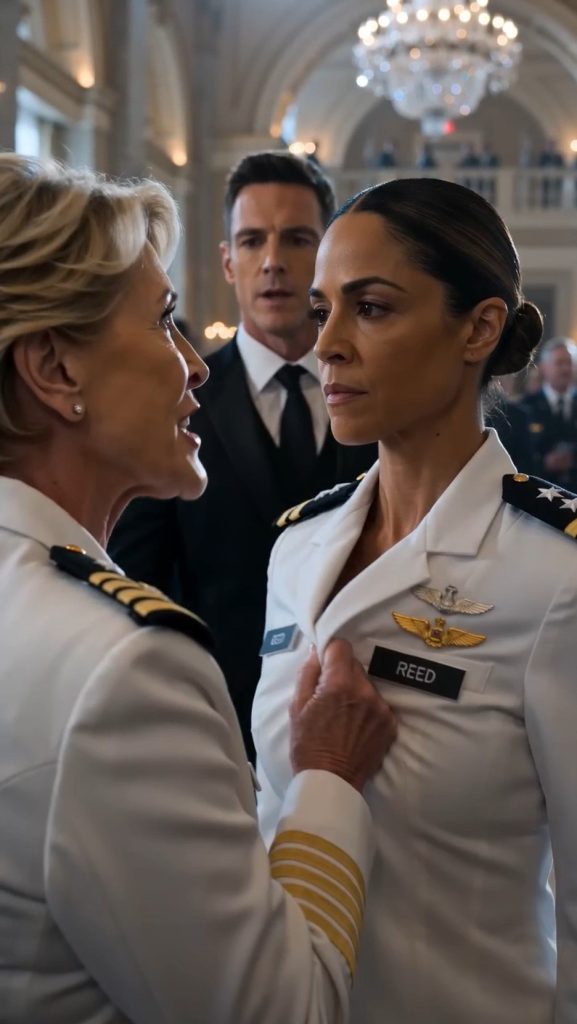
And when the retired Colonel saw the name on it, the confidence vanished from his face. For the first time that morning, he looked genuinely afraid.
Only moments earlier, he had been standing before a young woman, accusing her of disgracing her own father.
“You’re humiliating his memory,” Colonel Harris said, his voice sharp enough to silence the room. “Your father died years ago. Pretending otherwise won’t change that.”
The woman stood motionless beneath the cold fluorescent lights. She had expected resistance, perhaps even disbelief, but hearing someone speak about her father with such contempt made her fingers tighten around the documents in her hand.
She met Harris’s eyes.
“No,” she said quietly.
There was something in her voice that made the General, who had been observing the exchange, step forward.
“What exactly are you claiming?” he asked.
Instead of answering, she reached into her folder and removed a military identification card.
“My father’s,” she said, placing it in his hand.
The General examined the photograph, the name, and the identification number. His expression shifted almost imperceptibly, but the change was enough to make Harris stop smiling.
“This identification should no longer be valid,” the General said.
“Then have someone check it.”
A technician approached with a scanner. The faint electronic beep seemed unusually loud in the room.
He studied the results. Once. Then again.
“Sir,” he said, his voice suddenly cautious. “This ID is active.”
The General looked up.
“And the last recorded use?”
The technician swallowed.
“Yesterday, sir.”
Silence settled over the room.
Harris took one small step backward. It was barely noticeable, but the woman saw it. She had been watching him closely from the moment he called her a liar.
Slowly, she raised her hand and pointed directly at him.
“He knows.”
The General turned toward his former colleague.
“Colonel Harris?”
Harris gave a short, uneasy laugh.
“This is impossible. There must be some administrative mistake.”
But the woman was already reaching into her folder again.
This time, she withdrew a photograph.
It was recent. Clear enough to leave no doubt about the two men standing side by side.
One was Colonel Harris.
The other was her father.
The same father Harris had insisted was dead.
The General held the photograph closer, studying the faces as though another angle might somehow change what he was seeing.
“Harris,” he said slowly, “explain this.”
Harris opened his mouth, then closed it.
For the first time, he seemed unable to find the words.
Security personnel moved quietly toward the doors. Harris noticed them immediately. His eyes flicked toward the nearest exit, but a uniformed guard was already standing in front of it.
The woman had one document left.
A letter.
Its edges were slightly worn, and she handled it with particular care. Unlike the ID or the photograph, this was something she seemed almost reluctant to surrender.
“My father wrote this,” she said.
The General extended his hand.
She unfolded the letter but kept it between her fingers, turning it so everyone could see the first line.
HARRIS KNOWS WHO KEPT MY IDENTITY ACTIVE.
The General went still.
Harris’s face had lost its color. His gaze moved from the letter to the woman, then toward the blocked doorway.
“You told me I was humiliating my father,” she said, her voice trembling now, not from fear but from everything she had been holding back.
She lifted the active military ID.
“But someone was using his name.”
Her eyes never left Harris.
“And you know who.”
The General turned fully toward the retired Colonel.
This time, Harris had nowhere to look but at the evidence in front of him.
And the question he was about to face would change everything. 👇
“Who kept his identity active, Harris?”
The General’s voice was barely above a whisper.
Harris stared at the photograph, his jaw working as though he were searching for an answer that might still save him.
“You’re making a mistake,” he said. “That woman has no idea what she’s involved in.”
“Then explain it.”
Harris looked at the young woman.
“Did your father tell you why he disappeared?”
Her grip tightened around the letter.
“No. But I’m beginning to understand why he was afraid of you.”
The General placed the photograph on the table.
“Everyone except security and the technician, leave the room.”
Chairs scraped against the floor. The door closed, leaving five people beneath the humming lights.
The General held out his hand.
“May I read the rest?”
The woman hesitated before surrendering the letter. It was the last thing her father had given her, and she had already spent too many years losing pieces of him.
The General began reading.
With every line, his expression grew heavier.
The letter described an operation conducted years earlier, one involving military supplies that never reached their intended destination. Her father had discovered falsified transportation records and signatures approving shipments that existed only on paper.
One signature belonged to Harris.
Another belonged to a senior officer who had since died.
Her father had intended to report the discrepancies. Instead, he was ordered to remain silent.
When he refused, his death was officially recorded after a remote transport incident.
The General stopped reading.
“You signed the casualty confirmation,” he told Harris.
Harris said nothing.
“You told his family he was dead.”
“I was following instructions.”
“Whose?”
Harris lowered his eyes.
The technician interrupted, his voice uncertain.
“General, there’s something else.”
He turned the monitor toward them.
The active identification had been used repeatedly over several years to authorize access to restricted supply records. The most recent transaction had been approved through credentials connected to an administrative account Harris had retained as a retired consultant.
The General studied the screen.
“Can you preserve those records?”
“Yes, sir.”
“Do it. All of them.”
Harris suddenly leaned forward.
“You cannot understand what was happening back then. People above me were involved. People with enough power to destroy careers, families—everything.”
The woman looked at him.
“And my father?”
Harris’s mouth tightened.
“He was supposed to cooperate.”
“But he wouldn’t.”
“No.”
The answer came so quietly that she almost missed it.
For years, she had imagined her father’s final moments. Now she was standing only a few feet from a man who knew why those moments had been stolen from her.
“Where is he?” she asked.
Harris looked toward the General.
“Please.”
“Where is my father?”
Harris drew a shaky breath.
“He’s alive.”
The words emptied the room of sound.
The woman placed one hand against the edge of the table. Her knees suddenly felt unreliable.
“Say that again.”
Harris couldn’t look at her.
“He survived. We arranged for him to disappear. At first, it was supposed to be temporary.”
“Temporary?” Her voice cracked. “I buried an empty coffin.”
The General’s eyes narrowed.
“You authorized a false death report?”
Harris nodded.
“And then you kept using his identity?”
“It wasn’t supposed to go on this long.”
The woman stepped closer.
“You had years to tell me.”
Harris finally met her eyes.
“If I told you, everything would have come apart.”
She stared at him, struggling to recognize anything human in that explanation.
“Everything came apart for us.”
The General summoned military investigators. Harris was separated from the others, his access credentials seized and his statements formally recorded.
As the guards approached, Harris tried one last time.
“You think he’ll forgive you when he learns you exposed him? Your father agreed to stay hidden.”
The woman froze.
The General noticed.
“What do you mean, agreed?”
Harris’s expression changed. He had revealed more than he intended.
The woman unfolded the final page of her father’s letter.
Until that moment, she had been too frightened to read it.
Near the bottom, in handwriting she remembered from childhood birthday cards, was a sentence underlined twice.
I stayed away because Harris convinced me that coming home would put you in danger.
She read it again.
Then she looked up.
“You told him you’d hurt me.”
Harris turned away.
The General’s voice became hard.
“Take him into custody.”
The guards escorted Harris toward the door. His shoulders sagged as his years of authority disappeared into the ordinary sound of footsteps against polished flooring.
Before leaving, he glanced at the woman.
She didn’t look away.
“You made us grieve someone who was still breathing,” she said.
Harris had no answer.
The investigation moved quickly once the records were secured. Additional documents revealed how Harris had maintained her father’s identity, concealed unauthorized transfers, and used the supposed death to prevent questions about the original operation.
Other officials implicated in the records were investigated. The fraudulent authorizations were canceled, the missing funds traced, and the false casualty report formally corrected.
Harris was ultimately convicted of offenses connected to the fraud, falsified records, and conspiracy that had destroyed her family.
But the woman barely remembered hearing the sentence.
She was staring at a handwritten address the investigators had recovered.
Her father was there.
Alive.
When the General offered to arrange a meeting, she couldn’t speak.
She had spent years teaching herself to live without him. She had stopped expecting his voice on birthdays, stopped turning toward men who resembled him in crowded places.
And now she was being asked to walk through a door and find him waiting.
The meeting took place in a quiet government facility outside the city.
Rain tapped softly against the windows. A clock ticked above an empty chair.
The woman stood beside the General, holding the same worn letter.
Then the door opened.
An older man stepped inside.
His hair had turned almost completely gray. His shoulders were thinner than she remembered, and the years had drawn deep lines around his mouth.
But his eyes were the same.
He stopped when he saw her.
For several seconds, neither moved.
Then he whispered her childhood nickname.
The sound broke something she had held together for years.
“Dad?”
His face crumpled.
“I’m here.”
She crossed the room before he could say another word.
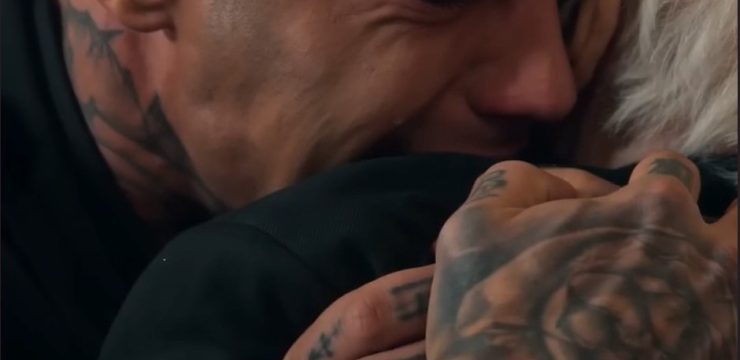
He caught her against his chest, holding her with both arms as she began to sob.
He smelled faintly of soap and rain.
Not like a memory.
Like someone real.
“I’m sorry,” he whispered into her hair. “I’m so sorry.”
She pulled back, both hands gripping his jacket.
“Why didn’t you come?”
His eyes filled.
“I thought they would find you. Harris showed me reports about people watching our house. He said the moment I contacted you, they’d know.”
“You believed him?”
“I was afraid.”
She looked down.
“You left me alone.”
He nodded, tears slipping down his face.
“I did. And being afraid doesn’t make that right.”
For a long moment, she couldn’t touch him again.
Then she sat beside him, and he let her ask every question.
He answered them without defending himself.
He told her about years spent moving between protected locations, about attempts to pass information to investigators, and about the photograph taken during a meeting Harris had demanded to maintain his silence.
He had secretly arranged for that photograph and the letter to reach her when he realized the threats might finally be exposed.
“I wanted you to know I hadn’t forgotten you,” he said.
She traced the fold in the paper.
“I thought you chose to leave.”
He reached toward her hand, stopping just short of touching it.
“I never stopped wanting to come home.”
She let her fingers rest over his.
Healing did not happen in that room. There were too many missed years for a single embrace to repair.
But when they walked outside, she didn’t let go of his hand.
Months passed.
The technician who had discovered the active identification received formal recognition for preserving the evidence. The General oversaw the correction of her father’s service record and personally delivered the documents restoring his name.
One afternoon, he visited them at their small family home.
Her father studied the official papers, then placed them gently beside an old photograph of himself holding his daughter when she was little.
“Thank you,” he told the General.
The General shook his head.
“We should have listened sooner.”
After he left, father and daughter sat together at the kitchen table.
Sunlight warmed the wooden surface. A kettle murmured on the stove.
Her father reached into a drawer and withdrew a small envelope.
“There’s something I kept,” he said.
Inside were dozens of birthday letters.
One for every year he had been gone.
Some were written on ordinary notebook paper. Others had been carefully folded and refolded until their corners softened.
She opened the earliest.
It described the day she had learned to ride a bicycle, the way she had laughed after falling into the grass, and how she had insisted on trying again.
The next letter was written for her eighteenth birthday.
Another for the day he imagined she might graduate.
He had never known whether those things had happened. He had written anyway.
At the bottom of the last letter were six words.
I hope you still remember home.
She covered her mouth.
Her father stared at his hands.
“I couldn’t send them,” he said. “But writing them made me feel like I was still your dad.”
She gathered the letters against her chest.
“You always were.”
His shoulders began to shake.
This time, she moved her chair closer and rested her head against him.
Outside, the evening light softened across the garden.
There would still be difficult conversations. Birthdays they could never recover. Ordinary moments they would grieve because they had happened apart.
But the empty chair at their table was empty no longer.
That night, her father washed the dishes while she dried them, just as they had done when she was a little girl.
He handed her a plate.
She took it, smiling through the last of her tears.
And for the first time in years, when someone called her name from the kitchen, she heard her father’s voice—and simply answered, “I’m here.”