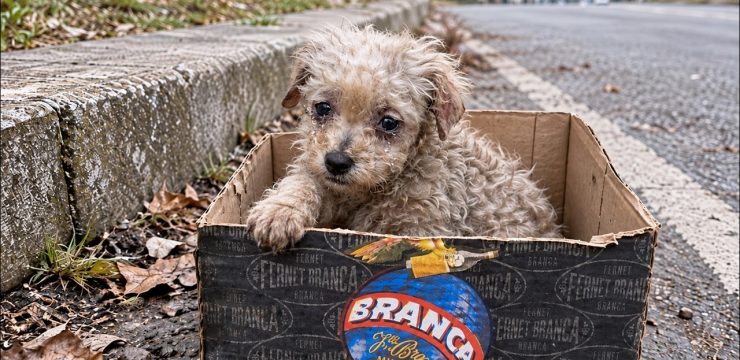
The puppy lay motionless beside the road, his fur soaked and his body shaking from the cold. When someone tried to lift him, he cried out and resisted. At only seven or eight months old, he was hurting so badly that even an attempt to help frightened him.
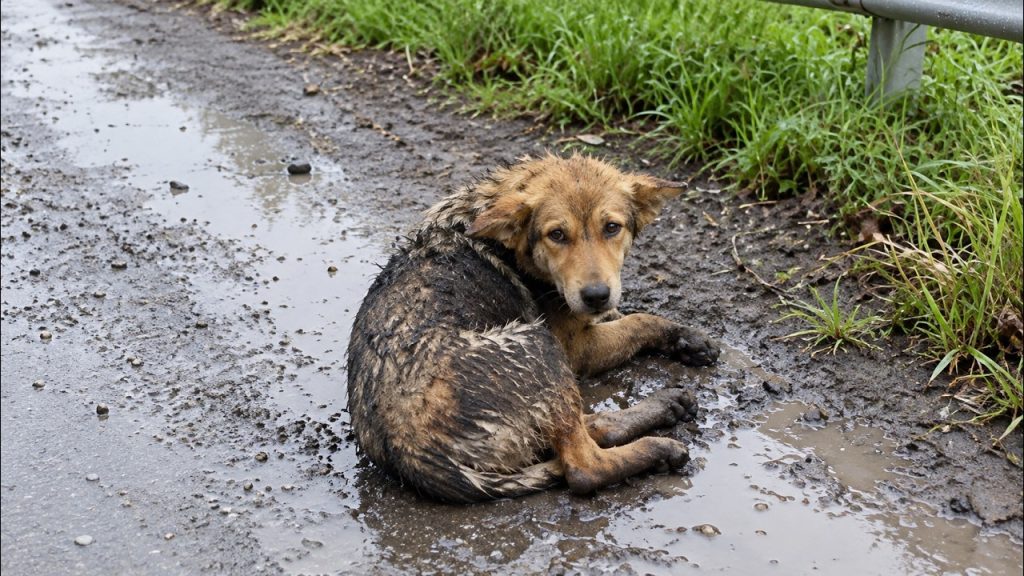
His name was Harvard. For this young dog, the distance between that roadside and a safe place felt greater than any puppy should have to face.
He was exhausted and unable to rise. The person who found him saw his fear when he was touched. Instead of forcing him into unfamiliar arms, the rescuer offered gentle strokes, giving him a chance to understand that this human contact meant care, not another reason to be afraid.
Something shifted. Harvard stopped resisting and rested quietly, trusting the hands that had come to help him. He still needed urgent medical attention, but he no longer had to face his pain alone.
He was taken straight to the nearest veterinary clinic. There, X-rays uncovered the seriousness of his injuries: a severe pelvic fracture and a dislocated leg joint. The problems were not limited to broken bones. Harvard’s body was dangerously cold, his blood pressure had dropped sharply, and he was profoundly weak.
For such a young puppy, those findings were concerning. Before anyone could think about the longer road to recovery, the medical team had to help him through the immediate crisis. He received intravenous fluids and medication to ease his pain. Then came the decision to transfer him urgently to VetCity, a specialized veterinary center, overnight.
Additional examinations revealed more reasons for concern. Harvard had an extremely low red blood cell count and a serious collection of blood in his bladder. Fleas covered his body, a troubling sign of inadequate care before his rescue.
The medical problems were daunting. His fractured pelvis needed treatment, his dislocated joint needed attention, and his exhausted body first needed enough stability to tolerate what came next. Through the examinations and care, though, Harvard remained gentle and cooperative, despite everything he was enduring.
He had every reason to be fearful. Only a short time before, he had been lying helpless beside a road, too frightened to accept being lifted. Now unfamiliar people were examining his injuries and working to relieve his suffering. His quiet cooperation became one of the most moving parts of his story.
Gradually, his condition stabilized. Although his red blood cell count had been dangerously low, he did not need a blood transfusion. It was a welcome piece of news in a period filled with difficult findings.
While Harvard was under anesthesia for a CT scan, the veterinarians were able to put his dislocated leg joint back into place. Further evaluation brought another important relief: his spinal cord had not been damaged. He would not need to lose his leg.
Those discoveries mattered enormously. His injuries were still serious, and there was more treatment ahead, but the possibility of standing and walking on all four legs remained open. The veterinary team then performed surgery to repair his pelvis, and the operation went smoothly.
When Harvard woke afterward, he was weak. Recovery was not something that happened all at once. A successful operation could address the injured bones, but it could not instantly restore the strength he had lost or erase the discomfort of his ordeal.
Yet there was a small gesture that spoke louder than any dramatic announcement. Whenever Harvard saw a familiar person or one of the veterinary staff, he tried to wag his tail. Even as he recovered from major surgery, he was finding ways to respond to the people caring for him.
The doctors also determined that his front leg did not require surgery. It needed time to heal. That meant Harvard could continue recovering without another operation on that limb, though he still had a great deal of rebuilding to do.
At first, standing was an effort. His earliest steps were unsteady and trembling. Each movement showed how much his body had endured, and how much patience his recovery would require. No one could make those steps for him. The care around him mattered, but Harvard had to find his balance again, little by little.
And he did. The same puppy who had been found lying still by the roadside gradually learned to stand steadily and walk on all four legs. What once seemed beyond his reach became part of his everyday life again. His progress was more than a medical milestone. It meant he could begin exploring the world as a young dog should.
Eventually, Harvard was well enough to leave the hospital. He moved into a temporary home, where his life began to include more than examinations, medication, and recovery from surgery. He met other animals and quickly settled in among his new companions.
In the yard, he could run and play. The frightened puppy who once resisted being held now showed a different kind of closeness. He often curled up against his rescuer’s legs and fell asleep there, comfortable enough to rest beside the person who had helped change his life.
His healing was not finished. Physical therapy sessions and injections were still part of the road ahead. He still needed care, attention, and time. But those remaining treatments did not take away from what he had already gained: movement, companionship, and a place where he could feel secure.
Harvard’s story did not end with a permanent adoption or a promise that every challenge had disappeared. It reached a quieter, equally meaningful beginning: a safe temporary home and the chance to grow stronger while surrounded by care.
A few gentle strokes beside a road had been the first step. Veterinary skill and steady attention carried him through the next ones. And now Harvard could take steps of his own, moving forward into a life that held something he had nearly lost: the simple happiness of being a puppy.