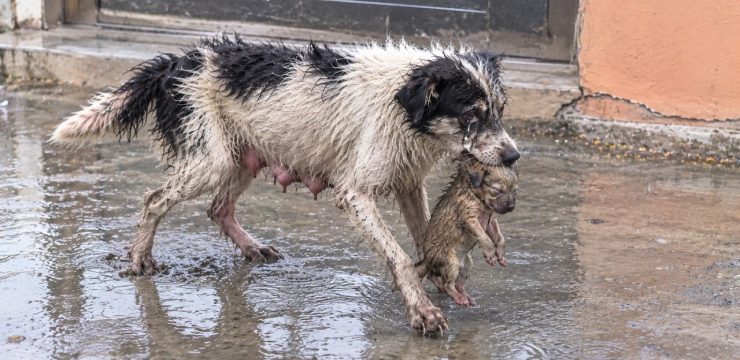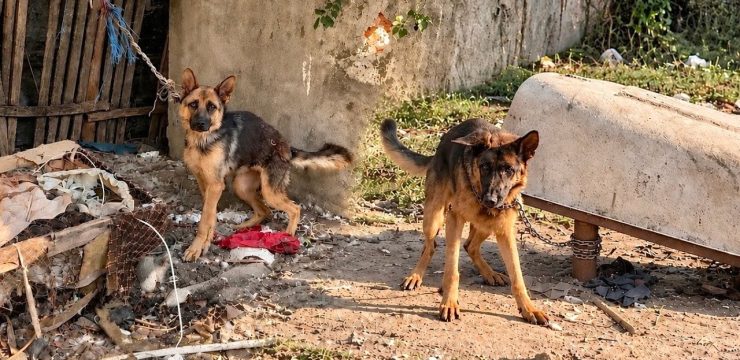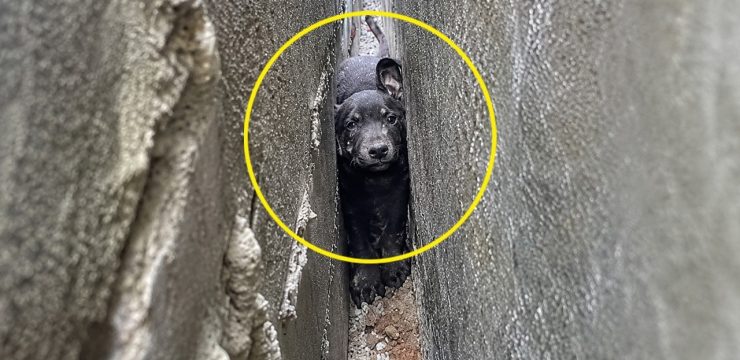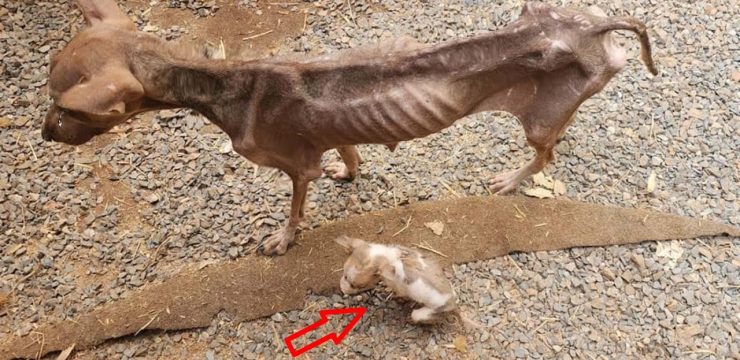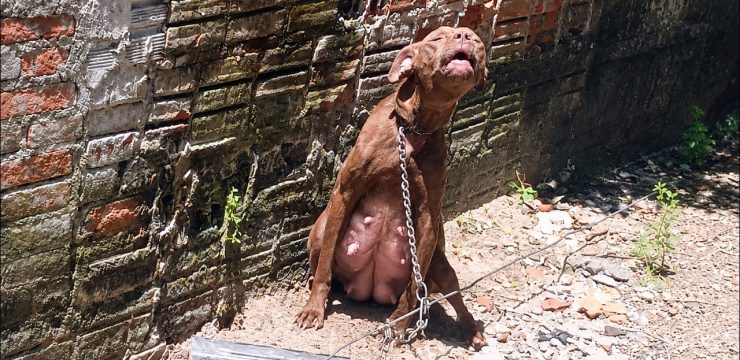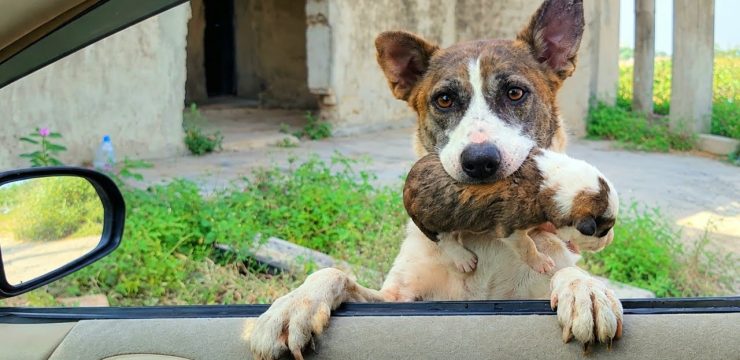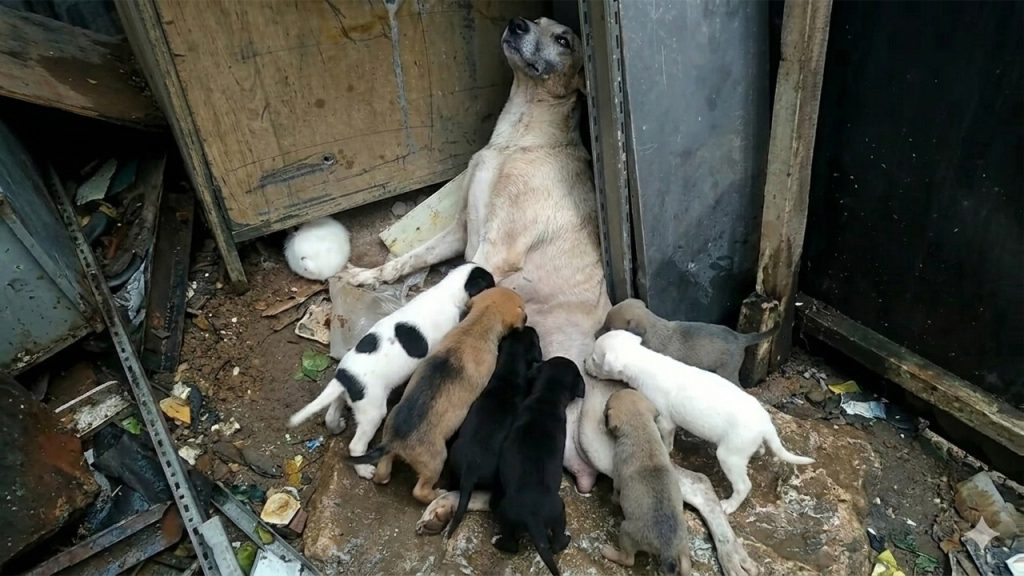
She needed help immediately. So did every one of her babies.
When rescuers reached Kim, she was too weak to stand. She tried to move away toward the water’s edge, but her condition made escape difficult. One leg was badly damaged, and her body showed signs of an untreated injury. People at the scene explained that a vehicle had hit her earlier. Some maggots had already been removed from her wounds, but medical care was still needed.
The rescuers faced another urgent responsibility. Kim was not alone. Her puppies were hidden among the brush near a sloping bank, too young to manage without protection. Leaving them there while their mother received treatment was not an option.
The search required attention to the vegetation and uneven ground. One by one, the little dogs were found and gently placed into a cardboard box. There were ten in all, boys and girls, each one part of the family Kim had struggled to keep together.
Now help could reach the entire family.
At the veterinary clinic, the extent of their suffering became clearer. Kim and the puppies were heavily infested with parasites, including fleas, ticks, and lice. The puppies needed washing, treatment, nourishment, and close observation. Their small bodies had already endured conditions no young animal should have to face.
The caretakers provided food and began checking their health. What they discovered raised further concerns. Signs of diarrhea and roundworms appeared, along with hard rice in the puppies’ stool. One puppy also had pain in a leg. These were not problems that could be solved simply by moving the family indoors.
With ten growing puppies to feed, their caregivers also needed support. They asked for appropriate puppy food, including Royal Canin products, meat-based wet food, and lactose-free milk. Each meal mattered, but so did every careful decision about their health.
The puppies were bathed to remove fleas. Their wounds received antiseptic care, and they were treated for worms. Blood samples were taken for complete blood counts. These steps meant something extraordinary for a family that had struggled outside: someone was finally looking after each of them.
Yet Kim’s condition remained the greatest worry.
Her damaged hind leg had suffered a crushing injury. She was profoundly weak and required vitamins and strong pain medication under veterinary supervision. Blood appeared in both her urine and stool. Deep infection and maggots around her injured hindquarters added to the seriousness of her condition.
The team could comfort Kim, but affection alone could not repair what had happened to her. She needed skilled medical treatment, monitoring, and possibly major surgery. Her caregivers appealed for help with the veterinary expenses, knowing the care required was far beyond a simple examination.
There was particular concern about whether she would survive her most critical period. For a mother who had already endured so much, even reaching the next stage of treatment was a meaningful step.
Once Kim was stable enough for further evaluation, specialists arranged a CT scan under anesthesia. They needed a clearer picture of the damage to her pelvis and lower body. The findings pointed toward orthopedic surgery, but the doctors could not proceed immediately. Her blood results and the color of her mucous membranes needed to improve before an operation could be considered safe enough.
Waiting was not the same as giving up. It meant allowing Kim the medical support she needed while her body remained fragile. Her recovery could not be rushed merely because everyone wanted a happier ending.
Meanwhile, the puppies continued receiving care of their own. There were ten small lives to nourish and protect, ten reasons for the rescuers to keep working even while their mother’s future remained uncertain.
Then came a moment that brought the family’s bond into focus.
The puppies returned to the clinic for vaccinations. Kim heard their cries and became restless. Although she was still receiving treatment, the sound of her babies drew an immediate response. Her caregivers brought one puppy close enough for her to see and touch.
Kim recognized her little one. She licked the puppy repeatedly and held it close, offering the affection she had shown such determination to give despite her injuries. For a brief moment, the medical equipment and difficult decisions seemed less important than this simple reunion between a mother and her baby.
But there were limits to what the caregivers could allow. Because Kim was receiving antibiotics and pain medication, they gently prevented the puppy from nursing. The reunion could offer contact and comfort, not a return to their old feeding routine. Protecting the puppy’s health was another way of protecting the family Kim loved.
There was tenderness in that difficult balance. Kim could recognize and greet her baby, while the people caring for them continued making the choices their medical needs required.
Later, Kim showed encouraging signs in her spirits. She rested more comfortably and accepted gentle petting from those around her. These small changes did not mean her injuries had healed or that surgery was behind her. They did mean she could experience a little peace while her treatment continued.
The road ahead was still uncertain. Her badly injured body needed more time and expert care. Her puppies needed continued attention, too. No one could promise that everything would turn out exactly as they hoped.
What had changed was that Kim no longer faced those challenges alone. Ten vulnerable puppies had been brought to safety, and their mother had people fighting for her chance to recover.
Sometimes hope arrives without a finished happy ending. Sometimes it looks like a mother resting quietly, a puppy safely cared for, and compassionate hands refusing to give up.