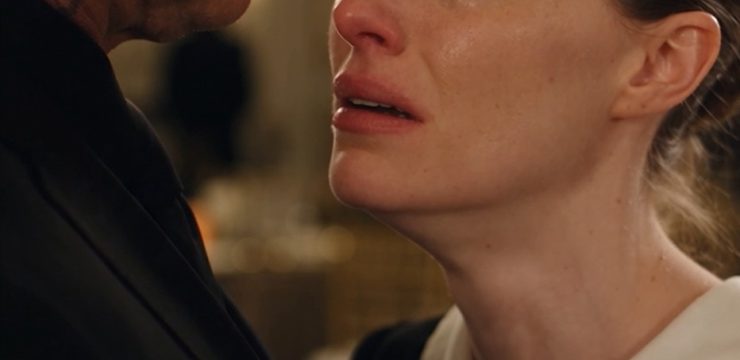
Alex and Anna had always imagined parenthood would be overwhelming, but nothing could have truly prepared them for the reality of those first months. Their son had arrived into the world just three months earlier, and from the moment they brought him home, every single day blurred into the next. Sleep became a luxury they could no longer afford. They took turns dragging themselves out of bed in the dark, rocking a crying infant back to sleep, learning the difference between a hungry cry and an uncomfortable one, and slowly — very slowly — finding their footing as first-time parents.
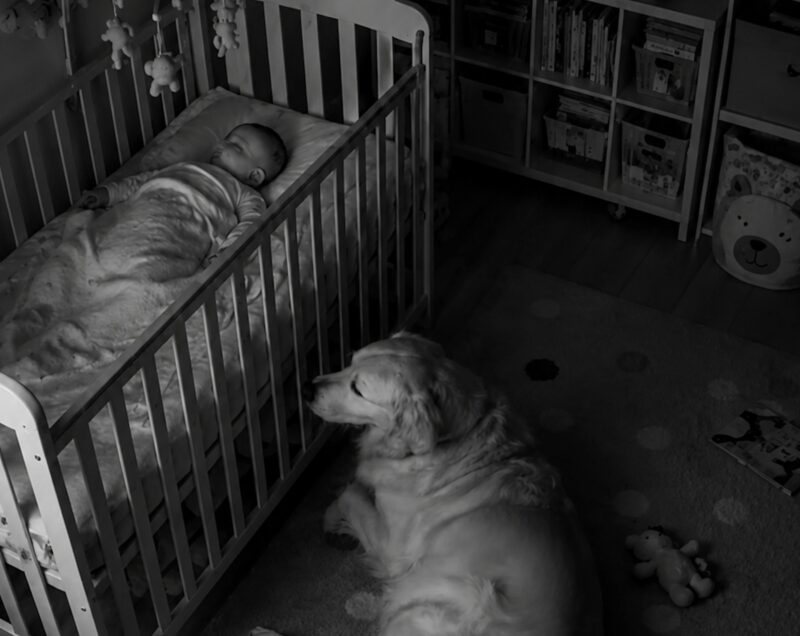
Through all of it, their Golden Retriever, Max, had been a steady presence in the house. He had been with them for seven years, a gentle and loyal companion who never caused a bit of trouble. Max was the kind of dog who could sense a bad mood and would quietly rest his head on your knee without being asked. He had always been calm, never destructive, never aggressive — just steady and faithful, the way only a good dog can be.
In the months leading up to the baby’s arrival, Max had shown almost no interest in the nursery. When Alex and Anna painted the walls and assembled the crib and hung the little curtains, Max would wander to the doorway, sniff the air for a moment, and then turn around and walk away. He seemed unbothered by the whole preparation. That was simply Max — easygoing and undemanding.
But something shifted after their son came home.
It started gradually, so gradually that Alex and Anna almost missed it at first. Every evening, after they tucked the baby into his crib, turned off the nursery light, and retreated to their own bedroom to collapse into bed, they began to notice that Max was no longer sleeping in his usual spot on the living room rug.
He was in the nursery.
Every single night, without fail, Max padded quietly down the hallway and settled himself beside the baby’s crib. He would stay there until morning, never barking, never causing any disruption — just lying there, still and watchful.
At first, Anna thought it was sweet. “He’s attached to the baby,” she told Alex. “It’s kind of adorable, isn’t it?”
Alex agreed. It seemed harmless enough.
But then they started noticing something that didn’t sit right with either of them.
Max wasn’t sleeping. He was keeping watch.
When they peeked through the nursery door late in the evening, they could see him sitting upright in the darkness, his head turning slowly between the crib and the window along the far wall. Occasionally he would rise, walk deliberately toward the baseboard near the corner of the room, stand absolutely still and listen, and then return to his position beside the crib.
“That’s not normal,” Anna said quietly one night, pulling Alex back into the hallway. “Something is off with him.”
“Maybe he’s anxious,” Alex offered. “New baby in the house, everything smells different, his whole routine changed.”
But the behavior didn’t stop. It happened every night, like clockwork, and it was growing more intense.
Anna’s worry began to take a darker shape. What if Max’s behavior wasn’t protective — what if it was something else entirely? What if he was becoming unpredictable around the baby? She had read stories. She knew that even the gentlest animals could behave in unexpected ways.
“I can’t keep wondering,” she told Alex one evening. “We need to know what’s actually happening in that room.”
They made the decision together. They ordered a small night-vision camera, mounted it discreetly in the corner of the nursery, and that evening they put their son to bed as usual, said goodnight to each other, and did not go back to check on the room until morning.
Alex was the first one awake. He opened the footage with a cup of coffee in hand, fully expecting to watch hours of Max simply lying on the floor. He figured they’d feel relieved and a little silly for worrying.
For the first portion of the night, that’s exactly what the footage showed. Max resting calmly beside the crib, lifting his head every now and then, nothing unusual.
And then the camera caught something moving near the baseboard.
Alex leaned closer to the screen.
A rat crept out from a narrow crack in the corner of the wall.
Then another.
Then a third.
Large, bold, moving fast — heading directly along the wall toward the baby’s crib.
Alex’s stomach dropped.
The moment the first rat appeared, Max was already on his feet. He lunged forward without hesitation, placing himself squarely between the crack in the wall and the crib. He barked — sharp, urgent, commanding — and drove the rats back. They scattered in a panic. Max chased them toward the opening, refusing to let a single one pass. Within moments, they had disappeared back beneath the floorboards.
But Max didn’t leave. He stood guard in front of that crack for nearly an hour, watching it without moving, waiting.
Alex called Anna into the room. They watched the rest of the footage together in complete silence.
It had been happening every night. Some nights, only one or two rats appeared. Other nights, there were more. And every single time, without a sound from the baby, without waking Alex or Anna, Max had been there — positioning himself as the last line of defense between those intruders and their sleeping child.
They called pest control that same morning.
When the specialists opened a section of the nursery floor, even they were taken aback. Beneath the floorboards was a massive infestation — tunnels, nesting materials, clear evidence that rats had been living under that room and entering through the crack near the crib for quite some time.
That evening, Anna sat on the nursery floor beside Max for a long, quiet moment. She wrapped her arms around his neck and pressed her face into his fur.
“I’m so sorry,” she whispered. “We were afraid of you. And the whole time, you were protecting him.”
Max wagged his tail slowly and rested his chin against her shoulder.
When the lights went out that night, he walked calmly back to his place beside the crib. Not out of habit. Not out of training. But because that little boy was his family, and Max had never needed a reason beyond that.