My son told me to choose between a nursing home and the street.
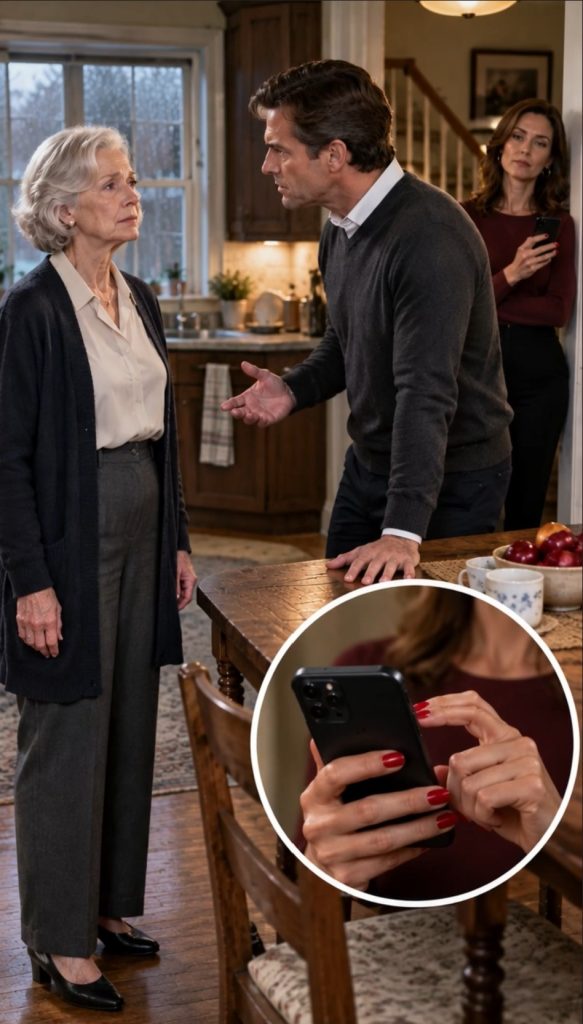
He said it in the kitchen of the house I had spent thirty-two years paying for.
The same kitchen where I had packed his school lunches.
The same kitchen where I had stayed up late helping him with homework.
The same kitchen where his father and I had once celebrated finally paying off the mortgage.
And now my son stood across from me with his jaw clenched and said:
“If you refuse to go to a nursing home, then pack your belongings and leave my house right now.”
My house.
That was the part that almost made me laugh.
Almost.
His wife, Emily, leaned against the doorway with her arms crossed.
Her bright red fingernails tapped softly against her phone.
Tap.
Tap.
Tap.
She wasn’t surprised.
She wasn’t uncomfortable.
She looked like someone waiting for a plan to reach the step she had already expected.
I should have cried.
I should have asked my son when he had stopped seeing me as his mother.
I should have reminded him how many nights I had sat beside his bed when he was sick, or how many afternoons I had waited outside his school because his father, Albert, was working late.
Instead, I smiled.
That unsettled him.
Good.
Then I walked upstairs, pulled my old leather suitcase from the closet, and began folding my clothes with the calmness of a woman who had been waiting much longer for this moment than anyone downstairs realized.
An hour later, a black limousine pulled up outside our home in Yonkers.
And the look on my son’s face disappeared so quickly that I almost felt sorry for him.
Almost.
The kitchen still smelled faintly of dish soap and grilled meat from Sunday lunch.
I remember that because ordinary smells feel strangely sharp when your life changes.
The dish towel was still hanging over the oven handle.
A plate sat drying beside the sink.
Outside, March rain darkened the road and left tiny silver drops clinging to the kitchen windows.
Everything looked normal.
Only the people had changed.
My son stood near the table.
Emily stayed in the doorway.
Neither of them looked confused about what was happening.
That was what hurt most.
This wasn’t an argument that had suddenly gone too far.
It had been discussed.
Prepared.
Agreed upon.
My son didn’t raise his voice again.
He didn’t need to.
His eyes were flat.
Cold.
Final.
Anger can pass.
Coldness like that usually comes after someone has already made a decision and stopped caring how much it hurts you.
I looked at him for a long moment.
Then I turned away.
I didn’t remind him of the elementary-school parking lot where I had waited every afternoon while Albert worked double shifts.
I didn’t remind him of the winters when money was tight and I altered wedding dresses until midnight because every extra fitting meant another grocery bill paid.
I didn’t remind him how many years I had spent bent over a sewing table, stitching lace, satin, beads, and pearls onto gowns for women who wanted to look perfect when they walked down the aisle.
Thirty-two years.
Thirty-two years of sore fingers.
Needles.
Thread.
Back pain.
Late nights.
Every paycheck helped build that house.
Brick by brick.
Payment by payment.
I had never thought I would need to explain that to my own son.
So I didn’t.
I simply walked upstairs.
My suitcase was old.
Brown leather.
Scuffed at the corners.
Albert had bought it for me years ago when we took our first real vacation after finally having enough money to leave town for more than a weekend.
I placed it on the bed.
Opened it.
Then began packing.
Two cardigans.
Three dresses I wore to church.
A pair of comfortable shoes.
A box of photographs tied with ribbon.
I paused when I picked that up.
Albert was in most of them.
Smiling beside me.
Holding our son as a baby.
Standing behind a birthday cake.
Wearing the ridiculous fishing hat I used to tell him made him look twenty years older.
For a moment, I traced one photograph with my thumb.
Then I placed the box carefully inside the suitcase.
Next came the bottle of medicine for my joints from the pharmacy down the street.
The receipt was still folded inside the paper bag.
I don’t know why that detail bothered me.
Maybe because it made everything feel so ordinary.
Medication.
Receipts.
Church dresses.
A woman packing her life while her son waited downstairs for her to disappear.
Then I stopped.
Because I remembered what was sitting on the coffee table.
The brochures.
I went downstairs without the suitcase.
The living room was empty.
My son and Emily were somewhere toward the back of the house.
On the coffee table sat a glossy stack of brochures.
The one on top read:
Assisted Living Community.
One corner was folded down.
Not accidentally.
Someone had been studying it.
I picked it up.
Photographs showed smiling elderly couples drinking coffee beneath bright windows.
A woman playing cards.
A landscaped courtyard.
A dining room with white tablecloths.
Everything looked cheerful.
Carefully cheerful.
Next to the brochures was a pen.
A cold cup of vending-machine coffee.
And several printed pages.
I moved closer.
There were boxes.
Lines.
Initial spaces.
Legal language.
I didn’t need to read every word.
Only one signature line remained empty.
Mine.
I stood there staring at it.
No one had asked me to sign anything.
No one had explained any papers.
No one had even told me there were papers.
That was when I understood something clearly.
They weren’t suggesting a nursing home.
They were preparing one.
For me.
I heard footsteps behind me.
Emily appeared.
Her expression changed when she saw what I was holding.
Then she smiled.
Too quickly.
“You don’t have to worry about any of that right now.”
I looked at her.
“What is it?”
She glanced toward the papers.
“Just information.”
“Information doesn’t usually need my signature.”
Her smile tightened.
She didn’t answer.
Instead, she said:
“The children are taking naps.”
I looked toward the hallway.
That was strange.
Peter’s Spider-Man backpack was still lying beside the chair on the porch.
Little Alice’s shoes were sitting crooked near the back step.
Normally, if the children were asleep, the house still made noise.
A cartoon left playing.
A toy falling.
A cough.
A whispered argument from the bedroom.
But that afternoon, the silence felt staged.
Even the ice maker dropping a fresh tray of cubes into the freezer sounded unnaturally loud.
It wasn’t peaceful silence.
It reminded me of church when everyone stands from the pews at exactly the same moment.
Too coordinated to be accidental.
Everything had already been planned.
I put the papers back exactly where I found them.
Then I went upstairs for my suitcase.
When I came down again, my son was sitting on the sofa I had bought when Albert was still alive.
He looked up.
Barely.
His eyes moved to my suitcase.
Then back to me.
No sadness.
No hesitation.
No guilt.
That was the moment I realized he truly expected me to leave.
Not temporarily.
Not until everyone calmed down.
Leave.
His own mother.
From the home she had helped pay for.
Emily stood near the fireplace.
Still holding her phone.
Still tapping one red fingernail against the screen.
Tap.
Tap.
Tap.
I placed the suitcase near the bottom of the staircase.
My son spoke first.
“So you’re going?”
I looked at him.
“That’s what you asked me to do.”
He shifted slightly.
“I didn’t want it to happen like this.”
That nearly made me laugh.
People say that when they want forgiveness without changing the thing they did.
I said nothing.
He continued.
“You know we’re only trying to do what’s best.”
There it was.
That phrase.
What’s best.
People can hide almost anything behind those words.
Control.
Greed.
Convenience.
Cowardice.
I looked toward the coffee table.
The brochures were still there.
So were the unsigned documents.
Then the doorbell rang.
Emily stopped tapping her phone.
My son looked toward the front window.
Nobody moved.
The bell rang again.
I reached for my suitcase.
Emily frowned.
“Are you expecting someone?”
“Yes.”
That was the first moment either of them looked nervous.
I walked to the window.
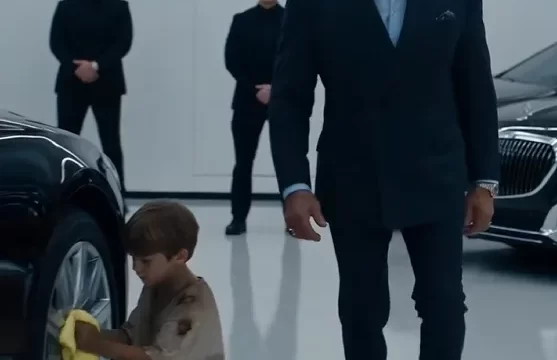
Outside, a long black limousine sat beside the curb.
Rain glistened across its roof.
The driver stepped out wearing a dark suit and opened an umbrella.
Then another man emerged from the rear door.
Older.
Silver-haired.
Perfectly dressed.
The kind of man who looked expensive without needing to show it.
My son stood immediately.
His face changed.
“What is he doing here?”
I turned slightly.
“You know him?”
My son didn’t answer.
He didn’t need to.
Most people around Yonkers probably would have recognized the man.
His photograph appeared in programs for hospital fundraisers.
His name was printed beneath charity-gala sponsorships.
People hurried to shake his hand at country-club events.
He belonged to the kind of world my son liked to talk about but had never actually entered.
Emily moved toward the window.
Then she saw him.
Her mouth tightened.
“Why is he here?”
I picked up my suitcase.
Neither of them had noticed that I was smiling again.
“Mom?”
My son followed me toward the front door.
I opened it before he could stop me.
Cold March air entered the foyer.
The driver walked toward the porch.
The silver-haired man followed.
He stopped at the bottom step.
Then looked directly at me.
His face softened.
“Mrs. Whitmore.”
I nodded.
“Good afternoon.”
My son appeared behind me.
His voice was low.
Confused.
“Mom, what is going on?”
I ignored him.
The driver reached for my suitcase.
“I have it, ma’am.”
“Thank you.”
Emily hurried onto the porch.
“What is this?”
I turned toward her.
For once, she looked completely unprepared.
That alone was worth the rain.
The silver-haired man offered me his hand as I stepped carefully down the wet stairs.
My son remained near the front door.
“Mom.”
I stopped.
He looked different now.
Not cold.
Not certain.
Afraid.
“Where are you going?”
I looked at him.
“You told me to leave.”
“I didn’t mean—”
“Yes.”
I interrupted him gently.
“You did.”
He stopped speaking.
The driver opened the limousine door.
I got inside.
Behind me, Emily stepped farther onto the porch.
My son stood frozen on the front step.
And when the silver-haired man climbed into the limousine after me, the last trace of confidence disappeared from my son’s face.
Inside, everything was quiet.
The leather smelled new and expensive.
The air-conditioning hummed so softly that I could hear the rain tapping against the windows.
The silver-haired man sat across from me.
For several seconds, neither of us spoke.
Then he reached beside him.
He picked up a dark blue folder.
And placed it on the seat between us.
My full name had been typed across the front.
Not Mom.
Not Grandma.
Not Mrs. Bennett.
My legal name.
The name I had signed on mortgage papers.
Tax forms.
Marriage records.
The name I had carried through decades of work.
Then my eyes moved lower.
There was another name beneath mine.
Albert’s.
My husband.
My fingers went cold.
I looked at the silver-haired man.
He nodded once.
“It’s time.”
I touched the folder.
For years, Albert’s name had existed mostly in memories.
Photographs.
Old cards.
Documents I rarely opened because seeing his handwriting still did something painful to my chest.
Now his name sat directly in front of me.
I opened the folder.
Several documents had been clipped neatly inside.
The first page contained legal language.
Dates.
Property references.
Signatures.
Then I saw the handwriting at the bottom.
Albert’s handwriting.
I would have recognized it anywhere.
Even after all these years.
The same uneven capital A.
The same sharp downward stroke in his last name.
The same signature I’d watched him write hundreds of times across checks, birthday cards, school forms, and mortgage documents.
For a moment, everything around me disappeared.
The limousine.
The rain.
My son’s face.
Emily’s red fingernails.
All of it.
There was only Albert’s signature.
I touched the edge of the paper.
Then slowly pulled the first page free.
My eyes moved to the paragraph directly beneath his name.
I read it once.
Then again.
And suddenly I understood.
Why the assisted-living papers on the coffee table had never frightened the silver-haired man.
Why he had come personally instead of sending someone else.
Why my son had looked so terrified when he recognized him.
And most of all—
why Albert had made absolutely certain that one day, if anyone ever tried to force me out of that house, they would discover something none of them had known.
I looked up.
The silver-haired man was waiting.
I lowered my eyes to the document one last time.
And finally understood why he had personally come to pick me up.
My thumb stayed pressed against Albert’s signature while the limousine idled beneath the wet trees.
The silver-haired man did not rush me.
He simply watched as I read the paragraph for the third time.
The house had never belonged to my son.
Not for one day.
Not for one hour.
Not even on paper.
Albert and I had placed the property into a family residence trust years before his death, after the mortgage was paid. I remembered signing documents at the dining-room table, remembered Albert telling me it would make things easier someday, remembered teasing him for worrying about a future neither of us wanted to imagine.
What I had not remembered was the clause Albert had added later.
A clause I had never seen.
A clause he had insisted remain sealed unless someone tried to remove me from the home against my will.
The silver-haired man finally spoke.
“Albert came to me six months before he died.”
Rain slid in crooked lines across the dark window beside him.
I looked down again.
The words blurred for a moment.
“What did he say?”
The man’s expression changed.
Not pity.
Something gentler.
Respect, perhaps.
“He said you would never ask for protection because you would consider needing it an insult to the people you loved.”
That sounded exactly like Albert.
My throat tightened.
“He also said your son loved you.”
I looked up sharply.
The man held my gaze.
“Albert believed that. He just wasn’t certain love would always be stronger than entitlement.”
The word settled between us.
Entitlement.
Not evil.
Not hatred.
Something quieter.
Something that grows unnoticed when people confuse familiarity with ownership.
I looked back at the page.
The trust granted me exclusive lifetime occupancy of the house.
No beneficiary could sell it.
No beneficiary could mortgage it.
No beneficiary could compel me to move.
No beneficiary could transfer my rights to an institution, temporary residence, or assisted-living facility without my informed written consent.
And then came the sentence that made my hands begin to tremble.
Any beneficiary who knowingly attempted to coerce, deceive, or remove me for the purpose of gaining control of the property would permanently forfeit his future interest in it.
My son’s name appeared below that paragraph.
So did the names Peter and Alice.
I stared at them.
“What happens to his share?”
The silver-haired man answered quietly.
“It passes into protected trusts for the grandchildren.”
The air seemed to disappear from the limousine.
I lowered the document.
“No.”
He waited.
“No,” I repeated. “Albert wouldn’t punish him like that.”
“He didn’t see it as punishment.”
“Then what did he see it as?”
“Protection.”
I turned toward the rain-darkened window.
Our house was several blocks behind us now.
I could still see the kitchen in my mind.
The dish towel.
The drying plate.
Emily’s red fingernail.
My son’s face when he said my house.
Something inside me broke then, but it did not break loudly.
It felt more like a thread snapping.
One I had been pulling tight for years without knowing it.
“Did he know?” I asked.
“Your son?”
I nodded.
“Not the details.”
The man folded his hands.
“He knew I handled parts of Albert’s estate. He knew there were trust documents. He knew enough to understand that seeing me at your door was not a social visit.”
That explained the fear.
Not guilt.
Not yet.
Recognition.
I looked toward the folder again.
“How did you know to come today?”
For the first time, the man almost smiled.
“You called my office.”
I blinked.
Then remembered.
Upstairs.
The bedroom door closed.
My suitcase open.
The old card I had kept for years in the small drawer beneath my jewelry box.
A number Albert had told me never to throw away.
I had called before packing the second cardigan.
I had said very little.
My son has told me to leave.
There had been silence on the other end.
Then a woman’s voice had transferred me.
And the silver-haired man himself had answered.
“Stay where you are,” he had said.
I had told him I didn’t intend to stay.
He had paused.
Then said, “I understand. I’ll come myself.”
At the time, I thought he meant he would explain something.
I had not known what.
Now I did.
“What were the papers on the coffee table?” I asked.
He opened a second section of the folder.
“I haven’t examined the originals yet.”
He chose each word carefully.
“But from what you described over the phone, some appear to be admission documents. Others may affect who would be permitted to make decisions for you once you entered the facility.”
My stomach turned.
“Would signing them have given them the house?”
“No.”
The answer came immediately.
“Nothing they put in front of you could override the trust that easily.”
I breathed for the first time in several seconds.
“But,” he continued, “your voluntary permanent departure could have created an argument about occupancy. A bad argument, in my opinion. But one they may have believed was useful.”
I closed my eyes.
Useful.
There are words that reveal more than accusations ever could.
I opened my eyes again.
“Take me back.”
His brows lifted slightly.
“To the house?”
“Yes.”
“Mrs. Whitmore, you don’t have to decide anything tonight.”
“I already did.”
He watched me.
I tightened my hand around the blue folder.
“My son looked me in the face and told me to leave a home I paid for. His wife placed papers beside brochures and waited for me to sign them. My grandchildren were hidden upstairs while it happened.”
My voice shook once.
I let it.
“I am not spending tonight in a hotel so they can sit in my kitchen and decide what to do next.”
The silver-haired man was silent.
Then he reached toward the intercom.
“Turn us around.”
When the limousine returned, the rain had softened.
My son was still standing near the front window.
I saw him before he saw me.
For one strange second, he looked like the little boy who used to wait there for Albert’s car to turn into the driveway.
Then his eyes found the blue folder in my hands.
That boy disappeared.
Emily came out of the living room.
Her phone was gone.
Her arms were folded tightly across her chest.
“What are you doing back?” she asked.
I stepped inside.
Water darkened the toes of my shoes.
The silver-haired man entered behind me.
My son stared at him.
“Mom, can we talk privately?”
“No.”
The word surprised all three of us.
Especially me.
I set the blue folder on the kitchen table.
The same table where my son had given me his choice.
Nursing home.
Or street.
I placed one palm beside the folder.
“We talk here.”
Emily looked toward the silver-haired man.
“This is a family matter.”
He did not answer.
I did.
“It became something else when you prepared documents without telling me.”
Her face stiffened.
“We were trying to help.”
I looked at my son.
He was staring at the folder.
“Were you?”
He swallowed.
“Mom.”
“Look at me.”
He did.
I had expected anger.
Instead, I saw calculation.
Not the cruel kind.
The frightened kind.
The expression of someone searching through every conversation of the past few weeks, trying to remember what he had said, what he had signed, what he had assumed.
I opened the folder.
“Who owns this house?”
His mouth parted.
Emily answered first.
“You know that’s complicated.”
“No.”
I kept my eyes on my son.
“It isn’t.”
He looked away.
That hurt more than if he had lied.
I waited.
Finally, he said, “Dad left it to the family.”
The silver-haired man shifted slightly behind me.
I touched the page.
“Your father left me the right to live here for the rest of my life.”
My son’s face changed.
I continued.
“No one can sell it while I am alive. No one can mortgage it. No one can make me leave.”
Emily’s arms loosened.
Just slightly.
My son stared at me.
“I didn’t know that.”
“You knew enough to be afraid when he arrived.”
Silence.
The refrigerator hummed.
Somewhere upstairs, a floorboard creaked.
Peter.
Or Alice.
Listening.
My son lowered his voice.
“I knew Dad had some arrangement.”
“What arrangement did you think it was?”
He rubbed one hand across his mouth.
“I thought when you moved out, the house became mine.”
There it was.
Simple.
Small.
Devastating.
“When I moved out.”
He flinched at my repetition.
Emily stepped forward.
“That isn’t what he meant.”
I turned to her.
“Then tell me what he meant.”
She stopped.
Her red nails curled against her palm.
For the first time all day, they were completely still.
My son spoke before she could.
“I thought you were going to need more help eventually.”
“Eventually.”
“Yes.”
“So you decided eventually was Sunday afternoon.”
His eyes dropped.
I could see his pulse moving at the side of his neck.
Emily’s voice became sharper.
“You’ve been forgetting things.”
I stared at her.
“What things?”
She hesitated.
“Appointments.”
“Which appointments?”
No answer.
“Names?”
Silence.
“Medication?”
Her mouth closed.
The silver-haired man remained near the doorway.
He did not rescue me.
He did not need to.
I looked at my son.
“What have I forgotten?”
His eyes filled before he looked away.
That was the first sign of shame I had seen.
“Nothing serious.”
Emily turned toward him.
He continued.
“You misplaced your keys twice.”
I almost laughed.
Instead, I walked to the small ceramic bowl beside the pantry and lifted my keys.
“They were in my coat pocket once and the church office once.”
He closed his eyes.
I understood then.
They had not created a story from facts.
They had created facts from ordinary life.
A missed object.
A sore joint.
A bottle from the pharmacy.
An older woman living in the same house for decades.
Tiny things that could be arranged into a picture if someone wanted the picture badly enough.
I touched the blue folder again.
“Your father anticipated something like this.”
My son looked up.
I read the forfeiture clause aloud.
Not every legal word.
Only enough.
His face emptied.
Emily took one step toward the table.
“What does that mean?”
The silver-haired man answered her for the first time.
“It means your husband’s future interest in this property may be terminated under the trust.”
She stared at him.
“And then what?”
“The remainder is preserved for Peter and Alice.”
No one moved.
Upstairs, another floorboard creaked.
My son sat down.
Not dramatically.
His knees simply seemed to stop holding him.
The chair scraped softly against the floor.
Emily remained standing.
“You can’t do that.”
The silver-haired man looked at her.
“I am not doing anything.”
She turned to me.
“You would take your son’s inheritance away?”
The question hit exactly where she intended.
Mother.
Son.
Inheritance.
As though I were holding a knife.
I looked at my son.
He still had not raised his eyes.
Then I looked at Emily.
“I didn’t put that clause there.”
“But you can stop it.”
The silver-haired man said nothing.
I understood why.
This part was mine.
“Can I?”
He met my eyes.
“You can decline to enforce certain remedies available to you.”
Emily exhaled sharply.
“There. See?”
He continued.
“But the trust’s succession provisions are not entirely yours to rewrite.”
Her relief disappeared.
My son finally looked at me.
“Mom, I didn’t know.”
His voice cracked.
I waited.
“I swear to you, I didn’t know about that clause.”
“I believe you.”
That seemed to hurt him more.
Because ignorance did not erase the kitchen.
It did not erase the suitcase.
It did not erase the sentence leave my house.
He pressed his palms together.
“I thought…”
He stopped.
I waited.
“I thought if you moved somewhere with care, we’d finally have room to breathe.”
The words were quiet.
Emily turned toward him.
He kept talking.
“The kids are getting older. The house is crowded. Everything is expensive. We kept talking about how much easier things would be if—”
He stopped again.
“If I disappeared?”
“No.”
His eyes snapped to mine.
“No, Mom.”
“But easier if I lived somewhere else.”
His silence answered.
I nodded slowly.
Honesty can be cruel.
But at least it gives you something solid to stand on.
Emily sat across from him.
For the first time, she looked tired instead of composed.
“This wasn’t supposed to hurt you.”
I looked at the brochures.
“You planned where I would sleep without asking me.”
Her eyes filled.
“You planned what I would sign.”
She looked away.
“You told the children to stay upstairs.”
That one broke something in her face.
My son looked toward the ceiling.
“Peter heard us arguing earlier.”
“What did you tell him?”
His voice dropped.
“That Grandma might be moving somewhere safer.”
I closed my eyes.
A child’s version of betrayal.
Wrapped in a comforting word.
Safer.
When I opened my eyes, Peter was standing halfway down the stairs.
Nobody had heard him come out.
His Spider-Man T-shirt was wrinkled from lying down.
Alice stood two steps behind him clutching the rail with both hands.
Peter looked at my suitcase.
Then at me.
“Grandma?”
My heart cracked cleanly.
I went to the stairs.
He came down the rest of the way.
“Are you leaving?”
I crouched as far as my knees allowed.
“No.”
His face changed.
Behind him, Alice whispered, “Daddy said you had to.”
The room went silent.
My son covered his mouth with one hand.
I looked at both children.
“Sometimes grown-ups say things when they are making bad choices.”
Peter glanced toward his father.
“Is Dad making a bad choice?”
My son lowered his hand.
“Yes.”
The word was barely audible.
Then he stood.
“Yes, Peter.”
Peter watched him.
My son walked to the bottom of the stairs but stopped several feet away.
“I made a very bad choice.”
Alice moved closer to me.
My son’s eyes dropped to his daughter.
“And Grandma didn’t do anything wrong.”
Emily began crying silently.
Not loudly.
No performance.
She simply pressed her fingers beneath her eyes, careful of those red nails that had looked so sharp all afternoon.
Peter looked at me again.
“So you’re staying?”
I touched his cheek.
“Yes.”
His shoulders dropped.
Alice stepped into me so quickly I almost lost my balance.
Her arms closed around my neck.
Peter joined her a second later.
For several moments, I could not see anyone else.
Only two children breathing against me.
Only the smell of Alice’s shampoo.
Only Peter’s small hand gripping the back of my cardigan.
I heard my son turn away.
When I finally stood, I knew what I had to do.
The decision hurt.
That did not make it wrong.
“You and Emily need to leave.”
My son stared at me.
Emily froze.
I continued before either could speak.
“Not tonight.”
My son’s eyes widened.
“I will not put you on the street.”
The sentence hung there.
He understood.
I saw it happen.
His face folded.
I did not raise my voice.
“You gave me two choices. A nursing home or the street. I will give you more than you gave me.”
He sat down again.
“You have thirty days to find another place.”
Emily shook her head.
“Thirty days?”
“Yes.”
“With the children?”
“The children will always have a place here.”
My son looked up.
“And us?”
I met his eyes.
“You will have thirty days.”
There are moments when justice does not feel triumphant.
It feels heavy.
Necessary.
Cold in your hands.
The silver-haired man closed the blue folder.
My son stared at it.
“What happens to the trust?”
I looked toward him.
“That is no longer the most important question you should be asking.”
He nodded.
Slowly.
Then he began to cry.
I had seen my son cry as a baby.
As a teenager after Albert’s mother died.
At his father’s funeral.
This was different.
He bent forward with his elbows on his knees and covered his face.
No sound came at first.
Then one broken breath.
Emily reached toward him.
Stopped.
Her hand remained suspended between them.
I watched him for a long moment.
Part of me wanted to cross the room.
Every instinct built over decades told me to.
Comfort him.
Touch his hair.
Tell him we would fix it.
That is what mothers do.
But another part of motherhood is allowing your child to feel the full weight of what he has done.
So I stayed where I was.
Thirty days passed slowly.
My son and Emily found a rental apartment twelve minutes away.
Nothing glamorous.
Nothing disastrous.
Two bedrooms.
A small balcony.
A kitchen smaller than mine.
The children complained about sharing a bathroom.
Then adjusted.
On moving day, my son carried boxes down the staircase while I stood near the doorway.
No limousine.
No legal documents.
No threats.
Just cardboard boxes and packing tape.
Emily stopped beside the coffee table where the assisted-living brochures had once been.
I had thrown them away.
The unsigned papers were gone too.
The silver-haired man’s office had taken copies.
The originals remained in a sealed file.
Emily looked at the empty table.
“I was wrong.”
I waited.
She swallowed.
“I kept telling myself we were being practical.”
Her fingers tightened around the car keys.
“I don’t know when practical became cruel.”
I believed she meant it.
That did not mean I trusted her again.
Those are different things.
“I hope you figure that out.”
She nodded.
Then went outside.
My son was the last to leave.
His old room upstairs was empty except for marks on the floor where boxes had sat.
He stood in the kitchen doorway.
The same doorway Emily had leaned against.
The same kitchen.
The same table.
The same oven handle with a dish towel folded across it.
He looked around.
“I really called it my house.”
“Yes.”
He rubbed the back of his neck.
“I don’t know how I became that person.”
“You became him slowly.”
His eyes lifted.
“So slowly you didn’t notice.”
He nodded.
I continued.
“That’s why you don’t become someone else in one apology.”
His mouth tightened.
“I know.”
“Good.”
He looked toward the front door.
Then back at me.
“I am sorry.”
I waited.
Not because I doubted him.
Because I wanted him to finish.
He understood.
“For the papers.”
His voice shook.
“For telling the kids you were leaving before you agreed to anything.”
He swallowed.
“For letting Emily and me talk about you like you were a problem we needed to solve.”
His eyes reddened.
“And for saying my house.”
That one landed deepest.
I looked away for a moment.
Rain had stopped days ago.
Sunlight rested across the counter.
“I forgive you enough to let you start proving who you want to be.”
He blinked.
“Is that the same as forgiving me?”
“No.”
A tiny, painful smile touched his face.
“That sounds like you.”
“It should.”
He stepped toward me.
Then stopped.
For the first time in his life, my son asked before hugging me.
“Can I?”
I nodded.
His arms closed carefully around me.
He felt taller than Albert.
I had never noticed that before.
I rested my hand between his shoulder blades.
Only for a moment.
Then we let go.
Healing did not happen because we hugged.
Healing happened because after the hug, he still left.
He honored the boundary.
He carried the last box to his car.
And when he drove away, he did not ask for a key.
The months that followed were quieter.
Peter and Alice came every Wednesday after school.
Peter did homework at the kitchen table where his father once did.
Alice liked sitting beside me while I sewed buttons back onto shirts, even though she had no patience for threading needles.
My son began calling before visiting.
At first, every conversation felt careful.
Too careful.
Then one evening he called because Peter had forgotten a science book.
Another time he called because Alice wanted my pancake recipe.
Ordinary reasons.
That mattered.
Trust rarely returns through speeches.
It returns disguised as small things.
A phone call.
A returned key.
A boundary remembered.
A promise kept when nobody is watching.
Emily took longer.
For several months, she never entered the house.
She waited in the car when the children came over.
Then one Wednesday in October, Alice ran back outside because she had forgotten her sweater.
Emily walked her to the porch.
I opened the door.
We stood there looking at each other.
Her nails were pale pink.
I noticed that before anything else.
She noticed me noticing.
A sad smile appeared.
“I stopped wearing red.”
“You didn’t have to.”
“I know.”
Alice ran past both of us.
Emily remained on the porch.
“I’m seeing someone.”
I raised an eyebrow.
“A therapist.”
“Oh.”
She gave a small laugh.
Not because anything was funny.
Because sometimes embarrassment needs somewhere to go.
“I’ve been trying to understand why I was so certain I knew what was best for everyone.”
I leaned against the doorframe.
“And?”
She looked down.
“Control feels a lot like competence until somebody gets hurt.”
That was the first thing she had said since that Sunday that made me believe she truly understood something.
I opened the door wider.
“Would you like coffee?”
She looked surprised.
Then nodded.
We did not become friends that afternoon.
We drank coffee.
That was enough.
The trust matter was finalized near the end of the year.
My son’s future interest in the house was permanently removed.
He did not fight it.
That surprised the silver-haired man.
It surprised me more.
At the final meeting, my son signed the acknowledgment without asking for a different arrangement.
When the pen left the paper, he stared at Albert’s name on the original trust.
“I think Dad knew me better than I knew myself.”
I looked at him.
“No.”
He frowned.
“I think he knew what fear can make people become.”
My son looked down at his hands.
The silver-haired man gathered the documents.
Peter and Alice’s interests would remain protected until adulthood.
No parent could borrow against them.
No parent could sell them.
No one could use that house as leverage again.
When we stepped outside, my son walked beside me to the car.
He opened the door.
Then hesitated.
“Mom?”
“Yes?”
“Do you think Dad expected this?”
I looked back toward the office building.
“No.”
He seemed surprised.
“Then why did he make the clause?”
“Because loving somebody doesn’t mean pretending they can never fail you.”
My son absorbed that.
Then nodded.
“I wish I’d learned that without hurting you.”
“So do I.”
He flinched.
I touched his arm.
“But you learned it.”
Winter came.
Then another spring.
The house changed in small ways.
I moved the sofa three feet closer to the window.
I replaced the hallway runner Emily had always disliked.
I turned my son’s old bedroom into a sewing room.
Not because I needed one.
Because I wanted one.
The first evening I sat there beneath a new lamp, needle between my fingers, I cried for nearly twenty minutes.
Not from sadness.
Not exactly.
The room had belonged to my child.
Then to boxes.
Then to resentment.
Now it belonged to no wound at all.
It was simply a room.
That felt like freedom.
The beautiful part came later.
I almost missed it.
One rainy afternoon, nearly a year after the limousine had pulled away from the curb, Alice asked to see pictures of Grandpa Albert.
I brought down the box tied with ribbon.
The same box I had packed into my suitcase.
We sat on the living-room rug.
Peter joined us after pretending he was too old to care.
We moved through decades.
Christmas mornings.
Birthday cakes.
School plays.
Albert asleep in a lawn chair.
Albert holding our son in the hospital.
Then Alice found the photograph.
The ridiculous fishing hat.
She laughed so hard she fell sideways.
“Grandpa wore that?”
“Unfortunately.”
Peter took the picture.
Something slipped from behind it.
A folded piece of yellowed paper landed on the rug.
My breath stopped.
I recognized the handwriting before I touched it.
Albert.
The children went quiet.
I unfolded the page.
It was not a legal document.
Not a trust amendment.
Not a warning.
It was a note.
My name was written at the top.
I had never seen it.
My fingers shook as I began to read.
Albert had written it shortly after we paid off the mortgage.
He wrote about the night we sat at the kitchen table and realized the final payment had cleared.
He wrote about how I had laughed.
How I had opened a cheap bottle of champagne we had been saving.
How I kept saying, We did it.
Then he wrote something that made the room disappear around me.
He said he had always hated when people congratulated him for providing our family with a home.
Because he knew the truth.
His paycheck had bought part of it.
My needle had bought part of it.
My late nights had bought part of it.
The dresses.
The alterations.
The aching fingers.
The groceries I paid when his overtime disappeared.
The school clothes.
The heating bills.
The months when my work kept us from falling behind.
Then came the line I had to read twice.
This house was never the gift I gave you.
It was the life we built together.
Alice leaned against my shoulder.
Peter watched my face.
I continued.
Albert wrote that if he died first, he wanted me to remember something when the rooms felt too large and other people’s opinions became too loud.
Home was not permission.
Home was not something another person could grant me.
I had earned my place in every room with a lifetime of work, patience, stubbornness, and love.
At the bottom, beneath his signature, was one final sentence.
If anyone ever makes you feel like a guest here, they’re the one who has forgotten where they are.
I covered my mouth.
Alice wrapped both arms around me.
Peter moved closer.
For several minutes, none of us spoke.
Then the front door opened.
My son had arrived to pick them up.
He stepped into the living room and stopped when he saw us on the floor.
“What happened?”
Peter handed him the note.
My son read it standing beneath the hallway light.
I watched his eyes move down the page.
Halfway through, his face changed.
At the final sentence, he sat down on the edge of the sofa.
He read it again.
Then folded the paper carefully along its old crease.
“I wish he’d said this to me.”
I wiped beneath my eye.
“Maybe he thought he had.”
My son stared at the floor.
After a moment, he handed the note back.
“No.”
His voice was quiet.
“I think he was saying it to you.”
I looked at him.
He smiled through tears.
“And maybe I was the one who needed to hear it.”
That was the final twist Albert had left us.
Not a trap.
Not revenge.
Not even the trust.
A reminder.
All those years I had believed the protection came from legal language hidden in a blue folder.
But Albert’s real protection had been simpler.
He had left words behind for the day I forgot the value of my own life.
And somehow, through all the damage my son had caused, those words reached him too.
We framed the note.
Not the trust documents.
Not the forfeiture clause.
The note.
It hangs now in the sewing room beside the photograph of Albert wearing that ridiculous fishing hat.
My son still lives twelve minutes away.
Emily still asks before entering.
Peter is taller every time I see him.
Alice can finally thread a needle by herself, although she still knots the thread so badly that half our sewing lessons end in laughter.
The silver-haired man came to dinner once.
No limousine.
He drove himself.
He sat at the same kitchen table where everything had begun and ate too much roast chicken while Peter asked him questions about the expensive cars he had owned.
He laughed more than I expected.
Before leaving, he stood beside Albert’s framed note for a long time.
“He worried about you,” he said.
“I know.”
“He also trusted you.”
I looked toward the kitchen.
My son was washing dishes.
Emily was drying them.
Alice stood on a chair beside them, talking with both hands.
Peter was searching the refrigerator for dessert even though dessert was already on the table.
“I know that now too.”
The silver-haired man nodded.
Then left quietly.
Sometimes people ask whether I ever wished I had sold the house after everything that happened.
I didn’t.
Not because walls deserve loyalty.
They don’t.
But because I refused to let one terrible afternoon become the final meaning of thirty-two years.
The kitchen where my son rejected me is also the kitchen where he learned to apologize without demanding forgiveness.
The staircase where my suitcase waited is also where Alice sits every Christmas morning counting presents.
The coffee table that held assisted-living brochures now holds Peter’s schoolbooks and too many magazines.
The window where Emily stood tapping her red fingernail against her phone looks out over the same road.
Cars pass.
Rain falls.
Seasons change.
And nobody owns the memories except the people brave enough to face them.
On the anniversary of Albert’s death, we cooked his favorite meal.
Nothing fancy.
Pot roast.
Carrots.
Mashed potatoes.
My son arrived early.
He carried groceries without being asked.
Emily brought flowers.
Peter complained about homework.
Alice wore one of my old pearl necklaces until I caught her using it as a jump rope.
For the first time in years, grief did not sit at the head of the table.
It moved among us gently.
Present.
But no longer in charge.
After dinner, my son stayed behind while everyone else went into the living room.
He stood beside the sink.
“Mom?”
I turned.
He looked older than he had the year before.
Softer too.
“I’ve been thinking about something Dad wrote.”
I waited.
“The part about you earning your place.”
He rubbed his thumb across the edge of the counter.
“I spent years thinking being his son meant I had earned mine.”
I said nothing.
He looked toward me.
“I hadn’t.”
I dried my hands.
“No.”
He nodded.
Then smiled faintly.
“I do love when you don’t soften things.”
“You didn’t always.”
“No.”
He looked toward the framed photograph visible through the hallway.
“I think I’m starting to.”
I touched his cheek.
He leaned into my hand for half a second.
Just long enough for me to remember feverish childhood nights.
Then he straightened.
“Goodnight, Mom.”
“Goodnight.”
He walked toward the door.
Then stopped.
“Your house looks good.”
I stared at him.
He knew exactly what he had said.
A small smile crossed his face.
My house.
Not his.
Not someday his.
Mine.
I laughed.
This time, completely.
He laughed too.
Then he left.
Later, after everyone was gone, I walked through the rooms turning off lights.
The living room first.
Then the hallway.
Then the sewing room.
I paused beside Albert’s note.
The glass reflected an old woman with silver hair standing behind me.
For once, I did not think she looked fragile.
I thought she looked tired.
Loved.
Older than she once imagined becoming.
And entirely at home.
I touched two fingers to Albert’s photograph.
Then turned out the light.
Downstairs, the kitchen still carried the faint smell of dinner.
A dish towel hung over the oven handle.
One clean plate sat drying beside the sink.
Peter’s Spider-Man backpack had been forgotten beside a chair again.
Alice’s shoes were crooked near the back step.
I stood in the doorway listening.
The refrigerator hummed.
The old clock ticked.
Wind moved softly through the trees outside.
No tapping fingernail.
No prepared silence.
No suitcase waiting by the stairs.
Nothing staged.
Nothing threatening.
Just a house settling around the people who had finally learned what home meant.
I switched off the kitchen light and left the small lamp above the stove glowing.
Then I went upstairs knowing no one was waiting for me to disappear.
The house was quiet.
But this time, the silence belonged to me.