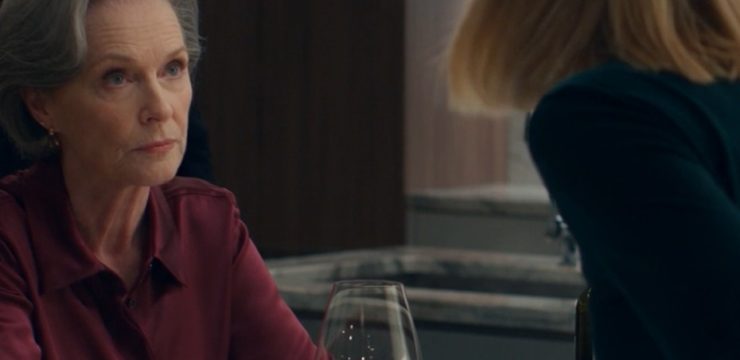
She had spent years learning how to live with a grief that never made complete sense.
The doctors at the private clinic had told her the news with cold, practiced efficiency — her newborn daughter had not survived the night. A winter power outage. Complications. Nothing anyone could have prevented. They handed her paperwork and sympathy in equal measure, and somehow, the paperwork felt more real.
She never got to hold the baby again after those first brief, trembling moments. The child was taken away, and then — silence. A closed door. A life she was expected to move forward from.
But something inside her had always resisted the story. Not loudly. Not in a way she could explain to anyone without sounding desperate or unhinged. It was quieter than that — a hollow space that grief alone couldn’t account for, a feeling that the loss had a shape grief wasn’t supposed to have. She told no one. No one around her would speak of it anyway.
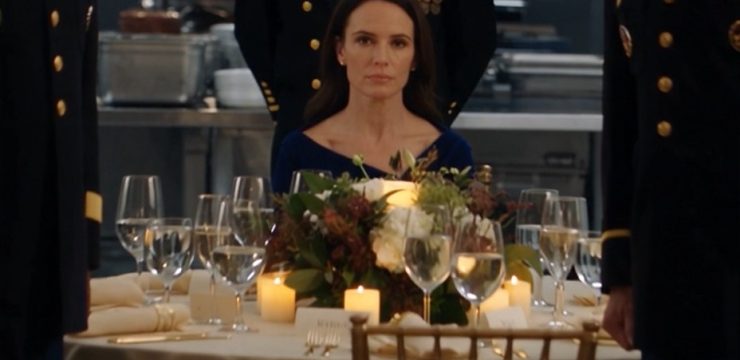
She had built something in the years that followed. A bakery. Small at first, then steady, then something the neighborhood depended on. Warm bread in the mornings. The smell of sugar that followed her home in her clothes. Regulars who knew her name, her order, her habit of standing by the window when the shop was slow.
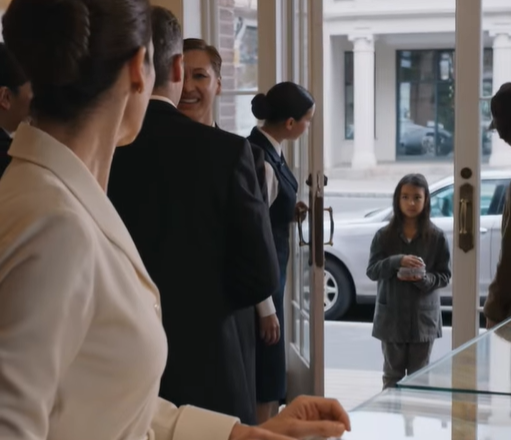
It was an ordinary afternoon when the girl walked in.
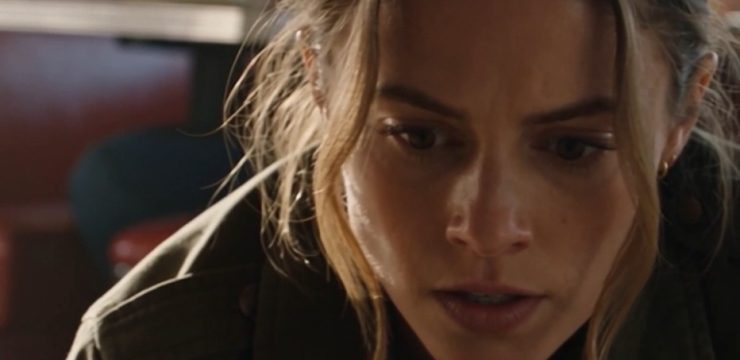
She was small for her age, wearing clothes that had clearly been worn many times over, with eyes that moved carefully around the room the way children do when they are unused to feeling welcome. She wasn’t there to buy anything. That was obvious. She stood near the door for a moment, as though working up the courage to stay.
Then she reached into the front pocket of her jacket and held something out — not toward anyone in particular, just out into the air between them.
It was half of a pendant.
The bakery owner’s hands went still. Her breath caught somewhere in the middle of her chest and didn’t quite make it out.
She knew that pendant. She had clasped it around her daughter’s neck herself, in those brief minutes before everything was taken from her. It was the kind of small, instinctive act a mother does — a way of saying you are mine and I am marking you as loved. She had assumed it was gone. She had assumed everything was gone.
“My mother found me behind the clinic,” the girl said, her voice low and careful. “She said I was wrapped in a towel with a tin beside me.”
The owner couldn’t speak.
“Inside the tin was this. And a photograph. And a note.”
The girl reached into her pocket again and produced a folded piece of paper, worn soft from being handled many times over many years. She held it out, and the owner took it with fingers that were not entirely steady.
She unfolded it slowly.
If anything happens to me, find the woman with the other half. She is your mother.
The owner’s knees nearly gave way. She pressed one hand flat against the counter and stood very still, reading the words again. And again.
The girl had fixed her eyes on the floor.
“My mother — the one who raised me — she wanted to tell you. For a long time, she wanted to.” The girl’s voice was quiet but even, like someone reciting something they had rehearsed so it wouldn’t hurt too much to say. “But she was poor. And she knew you were… not poor. She thought if she came to you, no one would believe her. She thought you were too far away from her world.”
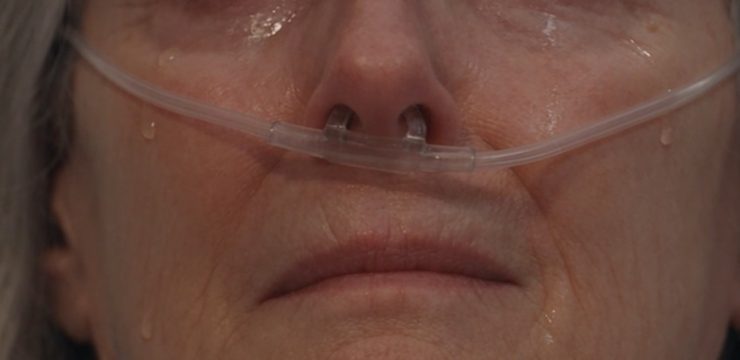
The owner began to cry. Not the composed, dabbing kind of crying that happens in public. The real kind. The kind that comes from somewhere below words.
“I would have believed her,” she said. “I would have believed her the moment she showed me that pendant.”
The girl’s lip trembled just slightly at the edges.
“Then why didn’t you find me?”
The question was not angry. That was almost worse — it was genuinely asking, the way a child asks something they have carried alone for too long, hoping the answer will finally make sense of everything.
The owner looked at her — really looked at her — and felt the full weight of what had been stolen from both of them.
“Because someone made sure I was told you were gone,” she said. “Someone made sure I had no reason to look.”
The girl was quiet for a long moment. Around them, the bakery held its breath — the warm glass cases, the cooling racks, the faint sound of something in the oven still rising.
There are losses in life that announce themselves clearly. You know what you are grieving and you grieve it. And then there are the other kind — the ones where something is taken so cleanly, so deliberately, that you spend years mourning without even knowing exactly what is missing. You only know the shape of the absence. You only know that the story you were told never quite fit the wound.
This woman had carried that kind of loss for years. She had built a life around it. A warm, good, sugar-scented life that anyone from the outside would have called whole.
But a child had walked through her door holding half of something she had never been able to let go of — and suddenly, the wound had a name.
She did not reach for the girl all at once. She let the moment settle. She let the girl stand in the warmth of the bakery and breathe it in.
Then, softly, she asked: “Are you hungry?”
The girl looked up.
And for the first time since she had walked through the door, something in her small face came loose — just slightly, just enough.
She had come looking for nothing but the truth. She had not expected to find the one person who had been missing her all along.