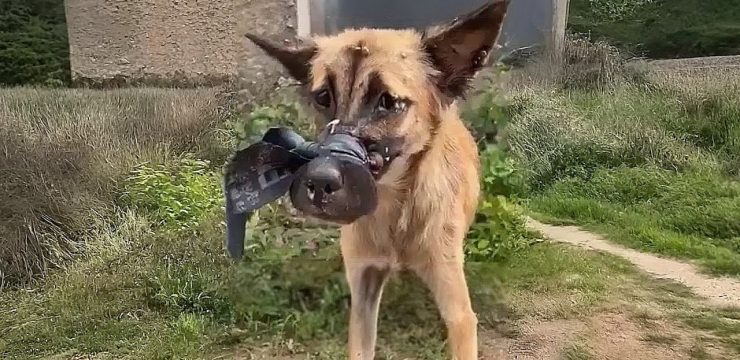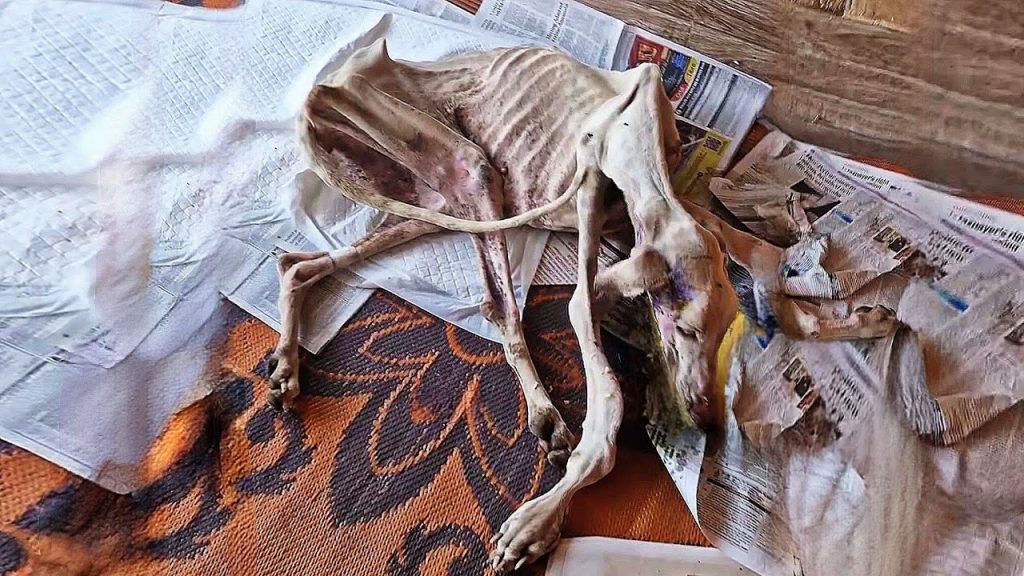
For a dog, the simplest comforts can mean everything: a meal, clean water, a safe place to rest, and someone who cares whether she is all right. Diana had lived without those basic protections. She had wandered through a desolate place where there was no food or water for her, growing weaker as she searched for a way to survive.
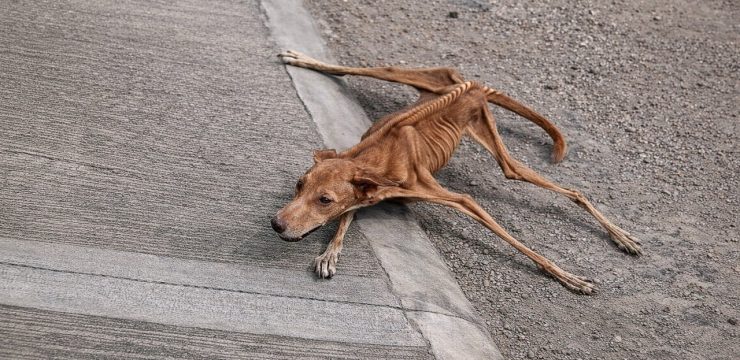
Her struggle had gone on for years. Hunger had taken its toll, and so had the painful experience of being unwanted. Eventually, her legs could no longer support her. She collapsed at the roadside, with no strength left to carry herself any farther.
There was no way to know what she understood about her condition. What was plain to see was that she needed help, and she needed it desperately.
That help came from a kindhearted young woman who found Diana and did not leave her where she lay. She brought a car and rushed the weakened dog to veterinary care. In a life marked by being left behind, this was a different kind of moment: someone had stopped, noticed her suffering, and decided that her life mattered.
But reaching the veterinarians did not bring the reassurance the woman had hoped for.
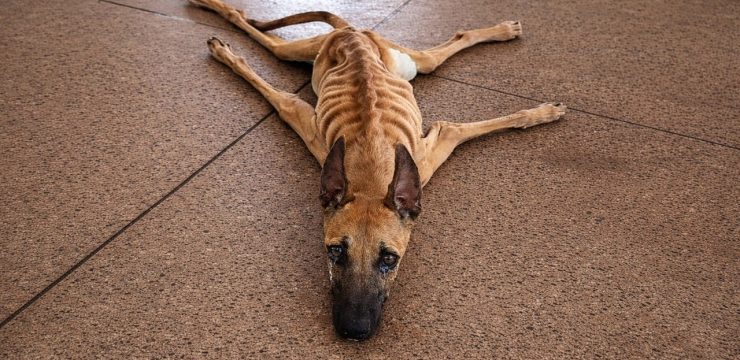
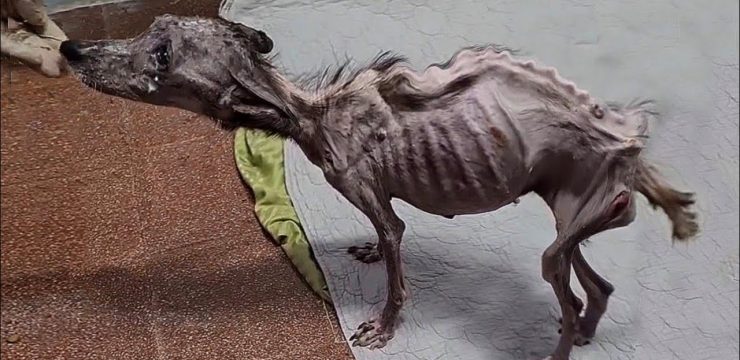
Diana was severely emaciated. Her bones stood out beneath her skin, and her body had been drained by prolonged deprivation. The veterinarians were pessimistic about her chances. They advised the woman to take Diana home and care for her during what they believed could be her final days.
It was a devastating outlook. The woman had acted quickly to get Diana help, only to hear that there might be little hope of recovery. The advice did not come from indifference. It reflected just how serious Diana’s condition had become.
Yet the woman was not prepared to let that prediction be the final word.
She took on the demanding work of caring for Diana, knowing that tenderness alone could not erase the physical effects of such severe neglect. Recovery, if it was possible, would have to begin with the most basic needs. Diana needed nourishment, steady attention, and the chance to regain strength without being left to struggle on her own.
The woman fed her nutritious food by hand, one spoonful at a time. She did it day after day, never treating the small task as too ordinary to matter. For a dog who had known prolonged hunger, being fed patiently was more than a daily routine. It was an expression of care that asked nothing in return.
There were many sleepless nights as the woman stayed beside Diana. No spoonful could undo years of hardship. No night of attention could guarantee that Diana would survive. But together, those efforts gave her a chance that had seemed out of reach when she was found.
Progress did not arrive all at once. At first, the changes were modest, the kind that might seem small to someone who had never watched a frail animal struggle to recover.
Diana began moving her head. Her eyes appeared brighter, less dulled by exhaustion. She showed a growing appetite. These were not signs that every danger had passed, but they were meaningful changes in a dog whose body had once seemed too weak to respond.
Each improvement gave the woman reason to continue. The care remained patient and consistent, and Diana gradually gained weight. Her body was beginning to reflect the nourishment and attention she was receiving. The dog who had been found collapsed at the roadside was no longer standing at exactly the same point in her struggle.
Something else was taking shape alongside her physical recovery. Through all that daily care, a close bond developed between Diana and the woman who had rescued her. Diana became part of the family, no longer simply an abandoned dog whose future had seemed hopeless.
Belonging did not mean that every difficulty was behind her. She still had to face one of the hardest parts of getting better: learning to support her own weight again.
As Diana grew stronger, the woman began helping her practice walking. Her legs remained weak, and the first attempts ended in falls. Those setbacks were a reminder of just how much strength she had lost. Wanting to walk was not the same as being physically able to do it.
Still, they kept trying.
There is something moving about that kind of perseverance. It does not depend on a dramatic transformation or an instant cure. It lives in the willingness to try again after disappointment, to recognize a small gain without pretending the work is finished.
And then Diana managed something that had once seemed impossibly far away. She stood up a little on her own, without assistance.
It was not the same as running freely. It was not proof that her recovery was complete. But for a dog who had collapsed because her legs could no longer hold her, even that brief independence carried enormous meaning.
The future still held uncertainty. The hope was that Diana would continue healing, become fully healthy, and eventually run and play again. For now, the truth was powerful enough: she had regained some strength, and she had a loving home where her progress mattered.
Diana’s journey reminds us that compassion is not always grand or visible. Sometimes it looks like food offered one spoonful at a time, patient care through exhaustion, and the steady refusal to overlook a life in need.
She had once been alone on the roadside, unable to stand. Now, surrounded by care, she was finding her feet again. Her story was not finished, but she no longer had to face it alone.