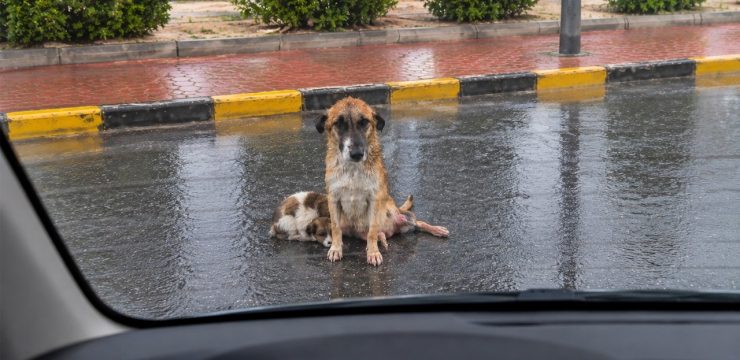
The mother dog would not stop following the car. Whatever waited behind her was important enough that she kept trying to reach a stranger, even as the vehicle moved away. Only when the driver stopped did the reason for her desperate pursuit begin to emerge.
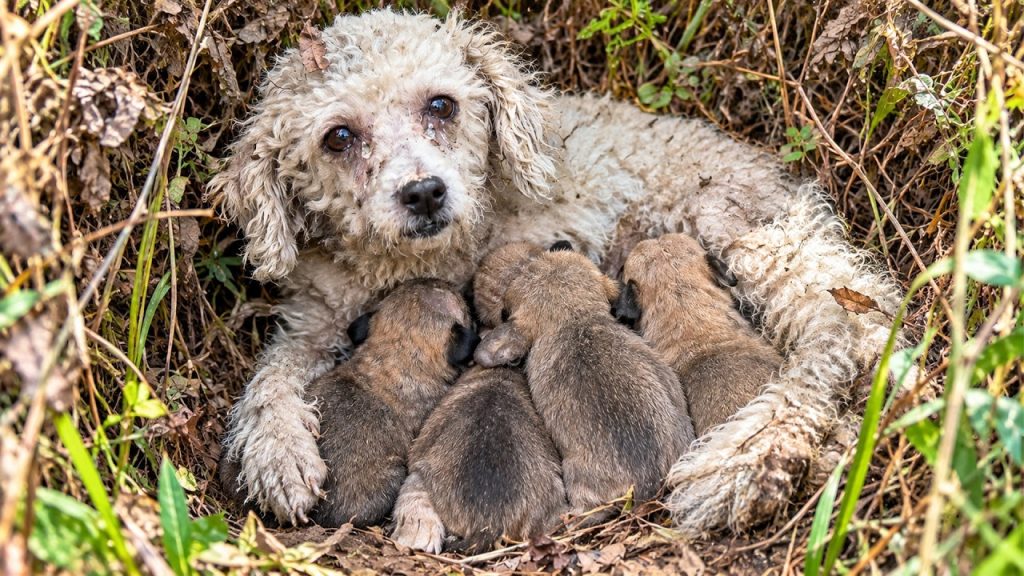
Her pursuit had a purpose beyond herself. Somewhere out of sight, her newborn puppies were waiting, and she seemed determined to bring help to them.
There is something especially moving about a mother who has so little power over her circumstances and yet refuses to stop trying. A dog cannot explain where her babies are hidden or describe what they need. She can only act, hoping that someone will recognize the meaning behind her behavior.
That was the choice facing this mother on the road. The person in the car could have continued onward without understanding why she was following. Instead, the driver noticed that something about her actions was unusual enough to deserve attention.
The car stopped.
For the mother dog, that small decision changed everything. The stranger was no longer moving away, and she had an opportunity to show where she wanted them to go. She did not flee when the person approached. Rather than disappearing, she began to lead the rescuer away from the road and toward a more secluded place.
It was the kind of moment that asks a person to pay attention without knowing what will come next. Following an unfamiliar dog offers no explanation in advance. There is only the animal’s insistence, the possibility that something is wrong, and the hope that stopping to help will make a difference.
The rescuer followed.
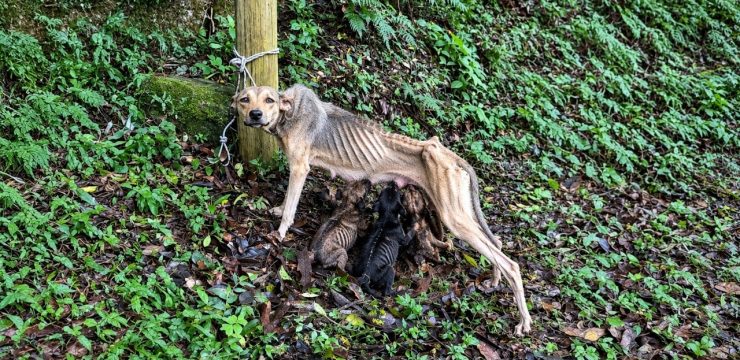
The mother led the way to the hidden place where her puppies were hidden. Until then, the little ones had been out of view. The dog who had seemed so strangely persistent beside the car was now standing at the center of a much larger story: she had babies who depended on her.
They were newborn puppies, small lives unable to seek help for themselves. Whatever conditions surrounded their hiding place, the simple fact of their vulnerability was enough to make the discovery urgent. They could not approach a passing vehicle or lead a stranger to safety. Their mother had done what they could not.
She never needed words to make her purpose clear. The distance she had followed the car, her refusal to run away when it stopped, and the path she showed the rescuer formed their own quiet message. Her puppies were there. She wanted someone to find them.
A rescue is sometimes imagined as a dramatic intervention, full of noise and obvious danger. This one began with a choice to take an animal seriously. The turning point was not a grand gesture. It was a person recognizing that a mother dog might have a reason for behaving in a way that seemed unusual.
Now the rescuer had found that reason. The mother and her babies needed to be brought somewhere safe together. Helping the puppies alone would not have told the whole story, because the dog who led the stranger to them needed safety too.
The rescuer approached with care, offering reassurance to the mother and gently gathering the puppies. These were vulnerable little animals, and the moment called for tenderness rather than haste. The mother who had brought help to their hiding place was included in the rescue, not left behind after her babies had been found.
Together, the mother and her puppies were taken to safety.
The change was both simple and profound. At the beginning of the encounter, the mother could only chase a passing car and hope she would be noticed. At its end, someone had followed her to her babies and helped the entire family reach safety. Her persistence had found an answer.
It is easy to overlook how much depended on that brief encounter on the road. A person traveling past could not see the puppies. The puppies could not make themselves known. The one connection between those two worlds was a mother who refused to give up trying to be noticed.
Her behavior did not come with a guarantee that anyone would understand. Animals cannot choose the words that might persuade us to pause. Their needs are often communicated through movement, persistence, and small changes in behavior that are easy to dismiss. This time, those signs reached someone willing to respond.
The rescuer’s kindness was practical. It meant stopping the car, following where the dog led, finding the puppies, and making sure the mother came along. Each action answered a need that the mother could not meet by herself. None required knowing her history or pretending to understand every feeling she had.
And that is part of what makes the encounter so tender. The stranger did not have to know where the dog came from, how she had reached that hiding place, or what might happen next. The immediate responsibility was clear once the puppies were found: get the family somewhere safer.
For people who have loved a dog, it may be difficult to imagine passing such a determined mother without wondering what she wanted. Yet her story is also a reminder that compassion often begins before we know the answer. Someone stopped because an animal’s actions suggested that help might be needed.
The mother did the rest of the guiding. She brought the rescuer to the babies waiting beyond the road. And when the puppies were finally gathered, the rescue honored the bond that had set everything in motion. They left together.
There would be more to their lives beyond this rescue, but this chapter had its own hopeful ending. A determined mother had been heard. Her puppies had been found. And because one person chose to follow, all of them finally reached safety together.
Sometimes a second chance begins not with a promise, but with a stopped car and the willingness to listen.