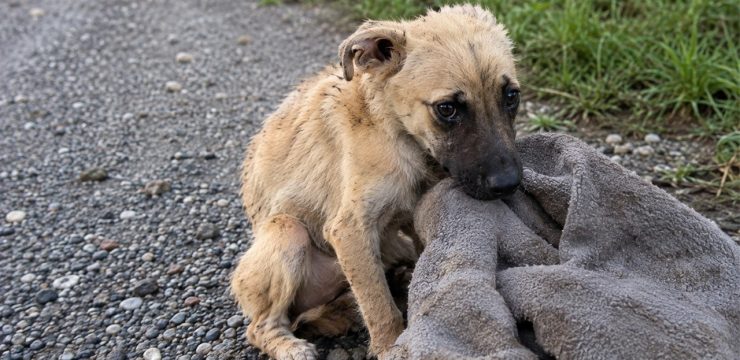
The little puppy could barely hold herself upright. Left inside a cardboard box beside the road, she trembled and cried, frightened and exhausted. Even after someone stopped to rescue her, her strength failed. She collapsed when she was brought into the vehicle, as though her small body had nothing left to give.
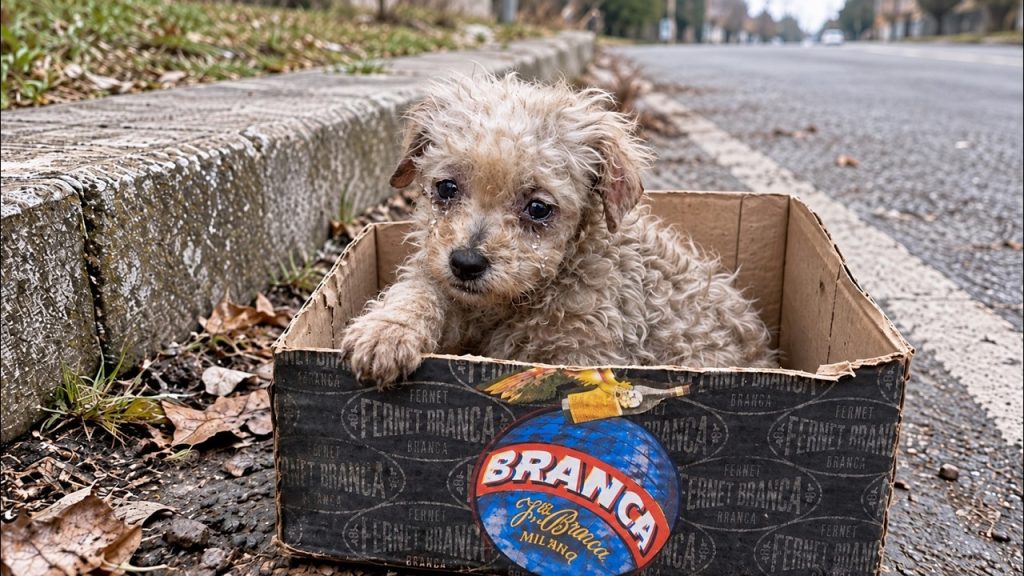
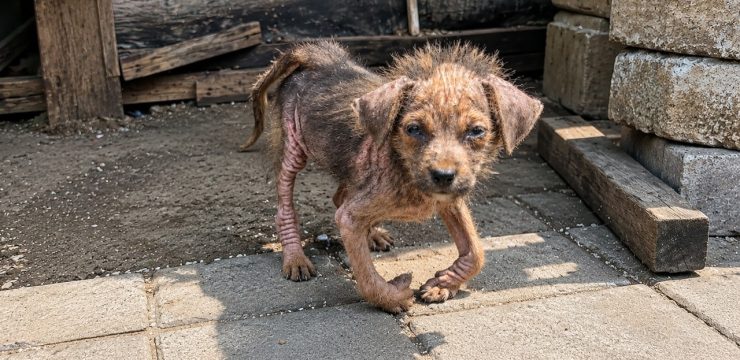
It was early morning when the puppy was discovered. A cardboard box had been her only shelter, and there was no familiar person beside her to offer comfort. Her condition made the abandonment especially painful to witness. She was weak, trembling constantly, and clearly overwhelmed by fear. Her skin also showed troubling signs of serious inflammation. She needed much more than a ride away from the roadside. She needed help, and she needed it quickly.
The rescuer took her straight to a veterinarian. Getting her away from the box was an important beginning, but it did not erase what she was experiencing. Surrounded by unfamiliar people and the uncertainty of a medical examination, the puppy was terrified. She tried to hide her head, withdrawing from the attention around her. Even while sleeping, she whimpered, unable to settle into the peaceful rest a young dog so badly needed.
For a puppy who had just been abandoned, even kindness seemed difficult to understand. The hands reaching toward her were there to help, yet she could not immediately recognize their intentions. The rescuer responded with gentle petting and reassurance rather than expecting instant trust. Gradually, the puppy began to calm. This suggested she was beginning to experience something she had been missing: the comfort of being treated with care.
The veterinarian’s findings made clear why she had been suffering. She was dehydrated and had a skin infection. Beneath her thick fur, numerous fleas and ticks had settled close to her skin. Her condition called for careful attention, and there was no reason to rush her through the process simply because she had finally reached safety.
The next part of her care was both practical and deeply tender. The puppy was washed with warm water and a specially formulated shampoo to treat the parasites. Her coat was so dirty that one bath was not enough. The rescuer carefully washed her a second time, making sure the cleaning was thorough while handling her with the gentleness her fragile condition required.
For this puppy, it was part of a much larger change. She had been found crying in a box, her skin irritated and her body weakened. Now someone was taking the time to clean her, protect her warmth, and attend to the discomfort she could not explain. Every careful movement carried the same quiet message: she was no longer being left to manage alone.
After the baths, she was dried and kept warm. Slowly, a different expression began to appear in her eyes. The fear that had dominated her first moments of rescue started to give way to curiosity. With that curiosity came the earliest signs of trust. Trust grew from the patient, repeated experience of being handled kindly when she was most vulnerable.
The rescuer gave her a name: Paula. It was chosen as a name of hope, a way of marking the new chapter opening before her. Until then, she had been a frightened puppy in a discarded box, an animal whose suffering might easily have gone unnoticed. Now she was Paula, someone who would be cared for and remembered. A name could not heal her skin or restore her strength on its own, but it reflected the commitment behind the care she was receiving.
As Paula became more stable, she was brought to the rescue shelter. There, another unfamiliar experience awaited her. Other dogs approached with curiosity, eager to investigate the newcomer. Their interest soon took on the warmth of a welcome. Paula was no longer the isolated little puppy on the roadside. She was surrounded by other dogs in a place where she had a chance to feel included.
The shelter also offered her something simple: a soft bed. When Paula was placed on it, she curled herself into the comfort. It was a quiet scene, but after everything she had endured, it carried enormous meaning. The puppy who had been left in a cardboard box could finally rest somewhere warm and gentle. Her curled body seemed to express how precious that comfort had become, as if she wanted to hold on to it for as long as possible.
Paula had arrived weak, dehydrated, frightened, and burdened by painful skin problems and parasites. The veterinary examination identified what was wrong. Attentive care addressed her immediate needs. Patient reassurance helped her discover that human contact did not always have to bring fear. Her growing curiosity was a reminder that emotional healing can begin alongside physical recovery.
When Paula returned for her follow-up examination, the news was everything her caregivers could have hoped for. Her health had fully recovered. The puppy who once collapsed from exhaustion had come through the ordeal that began beside the road. The change was profound, even though it had been built from ordinary acts of care: seeking medical help, cleaning her thoroughly, keeping her warm, and giving her a safe place to rest.
No one ever discovered who had abandoned Paula in that roadside box. That unanswered question remained part of her story, but it no longer defined the life ahead of her. She now had a loving family around her and the promise of happier days. What mattered most was not the person who had walked away, but the people who had chosen to stay.
Paula’s new beginning offers a gentle reminder of what compassion can accomplish. A frightened puppy did not need grand promises. She needed someone to notice, someone to act, and someone willing to care for her while she learned to feel safe. In that care, a little life once discarded found room for hope again.