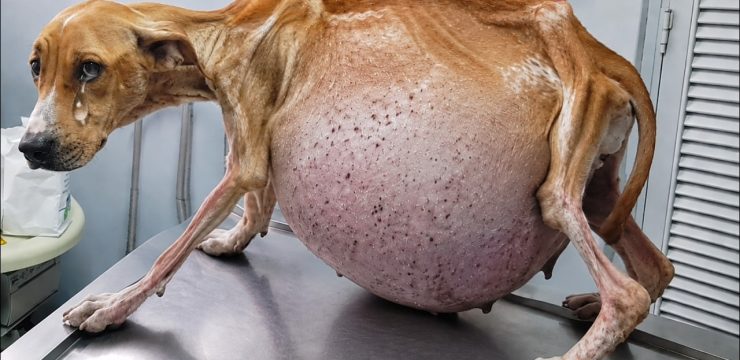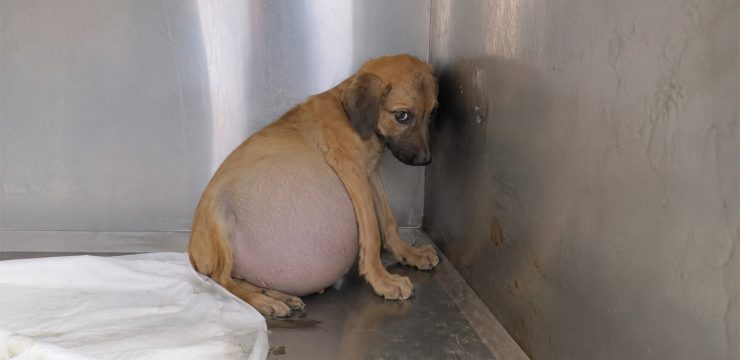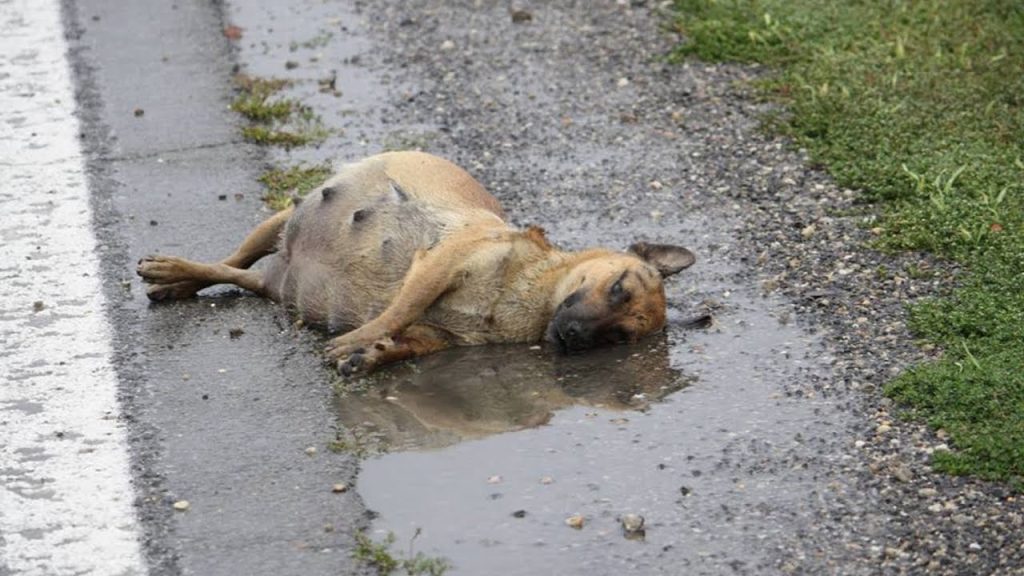
The first sign that Lisa needed help was a picture that spread widely, showing a pregnant stray dog who had been severely beaten and abandoned. Rescuers hurried to the reported location, determined to reach her. But Lisa was nowhere to be found. They could not bring her to safety. The search could not end simply because she had disappeared.
Volunteers kept looking. They eventually spotted her walking along a highway, but the dog they found was no longer pregnant. Lisa had given birth, and none of her puppies had survived. It was a devastating discovery. She had endured abuse during pregnancy, and now the babies she had carried were gone. No one could undo that loss. The only thing the rescuers could do was try to protect the mother who remained.
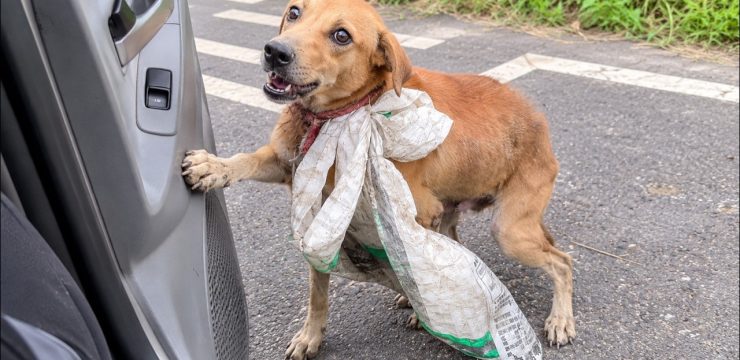
Even reaching her would take patience. Lisa was terrified of humans and refused to come near the people trying to help her. Her fear was understandable. A person approaching with good intentions could still seem threatening to an animal who had been hurt. Her rescuers recognized that urgency did not give them permission to ignore her distress.
They put food on the ground, then moved far enough away for Lisa to feel safe approaching it. Only with that distance did she begin to eat. What might have looked like a small moment was an important one. Hunger brought her toward the food, but fear still controlled how close anyone could come. The rescuers had to respect those limits.
Slowly, they moved closer. When they were finally near enough, they secured her by a hind leg and completed the rescue. It was a difficult moment for a dog already afraid of human contact, but it meant Lisa would no longer have to face her injuries alone beside the highway. The struggle to reach her was over. The much harder work of caring for her was beginning.
Lisa’s condition was deeply concerning. She was severely underweight, dehydrated, and anemic. She also had a prolapsed rectum, a serious problem requiring medical attention. Her physical state reflected the terrible mistreatment she had endured during pregnancy. Alongside these medical concerns, she appeared profoundly depressed after losing her litter. She needed more than comfort, even though gentle treatment mattered enormously. Her body required time and careful care before further treatment could be considered.
One immediate challenge was getting enough fluid into her. Lisa refused to drink water, even though dehydration was already one of her problems. The rescuers chose to administer an oral rehydration solution with a syringe, rather than add the pain and stress of an intravenous line at that point. It was not easy. Lisa initially resisted the syringe, and her caregivers had to keep trying patiently.
For a frightened dog, accepting help can be its own kind of struggle, even when her needs were plain to see. Her caregivers knew that she desperately needed fluids, but Lisa could not fully understand their intentions in the way a person might. They were asking her to tolerate unfamiliar handling after a period of cruelty. Rather than expect instant cooperation, they continued giving the rehydration solution carefully, working through her resistance without losing sight of her fear.
Nothing erased what Lisa had endured. Her condition was serious, her puppies were gone, and she still had medical needs ahead of her. Progress would have to be measured in ordinary things that healthy dogs are often able to do without a second thought. Drinking enough. Eating independently. Having the strength to move. Each was important because her recovery depended on what her body could manage next.
Then came a welcome change. Lisa began eating on her own. For a dog who had been so weak and dehydrated, that simple action mattered. Eating independently was a significant step toward rebuilding her strength and preparing her physically for surgery that still lay ahead. It was not a promise that every problem had been solved. It was evidence that the care she was receiving was helping her take a necessary step forward.
Lisa also began going for walks. The same dog who had once been found wandering along a highway in such distress was now learning to experience a better kind of daily life. Walking did not erase her fear or loss. But it showed that her days could begin to include something beyond the immediate struggle to survive.
Her story remains unfinished in an important way. The rescuers were working to strengthen Lisa for future surgery; there was no confirmed final medical outcome or adoption to celebrate. It would be unfair to turn her early progress into a recovery she had not yet completed. What can be celebrated is the change already visible: a dog who had been abandoned and abused was now receiving food, hydration, attention, and the chance for continued care.
Lisa’s suffering also raises a painful question about how people treat animals who cannot defend themselves. Sick and frightened strays need kindness, not stones thrown at them or more reasons to fear human hands. Cruelty can leave consequences that go far beyond the moment it occurs. In Lisa’s case, those consequences were bound up with injury, weakness, and the loss of her puppies.
No one can give Lisa back what she lost. Yet the volunteers who continued searching refused to let her disappear into the roadside landscape. They found her, respected her fear, and stayed with the difficult work of helping her regain strength. Her first steps toward healing were modest, but they were real. Lisa deserved safety long before anyone came looking for her. She deserves it still.