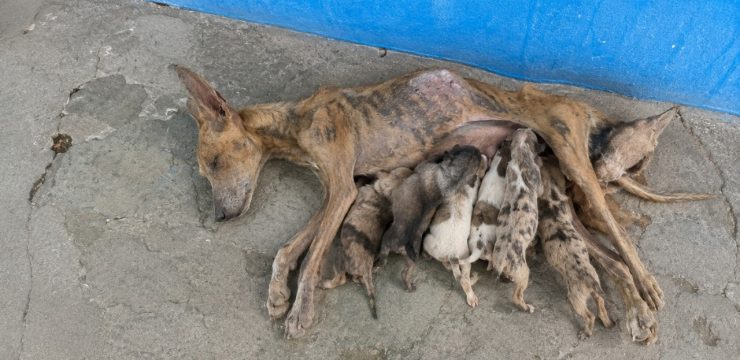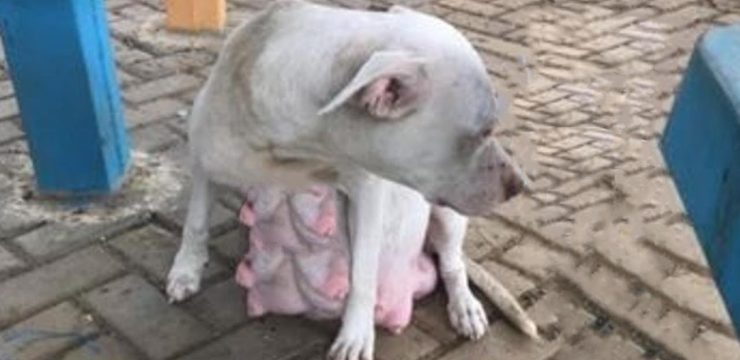
Local residents had reported dogs struggling through severe weather, and a rescue team went looking for them. The search led to an old shelter near an abandoned workshop, where a small family had taken refuge from the rain. There were only three dogs: a mother and her two young puppies. Their hiding place offered little protection from the cold and wet conditions outside.
The puppies were conscious, but their soaked bodies shook. Their mother was in far worse shape. She lay almost motionless and suffered seizures. She could not walk, let alone care for the little ones depending on her. For an animal already exhausted and underfed, the storm made an urgent problem even more frightening.
The rescuer approached wearing rain protection, aware that every moment spent in the damp surroundings carried another risk. Getting vulnerable animals out of wet conditions was essential, especially for puppies whose small bodies could lose heat quickly. The two youngsters were carefully placed in a secure crate first. They were protected while attention turned to their mother.
A preliminary examination suggested that she had gone without adequate food for too long. She was completely drained, and her inability to nurse and tend to her puppies was painfully clear. The rescuer prepared emergency medical supplies and administered an injection intended to support her energy before transporting the family for veterinary treatment. It was a first step, not a solution. She needed a veterinarian to determine why her body was failing.
At the clinic, the rescue team explained where the dogs had been found and how seriously the mother had deteriorated. Veterinary staff immediately began warming all three with a heat lamp. Warmth itself mattered after so much exposure to rain, and the puppies soon responded. As their bodies grew more comfortable, they became lively enough to explore their surroundings.
Their mother did not improve as quickly. Her temperature remained dangerously low, so staff continued warming and watching her. The contrast was striking: two curious little puppies were beginning to move around, while the dog who had kept them alive still struggled to recover. She had given them what she could, even as her own strength was disappearing.
The veterinarian began intravenous fluids and calcium treatment. The cause of the seizures was then explained: the demands of producing milk had left the mother with a severe calcium deficiency, a condition known as hypocalcemia. Nursing puppies can place enormous demands on a mother’s body, and in her case those demands had become a serious medical crisis.
There was another complication. According to the veterinarian, this condition often comes with a high body temperature, yet this mother’s temperature had fallen far below normal. That unusual combination made treatment more difficult. Fortunately, the urgent calcium treatment worked in time to bring her through the immediate danger.
But her recovery required more than simply stopping the seizures. The veterinarian instructed the team to separate the puppies from their mother so continued nursing would not drain her calcium and energy again. It was a difficult kind of care to consider: keeping a family safe meant changing how the mother could provide for her babies. For now, protecting her health was also a way of protecting theirs.
When the rescue team returned to the clinic the following day, the change was remarkable. The mother who had been unable to stand in the rain could now walk on her own. She was responsive, alert, and noticeably stronger. Each movement was evidence that the emergency treatment and careful monitoring had given her a chance to recover.
The puppies were doing well, too. Instead of relying entirely on their mother’s milk, they were being cared for separately, learning to eat food and drink puppy formula. Their needs were still being met, while their mother could rebuild her strength without the same physical demands. The small family was safe, even though their care now followed a different routine.
With that pressure eased, the mother began showing a more playful, friendly side around the people caring for her. It was a welcome contrast to the helpless animal lying in the rain. She was no longer defined only by seizures, exhaustion, or the inability to move. Her personality had room to appear as her health returned.
Once veterinary checks confirmed that the three dogs were stable, the team also attended to ordinary needs. The mother’s nails were trimmed as part of keeping her clean and comfortable. Bathing, however, was postponed until she was stronger. After such a serious episode, even routine grooming could wait. Her recovery remained the priority.
The rescue team later confirmed that the mother was stable and had not experienced another seizure. That was meaningful progress, but there were still unanswered questions about the family’s future. The team was looking for anyone in the area who might have owned the dogs. If no previous owner could be found, they hoped caring people would offer them homes.
Nothing about that future was settled yet. There was no confirmed adoption to celebrate, no promise that the family had found a permanent place to belong. What they did have was safety, veterinary attention, food, warmth, and people determined to give them a chance.
In the rain, the mother had been too weak to rise, while trembling puppies waited beside her. Now she could walk again, and her puppies could grow without exhausting her further. Their rescue was a reminder that compassion is sometimes as practical as a dry crate, a warm lamp, and the right medical care. A second chance begins when someone notices a life in trouble and chooses to help.