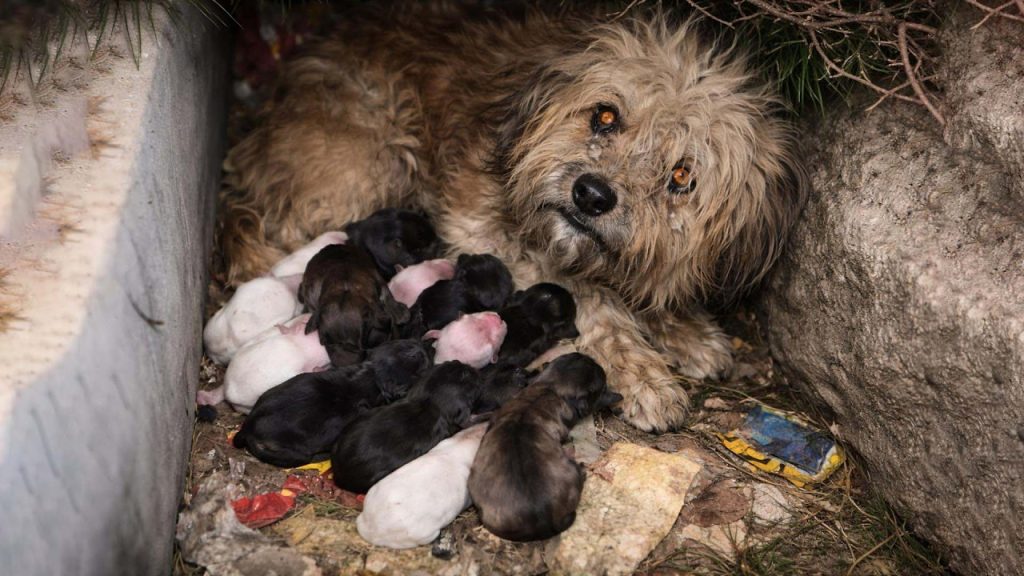
The person who found her could see how frightened she was. She snapped repeatedly, warning anyone who approached to stay back. Yet beneath that defensive behavior was exhaustion. When she stopped and watched, her expression seemed tired beyond words.
Her well-kept coat suggested she might once have known a home. Nobody could say how she ended up outside, or what had happened before that night. What was certain was that she had given birth in the cold, with eleven vulnerable babies depending on her.
Taking the puppies away from their mother was not an option. But getting close enough to move her safely proved difficult. The rescuer found a small foam box and made a temporary nest, hoping to give the tiny family some protection from the freezing air.
That kindness was only the beginning.
The rescuer eventually carried the nest and puppies into a building. Their mother resisted the stairwell. She did not know this place or the person trying to help her. Then she saw her babies being taken upstairs. Her resistance gave way to soft whimpers, and she followed them.
Even indoors, fear did not disappear. She hid inside a shoe rack, choosing a cramped space over the unfamiliar openness around her. The rescuer spent the night trying to bring her out of the cold stairwell and into a safe room. At last, she could be lifted and carried inside.
She was still terrified. Her body carried a strong odor, and her belly appeared swollen. She was worn down by life outdoors and the demands of giving birth. Still, for the first time since being discovered, the mother and all eleven puppies were together under a roof.
Safety, however, did not mean that every danger had passed.
The smallest puppy soon became seriously ill. At an age when the babies could do little more than seek warmth and milk, weakness was especially frightening. Their caregiver carefully provided glucose, electrolytes, and puppy formula to support the little one’s fragile body.
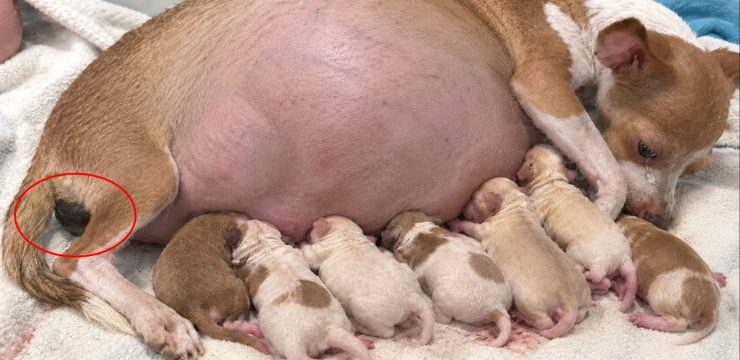
Meanwhile, the mother’s own condition made her burden seem almost impossible. She weighed only about ten pounds. Somehow, that small body had carried eleven puppies through pregnancy and birth, and now they looked to her for nourishment and comfort.
She needed care as much as they did.
In the beginning, stepping outside for a walk was overwhelming. She lowered herself to the ground and refused to move. The world outdoors, once a place of survival, still seemed to hold more fear than freedom. Her rescuer did not force a sudden transformation. The following day, she managed to walk farther.
It was a small change, but small changes mattered.
There were moments when she still seemed torn between the safety of her new surroundings and the habits that had helped her survive on the street. Trust did not arrive simply because a door had opened. It had to grow through patient, ordinary care.
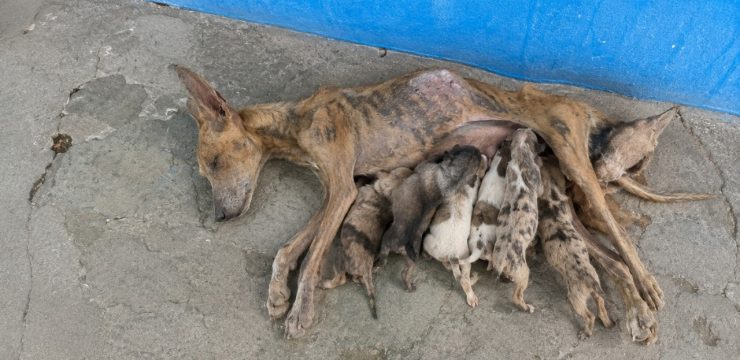
There were also physical reminders of a difficult past. Deep scars marked her body. Injuries had damaged her skin so severely that fur would never regrow there. The scars could not explain everything she had experienced, but they made clear that hardship had left lasting traces.
Then came a loss no amount of kindness could undo.
Of the eleven puppies born on that cold patch of grass, three of the weakest died during their first three days of life. Their brief lives mattered. The rescuer had worked to protect a family of twelve, and now there were nine remaining.
The eight surviving puppies continued to grow. Day by day, their little bodies grew stronger, and the fragile newborns began to look more like the lively dogs they were becoming. Their mother’s long struggle was not over, but the family no longer had to face hunger and winter weather alone.
Nothing about their care had been planned. The person who found them had not intended to raise dogs and was using whatever supplies were available. Even the small cage in their living space was an old birdcage, with food bowls set a little high. It was an imperfect arrangement born from an unexpected rescue, not a measure of how much the family mattered.
What mattered most was the willingness to keep showing up for them.
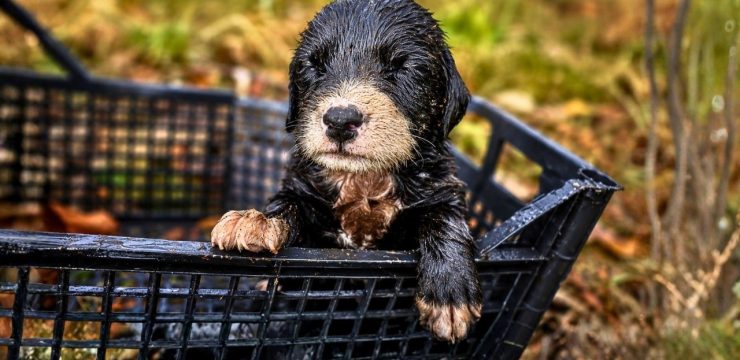
As the weeks passed, the surviving puppies discovered a world beyond the desperate beginning they had known. They learned to move about, play together, and wag their tails. Where there had once been trembling bodies on cold grass, there were now eight growing puppies with the energy to explore their surroundings.
After more than a month, they were ready to begin finding loving families. That was an important distinction: their next homes still lay ahead, but they had reached a point their first night had made painfully uncertain.
Their mother changed, too. The dog who had bitten at shoes to defend her babies could finally rest without having to stand guard against the cold. She was happier, much safer, and finally able to settle knowing her surviving puppies were protected.
She had not forgotten every fear, and the marks on her body would remain. But her days no longer belonged only to survival.
A stranger had stopped for a frightened dog who seemed determined to drive everyone away. Behind that fear were eleven newborn lives, a mother doing everything she could, and a family that needed someone to notice. Three babies were lost, and that sorrow remained part of their story. Eight others grew strong enough to look toward homes of their own.
For their mother, the greatest gift was simple: at last, she could rest.