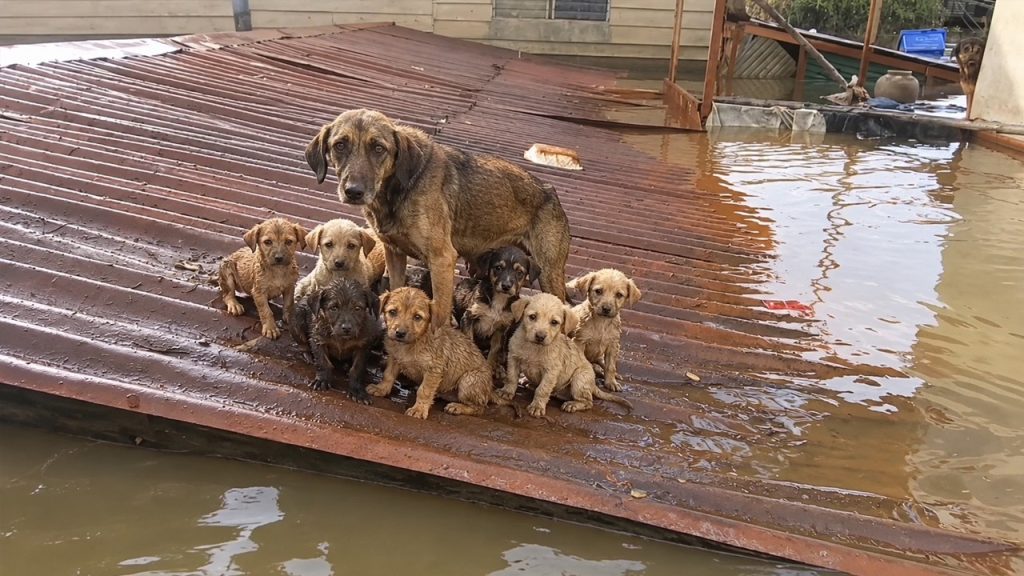
When volunteers reached the stranded animals, they approached gently, calling to them in reassuring voices. The dogs had escaped through a narrow opening because the house’s main door was closed. Climbing onto the roof had kept them above the rising water, but it had not brought them out of harm’s way.
Rain had continued for five or six days. The dogs were soaked, cold, and beginning to show signs of weakness. Below them, fast moving floodwater had overwhelmed approximately thirty to forty households in the surrounding neighborhood. Getting anyone to safety meant working against conditions that remained dangerous for families and animals alike. There was no simple way out.
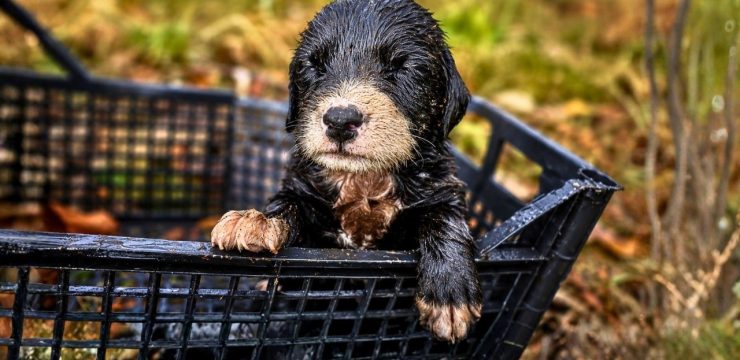
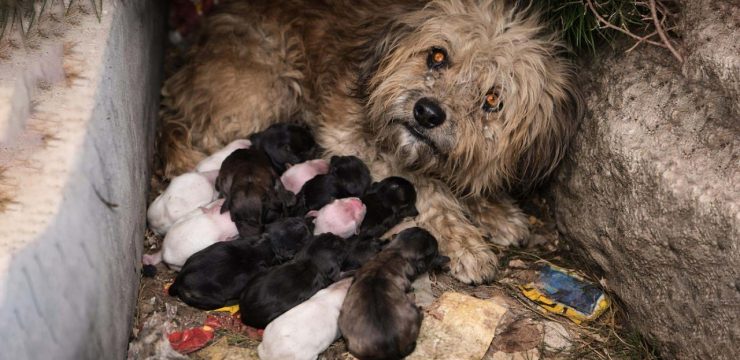
For the newborn puppies, the exposure was especially troubling. They had entered the world only about a week earlier. Instead of a sheltered place to grow, they were facing cold rain and a flooded neighborhood. Their small size made the volunteers’ decision urgent. Remaining on the roof was not a safe long term option.
Yet the first task was not to rush the animals. It was to help them feel secure enough to accept assistance. The volunteers brought out food and drinking water, offering both to the hungry dogs where they waited. One rescuer gently stroked a dog’s head. In that simple movement was a message the frightened animals could recognize without understanding a single word.
These were local volunteers who cared deeply about dogs and cats in Ubon. They had come into a neighborhood where the flood had left people and animals struggling, and they knew the need was larger than one rooftop. Still, the family in front of them needed immediate attention. The puppies could not wait for the weather to improve.
The rescue raft had limited room. The team decided to take five puppies first and return for the others. It was a practical choice made under difficult circumstances, not a decision to forget those who remained. Every place on the raft mattered, and moving the smallest animals toward dry ground offered them a chance to escape the cold.
As the volunteers worked, they noticed another dog trembling violently. The animal appeared overcome by cold and exhaustion. That sight made the situation even more serious. The roof might have been above the flood, but it offered little comfort to creatures already weakened by days of wet weather.
The mother dog’s response was one of the most touching moments of the rescue. As her puppies were placed on the raft, she greeted the volunteers eagerly. She did not turn on the strangers handling her little ones. Instead, she remained unusually friendly, eager to be near the people who were helping her family.
It was impossible to know everything she understood. What the volunteers could see was a mother responding warmly as her babies were moved toward safety. After so much rain and uncertainty, their careful hands offered something the animals had desperately needed: a way out.
Then came the journey across the flooded area. The volunteers concentrated on keeping the hungry puppies secure aboard the raft. They worked together, attentive to the animals and the difficult conditions around them. Dry land, with clean drinking water waiting there, was the goal they described as they reassured their frightened passengers.
Even during that crossing, the team noticed other animals in need. They distributed food to hungry dogs and cats encountered along their route. Each stop was a reminder that the flooding had disrupted far more than a single household. Behind the rescue of five puppies was a much larger struggle to reach animals scattered throughout the submerged community.
The volunteers also tried to understand where the mother dog belonged. She seemed familiar with the neighborhood, raising the possibility that she lived with a local family. But that remained only a possibility. In the middle of a flood, guessing about her past mattered less than responding to the immediate needs of her puppies.
Kang, the rescue leader, was part of the effort. His team had more to manage than the animals already aboard the raft. They needed transportation, equipment, food, and coordination so they could continue reaching flooded locations. Rescue work is often remembered through a single tender moment, but it depends just as much on people organizing what comes next.
Later, the volunteers divided pet food into supplies for other affected areas. The local Department of Livestock Development had provided food assistance, allowing the group to support more animals than they could have managed with kindness alone. The donated supplies were another essential part of the response to the disaster.
There were also ordinary arrangements to make. The volunteers discussed transportation for the morning, retrieving borrowed rescue cages, and contacting a team member named Golf to receive and safeguard equipment. These conversations were less dramatic than carrying puppies onto a raft, but they revealed the continuing responsibility that follows any emergency rescue.
Five vulnerable puppies had been placed on the rescue raft, but others still needed help. The team intended to return for the animals it could not take on that first trip. Where the mother and her puppies eventually went, and whether every stranded animal was brought ashore, was not established. The rescue effort was still unfolding, with volunteers preparing supplies and equipment for more trips through the flooded community.
In a disaster, compassion does not always arrive as one grand act. Sometimes it is food offered to a frightened dog, a gentle hand on a wet head, or a little space made on a crowded raft. For those puppies on that flooded roof, each small act mattered. And for the animals still waiting across Ubon, the rescuers’ determination to keep going mattered too.