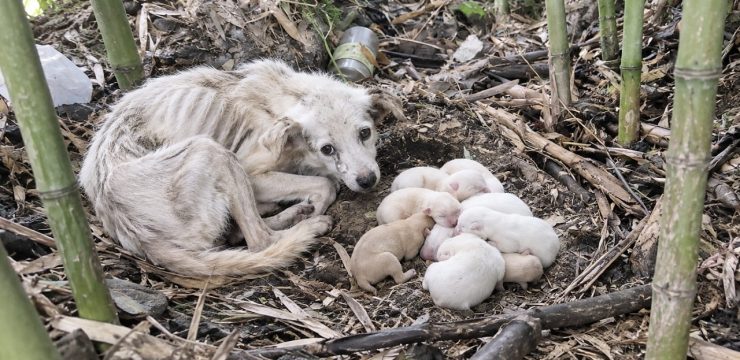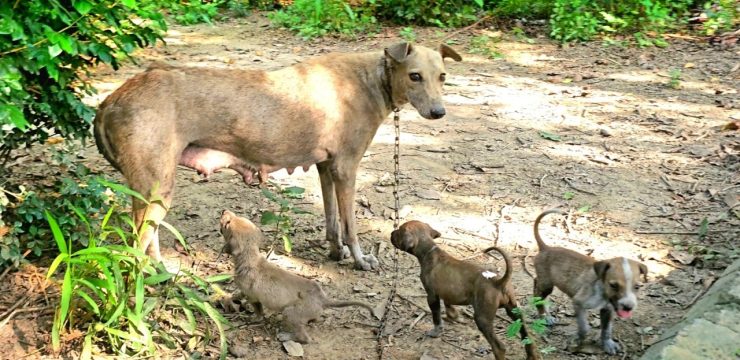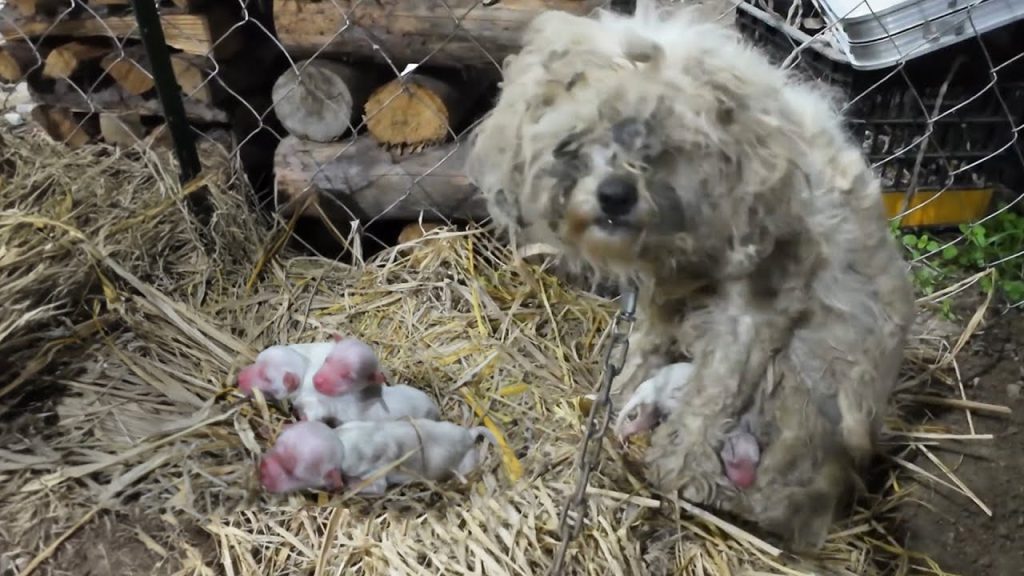
A man cleaning the building heard their cries. The mother could move only about six feet from where she was tied. She had no warm room or bedding for nursing. What should have been a protected beginning for her litter had become a struggle against conditions she could not escape.
The temperature fell below freezing at night. Four newborn puppies shivered beside a mother unable to take them somewhere safer. Leaving them there was dangerous.
He found a cardboard box and lined it with straw, sheltering the puppies. Approaching was difficult. The mother was anxious and protective, unsure whether the stranger intended harm. Her fear made sense: she had four defenseless puppies beside her and no way to retreat very far.
He worked patiently around her fear. Without expecting immediate trust, he provided what they needed. He lit a wood fire nearby to warm the space and brought the mother water. He trimmed matted fur around her eyes so she could see comfortably. It was a simple kindness, but the neglected condition of her coat made even that attention meaningful.
Even these small tasks mattered. The mother had tended four babies while barely able to move. Now someone cared for her, too. The warehouse finally offered relief from the cold.
He wanted to find more supplies, but the village shops were closed. He could not leave the vulnerable puppies to chance. He stayed awake through the night, monitoring the puppies.
By the following day, the mother still refused to leave the warehouse. Her puppies were there. The man adapted his plans rather than forcing her away. He brought a larger foam box for better shelter. Her reluctance to move did not mean that she had to go without protection.
He also prepared warm porridge and eggs for the exhausted mother, hoping the nourishment would support her milk production. He bottle-fed the puppies formula while she watched.
There was tenderness in this arrangement. The mother had carried the responsibility alone, restrained in a cold building. Now someone helped keep her babies nourished and warm. Every feeding was another act of care.
Yet kindness could not erase all the dangers they faced. Veterinary resources were limited in the rural area, and the weather remained unforgiving. The newborns were vulnerable, and their mother’s first litter may have complicated their care.
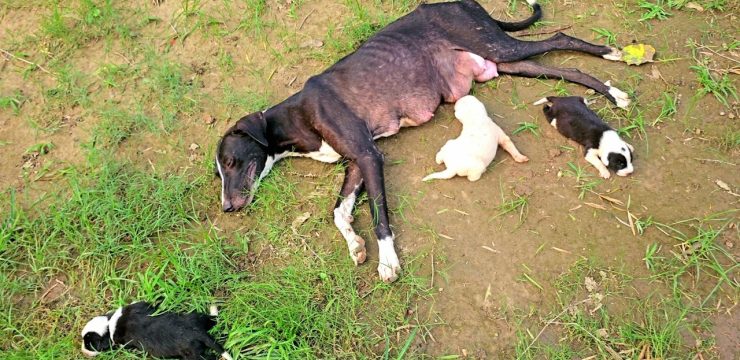
One puppy died from the cold. The loss was devastating after so much effort. Still, the struggle continued. Soon, two more puppies were gone. The shelter and extra feedings had not been enough to save them, a painful reminder of how fragile newborn lives can be.
Of the four babies he had discovered, only one survived. The hope he had felt while preparing their first warm bed now rested on that single tiny life.
The mother endured the cold and the loss of three puppies. Nothing could undo those losses. The man could only protect the life that remained and continue supporting the mother who had suffered so much.
He brought the surviving puppy into his own home, to keep it warm and monitored. Feeding became a demanding routine. Every two hours, he woke to give the little one formula, despite his exhaustion. That schedule left little room for uninterrupted sleep, but consistent attention was essential for a puppy still unable to care for itself.
They were quiet acts of responsibility, repeated again and again. The puppy depended on his warmth and nourishment. Eventually, the little survivor reached an important milestone: its eyes opened. After the worry and the losses, this ordinary step in a puppy’s development carried an extraordinary weight for the person who had kept feeding it.
He had not forgotten the mother. She needed more than temporary shelter. He made a lasting commitment: he bought the abandoned warehouse from its owner.
The cold warehouse began to change. He cleaned it and converted it into a properly equipped shelter, protecting the space from the weather. He visited three times daily to care for her. The place where she had once been found in distress was becoming somewhere she could be looked after regularly.
It was more than a change of surroundings. Her safety no longer depended on a cardboard box or fire. After confinement, she had a place designed for her welfare.
Then another family entered her life. The man rescued four abandoned puppies of roughly the same age as her surviving baby and brought them to her. They needed a mother, and she could care for them. The arrival of these puppies offered a new purpose without changing what had happened to her original litter.
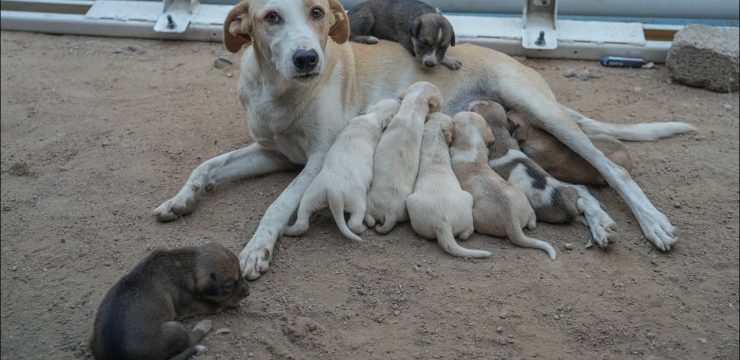
She accepted all four without hesitation, nurturing them as if they were hers. They bonded, eating and sleeping together peacefully. After so much loss, she had a growing family again. Her willingness to welcome the abandoned puppies gave them a kind of belonging they had been missing.
Her surviving puppy was growing, too. After those sleepless feedings, the survivor could grow alongside adopted siblings. Nothing could replace the puppies who had died, but new bonds could grow alongside the memory of them.
Eventually, the man moved the mother and puppies into a spacious new living environment. The mother ran joyfully, beyond the reach of any rope. Her own puppy and four adopted pups shared that new life.
The warehouse had held fear and loss. Steady care brought safety, companionship, and another chance at motherhood. Her story held sorrow, but it did not end there.
Sometimes love is not one grand rescue. It is a warm box, another feeding, another visit, and the decision to keep caring when the work is difficult. For this mother and her little family, those choices changed everything.