Buran had once belonged to someone.
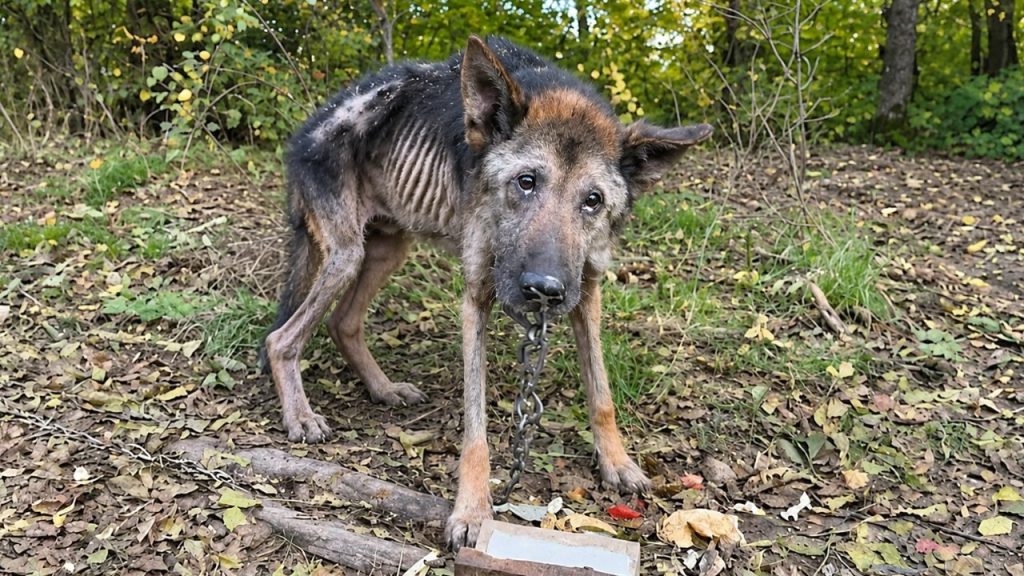
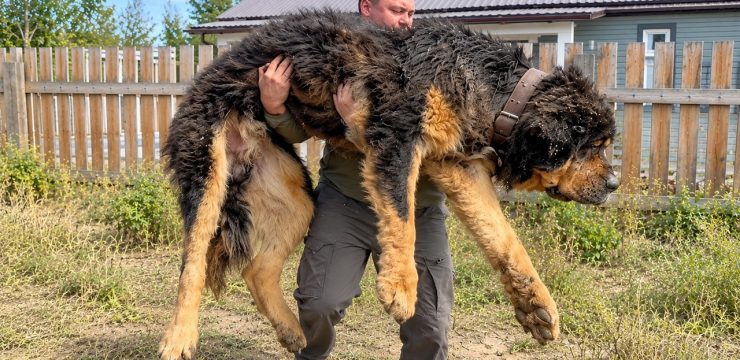
He had known what it meant to have owners, yet he was left chained in a forest, with no one to feed him or care for him. By the time rescuers found him, his body had become painfully thin, and he barely had enough strength to stand. The dog who should have been protected had been abandoned to face hunger and helplessness alone.
There is something especially painful about a dog being abandoned by the very people responsible for his well-being. Dogs depend on humans for food, shelter, safety, and care. They cannot understand why those responsibilities are suddenly forgotten. For Buran, abandonment meant being left in a place where he could not simply walk away and search for a better life. The chain that held him there made an already desperate situation even worse.
His condition told a terrible story of prolonged neglect. Buran was little more than skin and bones, his body weakened by a lack of proper nourishment. Standing, something a healthy dog might do without a second thought, had become a tremendous challenge. His physical condition made it clear that he needed far more than an occasional meal. He needed medical attention, careful nutrition, and people willing to take responsibility for his recovery.
Yet even in that terrible condition, Buran showed something remarkable. He remained gentle.
Despite having been abandoned by his previous owners, he did not behave aggressively toward the people who came to help him. His gentle temperament stood in painful contrast to the treatment he had received. Here was an animal who had suffered because of human neglect, yet he did not respond to his rescuers with hostility.
That quiet gentleness made his situation even more moving. No dog deserves to be abandoned, regardless of its temperament. But seeing Buran remain so peaceful while struggling with such severe weakness was a powerful reminder of how vulnerable animals can be when the people responsible for them fail to provide even the most basic care.
Finding Buran was an important turning point, but his rescue did not erase the harm that had already been done. His body had endured prolonged starvation, and recovering from that kind of neglect required patience and careful attention. Simply giving him unlimited food would not have addressed the complicated needs of a severely malnourished dog.
He needed appropriate medical treatment to deal with the effects of starvation and neglect. He also needed specially prepared nutrition to help him regain weight safely. His recovery required consistent supervision, making sure that his changing physical condition was properly supported.
For Buran, the journey toward better health would not be measured by one dramatic moment. It would come through the steady work of helping his weakened body recover.
And that work mattered enormously.
Every improvement in his condition represented something he had been denied while chained in the forest. Proper nutrition meant his body could begin rebuilding strength. Medical treatment meant his suffering was finally being addressed. Consistent care meant that his needs were no longer being ignored.
Gradually, the changes became apparent. Buran began gaining weight, a particularly meaningful development for a dog who had been found so severely undernourished. His physical strength also started returning. The same dog who had barely been able to stand was beginning to move toward a healthier condition.
These improvements did not mean that his recovery was complete. He still had considerable healing ahead of him. But his progress offered genuine encouragement, demonstrating what appropriate treatment, nourishment, and dedicated attention could accomplish.
There was another important part of Buran's recovery, one that could not be measured by his weight or physical strength.
He was learning to trust people again.
That process carried its own emotional significance. Buran had been abandoned by people who should have cared for him. Although he remained gentle toward his rescuers, rebuilding trust after such an experience was still an important part of his journey.
Trust is something that responsible animal caregivers build through reliability and kindness. A dog needs more than an occasional moment of attention. He needs to experience consistent care, to have his basic needs met, and to live without being left helpless when he depends on someone.
For Buran, those ordinary responsibilities had become the foundation of something extraordinary: a chance to recover from a life-threatening period of neglect and experience the security he should have had all along.
The contrast between his past and his present could hardly have been greater. In the forest, he had been chained, starving, and unable to care for himself. Under the care of his rescuers, he had access to food suited to his condition, medical treatment, and the supervision necessary to support his recovery.
His circumstances had changed because people chose to help rather than turn away.
It is tempting to think of an animal rescue as a single act of kindness, the moment someone finds a suffering dog and brings him to safety. But Buran's experience demonstrates why the commitment that follows is just as important. Rescue provides an opportunity. Continuing care gives that opportunity meaning.
A severely neglected animal cannot always return to full health quickly. Physical recovery may be gradual, and the emotional effects of abandonment can require patience as well. Buran's progress came through ongoing care rather than an instant transformation.
His story also reminds us that an animal's worth is never determined by appearance or physical condition. When Buran was found, he was terribly thin and weak. His body reflected the neglect he had endured, but that condition did not diminish his value as a living being deserving of compassion.
He was still Buran, a gentle dog who needed help.
As his condition improved, the hope surrounding his future became more meaningful. He was no longer facing starvation alone in the forest. He had people who cared about his well-being and were committed to helping him through the difficult stages of healing.
There was no reason to pretend that every problem had disappeared. Buran still had a long road ahead before he could be considered fully recovered. His progress was encouraging, but the damage caused by prolonged neglect required continued attention.
What mattered was that he now had the support needed to keep moving forward.
He would continue receiving food, treatment, and care from people who were committed to his recovery. Instead of being left to struggle without help, he had someone looking after his needs. That simple change represented an enormous difference in the life of a dog who had once been abandoned.
Buran's future remained a work in progress. His journey was not presented as a completed transformation or a story in which every hardship had already been overcome. There was still healing to be done, and his caregivers still had an important responsibility ahead of them.
But there was hope, grounded in the real improvements he had already made.
His growing weight, returning strength, and gradual rebuilding of trust were signs that his circumstances were changing for the better. Each step forward reflected the value of patient, consistent care and the importance of giving neglected animals the opportunity to recover at their own pace.
Buran's experience is a reminder of how deeply animals depend on the choices human beings make. Abandonment can leave them exposed to suffering they have no power to escape. Compassion, when accompanied by proper medical care and lasting responsibility, can help change that reality.
The dog who was once chained and starving in a forest still has a journey ahead of him. His body needs more time to heal, and his trust continues to grow. But the most important difference has already been made.
Buran is no longer forgotten. He is being cared for, his recovery matters, and he no longer has to face his struggles alone.