Laura had always believed that love meant safety. At twenty-nine years old, she had finally found everything she thought she wanted — a home, a devoted husband, and now a baby growing inside her. Victor was the kind of man who opened doors, remembered anniversaries, and never raised his voice. To everyone around them, they looked like the perfect couple.
When she first discovered she was pregnant, Laura cried happy tears in the bathroom, clutching the test with trembling hands. She couldn’t wait to tell him.
Victor had been overjoyed.
The early months passed like a dream. Every checkup came back healthy. Every ultrasound showed a baby growing right on track. Victor drove her to every appointment, held her hand in the waiting room, and spent weekends assembling the nursery furniture with quiet, patient care. He was, by every measure, a wonderful father-to-be.
But something had slowly been changing inside Laura’s body — something no one had noticed yet.
By her eighth month, Laura was exhausted in a way that went beyond ordinary pregnancy fatigue. She chalked it up to the final stretch. Her legs ached. Her breathing felt heavier than it should. She slept long hours but never felt rested. Victor told her it was normal, that her body was simply preparing for birth.
Every evening without fail, he brought her a warm cup of herbal tea before bed.
“It’ll help you sleep, sweetheart,” he would say softly, setting it on the nightstand. “The herbs are calming. You worry too much.”
She never questioned it. She trusted him completely.
Then came the appointment that changed everything.
On the morning of her eight-month ultrasound, Victor was supposed to come with her. But just before they were set to leave, his phone rang — an urgent situation at work, he said. He kissed her forehead, told her to call him the moment it was done, and promised everything would be fine.
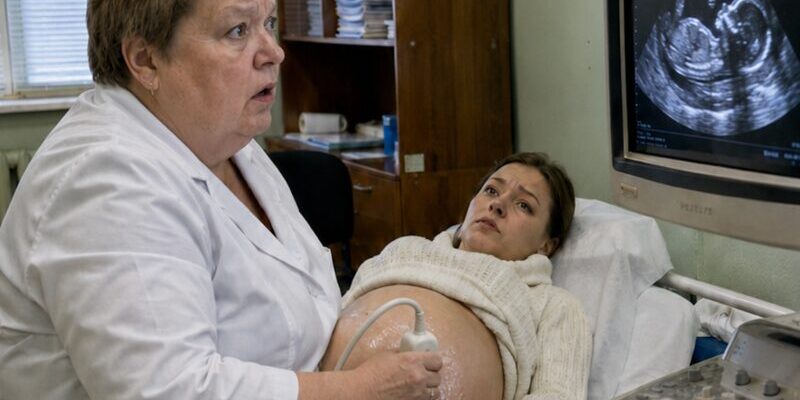
At the clinic, Laura was seen by Dr. Marta, a calm and experienced OB who had a quiet, reassuring presence. Laura lay back on the exam table, the cool gel was applied to her belly, and the familiar hum of the machine filled the room.
For the first few minutes, everything seemed routine. Dr. Marta moved the probe slowly, studying the screen with focused eyes, occasionally making notes. Laura tried to make out the shape of her daughter on the monitor, squinting at the gray shadows.
Then the doctor went very still.
Her face changed. Color drained from her cheeks. She leaned closer to the screen, adjusted the settings twice, and whispered something under her breath that Laura couldn’t quite catch.
“Doctor?” Laura asked carefully. “Is something wrong with the baby?”
Dr. Marta didn’t answer right away. She turned off the audio on the machine, set down the probe, and looked at Laura with an expression that sat somewhere between professional composure and barely concealed alarm.
“Laura,” she said quietly, “I need you to listen to me very carefully. You should not go home today. And I strongly believe you need to leave your husband.”
The room seemed to tip sideways.
Laura pushed herself up on her elbows, heart hammering. “What? Why would you say something like that?”
“I know how that sounds,” Dr. Marta said, her voice steady but urgent. “But right now, I need you to stay here. Don’t call him. Don’t answer his messages. Please trust me long enough to let us run some tests.”
Laura wanted to argue. She wanted to grab her phone and dial Victor immediately. But something in the doctor’s eyes stopped her — a gravity that felt too serious, too certain to dismiss.
She stayed.
Blood was drawn. An IV was placed in her arm. Monitors were attached to track the baby’s heartbeat. Laura lay in the hospital bed, watching Victor’s name light up her phone over and over again. At first his texts were gentle and worried: Are you okay? Call me when you’re done. I’m thinking of you. Then the tone shifted. Why aren’t you answering? Who are you talking to? I’m coming there.
Dr. Marta took the phone from her hands. “Not yet,” she said simply.
Hours passed. Then the test results came back.
A substance had been found in Laura’s bloodstream — not a medication, not a common vitamin supplement gone wrong. It was a compound that had been building up in her system gradually over an extended period of time. At low doses, it caused fatigue, shortness of breath, and disrupted sleep. Over time, with consistent exposure, it could deprive both mother and baby of adequate oxygen.
The baby had been showing reduced oxygen levels for weeks. Not hours. Weeks.
Laura’s mind went blank. “How would something like that get into my body?”
Dr. Marta asked her one careful question: “Is there anything you consume every day that Victor prepares for you? Something he gives you and only you?”
Laura’s lips parted. The answer came slowly, like a cold wave rising.
“The tea,” she whispered. “Every night. He makes it specially for me. He always said it was herbal, for relaxation. He never drinks it himself — he told me it made him too drowsy.”
The doctor picked up the phone on the wall and called the police.
When officers questioned Victor about the tea, he smiled calmly and said he had purchased it from an ordinary health store. The lab analysis told a different story. The herbal blend contained a potent compound not listed on any label — one that, in repeated small doses, produced exactly the symptoms Laura had been experiencing for months.
Victor was taken into custody.
Laura recovered steadily over the following days, surrounded by nurses who checked in on her gently and a doctor who had trusted her own instincts enough to act when it mattered most. Her daughter was delivered early but arrived into the world small, healthy, and loudly crying — the most beautiful sound Laura had ever heard.
One quiet afternoon, as Dr. Marta was checking her blood pressure, Laura finally asked the question she had been holding since that first terrifying moment in the exam room.
“How did you know? You saw it on the screen before any tests came back. What made you say those words to me?”
Dr. Marta paused. She looked at the floor for just a moment before meeting Laura’s eyes.
“Because I had seen results like yours once before,” she said softly. “Another woman. Same patterns. Same signs. By the time anyone believed something was wrong, it was too late for her.”
She squeezed Laura’s hand once and left the room.
Laura looked down at the tiny face of her daughter sleeping against her chest — small fingers curled, chest rising and falling with steady, perfect breaths — and understood that she was holding proof of what it means when one person chooses to speak up, to trust what they know, and to act in time.
Sometimes the person who saves your life is a stranger in a white coat who simply refuses to look away.