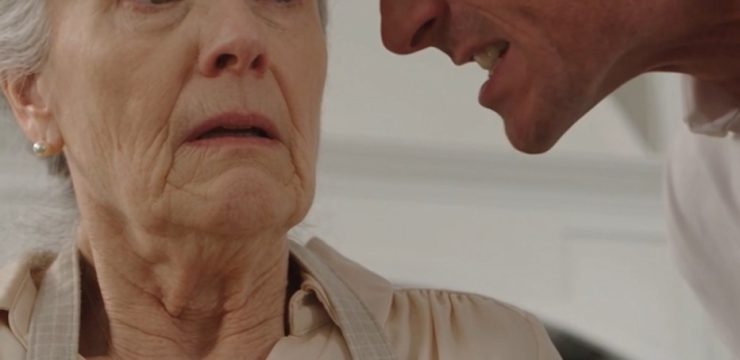
“You need to move, ma’am.”
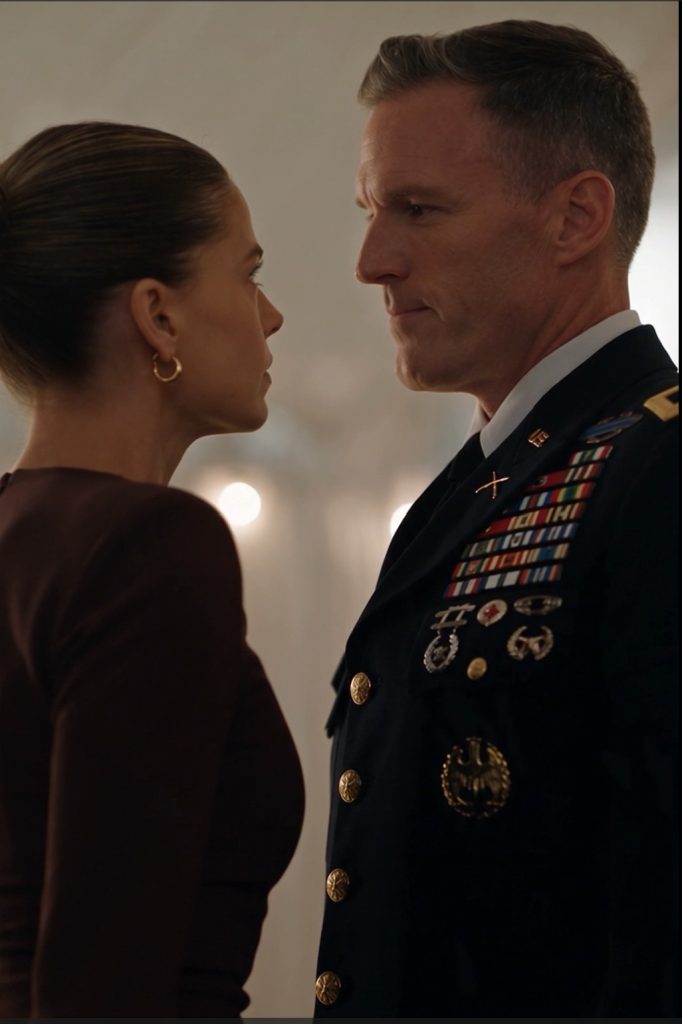
The words landed before she had even unfolded her napkin. Beneath the chandeliers of Fort Liberty’s memorial gala, a colonel stood over an older woman’s chair as if her presence at the front table were an embarrassing mistake.
Eleanor Bennett looked from Colonel Derek Maddox to the place card beside her plate.
“I believe this is where I was assigned.”
Derek never touched the card.
Instead, his eyes traveled over her simple navy dress, pearl earrings, and silver hair. Then he leaned closer.
“This table is reserved for honored guests.”
Eleanor rested one hand beside her invitation.
“Yes.”
Something in that quiet answer tightened his expression.
Around them, a string quartet played while servers moved through the ballroom with champagne and sparkling water. Hundreds of officers, veterans, donors, spouses, and military families filled the room.
Derek lowered his voice.
“What rank was your son?”
Eleanor’s fingers went still.
“He isn’t serving anymore.”
A faint, knowing smile crossed Derek’s face.
“Then there’s even less reason for you to be sitting here.”
A young server slowed behind Eleanor. At the neighboring table, two conversations quietly died.
Eleanor studied Derek’s face.
“Are you certain?”
He straightened and signaled to a banquet employee.
“Move her to the back.”
Then, quietly enough to make the cruelty feel almost private, he added, “You’re only the mother of a soldier.”
Eleanor didn’t argue.
She simply picked up her purse.
“All right.”
Her chair slid softly across the floor as she stood.
Derek stepped aside, already behaving as though the problem had been solved.
Eleanor walked past tables decorated with gold stars while guests watched in uncomfortable silence. Behind her, Derek returned to his seat near the stage.
His smile had returned before he sat down.
At the final row, a banquet employee named Caleb pulled out a chair.
“I’m very sorry, ma’am.”
“You didn’t make the decision, Caleb.”
His eyes flicked toward Derek.
“I still don’t like it.”
“That speaks well of you.”
From the back of the ballroom, Eleanor could still see her original table—and Derek laughing with business donors as if nothing unusual had happened.
That evening mattered enormously to him.
A new military family scholarship foundation was being formed, and its first executive director would control one of the largest privately funded education programs associated with the installation.
Derek wanted that position after retirement.
The prestige. The connections. The salary.
Most of all, proximity to powerful people.
He had spent months preparing for rooms exactly like this one, memorizing executives’ companies, their spouses, even the universities their children attended.
Tonight, he believed the people who mattered were sitting beside him.
He never once looked toward Eleanor.
A woman nearby leaned closer. A small gold pin identified her as a Gold Star family member.
“Did they change your table?”
“It seems they did.”
“I saw what happened.” She paused. “I’m Susan Parker.”
“Eleanor Bennett.”
Susan’s expression shifted.
“Bennett?”
“Yes.”
For several seconds, Susan simply stared.
“Have we met?”
“I don’t believe so.”
Susan looked as though another question had suddenly become very important.
Before she could ask it, the quartet stopped.
The room quieted.
Everyone was instructed to take their seats.
Near the stage, Derek adjusted the front of his dress uniform and turned his attention toward Brigadier General Marcus Hale and the executives beside him.
He still hadn’t looked back.
He still believed Eleanor Bennett was simply an elderly mother who had been seated too close to important people.
And as the program began, Susan Parker kept staring at Eleanor as though she had just realized exactly who Derek Maddox had ordered to the back of the room.
Nobody in that ballroom was prepared for what came next. 👇
The master of ceremonies stepped toward the microphone.
A photograph appeared on the enormous screen behind him.
Derek’s smile vanished.
It showed a young soldier in dress uniform.
The name beneath the photograph was BENNETT.
For the first time that evening, Derek turned toward the back of the ballroom.
His eyes found Eleanor.
She was still sitting beside Susan, hands folded quietly in her lap.
The room seemed to shrink around him.
“Ladies and gentlemen,” the master of ceremonies began, “before we announce the leadership of the Bennett Military Families Scholarship Foundation, we want to remember the man whose service inspired its creation.”
Derek’s face lost its color.
Brigadier General Hale slowly turned toward him.
“You knew her name?”
Derek opened his mouth.
Nothing came out.
On the screen, another photograph appeared: Eleanor standing beside the same young soldier.
Her son.
The man Derek had reduced to a rank he had never bothered to learn.
The room was completely silent now.
The master of ceremonies continued.
“Captain Thomas Bennett devoted his final years of service to advocating for military families facing financial hardship. After his death, his mother quietly continued that work.”
Susan covered her mouth.
Eleanor looked at the photograph.
For the first time that evening, something broke through her composure.
Her thumb moved slowly over the edge of her purse.
Derek stood.
“General, I can explain.”
Hale did not look at him.
“Sit down.”
Two words.
Nothing more.
Derek sat.
The same donors he had spent the evening charming suddenly seemed fascinated by their programs.
The master of ceremonies looked toward the back.
“Mrs. Bennett, would you please join us?”
Every head turned.
Eleanor remained seated for one breath.
Then another.
Caleb stood several feet away with a tray in his hands. When their eyes met, his expression softened.
Eleanor rose.
This time, nobody asked her to move.
They stood for her.
One table first.
Then another.
Chairs scraped against the floor until nearly the entire ballroom was on its feet.
Eleanor walked forward through the same aisle she had crossed in humiliation less than an hour earlier.
Derek watched her approach.
His hands remained flat against the table.
When Eleanor reached him, she stopped.
The applause slowly faded.
Derek swallowed.
“Mrs. Bennett, I didn’t know.”
Eleanor looked at him for several seconds.
“That was the problem, Colonel.”
His jaw tightened.
“You decided how much respect I deserved before you knew anything about me.”
Derek glanced toward Hale.
“I misunderstood the seating arrangement.”
“No,” Caleb said from behind them.
The young banquet employee immediately looked terrified that he had spoken.
But Hale turned.
“What did you say?”
Caleb set his tray down.
“He saw her place card, sir.”
Derek’s head snapped toward him.
Caleb’s hands trembled.
“He knew she was assigned to the front table. Mrs. Bennett showed him.”
Silence settled across the room.
Derek pushed back his chair.
“That employee is mistaken.”
Susan stood.
“No, he isn’t.”
Derek stared at her.
“I was watching,” Susan said. “You never checked her invitation. You looked at her clothes, asked about her son, and moved her.”
Several people at the neighboring table began nodding.
Hale finally faced Derek.
“Is that accurate?”
Derek’s polished composure began to fracture.
“I was trying to protect the seating protocol.”
“By overriding it?”
“I believed there had been an error.”
“Based on what?”
Derek had no answer.
Eleanor watched him search the room for someone willing to rescue him.
Nobody did.
The defense executives avoided his eyes.
The foundation board members whispered to one another.
Everything Derek had spent months building was collapsing because of a decision that had taken him less than two minutes to make.
Hale rose.
“The executive director of a military family foundation will meet widows, parents, children, enlisted families, officers, veterans, and people who walk into rooms without titles attached to them.”
Derek’s throat moved.
“General—”
“If you need to know someone’s importance before deciding whether to treat them with dignity, you are not qualified to lead them.”
The sentence landed without anger.
That made it worse.
Derek looked toward Eleanor.
“Mrs. Bennett, I apologize.”
She held his gaze.
“Would you have apologized if my photograph had not appeared on that screen?”
Derek said nothing.
Eleanor nodded once.
“That is what you should think about.”
Hale turned toward two members of the foundation board.
They exchanged a brief look.
One of them closed the folder in front of him.
“Colonel Maddox,” he said, “your candidacy for executive director is withdrawn effective immediately.”
Derek stared at him.
“You cannot make that decision because of one misunderstanding.”
“It isn’t one misunderstanding.”
The board member’s voice remained quiet.
“It is one decision that showed us how you behave when you believe someone cannot affect your future.”
Derek’s expression changed.
For perhaps the first time all evening, he looked small.
No rank had disappeared from his uniform.
No medal had been removed.
Yet the authority he had carried so confidently seemed to drain from him in full view of the room.
Hale gestured toward Eleanor’s original chair.
“Mrs. Bennett, your place is here.”
Eleanor looked at it.
Then she looked toward the rear table.
Susan was still standing there.
Caleb stood nearby.
“No,” Eleanor said softly.
Hale paused.
She turned toward the audience.
“If tonight is supposed to honor military families, then perhaps we should stop arranging the room as though some families matter more because they sit closer to the stage.”
A few faces lowered.
Eleanor looked back at Susan.
“Would you join me?”
Susan blinked.
“Me?”
“Yes.”
Then Eleanor looked at Caleb.
“And when you have a moment, young man, I would like you to sit down too.”
Caleb gave a startled laugh.
“I’m working, ma’am.”
For the first time, Eleanor smiled.
“Then perhaps later.”
Warm laughter moved through the room, breaking the tension without erasing it.
Hale pulled out Eleanor’s chair himself.
Susan joined her.
The program continued.
But Derek no longer sat at the front table.
He quietly left the ballroom before dessert.
No one stopped him.
Three weeks later, the formal review of his conduct concluded. His retirement proceeded as scheduled, but the foundation removed him from consideration for every leadership and advisory role connected to its programs.
The powerful second career he had imagined never materialized.
What remained was far less dramatic and far more permanent: the knowledge that the room had seen him clearly.
Eleanor never celebrated his downfall.
When Susan asked her about it later, she simply said, “I didn’t need him humiliated. I needed him unable to do that to another family.”
The foundation changed too.
Reserved seating at future memorial events was reorganized. Gold Star families, junior enlisted families, veterans, donors, and senior officers were deliberately mixed throughout the ballroom.
No table would again be labeled by prestige.
Caleb received a handwritten letter from Eleanor two weeks after the gala.
Inside was a scholarship application.
He stared at it in the employee break room for nearly a minute before calling the number written beneath Eleanor’s signature.
“I’m not military family,” he told her.
“I know.”
“Then I don’t understand.”
“You wanted to study hospitality management, didn’t you?”
Caleb went silent.
He had mentioned it once while refilling her water.
Eleanor had remembered.
The foundation had created a small community-service scholarship in Thomas Bennett’s name, funded separately for young people whose actions demonstrated quiet courage.
Caleb became its first recipient.
But the final surprise came months later.
On a bright spring morning, Eleanor returned to Fort Liberty for the foundation’s first scholarship ceremony.
Susan sat beside her.
Caleb, wearing a suit that looked slightly too new, helped families find their seats.
Before the ceremony began, Hale handed Eleanor a thin envelope.
“We found this while reviewing Thomas’s original foundation papers.”
Eleanor stared at her son’s handwriting on the front.
For Mom.
Her fingers trembled as she opened it.
Inside was a letter Thomas had written before his death.
He had known Eleanor would resist having the foundation named after him.
He had known she would avoid ceremonies, photographs, and recognition.
And he had predicted something else.
If this ever becomes something important, Mom, please make sure nobody mistakes important people for important titles.
Eleanor stopped reading.
Susan reached for her hand.
Tears slipped quietly down Eleanor’s face.
Thomas had written one final line beneath it.
You taught me that before the Army ever did.
Eleanor pressed the letter against her chest.
Suddenly, the humiliation of that first gala looked different.
She had believed she had walked into that ballroom alone.
She hadn’t.
The lesson she had given her son decades earlier had returned through him, passed into a foundation carrying his name, and changed the very room in which someone had tried to make her feel insignificant.
When the ceremony began, Eleanor did not sit at the front.
She sat halfway back, between a young enlisted mother holding a sleeping baby and a retired sergeant who kept polishing his glasses whenever he became emotional.
There was no honored table anymore.
That evening, sunlight spilled through the windows and across rows of families sitting together without rank separating them.
Caleb passed Eleanor on his way toward the stage to receive his scholarship.
He stopped.
“Mrs. Bennett?”
“Yes?”
He smiled.
“I saved you a seat.”
Eleanor looked at the empty chair beside Susan.
Then at Thomas’s letter resting safely inside her purse.
She sat down.
And this time, nobody in the room needed to ask whether she belonged there.