The cake was upside down in the kitchen bin, strawberries and cream crushed beneath coffee grounds and scraps of wrapping paper. When I reached for it, a hand closed around my wrist.
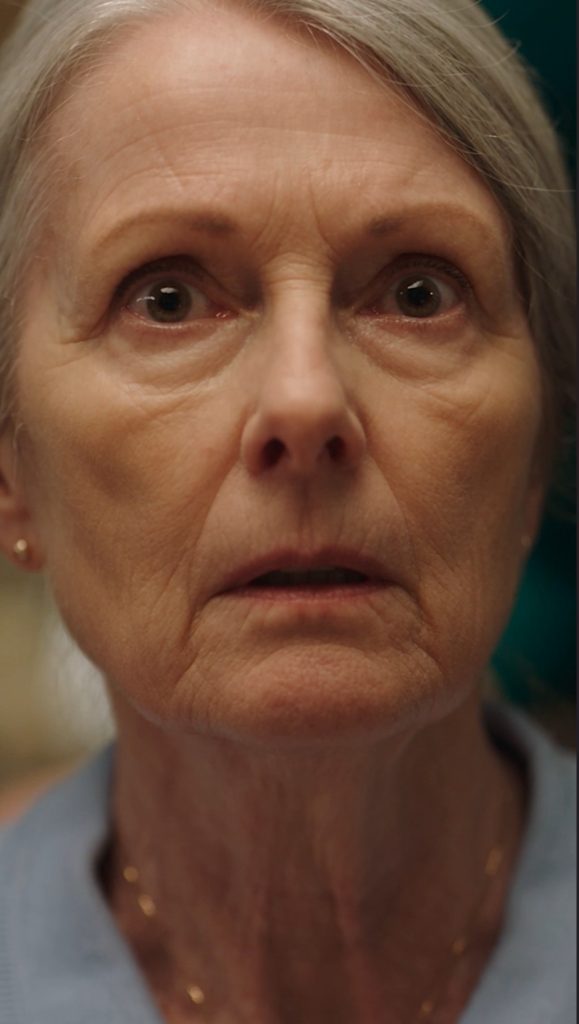
“For God’s sake, Maggie. Have some dignity.”
I looked past Claire toward my son, waiting for him to say something—anything. Daniel only exhaled, as though I were the problem.
“Mom, please. Don’t ruin Sophie’s birthday.”
Something inside me went completely still.
Eleven months earlier, I had sold the home where Robert and I had spent thirty-seven years together. I had also handed Daniel £80,000 because he promised I would have a permanent home with his family.
After Robert died, Daniel kept telling me I shouldn’t live alone.
“It’s not safe,” he said. “And you don’t need to be by yourself anymore.”
His house had space downstairs. With some work, he said, they could build me a bedroom, private bathroom, and small sitting room overlooking the garden.
“You spent your life taking care of me,” he told me. “Let me take care of you now.”
He and Claire even showed me pictures.
Cream walls. Oak floors. French doors. A blue chair beside the window.
Then the renovation costs supposedly climbed.
Daniel asked whether I could contribute £80,000 from the sale of my house. The morning before I transferred it, he sent me a message.
“Your £80k is for the downstairs room and works. You’ll have a home with us for life. Promise.”
I believed him.
Because he was my only child.
And because sometimes a mother mistakes trust for proof.
I sold the house, packed thirty-seven years of marriage into cardboard boxes, transferred the money, and moved in.
At first, everything felt warm. Sophie and Max were delighted to have their nana nearby.
The room was delayed, of course.
Builders. Permits. Materials. Rising costs.
There was always a reason.
So while I waited, I helped.
School pickups became routine. Then cooking. Laundry. Deliveries. Cleaning.
Claire began leaving lists on the kitchen counter.
Whenever I complained, Daniel smiled tiredly and told me not to “take things personally.”
One evening, they had friends over for dinner.
Claire suddenly announced there weren’t enough chairs. I offered to bring another from the hall.
She smiled.
“There really isn’t room.”
Daniel glanced at me.
“Mom won’t mind, will you?”
So I ate alone at the kitchen counter, still wearing the apron Claire had handed me earlier.
Sophie found me there.
“Nana, why aren’t you eating with us?”
“There wasn’t room, sweetheart.”
She looked toward the dining table.
“There’s loads of room.”
I smiled and sent her back.
That was who I still was then.
I swallowed humiliation so the people I loved wouldn’t have to feel uncomfortable.
Daniel later explained that Claire became anxious when entertaining.
I accepted it because the alternative hurt more.
I kept telling myself the new room would change everything.
But months passed.
My “temporary” bedroom beside the laundry room became permanent.
Meanwhile, the rest of the house transformed.
New kitchen fittings. New flooring. New appliances.
Whenever I asked about my room, the answer was always the same.
Later.
Then came Sophie’s thirteenth birthday.
I stayed up late making her favorite Victoria sponge, the cake that always reminded her of Robert.
The next afternoon, Claire arrived carrying an expensive three-tier bakery cake.
She glanced at mine.
“It looks a little too homemade.”
I went upstairs to change my blouse.
When I returned, my cake had disappeared.
I found it in the trash.
And when Daniel told me not to ruin Sophie’s birthday, I finally understood something I had spent eleven months refusing to see.
The next morning, I sat opposite Daniel and Claire.
“I want to see the renovation accounts.”
Daniel shifted in his chair.
“The money went into the house.”
Claire folded her arms.
“You transferred it voluntarily.”
Then she said it.
“You didn’t buy a share in our house, Maggie. You gave your son a gift.”
I turned to Daniel.
“Is that true?”
He wouldn’t answer.
He only said he would find paperwork, then accused me of trying to make them look like villains.
After he left the room, I noticed an old cardboard box on a shelf.
Robert’s handwriting was still across the side.
PHONES / CHARGERS / CABLES.
And suddenly, I remembered.
Months earlier, before I had moved in, I had used Robert’s old phone to record a builder during one of our renovation meetings.
Then I had forgotten the phone on Daniel’s kitchen counter for hours.
My hands were shaking as I pulled the box down.
The phone was still there.
I plugged it in.
Nothing.
Then, slowly, the white startup logo appeared.
When the screen finally opened, I found six recordings.
One was almost two hours long.
I stared at the date.
It had been recorded eight months before I moved into Daniel’s house.
And nobody in that family knew I was about to press play. 👇
My thumb hovered over the screen for a second, then touched the triangle.
At first, there was only the scrape of chairs and the builder’s voice discussing measurements, pipes, drainage, and the wall that would have to come down.
Then a door closed.
Claire spoke first.
“Eighty thousand is ridiculous to spend on a room for one person.”
There was a pause. Daniel’s voice came next, lower than hers.
“She thinks it’s for the room.”
“She thinks she’s moving in permanently.”
Another silence.
Then my son said, “We’ll sort something out.”
The recording continued.
They talked about the kitchen deposit, new flooring, mortgage arrears, appliances. Claire said the downstairs work could wait. Daniel said they would tell me the builder had been delayed.
Then Claire said, very clearly, “Once she’s sold the house, where is she going to go?”
Daniel answered, “Exactly.”
The phone slipped against my palm and struck the table.
For a long time, I did not move.
Morning light stretched across the new kitchen cabinets. The refrigerator hummed. Somewhere upstairs, a tap ran.
Everything looked ordinary.
That was the unbearable part.
I played the section again.
Not because I needed proof.
Because some part of me still wanted the voices to change.
They didn’t.
I copied the recordings, photographed Daniel’s message promising me a home for life, and called the solicitor who had handled the sale of my house.
By ten that morning, I had packed one suitcase.
Daniel found me fastening it.
“What are you doing?”
“Leaving.”
His face tightened. “Mom, don’t be dramatic.”
I looked at him.
“I heard the recording, Daniel.”
He froze.
Claire appeared behind him. “What recording?”
Daniel looked at her.
That one glance told her everything.
“You recorded us?” she demanded.
“No,” I said. “You recorded yourselves.”
Neither of them spoke.
I spent that night in a small hotel near my solicitor’s office. I cried only once, after placing Robert’s old phone on the bedside table.
Not because I missed Daniel’s house.
Because I finally understood I had been homeless long before I walked out.
My solicitor listened to the recording the next morning. She read Daniel’s message, examined the bank transfer, and asked me to write down every promise I remembered.
“This is not nothing,” she said.
That sentence steadied something inside me.
For eleven months, my questions had been treated like accusations and my hurt like an inconvenience.
Now someone was looking at the same facts and calling them facts.
A formal demand went to Daniel and Claire.
Repay the £80,000, or legal proceedings would follow.
Daniel called nineteen times.
I answered the twentieth.
“Mom, please. We can fix this privately.”
“You had eleven months.”
“We don’t have eighty thousand.”
“I know.”
Silence.
Then he whispered, “The kids keep asking where you are.”
My throat tightened.
“Tell them I love them. Tell them none of this is their fault. And tell Sophie I will see her when she doesn’t have to choose sides.”
Three weeks later, Daniel asked to meet.
I agreed only if my solicitor was present.
Claire came too.
She sat opposite me in a grey coat, composed until the transcript was placed on the table.
“This is being taken out of context.”
Daniel closed his eyes.
My solicitor played the recording.
Once she’s sold the house, where is she going to go?
Exactly.
The meeting-room door opened behind us.
Sophie stood there.
Daniel had brought her and Max because childcare had fallen through and left them in reception.
She had heard enough.
“You knew Nana had nowhere else?”
Daniel stood so fast his chair struck the wall.
“Sophie—”
“You knew?”
Claire reached for her.
Sophie stepped back.
That tiny movement broke the room open.
Daniel sat down again.
“I knew,” he said.
Then, finally, he told the whole truth.
The downstairs conversion had been real in the beginning. But they had fallen behind on the mortgage. They wanted the kitchen finished. Once my money arrived, they began using it elsewhere, always telling themselves they would replace it later.
By the time I moved in, most of it was gone.
Claire stared at him.
“You’re putting this on me.”
“I’m not.”
He looked at me.
“I agreed to all of it.”
His voice thinned.
“I let you sell your home knowing I couldn’t give you what I promised.”
There was nothing left to misunderstand.
Six weeks later, the settlement was signed.
Daniel and Claire could not repay me without selling the house. They tried to remortgage, failed, and finally put it on the market.
The new kitchen, the flooring, the appliances—all the things that had appeared while my room remained imaginary—were photographed for the estate listing.
I looked once.
Then I closed the page.
Claire moved out before the sale completed. She and Daniel separated soon afterward.
I never celebrated their marriage ending.
The repayment was enough.
So was hearing Daniel say, without excuses, “We stole your security from you.”
When the £80,000 returned to my account, I stared at the figure until the numbers blurred.
Nobody cheered.
Nobody needed to.
Something that belonged to me had finally been returned without requiring me to apologize for asking.
I rented a small bungalow while I decided what came next.
It had two bedrooms, a narrow garden, and a kitchen that needed painting.
The first time Sophie visited, she stopped beside the dining table.
Four chairs.
She touched the back of one.
“Nana?”
“Yes?”
“There’s room.”
I had to turn away.
When I looked back, she was crying silently.
I opened my arms.
She crossed the room so quickly the chair rocked behind her.
Max arrived carrying biscuits and pretended not to notice either of us crying. Ten minutes later, the three of us were sitting at the table with crumbs everywhere.
Exactly where we belonged.
Daniel came alone the following Sunday.
He stood on the doorstep in the rain.
“I’m not asking you to forgive me.”
“Good.”
He nodded.
“I kept thinking being your son meant there would always be another chance.”
I waited.
“It doesn’t.”
“No.”
His eyes dropped.
“But if you spend enough time becoming someone I can trust again,” I said, “I’ll notice.”
He looked up.
I did not hug him.
But I let him come inside for tea.
Months passed.
Daniel became quieter and more careful. He brought the children when invited, left when asked, and stopped defending what he had done.
Claire sent me one letter.
There were no excuses in it.
I read it, folded it, and put it away.
Forgiveness, I learned, did not mean pretending nothing happened. Sometimes it meant refusing to carry someone else’s choices inside you forever.
In spring, I bought a modest little house with a garden.
On moving day, Sophie and Max arrived with Daniel carrying something wrapped in an old blanket.
Sophie pulled the blanket away.
A blue chair.
Not new. Slightly faded at one arm.
“For the window,” she said.
My chest tightened.
That evening, Max found Robert’s old phone among the boxes.
“Does it still work?”
“Apparently better than some people,” I said.
He laughed.
We charged it.
There were six recordings.
I had listened only to the long one.
Sophie tapped the shortest.
Robert’s voice filled the room.
None of us moved.
There was laughter behind him, younger laughter, then Sophie’s small-child voice.
“Grandad, where does Nana sit?”
Robert answered immediately.
“By the window, obviously.”
My own younger voice called from farther away, “Robert, stop telling that child I need special treatment.”
He laughed.
“She doesn’t need special treatment, Soph. Just make sure there’s always a chair for her.”
The recording ended.
Sophie looked from the phone to the blue chair beside my new window.
Her lower lip trembled.
“I didn’t know.”
Neither did I.
I sat down while Sophie curled onto the rug beside me and Max leaned against the arm. Daniel remained near the doorway, one hand over his mouth.
Outside, evening light settled over the garden.
For thirty-seven years, I had thought home was the place Robert and I built together. Then I thought it was the room my son promised me. For a while, I feared I had lost the right to call anywhere home at all.
But Robert had understood something before any of us did.
A home was not the promise of a room.
It was the people who made space for you without being asked.
Sophie reached up and placed her hand over mine.
The blue chair faced the window, four chairs waited around the table, and for the first time since Robert died, I looked around me without wondering how long I was allowed to stay.