The boot hit the metal table before the pencil ever touched the page.
Steel screamed across concrete. Papers exploded into the freezing wind, radios cracked against the ground, and for one long second, the entire training yard seemed to forget how to breathe.
“Get your filthy hands off our equipment.”
Sergeant Mason Reed stood over the wreckage, his boot planted on one of the carefully numbered inspection sheets.
Around him, SEAL trainees who had been shouting commands only moments earlier went silent.
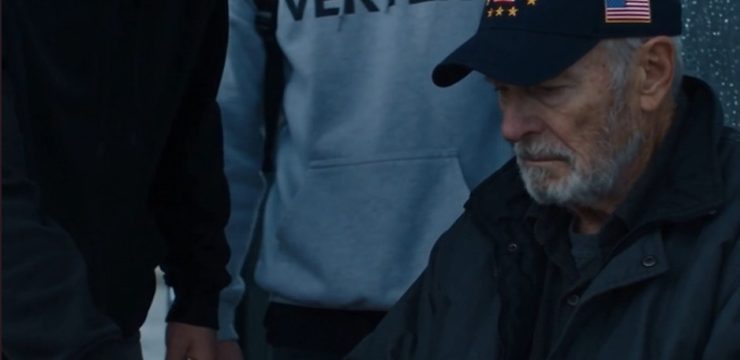
Arthur Cole remained beside the overturned table.
A small black notebook was still in his hand.
He stared first at the paper crushed beneath Mason’s boot, then at the damaged radio lying near a rack of weighted vests.
“I was recording the condition of the training gear,” Arthur said.
His voice was quiet.
Almost too quiet.
Mason turned toward the formation with a sharp laugh.
“You hear that? A groundskeeper thinks he can inspect our equipment.”
A few trainees smiled because Mason expected them to.
Others didn’t.
Arthur lowered himself into the mud and began collecting the scattered pages.
Cold water soaked through the knees of his faded work pants. His thin gray maintenance coat shifted in the Pacific wind as he picked up each sheet with slow, deliberate care.
Mason watched him.
Something about Arthur’s calmness bothered him.
Anger would have made sense.
Fear would have been better.
But Arthur gave him neither.
“Leave them,” Mason ordered.
Arthur reached beneath the twisted table frame for another page.
“I told you to leave them.”
Arthur placed it carefully with the rest.
Then he glanced toward the equipment rack.
“You also have a cracked buckle on harness fourteen.”
Several trainees looked instinctively toward the harness.
Mason noticed.
His face hardened.
“You don’t speak unless I ask you a question.”
Arthur stepped closer to the rack and touched the buckle with two fingers.
“This could fail under load.”
Mason crossed the distance between them in three strides.
His hand closed around the silver hair at the back of Arthur’s head.
A sharp breath moved through the formation.
Mason yanked him upright.
Arthur’s boots scraped through the mud. His notebook slipped from his fingers and landed beside the overturned table.
“Look at me when an instructor is speaking,” Mason said.
Arthur’s face tightened from the pain.
But he made no sound.
Mason pulled harder.
Slowly, Arthur raised his eyes.
There was no panic in them.
No pleading.
No anger.
Only a strange, steady attention.
As though Arthur were not being humiliated.
As though he were studying Mason.
That disturbed him more than anything else.
“You understand me?” Mason demanded.
Arthur held his gaze.
“I understand exactly what you are doing.”
The smiles disappeared from several faces.
Mason released him with a violent shove.
Arthur struck the edge of the table frame but stayed on his feet.
His silver hair had fallen across his forehead. Mud streaked one cheek.
Still, he said nothing.
Mason looked toward the wash station.
“Hayes. Bring that over.”
Twenty-year-old Logan Hayes froze beside a utility bucket filled with icy water used to wash sand from the training mats.
He looked at Mason.
Then at Arthur.
“Now.”
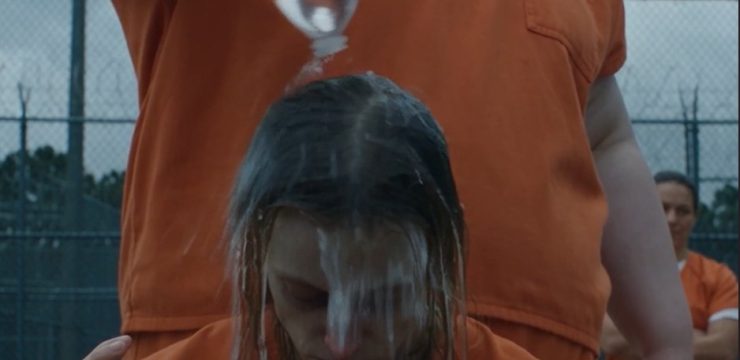
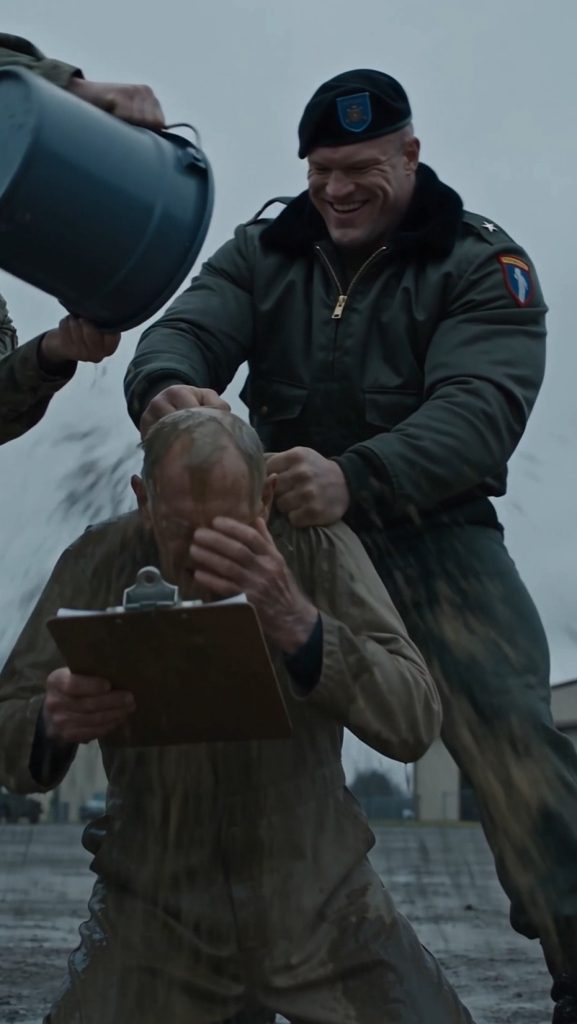
Logan lifted the bucket with both hands.
Water sloshed over the rim as he walked.
Three weeks into the hardest training cycle of his life, he already knew what hesitation could cost him.
Mason had threatened to remove him twice.
Arthur slowly straightened his coat.
He did not step back.
Mason nodded toward him.
“Maybe our inspector needs a shower.”
A nervous ripple of laughter passed through the formation.
Logan stopped in front of Arthur.
His knuckles tightened around the bucket handle.
Arthur looked at the young trainee, then at Mason.
The yard had gone completely silent.
“Go ahead,” Mason said.
Logan stared down at the freezing water.
Then back at the older man standing in the mud.
Nobody there understood yet why Arthur Cole was so calm.
And nobody was prepared for what that silence was about to uncover. 👇
Logan’s hands tightened around the bucket until the metal handle bit into his palms.
One drop of water slid over the rim and struck the mud between his boots.
Mason’s voice came low and hard. “Do it.”
Logan looked at Arthur’s wet knees, the mud on his cheek, the silver hair Mason had just yanked like a handle. Then he looked toward the formation. Nobody moved.
His arms lowered.
“No, Sergeant.”
Mason stared at him.
“What did you say?”
Logan swallowed, set the bucket on the ground, and forced himself to meet Mason’s eyes.
“I said no.”
Something shifted in the yard.
Mason stepped toward him. “You think you get to choose which orders you follow?”
Before Logan could answer, another trainee spoke.
“He’s right about the harness.”
Mason turned.
The trainee nearest rack fourteen had lifted the damaged buckle. A fracture ran almost completely through the load-bearing edge.
Then another voice came.
“Radio three was already cracked yesterday.”
A third trainee looked down before speaking. “We reported it.”
Mason’s face hardened. “Shut your mouths.”
Arthur bent and picked up his black notebook.
Mud had soaked into one corner. He wiped it against his coat and opened it.
Mason moved toward him.
Arthur closed the notebook.
“Don’t.”
It was the first word he had spoken that sounded like an order.
Mason stopped.
Footsteps came from the concrete path behind the training yard.
Measured. Unhurried.
A Navy captain approached with two senior chiefs and a civilian safety officer. His eyes moved over the overturned table, the scattered forms, the broken radios, the bucket at Logan’s feet, and finally Arthur.
“What happened here?”
Mason answered too quickly.
“This civilian interfered with training, sir. He was handling restricted equipment and refusing instructions.”
The captain looked at Arthur.
Then he said, “Master Chief Cole, are you injured?”
The yard went silent.
Mason’s mouth opened.
Arthur glanced at the mud on his coat. “Nothing that needs a corpsman.”
Master Chief.
The title seemed to move through the formation one man at a time.
Mason looked from Arthur to the captain. “Sir, I didn’t know—”
“No,” Arthur said quietly. “You didn’t.”
He handed the captain his notebook.
“I found six equipment discrepancies this morning. Harness fourteen is the worst. Two radio housings are compromised. One flotation vest has a failed seam. Three deficiencies were previously logged and marked corrected without repair.”
The civilian safety officer looked up sharply.
The captain turned to Mason. “Who signed the correction sheets?”
Arthur reached down and lifted a mud-streaked form.
Mason’s signature sat at the bottom.
For the first time that morning, Mason looked afraid.
“They were scheduled for replacement,” he said. “We were short on gear. I made a judgment call.”
“You marked them safe,” the captain said.
“They were usable.”
Arthur glanced at harness fourteen.
“Would you hang your own weight from it?”
Mason said nothing.
The captain’s jaw tightened. “Sergeant Reed, step away from the formation.”
Mason pointed toward Arthur.
“This was a setup.”
Arthur’s expression barely moved.
“I came dressed like maintenance because I work with maintenance now.”
Mason stared.
“I retired from Naval Special Warfare nine years ago,” Arthur continued. “Command asked me to review repeated equipment complaints because I spent most of my career training men on yards like this.”
He looked at the overturned table.
“I did not ask you to kick that over.”
Then at Mason.
“I did not ask you to put your hands on me.”
His gaze moved to the bucket.
“And I did not ask you to order a twenty-year-old trainee to humiliate another human being because you thought he was too frightened to refuse.”
Logan looked down.
Arthur’s voice stayed level.
“He made his choice.”
Then he met Mason’s eyes.
“So did you.”
The captain called one of the senior chiefs forward.
“Relieve Sergeant Reed of instructor duties. Effective immediately. Secure every item Master Chief Cole flagged.”
Mason took a step back. “Sir—”
“That is not a discussion.”
For a moment, Mason looked across the formation as if searching for someone who still belonged to him.
No one met his eyes.
The anger left his face only when he understood that fear would no longer protect him.
He walked away between the two senior men while the Pacific wind pressed the abandoned inspection sheets against the fence.
No one laughed.
The investigation confirmed the falsified safety entries and earlier complaints that damaged gear had remained in rotation after trainees reported it. Men who had stayed silent began giving statements because Logan had been the first to say no where everyone could hear him.
Mason never returned to the training staff.
His instructor qualification was revoked, and the disciplinary findings ended his path in the command.
Three days later, Arthur found Logan alone near the equipment cage, scrubbing mud from a training mat.
Logan kept working when Arthur approached.
“I thought I was finished,” he said.
“When?”
“When I put the bucket down.”
Arthur nodded.
Logan’s hands stopped moving.
“I almost did it.”
Arthur did not interrupt.
“I knew it was wrong. I still almost did it because I was scared he’d send me home.”
“That’s why courage usually feels terrible while you’re doing it,” Arthur said.
Logan looked at him.
“You weren’t scared?”
Arthur gave a tired half-smile.
“I was standing in mud while a man half my age had me by the hair. Of course I was scared.”
A short laugh escaped Logan before he could stop it.
Arthur reached into his coat and took out the black notebook.
“I want to show you something.”
The first pages contained serial numbers, dates, times, and equipment defects.
Then Arthur turned farther back.
There were names.
Dozens of them.
Beside each was a single sentence.
Logan found his own near the bottom.
Logan Hayes — Put the bucket down when obedience became cruelty.
He stared at it.
“What is this?”
Arthur closed the notebook.
“The part of the inspection nobody ordered.”
Logan frowned.
Arthur looked toward the empty yard.
“Everyone thinks the test is pain, cold, exhaustion. Sometimes the real test is what you do when the person in front of you has less power than you.”
“Was that why you didn’t fight back?”
Arthur was quiet for a moment.
“No. I didn’t fight back because I didn’t need to win that moment.”
He touched the notebook.
“I needed all of you to see it clearly.”
Weeks passed.
The broken harness disappeared into evidence. New radios arrived. Reporting procedures changed so trainees could raise safety failures directly to senior staff.
The table Mason had kicked over was repaired.
Arthur did it himself.
One afternoon, Logan found him tightening the final bolt.
“You know they would’ve replaced that,” Logan said.
“I know.”
“Then why fix it?”
Arthur tested the leg with both hands.
“Because broken isn’t the same as useless.”
Logan looked at the table.
Then at him.
Arthur pretended not to notice.
By the end of the training cycle, three trainees who had laughed that morning apologized to Arthur.
One could barely meet his eyes.
Arthur waited until he did.
“Next time,” Arthur said, “decide who you are before the crowd decides for you.”
The trainee nodded.
That was enough.
Logan remained in training.
Nobody protected him from the cold, exhaustion, failure, or brutal standards. But no one punished him for refusing the bucket.
Months later, on a clear morning washed gold by sunrise, Logan crossed the yard and found Arthur beside the repaired metal table.
A fresh inspection sheet lay beneath his hand.
The black notebook rested beside it.
Logan smiled. “Still checking our gear?”
Arthur glanced toward rack fourteen.
“Somebody has to.”
Logan started to walk away, then stopped.
“Master Chief?”
Arthur looked up.
“Thank you.”
Arthur studied him for a second, then shook his head.
“You’re thanking the wrong person.”
He nodded toward Logan’s hands.
“You were holding the bucket.”
Logan stood there, letting that settle.
Then he gave Arthur a quiet nod and returned to his team.
Arthur opened the notebook.
Beside Logan’s name, he added one final word.
Stayed.
He closed the cover, rested his palm on the repaired table, and watched the young men gather beneath the pale morning sky as the Pacific wind moved softly through the yard without turning a single page.