“She is not a hero. She reads books.”
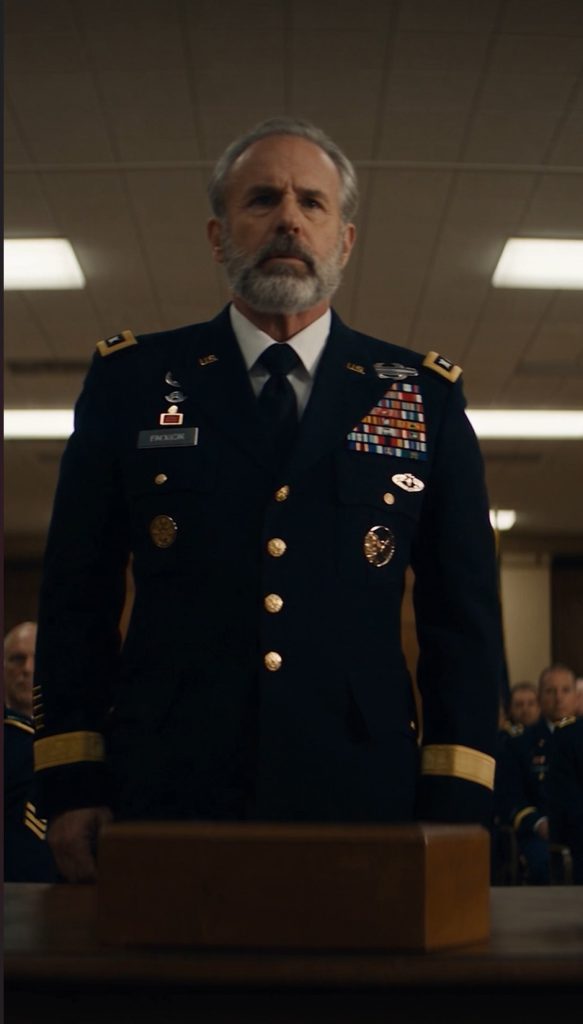
The words came from a decorated general in full uniform, spoken about his own daughter before an auditorium packed with senior officers. And when a four-star general finally pushed back his chair, the man who had commanded soldiers for forty years suddenly looked as though he had forgotten how to breathe.
Long before that day, people had started calling me Whisper.
I never knew whether it was affection or warning.
Growing up in base housing taught me that power had a sound. Boots striking tile. Keys tapping against a belt. A truck door slamming outside. My father’s voice crossing the dinner table with the sharpness of an order transmitted over radio.
I became the quiet daughter with a library book tucked beneath one arm. I watched faces, counted pauses, and learned that inside our house, silence was safer than choosing the wrong words.
I could speak seven languages.
At home, I barely used one.
The Pentagon auditorium felt colder than it should have that morning. Air-conditioning hummed over rows of polished shoes and immaculate uniforms, while the room carried the mixed smell of wood polish, old carpet, paper cups of coffee, and medal cases handled too many times.
Banners above the stage honored General Arthur Mendez for forty years of service.
My father.
The program in my hands listed campaigns, commands, decorations, speeches. In black print, his life looked carved entirely from duty.
There was nothing about forgotten birthdays.
Nothing about slammed doors.
Nothing about how a father could make his daughter disappear without ever laying a hand on her.
My brother Daniel stood near the VIP section in dress uniform, shoulders straight, expression controlled.
Major Daniel Mendez. West Point. Confident voice. Firm handshake.
Everything my father believed a soldier should be.
Daniel looked at me once.
No smile. No warmth.
Just enough to confirm I had shown up.
The ceremony unfolded with military precision. The anthem rose through the auditorium. Officers spoke of sacrifice, leadership, legacy. An admiral praised my father’s service. A civilian official described the institutions he had shaped.
Dad accepted every word with his chin slightly raised, as though each compliment were another salute.
Then the master of ceremonies turned a page.
“Before we conclude this portion of the program, we would like to recognize an officer whose contributions are less visible, but no less vital.”
My fingers tightened around the program.
No.
He continued.
“Through language, cultural intelligence, and crisis de-escalation, she has helped prevent loss of life in situations where force alone would have failed.”
The paper bent beneath my thumb.
I had sat across from armed men who hated my uniform. I had translated grief before it became gunfire. I had listened through shouting for the single word that meant a negotiation was seconds from collapsing.
None of that frightened me as much as hearing those things spoken aloud with my father sitting only yards away.
“Captain Julia Mendez, Military Police Corps.”
Every face seemed to turn toward me.
I stayed seated.
For one impossible second, I wondered if my father might look proud.
His chair scraped violently against the floor.
“That is enough.”
He didn’t shout.
He didn’t need to.
General Arthur Mendez stood gripping the back of his chair, medals flashing beneath the stage lights. The colonel at the podium froze.
Daniel never moved.
Dad looked directly at me—not as his daughter, but as though someone had accidentally entered my name into an official record where it did not belong.
“My daughter is not a hero,” he said. “She is a translator.”
The silence sharpened.
“She reads books. She studies dialects. She whispers to people who should be afraid of us. This is the United States Army, not a library.”
Several officers lowered their eyes.
I kept my hands still because I knew they would shake if I moved them.
Then came the part that hurt more.
“I trained leaders. I raised a son who understands duty. Let us not confuse language tricks with courage.”
I looked down.
A hard crease now ran straight through my name on the program.
Something inside me went completely quiet.
Then another chair moved.
A four-star general rose from the front row and turned toward the aisle.
His eyes settled on my father.
“Captain Mendez,” he said.
The room stopped breathing.
“Front and center.”
And nobody in that auditorium was prepared for what came next. 👇
The four-star general did not raise his voice. He did not need to.
“Captain Mendez. Front and center.”
My legs moved before the rest of me caught up. I rose, set the crushed program on my seat, and stepped into the aisle while a thousand people pretended not to look at my father. His hand was still clamped around the chair.
“General Mendez,” the four-star said, “remain where you are.”
My father’s fingers loosened.
I walked toward the stage with every old instinct telling me to make myself smaller. Instead, I stopped beneath the lights and faced the room.
The four-star lifted a thin folder.
“This recognition follows a review of operational records, award recommendations, and correspondence concerning Captain Mendez’s service.”
My father’s face changed.
Barely.
But I saw it.
The general looked at me. “Captain, I can read the record publicly, or we can conclude this matter in private.”
For years, silence had protected me from my father.
It had also protected him from me.
I looked at Daniel. His jaw tightened once.
“Read it, sir.”
The four-star opened the folder.
He described an operation I had never spoken about at home. A crowded allied compound. Armed men behind one door. Civilians behind another. A commander seconds from ordering force because every translation coming through the room sounded like a threat.
I had heard something different.
A change in dialect. A phrase that meant the men inside were preparing to die, not attack.
I asked for ninety seconds.
Those ninety seconds became eleven minutes.
And twenty-three civilians walked out alive.
The four-star turned a page.
“The officer in the initial classified report was identified only by call sign.”
My stomach tightened.
“Whisper.”
Daniel closed his eyes.
My father went completely still.
The general continued. “The senior command endorsement described Whisper’s actions as ‘an example of disciplined courage under pressure, where restraint accomplished what force could not.’”
He looked directly at my father.
“General Mendez wrote that endorsement.”
A low breath moved through the auditorium.
Dad’s mouth opened, then closed.
“At the time, the officer’s identity had been masked. When the award packet later identified Captain Julia Mendez, General Mendez submitted objections and requested that her actions be classified as technical support rather than command-level courage.”
“That is not what happened,” my father said.
The four-star’s expression did not move.
“The Inspector General disagrees.”
The banners, the flag, the enormous photograph beside Forty Years of Leadership suddenly looked fragile.
“The review substantiated improper interference in an awards process and conduct inconsistent with senior leadership. The retirement decoration scheduled for presentation today has been suspended pending final administrative action.”
For the first time in my life, I watched my father lose control of a room.
Not because someone shouted louder.
Because no one obeyed his version of the truth anymore.
He turned toward Daniel.
“Say something.”
Daniel’s shoulders lowered.
“I already did.”
Dad stared at him.
“I found the original endorsement six months ago,” Daniel said. “I recognized the call sign.”
“You gave them the file?”
“Yes.”
“You went behind my back?”
Daniel looked at me, and the distance in his face disappeared.
“No. I stopped standing behind yours.”
My father looked between us as if we had become strangers.
“This family has no idea what loyalty means.”
My hands began to shake.
This time, I let them.
“Maybe we learned it from you.”
He flinched.
The four-star closed the folder. The ceremony ended without the final medal, without the standing ovation, without my father walking beneath the banners to accept one last tribute.
People rose slowly.
Dad left through the side aisle.
For once, no one followed him.
I found him ten minutes later in a narrow corridor behind the auditorium. He had removed his cap. Without the stage and the salutes, he looked older.
“Was it worth it?” he asked.
I stopped several feet away.
“Destroying me in front of everyone.”
The old version of me would have apologized for the pain in his voice.
I did not.
“I didn’t destroy you. I stood still while the truth entered the room.”
He looked down at the cap in his hands.
“You could have kept this private.”
“You could have kept me from needing to.”
His eyes lifted.
“I wanted you to be strong,” he said.
“No. You wanted me to be strong in a way that made you comfortable.”
He had no answer.
I walked away before he could turn my silence into permission.
The final findings came months later.
The interference was formally substantiated. My father’s retirement decoration was withdrawn, and a written reprimand became part of the record he had spent a lifetime polishing. The Army did not erase his service.
It simply stopped pretending his service excused everything else.
My own commendation arrived without fanfare.
Daniel came to my apartment that night carrying takeout and the wrinkled program from the ceremony.
“You left this on the chair.”
The crease still ran through my name.
He placed it between us.
“I owe you an apology.”
I waited.
“I spent years letting him use me as evidence against you because being the favorite was easier than being your brother.”
His voice broke on the last word.
“I told myself I wasn’t hurting you because I wasn’t the one saying it.”
“But you stayed quiet.”
“Yes.”
No defense.
No excuse.
Daniel rubbed his thumb along the program. “That morning, I couldn’t look at you like my sister because I thought I’d give everything away. The review. The citation. All of it.”
Then he gave a small, embarrassed laugh.
“There’s something else. I started Whisper.”
I stared at him.
“When we were kids, Dad could fill the whole house with his voice. You’d wait until he stopped, then say one quiet thing that made the room survivable again. I called you Whisper because I thought it meant the person everybody should listen for when things got loud.”
My throat closed.
All my life, I had wondered whether the name had been a joke.
A warning.
Something small.
Daniel looked at me.
“It was never supposed to mean weak.”
He reached across the table, then stopped halfway, giving me the choice.
I took his hand.
My father did not come back quickly.
He wrote first.
The first letter contained no defense.
I made strength so narrow that there was no room for you inside it, he wrote. Then I punished you for not fitting. I used your brother as a weapon against you, and I called it pride. I do not expect forgiveness. I only want the record between us to stop lying.
I did not answer for three weeks.
When I finally did, I wrote four words.
You can come Sunday.
He arrived wearing civilian clothes and carrying a paper bag of bread.
No ribbons.
No stars.
No polished shoes announcing him before he entered.
Daniel was already inside.
For one long second, all three of us simply looked at one another.
Then Dad said, “I’m sorry, Julia.”
Not Captain.
Not translator.
Julia.
He turned to Daniel.
“And I’m sorry I taught you that love was something you earned by resembling me.”
Dad did not reach for either of us.
He waited.
That mattered.
I stepped aside.
“You can come in.”
Sunday dinner did not repair a childhood.
Neither did the next one.
But little by little, Dad learned to sit at a table without controlling it. Daniel learned to disagree without checking our father’s face afterward. And I learned that using my voice did not always mean preparing for impact.
Months later, on a warm evening with the windows open, the three of us sat around my small kitchen table while rain whispered against the fire escape.
A book lay beside my plate.
Dad glanced at it.
Years ago, he would have made a joke.
This time he asked, “What are you reading?”
I looked at him.
He waited for the answer.
So I told him.
Daniel listened. Dad listened too.
No one interrupted.
The loudest person in the room no longer decided what courage looked like.
For the first time, Whisper did not have to whisper.
I kept talking while the rain fell outside, and the two men who had once made silence feel safer stayed exactly where they were—quiet, listening, and finally home.