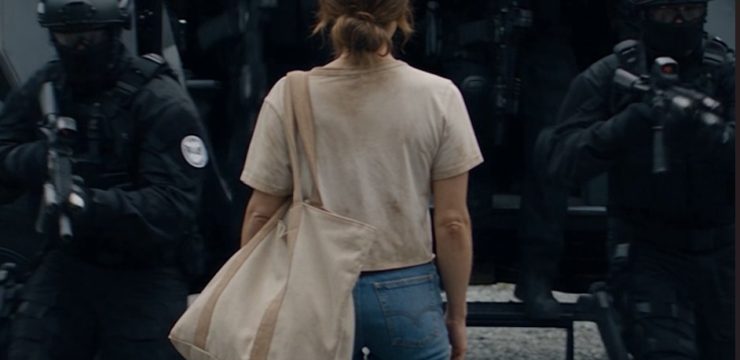
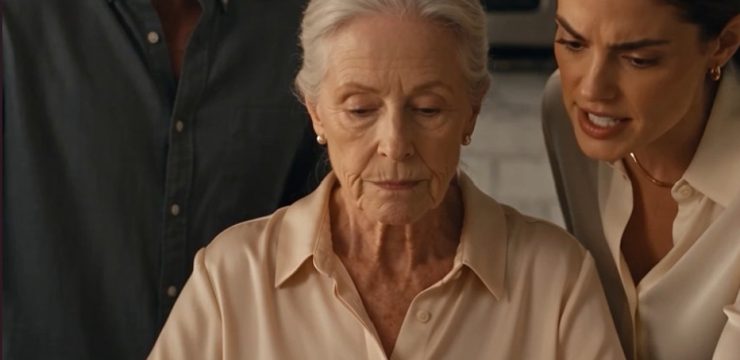
The words came from my own daughter, spoken with a coldness I had never heard in her voice.
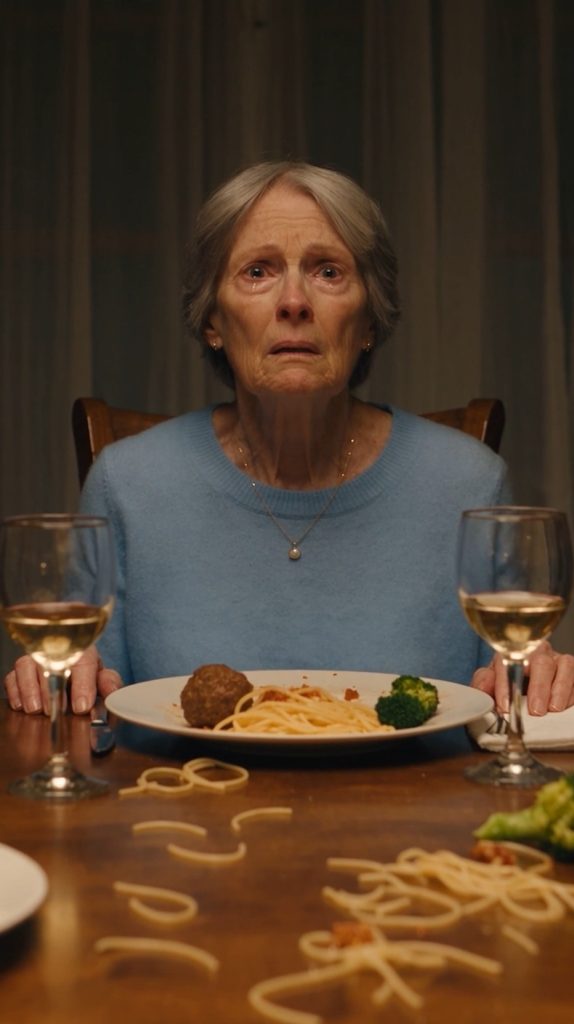
“We’re not wasting our lives on a dying old woman.”
My two sons stood behind her, their bags already packed. Four days earlier, I had been diagnosed with advanced cancer. Now, the three children I had devoted my life to were preparing to abandon me.
Twenty minutes after they left, my doctor would call with news that would change everything.
My name is Eleanor Kingsley. I’m 63 years old, and I live in Savannah, Georgia, in the same modest two-story house my husband and I bought 31 years ago.
Thomas loved that house. He loved its wraparound porch, its creaking wooden floors, and the sound of our children running through the hallway.
Six years ago, a sudden heart condition took him from me.
I thought losing my husband was the loneliest thing I would ever experience.
I hadn’t yet learned what it felt like to lose three children who were still alive.
Holden, my eldest, was 36. He worked in commercial real estate, drove an expensive car, and had grown accustomed to getting whatever he wanted.
Tessa was 33, sharp, ambitious, and frighteningly good at making cruel words sound reasonable. She had her father’s eyes, which made looking at her especially painful.
My youngest, Dashel, was 30. Quiet and anxious as a child, he now worked in finance, handling numbers and money with a confidence he rarely showed around people.
And then there was Hazel.
My 17-year-old granddaughter, Tessa’s daughter.
She was the only one who still called simply to hear my voice. Some evenings, we talked about nothing important at all, and those conversations meant more to me than she could possibly know.
Thomas and I had never been wealthy.
He sold insurance. I worked at an accounting firm. Every dollar we earned seemed to find its way into something our children needed.
Tessa’s braces. Holden’s first car, which he complained about despite our sacrifices. Extra tutoring for Dashel when he struggled to connect with other children.
We gave them everything we could.
And somewhere along the way, I mistook giving them everything for teaching them how to love.
Four days before they walked out, I sat alone in an examination room at Savannah Memorial.
Dr. Castellin turned her computer monitor toward me.
Gray shadows filled the screen.
The exhaustion I blamed on growing older. The back pain I blamed on my mattress. The weight disappearing from my body without explanation.
Suddenly, every symptom had a different meaning.
“The mass has grown since your last imaging,” she said quietly.
I stared at the monitor, struggling to understand how something so devastating could look so ordinary.
Then she spoke again.
“Eleanor, I want to be honest with you. This is advanced. We’re dealing with something very serious.”
I remember gripping the edge of my chair.
For a moment, all I could think about was Thomas.
How badly I wished he were sitting beside me, holding my hand.
Instead, I went home to the house we had built together and faced the terrifying possibility that I might not have much time left.
I had believed my children would stand beside me.
Four days later, I watched Tessa carry her bag through my front door while her brothers followed in silence.
And twenty minutes after the last footsteps faded, my phone rang.
Dr. Castellin.
I answered with trembling fingers.
As I listened, my knees weakened. I lowered myself onto the kitchen floor, staring at the empty doorway.
Then I began to laugh through my tears.
Not because anything was funny.
But because the words coming through that phone had changed what I thought I knew about my children.
And what Dr. Castellin said next would make that truth impossible to ignore… 👇
“Eleanor, are you still there?”
I pressed the phone harder against my ear. Outside, a car passed slowly along our quiet street, its tires whispering against the pavement.
“Say it again,” I managed.
“The biopsy confirms lymphoma. It’s advanced, yes, but it’s a type that often responds well to treatment. We have options, Eleanor. Real options.”
I closed my eyes.
Four days earlier, I had heard the word advanced and imagined my own funeral. Apparently, my children had heard it and imagined an inconvenience.
“Does that mean I’m going to live?”
“I can’t promise that,” she answered gently. “But I can tell you we’re not approaching this as a hopeless situation.”
I covered my mouth.
For the first time since my diagnosis, I felt something stronger than fear.
Hope.
Then Dr. Castellin hesitated.
“There’s something else. Your daughter called our office this morning requesting information about your prognosis and asking whether you were still capable of making financial decisions.”
My breathing stopped.
“She said she was helping you arrange your affairs. I wanted to confirm that with you personally.”
I looked toward the dining room.
There, beneath the vase Thomas had bought me for our twentieth anniversary, sat a folder Tessa had brought two days earlier.
She had called it paperwork.
Something to make things easier.
I had been too frightened to read it.
“Doctor,” I whispered, “I haven’t authorized anyone to manage my finances.”
There was a long silence.
“Then I think you should speak with someone you trust before signing anything.”
When the call ended, I remained on the floor.
The refrigerator hummed. Somewhere upstairs, an old floorboard settled with a familiar groan.
Then I stood and opened the folder.
Inside were documents transferring significant control over my property and financial decisions to Tessa.
A yellow note lay across the top.
Mom, just sign where I marked. We’ll take care of everything.
My hands began to shake.
For four days, my children had treated me like a burden.
But Tessa had been preparing to take control of what I owned.
I called an attorney Thomas and I had known for years.
By the following morning, I was sitting in Margaret Bell’s office, watching her examine the documents through narrow reading glasses.
“Did you sign any of these?”
“No.”
“Has anyone pressured you to?”
I thought of Tessa standing in my kitchen, telling me she didn’t have time for a dying woman.
“Yes.”
Margaret removed her glasses.
“Then we’re going to make certain nobody can use these against you.”
She helped me revoke any existing financial permissions, secure my accounts, and notify the relevant institutions that nobody had authority to act on my behalf.
What frightened me most was discovering that Tessa had already contacted a real estate agent about selling my house.
Holden’s name appeared in the correspondence.
My eldest son, who had spent his life selling buildings, had apparently been discussing the sale of the place where he learned to walk.
I felt something inside me go terribly still.
That evening, Hazel called.
“Grandma, Mom says you’re refusing to be reasonable.”
I sat beside Thomas’s empty chair.
“What else did she say?”
“That you’re confused. That you’re making things difficult because you’re scared.”
Her voice trembled.
“Grandma, are you confused?”
I swallowed.
“No, sweetheart. I’m frightened. But I know exactly what’s happening.”
Hazel was silent.
Then she whispered, “Can I come see you?”
Twenty minutes later, she appeared on my porch carrying her school backpack.
The moment I opened the door, she wrapped both arms around my waist.
And I held her.
Neither of us spoke for a very long time.
Eventually, sitting at the kitchen table, I told her what the doctor had said.
Hazel covered her face and cried.
Not because I was sick.
Because there was hope.
“Mom told us there wasn’t,” she whispered.
I stared at her.
“She told you I was dying?”
Hazel nodded.
“She said you probably wouldn’t make it through the year. She said everything needed to be handled before you got worse.”
Something cold settled beneath my ribs.
My daughter had turned my uncertainty into certainty.
Then she had used that certainty to justify taking control.
Three evenings later, the doorbell rang.
Tessa stood on the porch with Holden and Dashel.
She walked past me without being invited.
“We need to settle this,” she said.
Holden placed his phone on the dining table. “Mom, you’re making a simple situation unnecessarily complicated.”
Dashel lingered near the doorway.
I noticed he couldn’t meet my eyes.
“Sit down,” I said.
Tessa folded her arms.
“I’m not here to be lectured.”
“Then you’re free to leave.”
For once, she had no immediate answer.
I placed her folder on the table.
“Why were you arranging to sell my house?”
Holden looked sharply at his sister.
Tessa’s expression barely changed.
“Because somebody had to think practically.”
“Practically?”
“You’re seriously ill, Mom. You can’t expect everyone to rearrange their lives around you.”
The words landed with the same cruelty as they had four days earlier.
But this time, I didn’t collapse beneath them.
“My doctor says my cancer is treatable.”
Silence.
Holden straightened.
“What?”
“I have lymphoma. It’s advanced, but there are treatments with a real possibility of success.”
Dashel gripped the back of a chair.
Tessa stared at me.
And for one fleeting second, I searched her face for relief.
I wanted to see the little girl who used to climb into my lap during thunderstorms.
Instead, she said, “That doesn’t change the paperwork.”
I heard Hazel gasp behind me.
She had been standing in the hallway.
“Tessa,” I said softly, “your mother might live, and that’s the first thing you say?”
Tessa looked away.
Then Dashel spoke.
“Tell her about the house.”
Holden turned toward him.
“Don’t.”
Dashel’s face drained of color, but he continued.
“Tessa said Mom had agreed to sell it. She told Holden there was already a buyer interested.”
My eyes moved toward my eldest son.
He lowered his gaze.
“I thought she had your permission,” he murmured.
Tessa laughed bitterly.
“Oh, don’t pretend you’re innocent. You were happy enough when we discussed the commission.”
Hazel stepped into the room.
“Mom, you told me Grandma was dying.”
Tessa flinched.
“I was trying to protect you.”
“From what? Loving her?”
Nobody answered.
Then Hazel said something I will never forget.
“You didn’t even ask if she was scared.”
Tessa’s mouth opened.
Nothing came out.
Margaret had prepared me for this confrontation. The documents were secured, the proposed sale halted, and every relevant institution had been notified.
I wasn’t asking my children for permission to protect myself.
“I won’t be signing anything,” I said. “And none of you will be making decisions about my home or my money.”
Tessa’s composure broke.
“You’re choosing to punish your own children?”
“No,” I answered. “I’m choosing not to let them punish me for being sick.”
The real estate company formally closed its involvement after reviewing the records. Holden was removed from the proposed transaction, and his employer opened an investigation into his conduct.
He lost his position weeks later.
For a man who measured his worth through status, the humiliation was devastating.
But Tessa faced something worse than embarrassment.
Margaret discovered that Tessa had submitted paperwork bearing a signature that was not mine.
The matter was referred to the authorities.
Eventually, confronted with the documentary evidence, Tessa admitted she had signed my name without permission.
The criminal case ended with a conviction, restitution obligations, and court-ordered supervision.
Her professional clients began withdrawing their contracts once the case became public.
She had spent years building a reputation around trust.
Her own decisions destroyed it.
I did not celebrate.
The day I learned the outcome, I sat on my porch and cried.
Because justice doesn’t make betrayal painless.
It only makes it possible to stop living beneath it.
Holden came to see me one Sunday afternoon.
He looked older than I remembered.
“I should have asked you,” he said.
“Yes.”
“I should have come when you got sick.”
“Yes.”
He stared down at his hands.
“I was thinking about the money.”
“I know.”
His eyes filled.
“I don’t know how to fix that.”
I watched a breeze lift the leaves along the porch steps.
“Neither do I, Holden. But you can begin by telling the truth without asking me to make you feel better about it.”
He nodded.
And for the first time in years, he listened.
Dashel began driving me to treatment appointments.
At first, we barely spoke.
He brought coffee, waited through long afternoons, and learned which crackers settled my stomach after chemotherapy.
One evening, while helping me into the car, he stopped.
“I heard what she said that day,” he whispered.
“I know.”
“I wanted to say something.”
I looked at him.
“Why didn’t you?”
His eyes shone.
“Because I was afraid she’d turn on me.”
I rested my hand over his.
“You were afraid of your sister. I was afraid I might die. We both needed you to be braver.”
He began to cry.
I didn’t tell him it was all right.
Instead, I let him stand beside me until he could speak again.
Healing wasn’t immediate.
There were exhausting treatments, difficult conversations, and mornings when simply getting dressed felt like climbing a mountain.
But there was also Hazel.
She came every Saturday.
Sometimes we cooked. Sometimes we watched old movies. Sometimes she sat beside me while I slept.
And slowly, my house began to feel inhabited again.
Several months later, Dr. Castellin showed me a new scan.
The treatment had worked better than we had dared hope.
My cancer was in remission.
I cried in her office, remembering the first time she had turned that same monitor toward me.
This time, I didn’t go home alone.
Hazel drove me.
When we reached the house, she stopped at the foot of the porch.
“Grandma, there’s something I’ve been keeping from you.”
My stomach tightened.
She reached into her backpack and produced an envelope.
Inside was her acceptance letter to a college in Savannah, along with confirmation of a scholarship.
“I applied before you got sick,” she explained. “I wanted to tell you, but then everything happened.”
I stared at the letter.
She smiled through tears.
“And there’s something else.”
She pulled out a small notebook.
The cover was worn, its corners softened by years of handling.
I recognized Thomas’s handwriting immediately.
It was the little notebook he used to keep beside his chair.
Inside were pages of notes about our family, birthday reminders, favorite meals, and the ordinary details he never wanted to forget.
Near the back, beneath Hazel’s name, he had written:
She calls Eleanor just to talk. I hope she never stops. One day, those conversations may mean more than anything we leave behind.
I pressed the notebook against my chest.
Hazel took my hand.
“Grandpa told me once that people need to know they’re loved even when they have nothing left to give.”
Her voice softened.
“I wasn’t calling because he told me to, Grandma. I called because I liked talking to you.”
For six years, I had believed Thomas’s voice was gone from this house.
But there it was.
In his handwriting.
In our granddaughter’s kindness.
In the ordinary love that had survived everything.
That evening, Holden came for dinner. Dashel arrived carrying groceries, and Hazel insisted on making Thomas’s favorite peach cobbler.
Tessa wasn’t there.
We were not ready for that.
I had written her a letter telling her I loved her, but that love could no longer mean access without trust. Whether we could rebuild our relationship would depend on the choices she made over time.
For now, the distance remained.
At dinner, nobody pretended the past had disappeared.
Holden washed the dishes without being asked. Dashel stayed to fix the loose porch railing. Hazel laughed when I told her Thomas had once burned an entire Thanksgiving dinner.
Later, I stepped outside.
The Savannah evening was warm, and the porch boards creaked beneath my feet.
Behind me, I could hear three voices moving through the kitchen.
Not asking for money.
Not discussing inheritance.
Just talking.
I looked down at Thomas’s notebook resting in my lap and placed my palm over its worn cover.
For years, I had believed a good mother was someone who kept giving until there was nothing left.
Now I understood something different.
Love could open a door.
It could offer a second chance.
But it didn’t have to surrender the house.
Hazel came outside and settled into the chair beside mine.
“Grandma?”
“Yes, sweetheart?”
“Are you happy?”
I looked at the warm light spilling through the windows of the house Thomas and I had built our lives inside.
Then I reached for her hand.
“Yes,” I whispered. “I think I’m finally learning how.”
And as the evening settled around us, the old floorboards creaked once more, sounding almost like Thomas coming home.