The rescuer had awakened ill, with his temperature reaching 102.2 degrees Fahrenheit, or 39 degrees Celsius. He was exhausted before the day had truly begun. Then came word of a puppy stranded in a ruined village, far from where he lived. The distance was daunting, and his condition made the trip even harder. But he believed that if he did not go, no one else would come for the little dog.
So he set out despite his fever. The drive was long, and waves of dizziness made an already difficult journey more demanding. His body needed rest, yet he kept going toward a place where buildings had fallen into disrepair and a helpless animal was waiting among the remains.
It is easy to think of a rescue as the moment someone lifts an animal into their arms. Often, though, the hardest part begins long before that moment. For this man, it began with choosing to leave home while sick, not knowing exactly how difficult it would be to reach the puppy or bring him out.
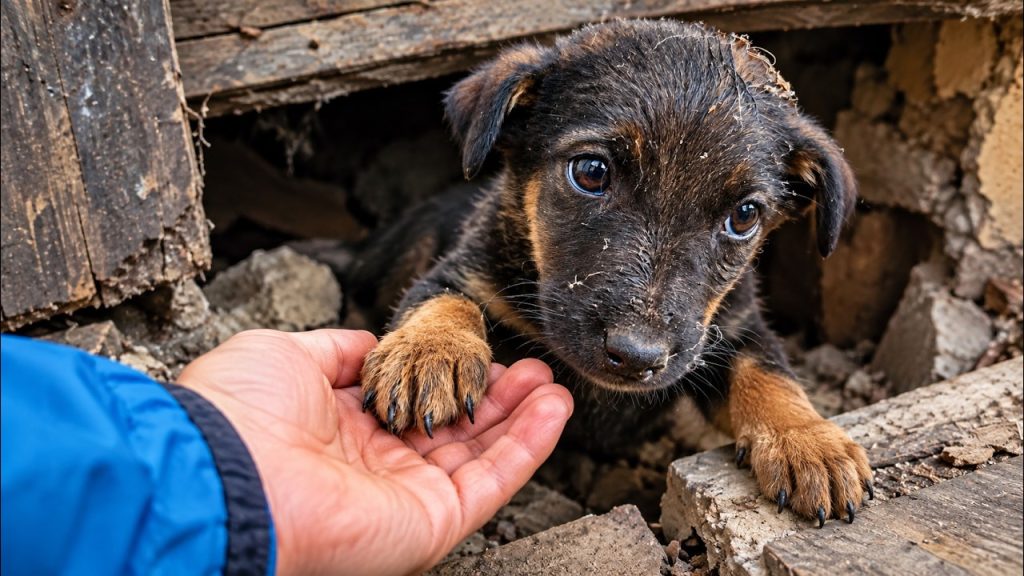
When he finally arrived, the village was deserted. Ruined structures and scattered debris stood between him and the animal he had come to find. Somewhere beneath the rubble of a collapsed house, the puppy was hiding, too frightened to emerge. Being close enough to search was not the same as being close enough to help.
The rescuer examined the debris and used small cameras to look into spaces he could not easily reach. Those cameras helped him locate the puppy deep inside the wreckage. Finding him was a relief, but it presented another challenge: the little dog still had to be brought out carefully, without making a frightening situation worse.
He began moving the debris by hand. Piece by piece, he dug toward the small hiding place, relying on patience and care rather than haste. There was no easy way to reach the puppy. The rescuer was still ill, still exhausted, and now working with his bare hands among the remains of a house. Yet he continued until he could finally pull the tiny dog free.
The puppy was out of the rubble. He was no longer alone in the ruins.
After everything it had taken to reach him, the next things the little dog needed were wonderfully ordinary: food, water, and a safe place to be. In the car, the rescuer offered him something to eat and drink. The puppy had been starving, and even these simple comforts marked a profound change from what he had just endured.
As they traveled back, the frightened little survivor began to relax. He cuddled with the man who had dug him out, a tender change from the fearful puppy hidden beneath broken debris. The journey that had begun with fever, distance, and uncertainty now included a small creature resting close to the person who had found him.
The rescuer chose a name that would always carry something of that first meeting: Dig Jagger. “Dig” honored the effort of digging him from the ruins, while “Jagger” gave a playful nod to a rock star. It suited a little survivor whose life had already demanded more toughness than any puppy should need.
But getting out of the abandoned village was only part of his new beginning. The rescuer’s fever was worsening, and he was still struggling with exhaustion. Even so, he took Dig to a veterinarian rather than assuming the puppy was fine simply because he was safe in the car.
At the clinic, the veterinarian examined Dig, checking his eyes, ears, teeth, belly, and temperature. After the fear and uncertainty of the rescue, the findings offered welcome reassurance. Dig had no other health problems identified during the examination. He was malnourished and needed proper nourishment and hydration, but otherwise the veterinarian considered him healthy.
For a puppy found beneath the wreckage of a collapsed home, that was precious news. His hunger needed attention, and his small body needed care, but he had reached help without the serious illness or injury that the rescuer might have feared. The first steps toward a better life could now be as simple and important as being fed, given water, and kept safe.
When they finally reached home, Dig encountered another unfamiliar experience: his first warm bath. He squirmed and was frightened of the water at first. The moment called for gentleness, not impatience. Gradually, the puppy relaxed, allowing the washing to become part of the care he had been missing.
Once he was clean and dry, he was introduced to a cozy bed of his own in the living room. There was food, too. Dig ate a hearty dinner, no longer having to face hunger in the ruins. Then he began curiously playing with a small ball, an ordinary puppy pleasure that felt especially meaningful after his rescue.
A bed. A meal. A ball. None of these things is remarkable in a home where a dog is loved. For Dig, each represented a world different from the abandoned house where he had been found. Nothing about his new surroundings required him to hide beneath rubble. He could rest, eat, and explore in safety.
At last, the exhausted rescuer and the little puppy fell asleep together. The man was still very sick, and the effort had cost him dearly in strength. But he felt that saving Dig’s life had been worth every mile. The tiny dog who had waited in the ruins was now warm, fed, and close to someone who cared. Sometimes a second chance begins because one person decides that a life, however small, is worth reaching.