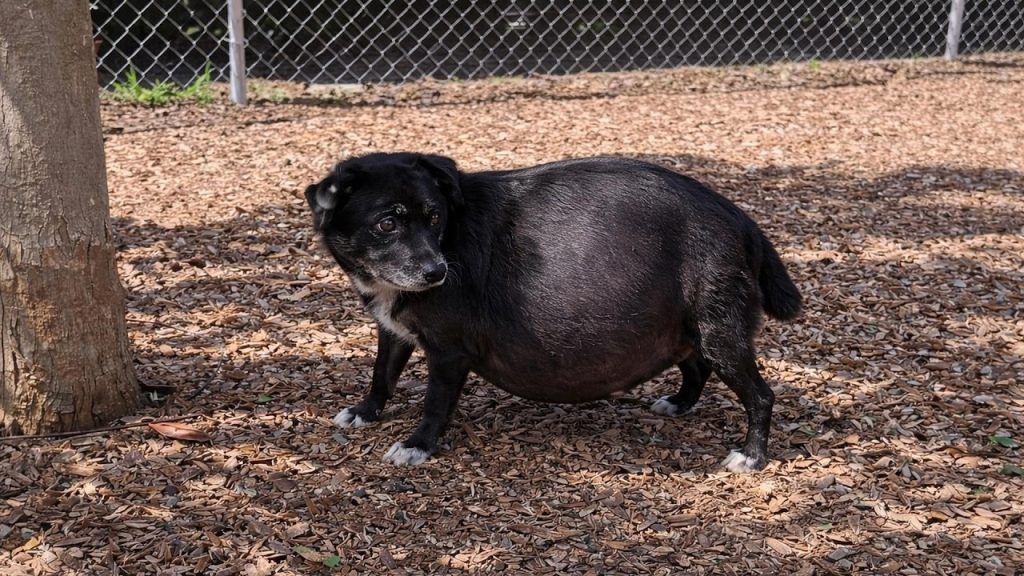
At about two years old, Kenna had already experienced abandonment. By the time the rescue organization Promise for Pause took her in, she was shy and anxious. The unfamiliar care surrounding her offered a chance at security, but trust was not something she could regain all at once. She needed patience, steadiness, and someone willing to give her room to settle.
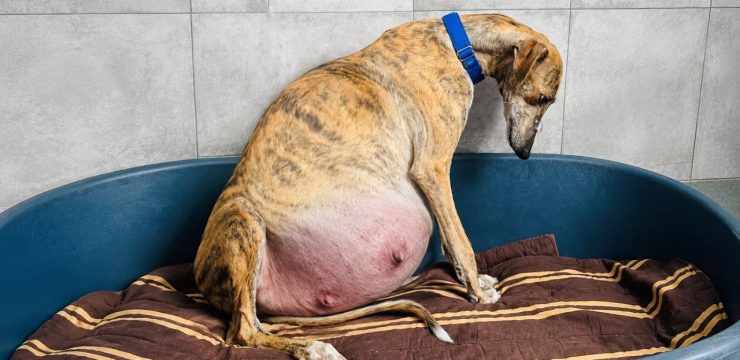
A veterinary X-ray brought an unexpected discovery. Kenna was pregnant with three puppies. The news meant that caring for her now involved protecting four lives, each with needs that could not be ignored. A woman agreed to foster Kenna and support her through the pregnancy and delivery. For a dog who had been left behind, having a dedicated caregiver marked a meaningful change.
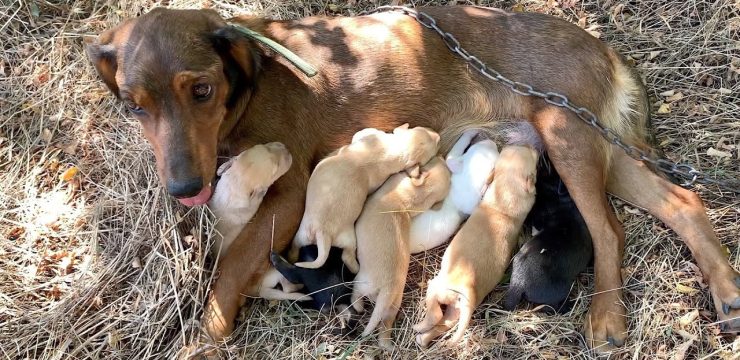
Kenna gave birth to three healthy puppies. One was Nalu, a plump gray-black little girl whose looks suggested a Shar-Pei mix. The other two, Koa and Lana, were golden-colored puppies resembling miniature Golden Retrievers. Each was different, and together they brought a new kind of energy into Kenna’s care.
For a moment, it seemed that the greatest challenge was behind them. The puppies had arrived safely, and Kenna was a mother. But her body was still in trouble.
Three placentas had remained after delivery. One had become infected. It was a serious complication requiring emergency veterinary surgery, a frightening turn after everything Kenna had already endured. The procedure was necessary to remove the retained placentas and address the danger to her health. Her foster caregiver and the veterinary team now had to focus not only on the puppies but also on keeping their mother alive and helping her recover.
Kenna made it through the operation. Her recovery, however, came with the demands of nursing three growing babies. Despite the surgery and her weakened condition, she continued producing milk. She stayed affectionate with her puppies, offering them the closeness that newborns need. Her determination as a mother was apparent in the care she continued to give, even while needing care herself.
Love did not erase the practical difficulties. Kenna’s milk supply was limited, and the puppies needed more nourishment than she could provide alone. Her foster caregiver stepped in with supplemental feedings, getting up three times each night to make sure the little ones had enough. Those interrupted nights became part of the quiet work of helping this family grow stronger.
Slowly, the puppies began reaching the small milestones that mean so much to anyone caring for newborn animals. Koa and Lana started opening their eyes. Their world was changing, and the caregiver who had supported their mother remained close as they grew. Each new sign of development carried special meaning after the medical emergency that had threatened their start.
The puppies were also regular visitors to San Juan Animal Hospital, where their foster caregiver worked. She brought them along in a basket, allowing their health to be monitored while they received the attention and protection they needed. The arrangement helped her balance her work with the responsibility of caring for a very young litter.
As the puppies became stronger, their needs changed. Supplemental milk gradually gave way to learning how to eat a mixture of goat’s milk and Royal Canin kibble. They began practicing their steps, then running and exploring. They chewed toys, played, and interacted with larger dogs. The helpless newborns were becoming curious young animals, each discovering what a growing body could do.
Nalu, Koa, and Lana were no longer simply tiny puppies nestled beside their mother. They had become lively companions with personalities of their own. Their foster caregiver helped them learn basic commands, including coming when called. It was another sign that they were preparing for life beyond the home that had kept them safe during their earliest weeks. Their progress, from needing extra milk at night to answering a command, reflected many hours of patient care.
Eventually, all three were ready for adoption. At eight weeks old, they had reached the stage when new families could welcome them. Their lucky adopters offered the opportunity for the secure homes every rescued puppy deserves. The outcome was joyful, but it also meant a profound change for Kenna.
After her puppies left, she struggled. Kenna stopped eating, had trouble sleeping, and appeared deeply sad. Her caregiver understood that the separation was affecting her. The mother who had devoted herself to feeding and comforting three little ones now faced the absence of all three. Her physical recovery had been one kind of challenge; adjusting to the quiet after motherhood was another.
There was no quick way to make that sadness disappear. Kenna needed continued attention and affection, just as she had needed careful support through her pregnancy and surgery. Her caregiver stayed devoted to her well-being, offering the love and stability that had helped the family through its most difficult days. Gradually, Kenna began to move beyond the period of withdrawal.
And then her joy became visible again. She ran and played freely, her tail wagging with unmistakable enthusiasm. The timid rescue dog who had arrived burdened by fear was now healthy, energetic, and able to enjoy her own life. Motherhood had shaped an important part of her journey, but it did not have to define every chapter that followed.
Kenna’s three puppies had loving new homes, and she had found her happiness again. Her story holds both sides of rescue: the urgent medical help that saves a life and the patient, everyday care that helps that life become full. Sometimes a second chance means surviving the hardest moment. Sometimes it means discovering there is still joy waiting afterward.