She dropped the plate by accident. Her hands were shaking, and the ceramic shattered across the worn tile floor like a secret finally breaking free. The waitress — exhausted from a double shift, still wearing the same apron she’d washed twice that week — could barely breathe as she looked up and met the eyes of the man standing in the doorway.
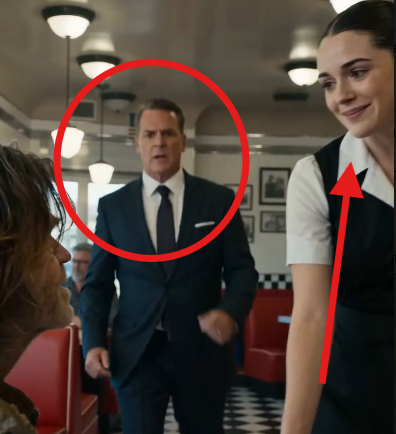
He wasn’t just any customer. He was the owner.
She braced herself. Her heart pounded so hard she could feel it in her throat. In her years of working at this diner, she had seen people fired for less. She had seen grown men reduced to silence with a single look from someone in power. And right now, that look was aimed directly at her.
The broken pieces of the plate lay scattered at her feet like shards of her worst fear come to life.
The manager rushed over, his voice low and tight. “Sir, I didn’t know she—”
The owner raised one hand, and the manager stopped speaking immediately.
The whole diner went quiet. Not the kind of quiet that happens between songs on the jukebox. The kind of quiet that settles into your chest and makes you hold your breath without realizing it. The other customers, mid-bite, mid-sip, mid-sentence — all of them paused. Every eye in the room shifted toward the two of them.
The owner looked at the broken plate on the floor. Then he looked at her.
When he finally spoke, his voice was low and steady, carrying the weight of something far older than this moment.
“You fed me when everyone else judged me.”
The waitress blinked. She didn’t understand. She searched his face, trying to place him, trying to remember. Had she served him before? When? He didn’t look familiar — and yet, something about the way he stood there, the way his eyes softened when they landed on her, made her feel like he’d been carrying this moment for a very long time.
The manager tried again. “Sir, I didn’t know—”
The owner turned to him slowly, and this time his words were deliberate, each one measured like a drop of something heavy falling into still water.
“That’s the problem.”
Silence swallowed the room whole.
The waitress felt a tear slip down her cheek before she even realized she was crying. She wasn’t even sure what she was feeling — fear, confusion, something tender and raw she didn’t have a name for yet. She wiped it away quickly, the way women who are used to holding it together always do. She straightened her apron. She stood a little taller. She waited.
Then the owner reached into the inside pocket of his worn jacket — the kind of jacket that had seen real winters, real struggles, real years — and pulled out a photograph. Old and folded, its edges soft from being handled so many times.
He unfolded it gently, the way you unfold something precious. Something you’ve kept close to you for reasons the rest of the world will never fully understand.
He held it out to her.
She took it with trembling fingers.
It was a photograph of this same diner. But younger. The booths were different, the lighting was warmer, the counter gleamed in a way it no longer did. And standing proudly beside that counter, chin lifted, eyes bright with a kind of joy that only comes from doing exactly what you were meant to do — was a woman.
A woman the waitress knew in her very bones.
Her face went white.
The photograph slipped slightly in her grip, and she caught it, holding on like it was something sacred. Because it was.
“That’s my mother…” she whispered.
Her voice broke on the last word. Not dramatically, not loudly. Just the way a heart breaks when it finally recognizes something it’s been searching for without knowing it was searching at all.
The owner nodded. His jaw tightened the way men’s jaws tighten when they are trying very hard not to let their own emotions overflow in public.
“She saved this place once,” he said, his voice thick with memory. “Years ago, when I had nothing. When I walked through that door cold, hungry, and invisible to the rest of the world — she saw me. She fed me. She treated me like I was somebody.”
He paused. The whole diner was still listening. No one moved. No one pretended not to hear.
“She never asked for anything in return. She just said that’s what you do for people. You see them. You take care of them. You don’t let them disappear.”
The waitress pressed her fingers to her lips. Tears ran freely now, and she didn’t wipe them away this time. She let them fall, because some moments deserve to be felt fully, without apology, without hiding.
The owner looked at her — really looked at her — and something passed between them that couldn’t be put into words. Recognition. Gratitude. The quiet miracle of grace finding its way back to where it started.
“Now it belongs to you,” he said.
Three words built from a lifetime of memory. Three words that meant: your mother’s kindness did not disappear into the air. It lived. It multiplied. It found its way back to her daughter, standing in the very same diner, wearing an apron, just like she once did.
The waitress stood there in the middle of that little diner, surrounded by strangers who no longer felt like strangers, holding a photograph of her mother in her hands, and understood something that no one ever teaches you when you are young.
Kindness is never wasted. It travels further than you can see. It outlives the person who gives it. And sometimes — if you are very lucky — it comes home.