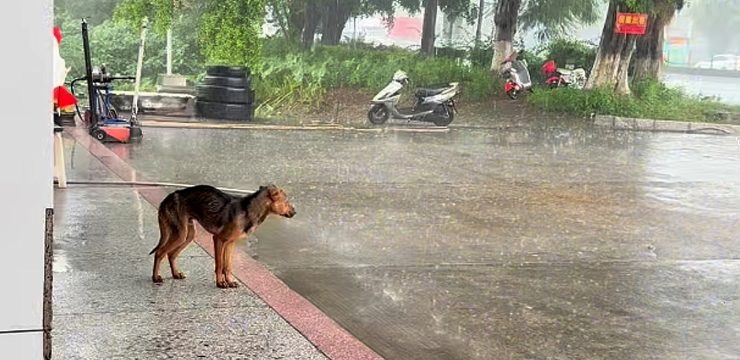
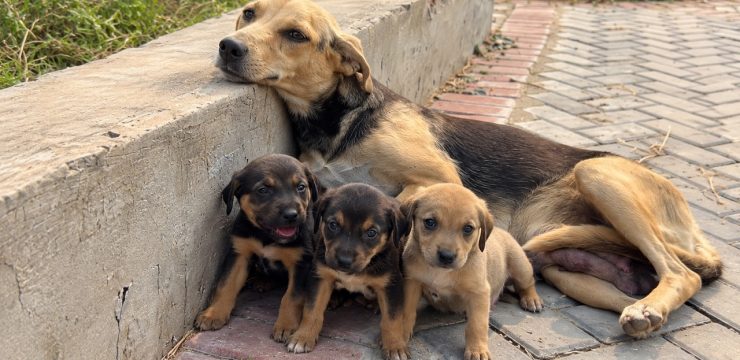
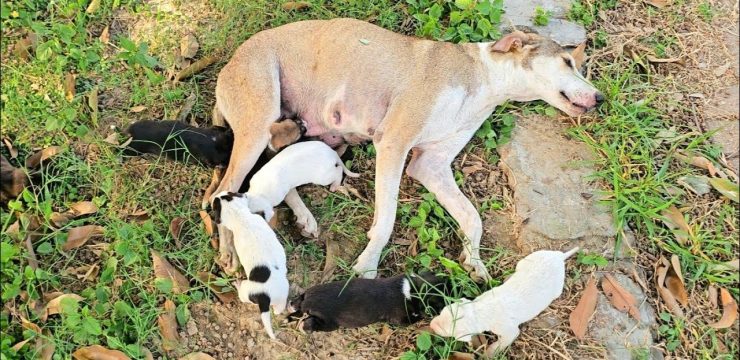
For years, she remained in the same lonely place, watching the world from a distance and living with a fear she could never seem to escape.
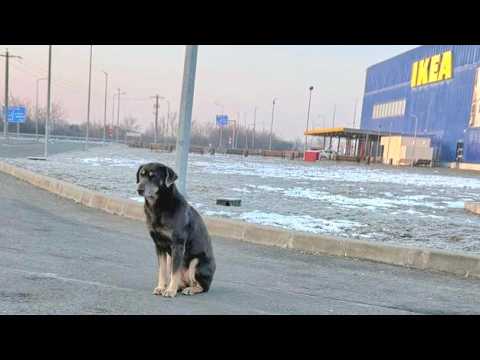
She was a dog without a family, without a home, and without the simple comfort of knowing she was safe. While life continued around her, she stayed alone, frightened by nearly everything and unable to trust the people who wanted to help.
There is something especially painful about a dog who has spent so much of her life afraid. Dogs are naturally drawn to companionship, and many find happiness in the smallest expressions of affection. A gentle touch, a familiar presence, or a peaceful place to rest can mean so much to them. But for this lonely girl, even those ordinary comforts seemed impossibly far away.
She had lived in the same area for years, surviving without an owner or another dog to keep her company. Her days were shaped by caution and uncertainty. She watched her surroundings carefully, always alert to whatever might happen next. The world that should have offered opportunities for companionship had instead become a place she approached with overwhelming fear.
Whenever people tried to come close, she kept her distance. Even the gentlest approaches could not convince her that human contact was safe. She would retreat rather than allow anyone to touch her. It did not matter how carefully someone approached or how much kindness they hoped to offer. Her fear stood between her and the help she desperately needed.
For those trying to rescue her, this created an unusually difficult challenge. Helping a frightened animal requires patience, but helping a dog who has avoided human contact for years demands an even deeper understanding. A person cannot simply explain that everything will be all right. Trust must develop through experiences that allow the animal to feel safe, without being forced into situations she cannot yet handle.
Her suffering was not defined by a visible injury. The most difficult part of her condition was the fear that had come to shape nearly every aspect of her existence. Although her past experiences with people were not fully known, her behavior revealed just how difficult human contact had become for her. Whatever had brought her to this point, she needed more than someone willing to provide food and shelter.
She needed someone willing to understand her.
That distinction became especially important when considering what kind of future would truly help her. An animal shelter can provide essential protection for dogs who have nowhere else to go. Yet for a dog as frightened as she was, a shelter could also be overwhelming. Unfamiliar voices, barking dogs, constant activity, and the presence of strangers might make it even harder for her to relax.
A safe environment is important, but safety alone does not always make an anxious animal feel secure. For this gentle soul, the surroundings themselves mattered. She needed peace, consistency, and the opportunity to discover that not every unfamiliar experience had to be frightening.
A quiet home offered a different possibility.
Instead of constant activity and unfamiliar faces, she could have a calm environment where her needs were respected. Rather than being expected to accept affection immediately, she could be allowed to maintain whatever distance made her comfortable. Nobody would need to rush her toward a milestone she was not ready to reach.
The family she needed would have to understand that love does not always begin with cuddles or playful moments. Sometimes, love means accepting that an animal is afraid and allowing her to approach life at her own pace. It means recognizing that a frightened dog may need space more than attention, patience more than encouragement, and consistency more than anything else.
For her, an ideal adoptive family would be gentle, understanding, and prepared for a gradual process. They would not expect her personality to change simply because she entered a home. They would understand that adjusting to unfamiliar surroundings could be difficult and that building trust might involve many small steps.
A calm, compatible canine companion could also make a meaningful difference. Another dog, comfortable with people and familiar with the rhythms of home life, might offer reassuring companionship. Such a relationship could help her become more comfortable with experiences that had always seemed frightening, although every step would still depend on her individual needs and readiness.
There was no reason to expect an immediate transformation. A dog who had spent years protecting herself through distance and caution would need time to learn a different way of living. Even the smallest improvement in her willingness to trust would deserve recognition, without placing unnecessary expectations upon her.
That is what made her situation so moving. She was not being asked to become a different dog. She simply needed the opportunity to experience a life in which fear no longer controlled every interaction.
Her future remained an open chapter. She was still searching for a special family capable of offering the patience, understanding, and peaceful home environment she needed. Finding that family would be an important step, but it would not automatically erase the difficulties she had experienced.
What mattered was giving her a genuine opportunity to feel secure and to build trust without pressure.
For people who have shared their lives with animals, her circumstances carry a particularly tender reminder. The quiet companionship of a beloved dog is something many families cherish without thinking twice. Yet there are animals for whom that ordinary closeness remains unfamiliar, not because they are undeserving of affection, but because fear has made accepting it so difficult.
This lonely girl deserved the same consideration as any other dog. Her reluctance to be touched did not make her less worthy of a caring family. Her need for patience did not make her any less deserving of a peaceful home.
Her story also reminds us that rescue is not always a single moment when an animal is carried away from danger. Sometimes, the greater challenge comes afterward, when a frightened animal must be given the conditions necessary to feel safe. Providing physical protection is essential, but understanding emotional needs can be just as important to an animal's long-term well-being.
For a dog who has spent so much of her life alone, a second chance may begin with something remarkably simple: a home where nothing is demanded of her before she is ready.
No pressure to accept a touch. No expectation that she must immediately trust unfamiliar people. No requirement that she overcome her fears according to someone else's schedule.
Just patience, stability, and the possibility of discovering a gentler life.
There is still uncertainty ahead for this sweet dog, and her journey toward trust cannot be rushed or guaranteed. But the search for an understanding family offers something she has needed for so long: the possibility of a future shaped by compassion rather than fear.
Every animal deserves to feel safe, even those who have forgotten how to trust. And sometimes, the greatest expression of love is not reaching out to hold a frightened dog, but giving her the time and space to discover that she no longer needs to be afraid.