The golden afternoon light filtered through the dusty windowpanes of the quiet living room, casting long and weary shadows across the worn surface of the oak dining table.
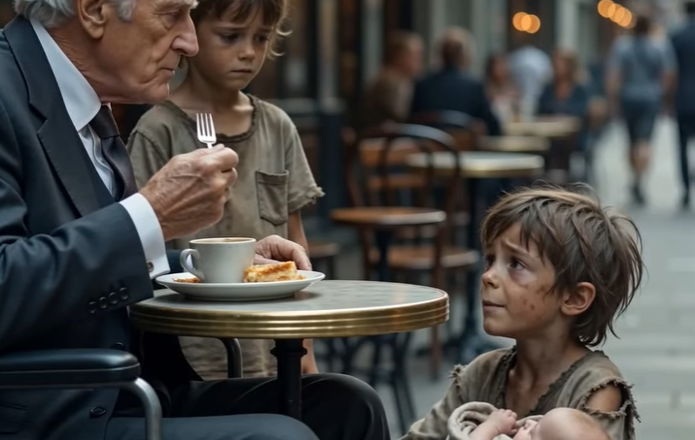
An elderly man sat alone in his wheelchair, his motionless silhouette framed against the glass, completely isolated from the bustling world outside. For a very long time, the only sound filling the silent house was the slow, measured rhythm of his own breathing. Then, without warning, everything changed in a single heartbeat. The old man stared intently down at his right foot. It moved again. It was nothing more than a faint, almost imperceptible twitch beneath the dark wool of his trousers, a microscopic flutter of nerves. But to a proud man who had spent many years trapped in a devastating state of physical stillness, it felt like a seismic shift. His trembling hand clamped down hard on the edge of the wooden table, his worn knuckles turning a stark, bloodless white as he crushed his fingers against the timber. His pounding heart hammered violently against his aching ribs as sheer, overwhelming disbelief washed over him, leaving him completely breathless in the gathering silence.
“What did you say?” he whispered desperately, his voice sounding like dry autumn leaves scraping across rough pavement. In front of him stood a young boy whose frail shoulders carried a sorrowful burden far too heavy for his tender age. The boy’s voice shook slightly with lingering fear, yet his determined gaze remained steadily fixed on the elderly man. “My mother always told us the story,” the young boy explained carefully, swallowing hard to clear the heavy lump in his throat. “She said your legs stopped working the very night she ran away into the pouring storm.”
A sudden, suffocating paleness washed over the old man’s lined face, instantly draining whatever warmth his weathered skin possessed. The familiar room seemed to tilt dangerously beneath the heavy wheels of his chair. “Who is your mother?” he demanded hoarsely, his breath catching sharply as a painful, beautiful realization took root inside his aching chest. The young boy did not answer with immediate words. Instead, he looked gently down at the fragile bundle cradled carefully in his tired arms—an infant, fast asleep and wrapped securely in a faded blue blanket. “Her name was Lily,” the boy whispered softly, his voice echoing with profound reverence.
The heavy silver fork slipped effortlessly from the old man’s unfeeling fingers, hitting the porcelain dinner plate with a sharp, echoing sound that pierced the heavy silence of the room. Lily. His cherished daughter. The beloved child he had ruthlessly banished from his home during a raging storm because she bravely chose to love a poor, honest mechanic instead of the wealthy, influential suitor he had stubbornly handpicked for her future. He vividly remembered the blinding fury that had consumed his mind, driving him to chase her out into the freezing rain. He remembered the slick asphalt, the blinding glare of oncoming headlights, the deafening crunch of twisted metal, and the sudden darkness that followed. He had never seen her again after the horrific crash that shattered his spine and bound him permanently to a cold steel wheelchair, leaving him to endure years of solitary remorse.
The old man’s voice cracked painfully under the crushing weight of decades of unresolved grief. “She’s alive?” The boy’s tired eyes filled with hot tears that spilled silently over his hollow cheeks. “She was,” he corrected softly, his words carrying a devastating finality that sent chills through the quiet room. In an instant, the surrounding noise of the outside city completely disappeared from the old man’s awareness. The world suddenly narrowed to this single room, these abandoned children, and the unbearable weight of a profound loss. Slowly, with immense difficulty, the old man looked from the grieving boy to the sleeping baby. The boy continued, barely breathing. “She had me first. Then my sister. Then him.”
As if on cue, a smaller child stepped closer from the quiet shadows near the doorway, holding the old man’s frayed sleeve with trembling, dusty fingers. She wore oversized shoes that had seen miles of hard travel. “Mom said you were angry,” the little girl whispered gently, looking up with innocent eyes that mirrored his lost daughter perfectly. “But she said angry people can still come home.” The old man covered his face, trembling uncontrollably. For years, he had bitterly blamed the metal wheelchair for making him cynical and detached from humanity. He had convinced himself that physical suffering was the source of his misery. But seeing these three precious children standing in front of him, the harsh truth finally pierced his soul. The real wound had never been in his broken spine or paralyzed legs. It had been deep within his heart, rooted in the stubborn refusal to forgive the daughter who only wanted to follow her own honest dreams and seek unconditional love.
The kneeling boy placed the baby’s tiny hand gently on the old man’s knee once again. “She said he has her hands.” The old man broke completely. Not loudly, but deeply and irrevocably. His tired eyes filled to the brim, and the proud, stern face he had worn like armor for a lifetime fell apart into heartfelt tears. “What did Lily want from me?” he wept softly. The boy pulled a folded note from the baby blanket. The old man opened it with shaking hands, instantly recognizing her looping handwriting: Dad, if my children find you, please don’t let pride bury them too. The old man let the note fall as he reached out toward the lonely children. “I’m sorry,” he whispered softly. The older boy’s lips trembled with overwhelming emotion. “We don’t need sorry.” The old man looked at the sleeping baby, then at the two hungry children standing before him on the cold sidewalk. “What do you need?” he asked gently, his heart aching with remorse and newfound hope. The boy answered through heartfelt tears. “A grandfather.”