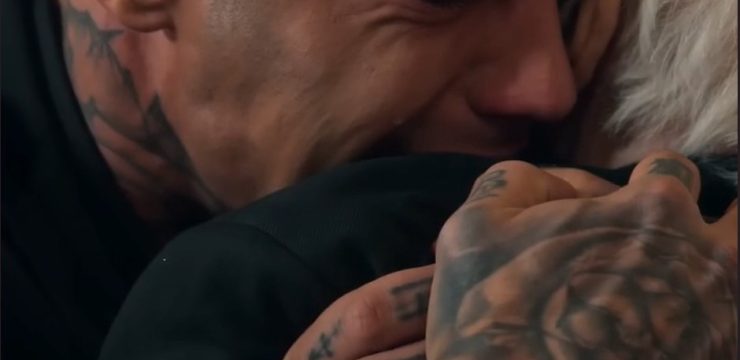
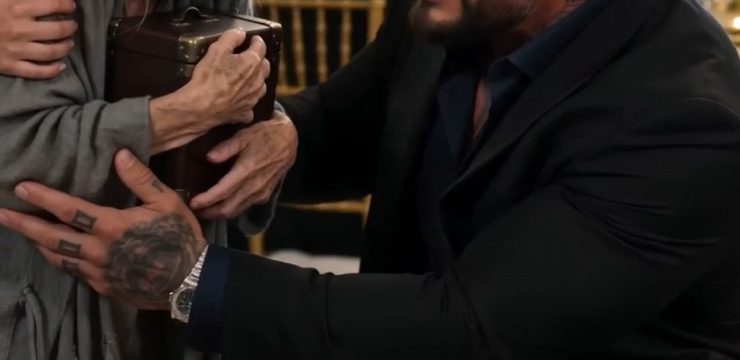
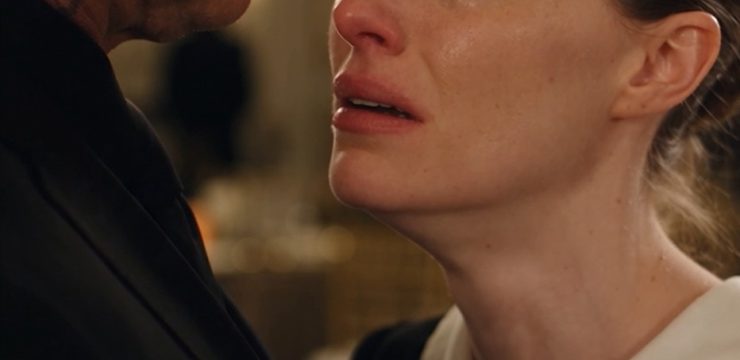
The hospital ward was peaceful in the way only night wards can be — the kind of quiet that feels almost sacred, broken only by the steady rhythm of a heart monitor and the soft hum of machines keeping someone tethered to the world of the living. She had been lying in that bed for nearly three months, motionless, her face pale against the white pillow, her chest rising and falling only because the equipment allowed it to.
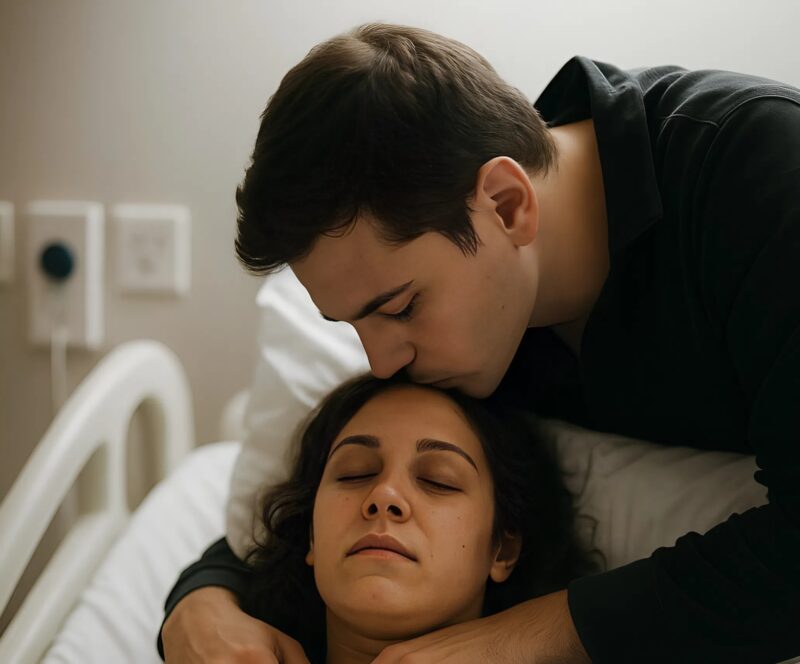
And every single day, without fail, her husband came.
He would sit beside her, cradle her hand in both of his, press his cheek gently against the pillow next to hers, and murmur soft words that no one else could hear. The nurses adored him. The doctors quietly admired him. Visitors who passed by the room would sometimes pause, moved by the sight of a man so utterly devoted to his unconscious wife. In a world full of people who walk away when things get hard, he stayed.
Or so everyone believed.
When the medical team gathered to deliver the news — that her body was failing, that the machines were doing all the work her organs could no longer manage, that a decision had to be made — he wept openly. His shoulders shook. He pressed his hands to his face. It looked like a man being hollowed out from the inside, grief carving through him like a blade.
He asked for a few moments alone with her. Just to say goodbye.
The request seemed more than reasonable. Heartbreaking, even. He was granted his time.
He walked into the room, closed the door softly behind him, and moved to her bedside. He lifted her cold hand, pressed his lips gently to her forehead in what appeared to be one final, tender kiss. And then he leaned down close to her ear and whispered words that were never meant for anyone else to hear.
What he didn’t know was that someone was listening.
Weeks before that moment, something had quietly shifted in the investigation surrounding her condition. What had initially been treated as a tragic medical event had drawn a second look from authorities after a nurse flagged an unusual detail during a routine check. Subsequent testing revealed trace amounts of a toxic substance in her bloodwork — not enough to cause immediate death, but precisely enough to hold a person suspended in that terrible space between living and dying.
The findings were deeply troubling. The kind of poisoning detected doesn’t happen by accident. It requires patience. It requires proximity. It requires someone who has regular, unquestioned access to the patient.
Law enforcement moved carefully. Rather than making an immediate arrest on evidence that, while damning, remained circumstantial, investigators chose a different approach. They worked with the medical team to create a controlled scenario — one in which the husband would be told that his wife had reached the end, that there was no hope remaining, and that it was time to make final arrangements. Plainclothes officers were positioned discreetly. The room was under surveillance.
And so the stage was set.
When he leaned down and whispered into her ear in that quiet hospital room, he believed he was speaking to someone who could not hear him, in a space where no one was watching. He was wrong on both counts.
His words, soft as they were, were captured. And they were devastating in their coldness.
“From now on, everything you own belongs to me. Farewell, my dear.”
No grief. No guilt. No farewell in the way a loving spouse speaks to someone they are losing. Just a quiet, calculated declaration of ownership — the final move in a plan he believed had succeeded.
He straightened up, composed himself, and walked toward the door.
Two officers were waiting in the hallway.
He faltered when he saw them, tried to speak, tried to explain, tried to construct something that made sense. But there was nothing left to construct. His own words had dismantled every story he might have told. He was escorted out of the building in handcuffs, down the long corridor he had walked every day as the devoted husband, and into a very different kind of reckoning.
Back in the room, the medical team now knew something crucial — the source of the poisoning had been removed. Her body, no longer being quietly undermined, could begin the work of healing on its own. The doctors monitored her closely, watching the numbers on her monitors with cautious hope.
And the numbers began to change.
Her fingers moved first. Small, tentative movements, as though she was learning what her hands were again. Then, slowly, her eyes opened — blinking against the light, searching the ceiling with a quiet confusion that is common to people returning from a long, dark place.
A nurse was beside her immediately, voice low and steady.
“It’s over,” she said gently. “You’re safe now.”
It took time for the full truth to reach her. For a woman waking up from what she had been told was illness, learning that the man who had sat at her bedside every day had been the very reason she was there — that the tenderness had been performance, the devotion a cover story, the whispered words of love a disguise for something far darker — that kind of truth doesn’t settle quickly. It lands in layers.
But she was alive. And he was not free.
The story is a stark reminder that sometimes the greatest danger in a person’s life wears the most familiar face. And that love, when it is weaponized, can be the most patient predator of all. She survived not because of any grand intervention, but because in his moment of quiet triumph, he could not resist speaking the truth — and the truth, as it always does, found its way into the light.