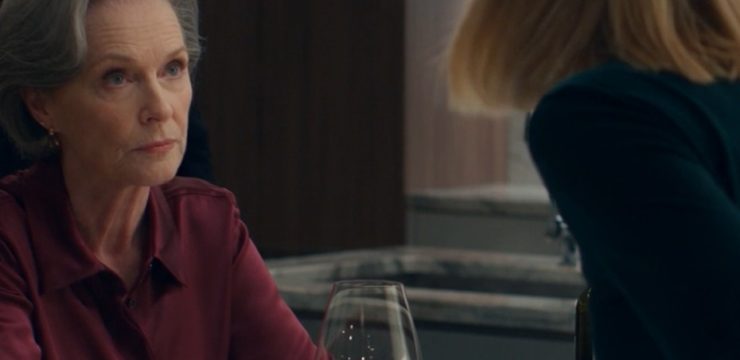
What happened next, nobody in that hospital saw coming. 👇
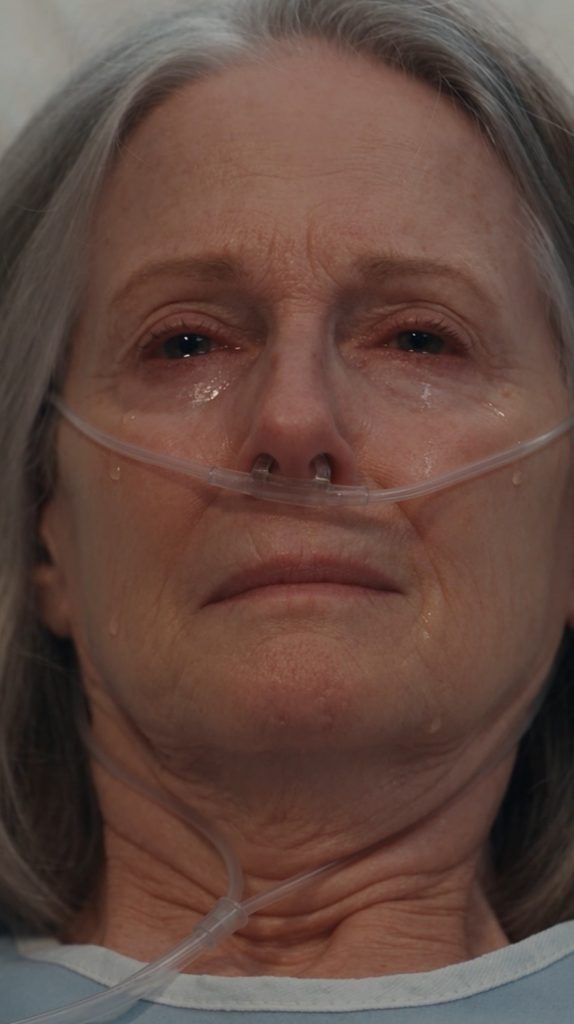
The door had barely clicked shut behind Henry when I heard footsteps in the hallway — quick, uneven, the sound of someone trying not to run.
I closed my eyes again, the way I’d learned to in the last hour, the way that let me listen without being seen listening.
It was Rachel. Alone this time.
She slipped into the room and stood at the foot of my bed, staring at the machines, at the numbers on the monitor, at me. For a long moment she said nothing. Then she took out her phone and started recording.
“Just for the lawyer,” she murmured to herself, angling the camera toward my face. “Proof of condition. Proof of timeline.”
My hand curled slightly against the blanket. She didn’t notice. She was already halfway out the door, already back in the hallway, already dialing someone.
I opened my eyes and looked at the ceiling and let myself feel it — not the injury, not the fear of dying, but the colder thing underneath. The thing that had been growing since the moment Mark whispered it’s finally happening into my ear like a prayer answered.
I was not going to die in this bed being filmed like evidence in someone else’s inheritance.
Henry came back an hour later with a folder instead of a clipboard.
“I want to be careful how I say this,” he said, sitting down slowly, the way a man sits when he’s about to hand someone something heavy. “But I think you need to see it with your own eyes instead of hearing it from me.”
He opened the folder on the rolling table beside my bed. Bank statements. A casino loyalty account under Mark’s name, six figures deep in losses over eighteen months. A collections notice addressed to Rachel at an address I didn’t recognize — a rental, not our penthouse, a place they’d apparently been keeping quiet.
And beneath all of it, a single printed email, dated three weeks earlier, from Rachel to a probate attorney named Daniel Crest.
Subject: Expediting incapacity proceedings — urgent.
I read it twice. My hands were shaking, but not from weakness.
“They tried to have you declared incompetent,” Henry said quietly. “Before the accident. This was already in motion, Helen. The crash didn’t create this. It just gave them an opening.”
The room went very still. Outside, a cart wheel squeaked past in the hallway, and somewhere down the corridor a monitor beeped in a rhythm that wasn’t mine.
I thought about all the years I’d defended Mark to people who called him lazy, entitled, soft. I thought about the nights I’d told myself he just needed time to find his footing. I had built an entire private mythology around my son, brick by brick, refusing to look at what was underneath it.
“I want you to help me do something,” I said. My voice came out steadier than I expected.
Henry leaned forward. “Anything.”
“I want a video of my own. Recorded properly, with a witness, stating clearly that I am of sound mind. And I want my attorney here by tomorrow morning — not Daniel Crest. Marguerite Osei. She’s handled my trust for fifteen years and she does not like being lied to.”
Henry almost smiled. “I already called her an hour ago. She’s driving in tonight.”
That night, I didn’t sleep. I lay in the dark listening to the hospital breathe around me, and for the first time since the accident, the fear in my chest wasn’t about dying.
It was about what I would have to do to the people I loved most in order to survive them.
Marguerite arrived just after seven the next morning, sharp-suited and unhurried, the calm of a woman who had disarmed far worse people than my son over a conference table. She sat beside my bed with a legal pad and listened without interrupting while I told her everything — the whispered words, the cruise, the furniture, the email Henry had found.
When I finished, she didn’t say I’m sorry. She said, “Good. Now we move faster than they do.”
Over the next four days, while the hospital staff kept my “condition” quietly unchanged for outside ears, Marguerite restructured the trust from the ground up. She documented my competency with two independent physicians. She flagged the incapacity filing as fraudulent and froze every account Mark or Rachel could touch. Quietly, deliberately, she built a case that could not be unbuilt.
Mark visited twice during that time. Both times, he sat by the bed performing a grief he no longer needed since, in his mind, the outcome was already settled. He held my hand. He told me he loved me. He asked, so gently, so casually, whether I’d thought any more about “putting things in order.”
I let him believe I hadn’t.
The confrontation came on the fifth day, in a conference room down the hall from my hospital bed, because Marguerite insisted I be wheeled in myself — present, alert, undeniable.
Mark’s face changed the moment he saw me sitting upright, color back in my cheeks, my eyes clear and unclouded by whatever ending he’d been counting down to.
“Mom,” he said carefully. “You look… better.”
“I am better,” I said. “Sit down, Mark.”
Rachel came in a step behind him, and when Marguerite slid the folder across the table — the casino statements, the rental lease, the incapacity filing dated three weeks before the accident — I watched something in Rachel’s face give out entirely. Not tears this time. Just the sudden, bare terror of someone who understands the story is already over and they are the only one who hasn’t finished reading it.
“You had a doctor lie to you,” Mark said, his voice cracking toward anger because it had nowhere else to go. “This isn’t fair—”
“No,” I said. “What isn’t fair is standing beside my hospital bed telling my daughter-in-law you can’t wait for the smell of my dying body to stop bothering you.”
The room went silent in a way I will never forget. Rachel’s hand found the edge of the table like she needed something solid to hold. Mark’s mouth opened and nothing came out, because there was nothing left to say that wouldn’t be a lie on top of a lie.
“The trust is restructured,” Marguerite said calmly. “Effective this morning. Neither of you has access to anything until Helen decides otherwise, if she ever does. The incapacity filing has been reported to the state bar. Mr. Crest will be answering for that separately.”
Mark’s downfall didn’t come as a shout. It came as silence — the specific, hollow silence of a man watching every convenient assumption he’d built his life on collapse at once. Rachel didn’t even look at him. She was already calculating her next move, and for the first time, I understood I had never really been the one she was performing for. She’d been performing for the money the whole time.
They left separately. I never saw them arrive together again.
The twist came three weeks later, when I was well enough to be home, sitting on my balcony with the Miami skyline turning gold at the edges. A knock at the door. A young woman I didn’t recognize, nervous, holding an old photograph.
“Mrs. Whitfield,” she said. “My name is Sofia. I think you knew my grandmother. Dr. Henry said I should come to you directly.”
The photograph was of my husband, decades younger, standing beside a woman I’d never seen — and beside her, a baby.
It turned out my husband, before we ever met, had a daughter he never knew existed, given up in a private adoption he’d only learned about in his final year, too ashamed and too sick to ever tell me. Henry had known. He’d kept the secret out of loyalty, until watching Mark’s betrayal made him realize secrets kept too long only ever protect the wrong people.
Sofia wasn’t there for money. She didn’t know about the trust, hadn’t asked for anything. She’d only wanted, finally, to know where she came from.
I invited her in. We talked until the sky went dark, and for the first time in longer than I could remember, my house didn’t feel like it was waiting for me to die in it.
Mark eventually got help — real help, the kind that comes after rock bottom rather than before it. We speak sometimes now, carefully, the way people speak after an earthquake, checking which walls are actually still standing. Rachel I never heard from again.
Sofia moved into the guest wing that spring. She calls me Helen still, gently, like she’s giving me room to decide when I’m ready for something else.
Some evenings, we sit together on that same balcony, the city glittering below us, and I think about how close I came to leaving this world believing I had nothing left worth staying for — and how wrong, in the end, I had been.