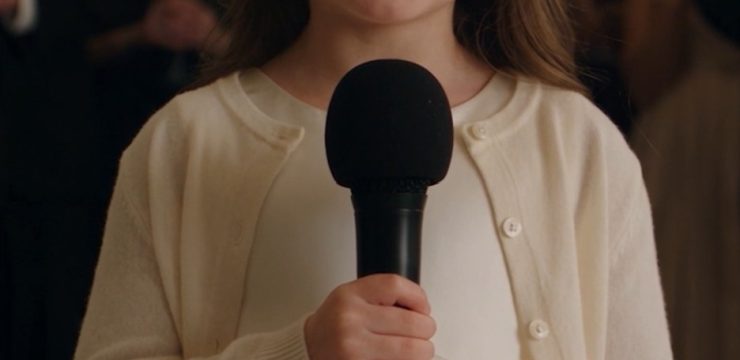
The cake hit the patio stones with a soft, sickening collapse.

For one suspended second, nobody moved. Sixty-five candles rolled through crushed lemon frosting while my daughter-in-law lifted her wineglass, raised one eyebrow, and watched me with the faintest trace of satisfaction.
“Oops.”
My son had seen everything.
Harrison had watched Sloan shift her elbow. He had watched the cake fall. And instead of defending me, he lowered his eyes.
That silence hurt more than the ruined birthday cake.
Brenda, my closest friend, had made it by hand because she knew how much I had been dreading turning sixty-five. Not because of the number, but because of what the last year had turned my life into.
For eleven months, I had moved carefully through the home my late husband, Daniel, and I had spent thirty-two years earning.
Harrison and Sloan were supposed to stay temporarily after he lost his job.
Temporary became months.
Then Sloan began taking over closets. Cabinets. Bathrooms. Kitchen shelves. Spaces that had once belonged to me disappeared so gradually that I barely noticed until I felt like a guest in my own house.
Whenever I objected, Harrison asked me not to “start something.”
So I stopped.
Until that afternoon.
I stared at the broken cake, then looked across the patio.
Beside the fire pit sat Sloan’s $2,500 Gucci handbag—the one she had spent half the party telling everyone Harrison had surprised her with.
I walked toward it.
Harrison finally looked up.
I picked up the purse, carried it three steps, and lowered it directly into the glowing embers.
Then I turned back to Sloan.
“Oops.”
Her scream cut through the yard.
Suddenly Harrison had plenty to say.
Not about my birthday cake. Not about what his wife had done.
About the handbag.
Sloan lunged for the fire tongs and dragged it from the flames, but one side had already blackened and curled.
“You did that on purpose!”
I met her eyes.
“So did you.”
The party died right there.
Guests quietly collected purses, jackets, and children. Nobody knew where to look.
Unfortunately, Harrison and Sloan had nowhere to go.
They were still living in my house.
At exactly 10:43 that night, Harrison knocked on my bedroom door.
He told me Sloan was “devastated.”
She wanted an apology.
And $2,500.
I reminded him that pieces of my birthday cake were still outside.
His expression hardened.
“You’re acting childish.”
Something shifted inside me.
For the first time, I didn’t hear the frustrated voice of the little boy I had raised.
I heard a thirty-five-year-old man speaking disrespectfully to another adult.
When he demanded again that I replace the purse, I gave him the simplest answer I had spoken in months.
“No.”
The next morning, I sat at the kitchen table with a yellow legal pad.
Across the top, I wrote two words.
MY HOUSE.
Then I began taking it back.
Sloan’s belongings came out of my linen closet, laundry cabinets, hall bathroom, kitchen, and guest room. I boxed everything and left them only the bedroom and bathroom they actually used.
When Sloan finally came downstairs, she was wearing one of my robes.
She stared at the boxes.
“You need to act like family.”
My eyes settled on the robe.
“Take that off.”
For once, Sloan said nothing.
I installed locks on my bedroom and office. I stopped buying groceries for three adults. Their food got one refrigerator shelf and one cabinet.
Harrison stared at the empty space in disbelief.
“You seriously expect us to buy our own groceries?”
“You are thirty-five.”
For four days, the house filled with slammed doors, heavy footsteps, and simmering resentment.
Harrison kept bringing up the Gucci bag.
My answer never changed.
No.
Strangely, neither did my pulse.
The more boundaries I set, the calmer I became.
For almost a year, I had confused keeping the peace with keeping Harrison and Sloan happy.
Once I stopped managing their anger, their anger stopped running the house.
On the fifth morning, I drove to the bank.
I planned to do one thing: remove Harrison as an authorized user from an emergency account Daniel and I had created years earlier.
It was meant for real emergencies—medical bills, unemployment, urgent repairs.
After Harrison lost his job, I had added him.
Because he was my son.
Because I trusted him.
The banker opened the account.
Her smile vanished.
“Ms. Bennett… have you been reviewing the recent activity?”
My stomach tightened.
“What activity?”
She hesitated, then slowly turned the monitor toward me.
And as the screen came into view, I realized the burned Gucci handbag might be the smallest betrayal waiting for me there.
Nobody in that house was prepared for what those numbers were about to reveal. 👇
The banker did not speak while I stared at the screen. The numbers were arranged in neat rows—dates, transfers, withdrawals, charges—each one quietly cutting into something Daniel and I had spent years building.
My hand moved toward the monitor. “That one.”
A charge for $2,487.36 had posted six days earlier.
GUCCI.
For a moment, all I could see was Sloan dragging that scorched handbag from the fire, screaming that I had destroyed something Harrison had bought for her.
Except Harrison had not bought it.
I had.
“How much altogether?”
The banker typed for several seconds.
“Just under forty-seven thousand dollars.”
The room went silent.
There were cash withdrawals, credit-card payments, hotel charges, transfers to an account I did not recognize, and an eighteen-thousand-dollar transfer scheduled but not yet cleared.
The receiving account carried Sloan’s name.
Then the banker showed me three scanned withdrawal forms.
My name was signed at the bottom.
I had never seen them before.
She asked whether I wanted the account frozen.
I thought of Harrison at six, crying over a broken bicycle. Harrison at Daniel’s funeral, gripping my hand. Then I saw him again on my patio, lowering his eyes while my cake hit the stones.
“Yes,” I said.
“Freeze it.”
The banker explained that the fraud department would contact me and that I would need to identify every transaction I had not authorized.
I understood what that meant.
I could no longer protect Harrison from the consequences of whatever had happened inside my house.
I signed.
Rain had started by the time I drove home.
Harrison was in the kitchen. Sloan sat at the island, scrolling through her phone.
I placed the statements on the counter.
“Did you take money from Daniel’s emergency account?”
Harrison’s face changed instantly.
“No.”
Sloan gave a short laugh. “What are you talking about?”
I slid the Gucci charge toward her.
The laugh vanished.
Harrison picked up the page.
“Sloan?”
She folded her arms. “You told me the account was for emergencies.”
“Buying a Gucci bag is an emergency?”
“It wasn’t just the bag.”
That sentence changed the room.
I spread the remaining pages across the counter.
“Almost forty-seven thousand dollars.”
Harrison went pale.
He read through the withdrawals and transfers, then stopped at the forged forms.
“I didn’t do this.”
“I know.”
Sloan pushed back from the island. “You gave Harrison access. We’re married. He gave me his card and passwords.”
Harrison looked at her sharply.
“For groceries and gas. You said you’d handle the bills.”
“I did handle them.”
“With my mother’s money?”
“With money she wasn’t using!”
Harrison flinched.
Then Sloan said the thing she had clearly not meant to say.
“I had to keep us looking normal after you lost everything.”
Harrison became completely still.
“What else did you do?”
She looked away.
“What else, Sloan?”
Finally, it came out.
Four credit cards had been opened in Harrison’s name.
He had never applied for them.
The hotel charges were hers. The private transfers were hers. She had been moving money because she was tired of living in my house with a husband who could not give her the life she expected.
Then she pointed at me.
“She has money. She has this house. She could afford it.”
The doorbell rang.
Two investigators from the bank stood outside with a local officer. The banker had warned me someone might come once the forged documents were confirmed.
Sloan’s face emptied of color.
What followed was quieter than I expected.
Questions. Documents. A request for her phone. Another officer arriving after the bank confirmed surveillance footage showing Sloan making one of the withdrawals with identification that was not hers.
Then Harrison sat down.
He covered his face with both hands while the woman he had defended for nearly a year was escorted from my house.
The front door closed.
Neither of us spoke for a long time.
Finally, Harrison whispered, “Mom.”
I looked at him.
“I saw her knock the cake over.”
“I know.”
“I knew she did it on purpose.”
“I know.”
His mouth trembled.
“And I still let you stand there alone.”
That was the first apology that mattered.
Not because it fixed anything.
Because he finally named what he had done.
Harrison moved out three days later.
Not because I threw him out.
He said he needed to learn how to stand on his own without turning me into the floor beneath him.
He found a small apartment, took temporary work while continuing his job search, and cooperated fully with the investigations into the bank withdrawals and the credit cards opened in his name.
Sloan was eventually charged over the forged documents, unauthorized withdrawals, and identity theft tied to Harrison’s credit.
The marriage ended.
Some of the money was recovered quickly. Some took months. Some never came back.
But the eighteen-thousand-dollar transfer had been stopped.
And for the first time in nearly a year, my house became quiet without feeling empty.
One Saturday morning, Brenda arrived with cleaning gloves and two coffees.
We scrubbed the last faint streak of lemon frosting from between the patio stones.
She glanced toward the fire pit.
“Daniel would have loved the purse part.”
I laughed before I could stop myself.
It came out rusty, then real.
Brenda laughed too, and soon we were both sitting on the damp patio, crying and laughing over a ruined cake and a burned Gucci bag.
Inside, Brenda reached into her purse.
“I’ve been waiting to give you this.”
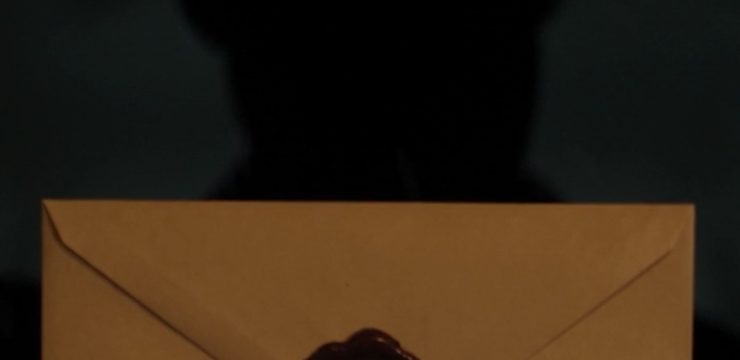
She placed a sealed envelope on the kitchen table.
My name was written across the front in Daniel’s handwriting.
I stopped breathing.
“He gave it to me before he died,” Brenda said. “He made me promise I wouldn’t give it to you until your sixty-fifth birthday.”
My fingers shook as I opened it.
Daniel wrote that he knew I would keep taking care of everyone after he was gone. He said it was one of the things he loved most about me—and one of the things that frightened him most.
Then I reached the last paragraph.
If Harrison ever falls, help him stand. But don’t become the ground he refuses to leave. And this house, my love, is yours. Fill it with people who know the difference between being welcomed and taking over.
I pressed the paper to my mouth.
For nearly a year, I had believed setting boundaries meant betraying the family Daniel and I had built.
But he had known me well enough to understand that I might confuse love with surrender.
Years before I needed the words, he had left them waiting for me.
Two months later, Harrison came for dinner.
He brought groceries.
All of them.
He even held up the receipt when he walked in.
“Just so we’re clear.”
I laughed.
He did not ask for his old room back. He did not ask me to fix his finances.
He helped cook, washed the dishes, and stood beside me on the patio after sunset.
“I miss Dad,” he said.
“So do I.”
He looked toward the house.
“I forgot what he taught me about this place.”
“What was that?”
“That having a key doesn’t mean something belongs to you.”
He looked ashamed, but he did not look away.
I reached for his hand.
Forgiveness did not arrive like a door swinging open.
It came in smaller things.
A grocery bag carried without being asked.
A bill paid on time.
A phone call made without needing rescue.
An apology repeated through behavior instead of words.
By spring, Harrison had a new job in his field.
Brenda still came every Thursday.
The locks stayed on my bedroom and office.
Not because I was afraid.
Because I liked remembering that a boundary could be a form of peace.
On the first warm evening of the year, Brenda arrived carrying a white bakery box.
Harrison came ten minutes later with sixty-six candles.
Inside the box was a lemon cake.
The same recipe.
The same pale frosting.
For one second, I saw broken candles rolling across stone.
Then Harrison placed the cake carefully in the center of my table.
Carefully.
That word mattered.
We lit the candles until the kitchen glowed gold.
Daniel’s letter rested in the drawer beside me, no longer hidden, no longer waiting.
“Make a wish, Mom,” Harrison said.
I looked at Brenda.
At my son standing beside me instead of behind someone else.
At the cabinets that held my things.
At the quiet rooms beyond them.
At the home that felt like mine again.
I closed my eyes.
But I did not make a wish.
For the first time in a very long while, there was nothing I needed the future to give back to me.
I opened my eyes, took a breath, and blew out every candle while the people who loved me stayed exactly where they were.