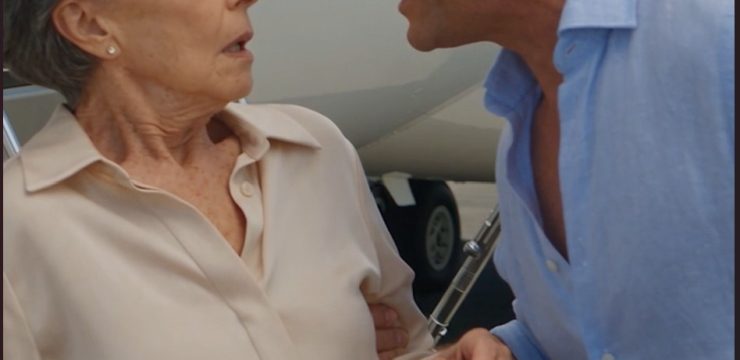
Eight days after my son gave me thirty days to leave his house, his wife stood frozen in the foyer, staring at a brass key in my hand and a document trembling between her fingers. Something in her face had changed. She had realized I was not the helpless widow she thought I was.
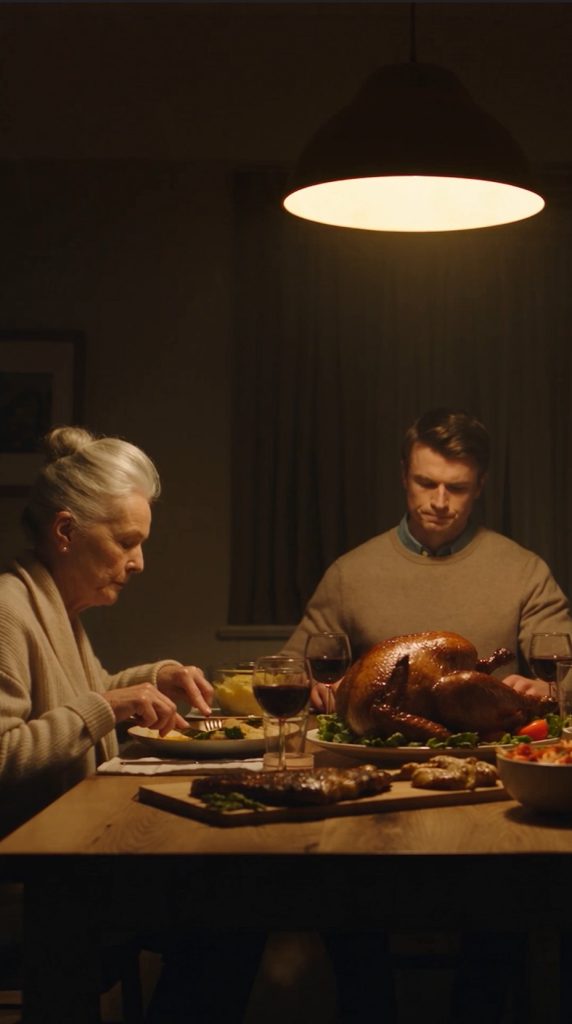
Three nights earlier, Grant had looked across the dinner table at me as if he were ending an inconvenience.
“We think it’s time you found your own place.”
The pot roast still steamed between us. Abby’s history flash cards sat beside her plate.
For nearly two years, I had cooked, cleaned, driven the children, handled appointments, stayed up through fevers, and filled every gap. I had even given Grant eight thousand dollars when his air-conditioning failed.
Then, two months earlier, I heard Marissa behind a bedroom door.
“She doesn’t pay rent.”
Grant sighed. “I know.”
Those two words hurt more than anything she said.
After Thomas died, Grant begged me to leave Tucson and sell the little stucco house where I had spent thirty-eight years with my husband. I stood beneath Thomas’s lemon tree one final morning, then packed my marriage into twelve boxes and moved into their Scottsdale guest room.
Marissa asked me to use one dresser drawer because she liked the room “uncluttered.”
I told myself I was family.
Eventually, I learned the difference between being loved and being useful.
What they did not know was that three weeks before they asked me to leave, I stopped at a gas station because I missed Thomas. Whenever lottery jackpots became enormous, he bought one ticket.
“Somebody has to win,” he used to say.
So I bought one.
Three days later, alone at their kitchen island, I checked the numbers. Then again. Then with my reading glasses.
Seventy-six million dollars.
I stared at Thomas’s photograph and whispered, “You ridiculous man.”
The next morning, I called attorney Celia Monroe.
“Before you celebrate,” she said, “protect yourself.”
While Marissa thought I was running errands, I met with lawyers, accountants, and advisers. I created trusts, protected Mason and Abby’s education money, updated my will, and learned the value of silence.
Celia told me something else.
“Money doesn’t change everyone around you. It reveals them.”
So when Grant gave me thirty days, I nodded.
“Thirty days is more than enough.”
The next morning, I emailed Celia: I’m ready to buy a house.
By 10:20, I was inside a four-bedroom brick home in Arcadia—the exact house Grant and Marissa had obsessed over for months. Their dream house. Their contingent offers had been rejected.
Then I saw the sunroom, morning light across the hardwood floor, and two mature citrus trees beyond the glass.
I thought of Thomas.
“How quickly can they close?”
“For cash?”
“Yes.”
I offered full price.
The purchase went through a trust under my maiden name: Evelyn Price.
A week later, while I packed Thomas’s photograph, Marissa entered without knocking. Her eyes landed on the brass key beside my Bible.
“What’s that?”
Before I answered, the doorbell rang.
A man from Whitmore Realty handed her an envelope concerning the East Marigold property.
Marissa tore it open.
“The house sold.”
Grant grabbed the papers. “To who?”
“A cash buyer.”
Then her eyes shifted to the key in my hand.
“What key is that?”
“A house key.”
Grant laughed nervously. “Mom found a place already?”
Marissa barely heard him.
“The purchasing trust…” Her voice thinned. “It’s connected to someone named Evelyn Price.”
Grant frowned.
Then the color drained from his face.
Price.
My maiden name. The name on his birth certificate.
Marissa turned slowly toward me, looking from the papers to the key, then to my face.
“No.”
Grant stared at me as if he were seeing his mother for the first time.
“Mom,” he whispered. “What did you do?”
Nobody in that foyer was prepared for the answer. 👇
The paper in Marissa’s hand made a soft crackling sound.
For several seconds, no one moved. Grant’s mouth opened, then closed again. Marissa looked at the key in my pocket as though it had become something dangerous.
“Where did you get four million dollars?”
I held her gaze. “I didn’t get four million.”
Her shoulders loosened for half a second.
“I got seventy-six.”
Grant sat down on the bottom stair.
Marissa did not blink. “Seventy-six… million?”
“Before taxes and payout decisions.”
The foyer seemed to shrink. Somewhere upstairs, a cabinet door closed. The air conditioner clicked on, sending cold air across my hands.
Grant rubbed his face. “When?”
“Three weeks ago.”
His eyes snapped up. “You knew when we asked you to leave?”
“I knew.”
Marissa’s expression hardened. “And you said nothing.”
“You didn’t ask whether I’d won the lottery. You asked me to move out.”
Grant stood slowly. “Mom, were you testing us?”
That hurt more than I expected.
“No. I was protecting myself.”
I told them about the ticket. Thomas. The gas station. Celia. The lawyers and advisers they had mistaken for errands.
Then I told them the part that mattered.
“Mason and Abby’s education is protected. Directly. No matter what happens between the adults.”
Marissa’s eyes flickered.
“And us?”
Grant turned toward her. “Marissa.”
“What? We need to know.”
“I’m saying the children are secure.”
“That isn’t what I asked.”
“No,” I said quietly. “It isn’t.”
Footsteps sounded above us.
Abby stood at the top of the stairs, Mason behind her. Neither child spoke.
Grant went pale. “Guys, go upstairs.”
Abby didn’t move.
“Is Grandma rich?”
Nobody answered.
Then Mason looked at his mother. “Are you still making her leave?”
The question landed harder than shouting.
Marissa pressed the papers against her chest. “This is an adult conversation.”
“You said Grandma was costing us money,” Abby said.
Grant’s head turned sharply.
“I heard you talking to Aunt Kelsey. You called Grandma another dependent.”
Marissa flushed. “You were listening to a private conversation?”
“You were in the kitchen.”
I climbed two steps and held out my hand.
Abby came down immediately.
“Are you coming back?” she whispered.
I squeezed her fingers. “I am not leaving you. I’m changing where I live.”
Mason came down too, jaw tight.
Then Marissa said the sentence that stripped away the last of my restraint.
“We took care of you for two years.”
Grant closed his eyes.
“You lived here without rent,” she continued. “You used our house, our utilities, our space. And now you’re acting like we treated you terribly.”
“I gave you eight thousand dollars for your air conditioner.”
Her mouth tightened.
Grant looked at the floor.
And suddenly I knew there was something else.
“Grant.”
He didn’t answer.
“Look at me.”
He did.
The shame on my son’s face frightened me more than anger would have.
“The repair,” he said. “It wasn’t eight thousand.”
Marissa spun toward him. “Don’t.”
“How much?”
“Twenty-four hundred.”
The room seemed to fall away.
Grant swallowed. “We used the rest for the Marigold house. Inspection costs. Appraisal. Things connected to the offers.”
Marissa’s voice sharpened. “We were going to pay it back.”
“You told me the repair would destroy your budget.”
Grant nodded once.
“I lied.”
Abby pulled her hand from mine and stared at her father.
Grant’s shoulders folded inward.
“I’m sorry.”
I looked at the man I had once carried feverish through the night.
“I believe you’re sorry,” I said. “But sorry is the beginning of repair. It isn’t the repair.”
Marissa laughed once, brittle and disbelieving. “This is insane. We’re family.”
“Yes,” I said. “That’s why it hurts.”
She looked at Grant. “Say something.”
He did.
“We pay her back.”
“What?”
“All of it. The fifty-six hundred.”
“She has seventy-six million dollars.”
Grant’s face changed.
For the first time, he looked at his wife with clarity instead of appeasement.
“That doesn’t make the lie smaller.”
Her eyes widened. “You’re choosing her over me?”
“No. I’m choosing to stop pretending this was okay.”
Marissa stepped backward as if he had struck her.
Nobody followed when she went upstairs.
The bedroom door slammed hard enough to shake the hallway photographs.
The silence afterward was enormous.
I took Mason and Abby into the kitchen and poured orange juice because my hands needed something ordinary to do.
Grant sat across from me.
“I don’t expect you to forgive me.”
“Good.”
He nodded.
“I let you become useful enough that I didn’t have to notice what we were taking from you.”
He rubbed his thumb against a scratch in the table.
“And the worst part is, I knew better.”
That was the first honest thing he had said all morning.
I moved into East Marigold two days later.
Not because I was running away. Because for once, I was allowed to choose where my life happened.
Celia made every boundary clear. No loans. No shared accounts. No access to the trusts. Mason and Abby’s education remained protected exactly as planned.
Grant repaid the fifty-six hundred dollars within six weeks. He sold his second car to do it.
Marissa never truly apologized.
Instead, she spent several weeks asking Grant whether my money could solve problems that suddenly seemed urgent: their mortgage, tuition, investments, postponed vacations.
Each time, he said no.
Their marriage did not survive that word.
By spring, Marissa had moved into a townhouse fifteen minutes away. She and Grant shared custody. It was painful, but the children were never asked to choose sides.
And Grant stopped asking me to make things easier for him.
That mattered.
One Saturday morning, he arrived at East Marigold with Mason and Abby and an old terracotta pot in the back of his SUV.
“What is that?”
He lifted the pot carefully.
A thin green tree rose from the soil, no taller than my shoulder. Its leaves were glossy and uneven.
My breath caught.
“The day we moved you out of Tucson,” Grant said, “I took a cutting from Dad’s lemon tree.”
I could not speak.
“I knew selling the house was killing you. I didn’t know how to help. So I cut one branch and took it home.”
Mason stared at him. “You grew that?”
“Barely.”
Abby touched one leaf with her fingertip.
Grant smiled weakly. “I kept it behind the shed. Every winter I thought I’d killed it. Every spring it came back.”
I pressed my fingers to my mouth.
For two years, I had believed everything from Tucson was gone.
It wasn’t.
Grant had saved one living piece of it without ever telling me.
Not enough to erase what he had done.
But enough to remind me that people are rarely only the worst thing they have chosen.
We planted the little tree between the two orange trees.
Mason dug too deep. Abby corrected him. Grant got dirt on his shirt and didn’t seem to notice.
When we finished, he stood beside me with the shovel resting against his shoulder.
“I should have protected you better.”
“Yes.”
He swallowed. “I’m going to spend a long time wishing I had.”
“Then spend less time wishing,” I said. “And more time becoming someone who wouldn’t do it again.”
His eyes filled.
He nodded.
That was as close to forgiveness as I could honestly give him then.
It was enough.
A year later, the sunroom had become the loudest room in my house.
Abby studied there before exams. Mason left baseball gloves under the chairs. Grant came for Sunday dinner and always knocked before entering, even when the door was unlocked.
Celia became a friend instead of merely the woman who protected my fortune.
I traveled. I donated quietly. I funded a hospice program in Thomas’s name.
And I still clipped coupons.
The lemon tree bloomed for the first time in March.
Only six blossoms.
I stood beneath them early one morning while the house was still quiet. The air smelled faintly sweet, almost exactly like Tucson after winter.
Behind me, the back door opened.
Grant stepped outside carrying two cups of coffee.
He handed me one.
Neither of us spoke.
Inside, Mason laughed and Abby told him to be quiet.
Grant looked toward the sound, then at me.
I touched one small white blossom with my fingertip.
For the first time since Thomas died, home did not feel like a place I had lost.
It felt like something still growing.