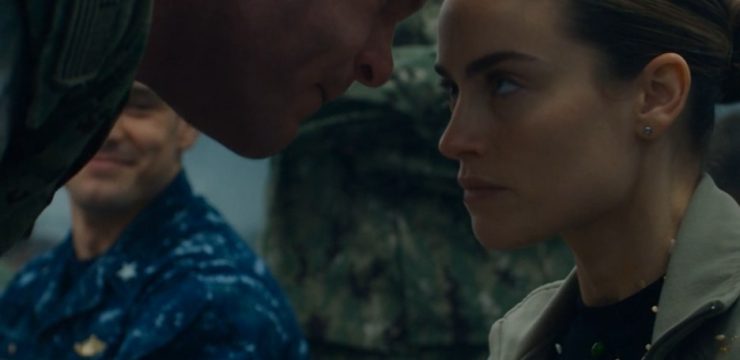
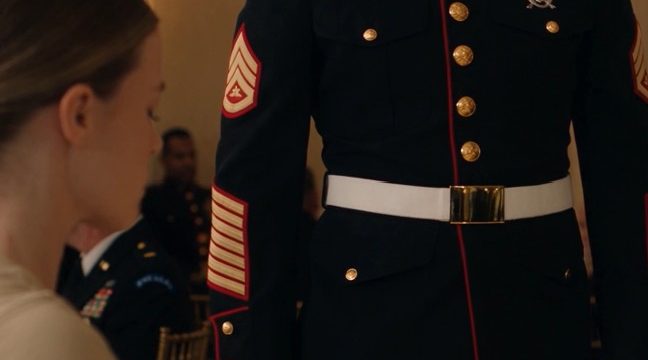
The laughter stopped when the SEAL commander stepped away from the podium and began walking straight toward my row.
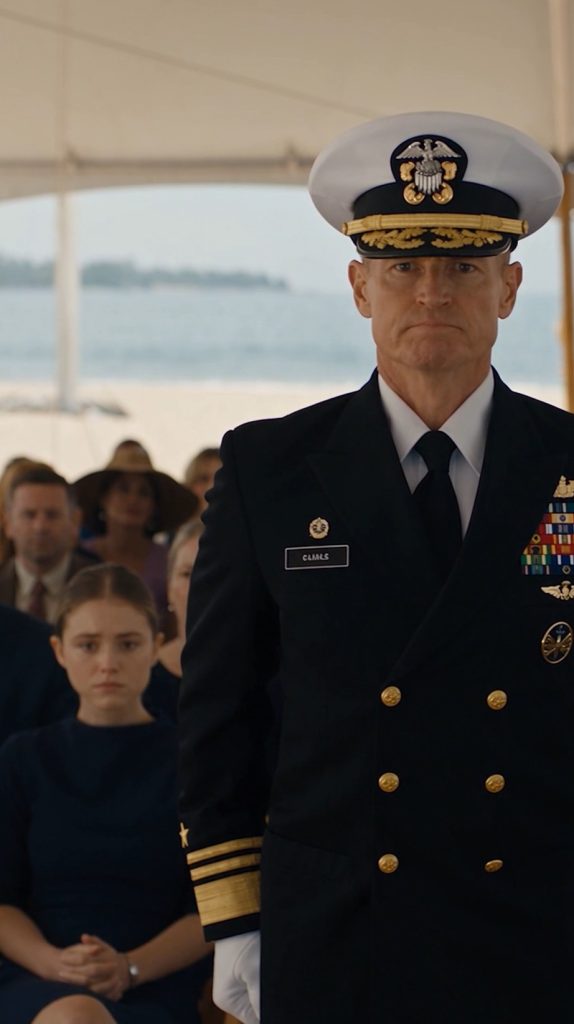
A few seconds earlier, my family had been treating me like an embarrassment they wished security would remove. Now every face beneath the white tent was turning in my direction—and the empty reserved chair near the stage suddenly felt like a warning no one else understood.
My brother stood twenty feet away in dress whites, the gold Trident on his chest catching the California sun.
“Don’t embarrass me today, Emily.”
So I folded my hands in my lap and smiled.
Silence had always unsettled my family more than anger. When I stopped defending myself, it usually meant I had already studied the room, measured the people in it, and decided how much truth they deserved.
My mother adjusted the pearls around her neck.
“She wore black,” she whispered to Aunt Patricia, loudly enough for several rows to hear. “To her own brother’s proudest day.”
I looked down at my simple knee-length dress. No jewelry except a silver watch. Barely any makeup, just enough concealer to hide the exhaustion from driving six hours through the night.
Black traveled well.
It wrinkled less.
And it didn’t show blood easily.
They knew none of that.
To them, I was still Emily Carter—the difficult daughter who left college, disappeared for long stretches, missed holidays and funerals, mailed expensive gifts without return addresses, and came home with scars nobody had been brave enough to ask about.
Ryan had always been easier to understand.
Football captain. Homecoming king. Golden son.
My father loved telling people, “Ryan is serving his country.”
Then he would glance at me.
“Emily is still figuring things out.”
That morning, base security had already noticed something my family had not.
At 6:14, a guard checked my visitor pass against the ceremony roster and frowned when he saw my name listed in a different column from the family seating.
Mom immediately stepped between us.
“She’s only his sister,” she said with a dismissive smile. “She isn’t important. Please don’t let her make this uncomfortable.”
The guard looked at me, then at his clipboard.
“This seat is fine,” I said.
I could have shown them the email from protocol.
I could have pointed to the full name and rank in the subject line or called the senior chief whose number had been saved in my phone since 5:42 that morning.
Instead, I sat down.
Sometimes dignity is nothing more dramatic than refusing to explain yourself to people committed to misunderstanding you.
My cousin Madison twisted around in her red sundress.
“Emily, seriously. Why are you sitting here? This section is for immediate family.”
“I am immediate family.”
She gave me a polished smile.
“I mean supportive immediate family.”
Aunt Patricia laughed.
My parents said nothing.
Ryan heard her too. His jaw stayed tight, eyes forward—but the corner of his mouth moved.
Not quite a smile.
Agreement.
That hurt more.
Onstage, velvet cases held rows of Tridents that flashed under the sun. Around us, programs rustled, coffee lids clicked, children shifted impatiently, and proud fathers sat taller in their chairs.
Then Dad leaned toward me.
“After this, don’t come to the private reception unless Ryan specifically invites you. This is a military crowd. People will ask questions.”
“What questions?”
His smile tightened.
“What you do. Where you’ve been. Why you never talk about any of it.”
Mom gave a small nervous laugh.
“Today is about Ryan, honey. Please don’t make things strange.”
“I drove here for Ryan.”
From the candidate line, my brother answered.
“No. You drove here because you wanted people to see you.”
For a moment, everything around me seemed unnaturally sharp.
A paper program fluttering.
A coffee cup rolling beneath a chair.
A little boy behind me whispering to his grandfather, asking why that lady looked sad.
I wasn’t sad.
I was staring at my brother in his perfect uniform while fighting the sudden urge to open my purse, take out the folded protocol invitation, and place it directly on my father’s knee.
I didn’t.
I simply smoothed the black fabric over my legs and faced the podium.
That was when the commander stopped talking to the senior chiefs.
His eyes passed over the family section once.
Then again.
The second time, he wasn’t searching anymore.
He glanced toward the security guard beside our row.
Then toward the empty reserved chair near the stage.
Then directly at me.
My mother noticed.
Her smile vanished.
The commander stepped away from the podium.
Several senior chiefs turned with him.
Across the ceremony grounds, Ryan’s expression changed almost imperceptibly, the confidence draining from his face as if he had suddenly understood something everyone else was about to learn.
One by one, conversations died.
Every family beneath that white tent watched the SEAL commander cross the aisle toward the woman my mother had just called disappointing.
He stopped directly in front of my chair.
His heels came together.
His posture straightened.
And then, in front of my parents, my brother, and everyone watching, he raised his right hand toward his brow.
Nobody in that row was prepared for what came next. 👇
His salute remained there for one long, impossible second.
“Captain Carter,” Commander Hayes said. “Ma’am. We’ve been expecting you.”
My mother’s fingers froze against her pearls.
Dad made a sound under his breath, almost a laugh, except nothing about his face suggested amusement anymore.
I stood.
Muscle memory took over before emotion could. Shoulders back. Chin level. My right hand rose, returned the salute, and dropped cleanly to my side.
“At ease, Commander.”
The words were quiet.
That made them travel farther.
Behind him, one of the senior chiefs stepped toward the empty chair beside the stage. He lifted the small RESERVED placard that had been resting on its seat and turned it outward.
CAPT. EMILY CARTER.
Mom read it twice.
Ryan stared at it once.
That was enough.
Commander Hayes lowered his voice. “Protocol said you’d be arriving before six.”
“I did.”
His eyes flicked toward the chair where I had been sitting.
“I can see there was some confusion.”
“There wasn’t.”
I glanced at my mother.
Her face had gone pale beneath her makeup.
“I chose to sit here.”
Hayes understood immediately. Good commanders usually did.
He nodded once.
“Your seat is waiting whenever you’re ready.”
Dad pushed himself halfway to his feet.
“Captain?”
The word cracked strangely in his mouth.
Not Emily.
Not sweetheart.
Not his daughter.
A rank.
I turned toward him.
For years, I had imagined this moment differently. I thought revelation would feel like revenge. I had pictured satisfaction, maybe even triumph.
Instead, looking at my father’s stunned face, I felt tired.
“You said you left college,” he whispered.
“I did.”
“To do this?”
“Eventually.”
Mom shook her head. “But ten years? Emily, ten years and you never told us?”
My chest tightened.
“I tried.”
Nobody moved.
Even the breeze seemed to have slipped out from beneath the tent.
“You told me military life wasn’t for women who wanted families,” I said to Dad. “You told Ryan service would make him a man.”
His mouth opened.
Nothing came out.
“So when I signed my first contract, I stopped asking for your approval.”
Ryan took one step away from the candidate line.
“Captain of what?”
Commander Hayes looked at me.
That question belonged to me.
I could answer it. I could let the titles spill out, let the decorations and assignments do what my words had never been allowed to do.
Instead, I looked at my brother.
“Today is your ceremony.”
Ryan’s face tightened. “Don’t do that.”
“Do what?”
“Make yourself look noble.”
There it was.
The old wound, still alive beneath the white uniform.
Dad found his voice again. “Ryan, leave it.”
“No.” Ryan’s breathing had changed. “She disappears for years, tells us nothing, comes back here with some secret rank, and suddenly everybody’s supposed to act like we were wrong about everything?”
Commander Hayes’s expression hardened.
I saw it happen before Ryan did.
“Petty Officer Carter.”
Ryan straightened automatically.
“Sir.”
“You should be very careful with your next sentence.”
A flush climbed Ryan’s neck.
Hayes looked toward me again.
“Especially considering who requested that her introduction be removed from today’s printed program.”
Ryan blinked.
I closed my eyes for half a second.
I had asked Hayes not to say that.
Mom whispered, “What?”
The commander’s voice remained measured.
“Captain Carter was scheduled to sit onstage as an honored guest. She specifically requested no public recognition before the Tridents were presented because she did not want attention taken away from this class.”
Ryan stared at me.
The anger did not vanish.
It simply lost somewhere to stand.
“You knew I was graduating,” he said.
“Yes.”
“You knew months ago.”
“Yes.”
His lips parted.
“Then why didn’t you call?”
The question was so much smaller than everything around it that it nearly broke me.
I looked at him.
“Because the last time I called, you told me my life was an excuse for missing yours.”
Ryan dropped his eyes.
No one spoke.
Then Dad stood completely.
“This should have been discussed privately.”
I almost smiled.
Of course.
Privacy.
The place where every uncomfortable truth in our family had been buried.
Dad reached for my arm.
I stepped back before he touched me.
Something changed in his face when he realized I had done it without thinking.
Commander Hayes moved between us, not dramatically, just enough.
“Sir,” he said, “I’d recommend you return to your seat.”
Dad looked around.
That was the moment his power broke.
Not because anyone shouted at him.
Because nobody rescued him.
Aunt Patricia stared into her lap.
Madison’s glossy smile was gone.
Mom was crying without making a sound.
Ryan stood motionless beneath the sun.
For the first time in my life, my father looked around a room expecting everyone to agree with him and found only silence.
He sat down.
The ceremony continued.
When Ryan’s name was called, I stood with everyone else.
He crossed the stage, received the formal congratulations, and turned toward the audience.
His eyes found mine.
I clapped.
Not because he had earned my forgiveness.
Because he had earned the Trident.
Those were different things.
At the reception afterward, Ryan found me outside instead of inside.
I was standing near the edge of the seawall, where sunlight shattered across the Pacific in hard silver pieces. Behind us came the muffled sound of glasses touching, voices rising, families taking photographs.
He stopped several feet away.
For once, he did not tell me what expression I should be wearing.
“I remember the packages,” he said.
I kept looking at the water.
“Which ones?”
“All of them.”
I turned.
His hands were clasped behind his back, but his thumb kept rubbing over one knuckle.
“The boots before selection. The watch after Hell Week. The book Dad said was stupid.”
I remembered that book.
Ryan had been seventeen.
He had wanted to quit football after tearing his shoulder.
Inside the cover, I had written six words.
Pain gets a vote, not command.
Ryan swallowed.
“I kept it.”
Something moved behind my ribs.
Then he reached into the inside pocket of his dress jacket and unfolded a piece of paper worn soft along the creases.
I recognized my handwriting before he opened it.
The same six words.
“You wrote this.”
“Yes.”
“I thought Mom did.”
Despite everything, a laugh escaped me.
Ryan looked down.
“She told me she did.”
The laughter died.
Behind us, the reception doors opened.
Mom stood there.
She had heard him.
Her face crumpled.
“I wanted you to think I understood you,” she said.
Ryan stared at her.
“You took credit for Emily’s letter?”
Mom pressed one hand over her mouth.
“I thought it was just a note.”
“No,” Ryan said quietly. “It wasn’t.”
Dad appeared behind her.
“Enough.”
Ryan turned.
That single word had controlled our family for years.
Enough crying.
Enough questions.
Enough making scenes.
Enough telling the truth when the truth inconvenienced him.
Ryan looked at our father for a long time.
Then he removed the smile he always wore around him.
“No.”
Dad stiffened.
Ryan stepped closer to me.
Not dramatically.
Just one step.
But everyone saw it.
“You spent my whole life teaching me that strength meant never looking weak,” Ryan said. “And I believed you so completely that this morning I humiliated the one person who kept showing up for me when I didn’t even know she was doing it.”
Dad’s jaw flexed.
“I made you successful.”
“You made me afraid of disappointing you.”
The words landed harder than shouting would have.
Mom began to cry again.
Ryan looked at her.
“And you made cruelty sound like concern.”
She lowered her eyes.
Nobody defended themselves after that.
There was nowhere left to hide.
Madison eventually crossed the patio and stopped beside me.
Her face was bare of its earlier confidence.
“I’m sorry about what I said.”
I watched her struggle not to add an excuse.
She didn’t.
“Thank you,” I said.
Aunt Patricia apologized too, awkwardly and with tears she kept wiping away as though irritated by them.
I accepted the apology.
Acceptance was not absolution.
They seemed to understand.
Dad never apologized that afternoon.
Not properly.
He tried three times.
Each attempt began with, “I only wanted—”
Each time, I walked away.
Three months passed before he finally sent a letter without defending himself.
There were no explanations.
No mention of sacrifice.
No claim that he had done his best.
Just four handwritten lines.
I made Ryan’s achievements proof that I had succeeded as a father, and I made your silence proof that you had failed as a daughter. I was wrong. I do not expect forgiveness. I only wanted, once, to tell the truth without asking you to make me feel better about it.
I kept the letter.
I did not answer immediately.
Healing, I learned, did not arrive like a medal pinned cleanly to a uniform.
It arrived badly.
Slowly.
Sometimes months late.
Ryan called every Sunday.
At first, our conversations lasted six minutes.
Then twelve.
Then forty.
He stopped asking what operations I had been on when I told him I could not discuss them. Instead, he asked whether I had eaten, whether my shoulder still hurt in cold weather, whether I remembered the time he crashed Dad’s truck into the mailbox and convinced everyone I had done it.
“I remember,” I told him.
“You still owe me for that.”
“I think becoming a SEAL cleared the debt.”
“Not even close.”
For the first time since we were children, I heard my brother laugh without feeling like someone else was being cut open to make room for it.
The final truth came the following spring.
Ryan was home in Virginia Beach between assignments when he showed up at my apartment carrying a cardboard box.
Inside were every gift I had mailed over ten years.
Not the objects.
The wrapping.
The notes.
The envelopes.
He had kept all of them.
At the bottom was a photograph I had forgotten existed.
Ryan and I were children, standing barefoot in wet sand, both sunburned, both grinning. He was missing his front tooth. My arm was wrapped around his shoulders.
On the back, in a child’s handwriting, were the words:
When I grow up I want to be brave like Emily.
I stared at it until the room blurred.
Ryan sat beside me.
“I wrote that when I was eight.”
“I know.”
“I forgot.”
“I did too.”
He shook his head.
“No. That’s the worst part. I didn’t forget you were brave.”
His voice broke.
“I just let Dad teach me that your kind of brave didn’t count.”
For a long time, neither of us moved.
Then my brother—the golden son, the homecoming king, the Navy SEAL who had once told me not to embarrass him—lowered his head and cried beside me.
I did not tell him to stop.
I put my hand over his.
Months later, Mom invited us both to dinner.
Dad cooked.
Aunt Patricia brought pie and, for once, no opinions.
Madison arrived in jeans instead of something designed for photographs.
Nobody asked me to explain where I had been.
Nobody asked Ryan to perform pride for them.
We ate on the back porch while evening settled over Virginia Beach, the air warm with salt and cut grass.
Dad brought out an old wooden box after sunset.
Inside were Ryan’s football medals, childhood photographs, school ribbons, and every newspaper clipping he had ever saved about his son.
Then he placed an empty folder beside them.
My name was written across it.
He looked at me.
“I realized I built a whole archive of one child because his life was easy for me to understand.”
His fingers rested on the empty folder.
“I don’t need you to fill this.”
I watched him carefully.
He pushed the folder away.
“I just needed to see the empty space I created.”
That was the first time I forgave him for something.
Not everything.
Something.
It was enough to begin.
Later, Ryan and I walked down to the water.
He carried his shoes in one hand, and the tide moved cool around our ankles.
For years I had believed home was the place I kept leaving.
That night I understood something different.
Home was not a house where nobody hurt you.
Families were too human for that.
Home was the place where truth no longer had to knock before entering.
Ryan bumped his shoulder lightly against mine.
“Hey.”
“What?”
He looked toward the dark horizon.
“When I get married someday, you’re sitting in the front row.”
I smiled.
“Only if I’m invited.”
He groaned.
“I deserved that.”
“Yes.”
We kept walking.
Behind us, our parents sat beneath the porch light, smaller than they had seemed when we were children, no longer heroes, no longer villains, just two flawed people finally learning that love without humility could still wound.
Ahead of us, the Atlantic stretched black and endless beneath the moon.
Ryan reached into his pocket.
When he opened his hand, his Trident lay against his palm.
“I used to think this proved I was the strongest person in our family.”
I looked at him.
“And now?”
He closed his fingers around it.
“Now I know better.”
He offered me his other hand.
For half a second, I saw us at eight and twelve again—bare feet, wet sand, scraped knees, no secrets yet between us.
I took it.
And together we walked back toward the porch, where the light was waiting.