The laughter spread through the ballroom before I could even decide where to look.
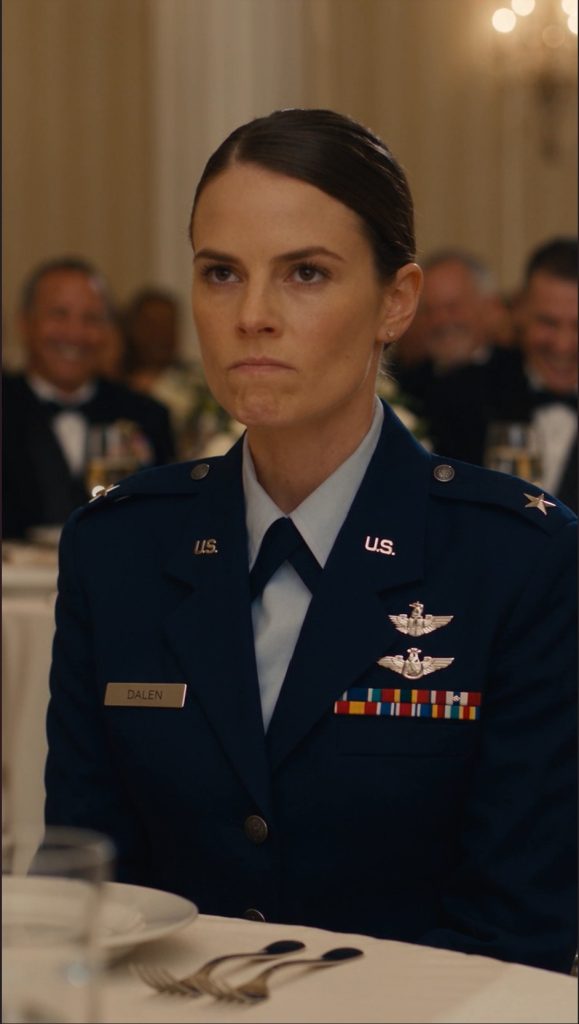
My father stood beneath the chandeliers, smiling into a microphone as hundreds of people laughed at the idea that his daughter could ever be a General.
Less than a minute later, the ballroom doors would slam open.
But first, I had to sit there and take it.
The West Crest Hotel in Chicago glittered with polished wood, roses, white tablecloths, and expensive bourbon. A string quartet played near the stage while former classmates traded handshakes and carefully edited stories about their lives.
The moment I entered, I knew exactly where I stood.
Nowhere important.
My mother stood near the stage in an emerald-green gown, glowing beneath the camera flashes. My father laughed with two retired bankers from our old neighborhood, whiskey in hand.
Neither looked at me.
Across the room, my younger brother Ethan was surrounded by admirers. He had become the family success story—a corporate executive with the kind of title people repeated because it sounded expensive.
My parents watched him with open pride.
Then I found my seat.
Table 19.
Beside the emergency exit. Half-hidden behind a decorative palm.
My place card read simply:
Dr. Alyssa Dawson.
No Brigadier General.
No U.S. Army.
Not even veteran.
Just “doctor,” because that was the version of me my father could acknowledge without sounding ashamed.
Erasure is rarely dramatic.
Sometimes it is only a missing title.
A photograph absent from a slideshow.
A father refusing to see the life his daughter built without his approval.
I sat down quietly.
On the enormous screen, alumni achievements appeared one after another—lawyers, surgeons, athletes, founders, donors.
Ethan received three slides and a standing introduction.
I received nothing.
Then Mara, a former classmate, approached my table holding her phone with both hands.
“Alyssa,” she said softly. “I think you need to see this.”
The email was sixteen years old.
My father’s name was at the top.
The subject line read: Recognition Removal Request.
My stomach tightened.
“Given Alyssa’s decision to pursue a non-civilian profession,” the message said, “we believe including her in future honor-roll and alumni recognition materials would misrepresent our family’s values.”
I stopped breathing for a second.
“Please remove her name from all related publications.”
Sixteen years.
Every newsletter that excluded me.
Every invitation that arrived late—or never.
Every awkward silence when someone asked how my parents felt about my career.
It had never been an oversight.
There had been paperwork.
Intent.
A decision.
Mara touched my arm. “I found it in an old school archive while they were preparing tonight’s program.”
I nodded.
Uniforms teach you strange things.
How to stay still when something inside you is breaking.
At 8:42 p.m., my father walked to the microphone.
“Ladies and gentlemen,” he announced, raising his glass, “tonight is about excellence. And Ethan has become everything a parent could ever hope for.”
Applause filled the ballroom.
My mother dabbed at her eye.
Ethan smiled.
Then someone called from the center tables.
“What about your daughter? Didn’t she join the military?”
My father laughed.
Not awkwardly.
Not nervously.
Confidently.
“Oh, absolutely,” he said, gesturing toward the back. “If my daughter is a General, then I suppose I must be a ballerina.”
The room exploded.
People laughed behind napkins. Someone beside me covered her mouth.
Ethan stared down at his plate.
My mother did not laugh.
She simply looked at me, then lowered her eyes.
That hurt worse.
For one second, I imagined walking to the stage and reading his sixteen-year-old email aloud.
Instead, I folded Mara’s napkin once and placed it beside my water glass.
Patience is not weakness.
Sometimes it is discipline wearing civilian clothes.
My father leaned toward the microphone again.
“She always did have a very active imagination.”
More laughter.
Then—
BANG.
The ballroom doors slammed open.
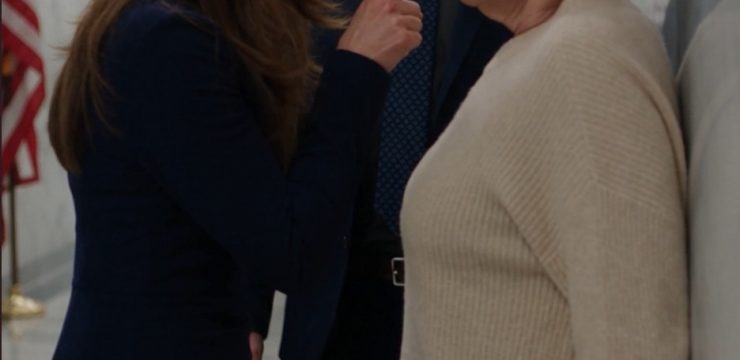
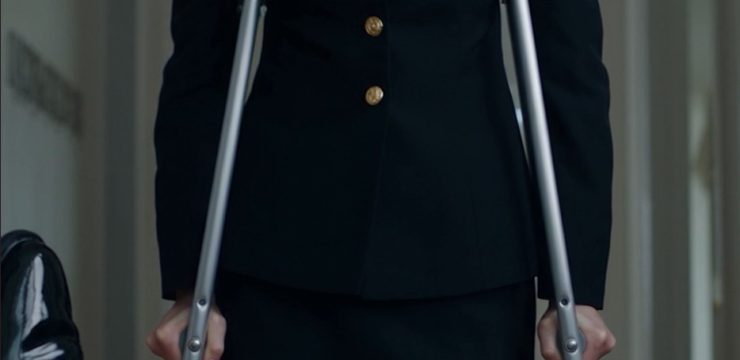
Three uniformed military officers entered at a fast, deliberate pace, followed by two armed security personnel.
The music died.
Forks froze halfway to mouths.
Every conversation disappeared.
The lead officer scanned the ballroom once.
Then his eyes found me.
He walked directly toward Table 19.
My father’s smile vanished.
The officer stopped beside my chair and snapped into a precise salute.
“General Dawson.”
My mother’s hand flew to her throat.
Ethan stood without seeming to realize he had moved.
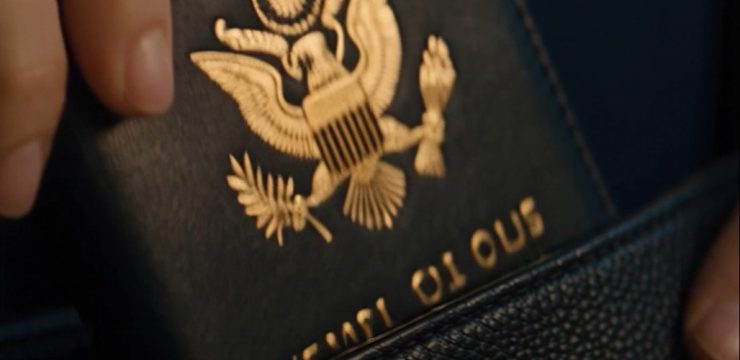
The officer extended a classified folder marked with urgent clearance warnings.
“Washington needs your authorization immediately.”
Every face in the ballroom turned away from my father.
Toward me.
I rose slowly from the chair he had hidden beside the emergency exit.
And beneath the officer’s steady hand, inside that sealed folder, was the one truth my family had never imagined.
Nobody in that room was prepared for what came next. 👇
The officer lifted the folder just high enough for me to see the first page.
My name appeared beneath a block of restricted markings.
BRIGADIER GENERAL ALYSSA DAWSON.
COMMANDING GENERAL.
Below it was the authorization line Washington was waiting for.
I felt my father staring at the page from across the ballroom.
He could not read the classified details.
He did not need to.
For sixteen years, he had reduced my career to something embarrassing enough to erase from newsletters and joke about over whiskey. Now an armed security detail had crossed a ballroom because people far beyond that room trusted my judgment when the stakes were real.
“Ma’am?” the officer said quietly.
I took the pen.
My hand did not shake.
I signed.
The officer immediately closed the folder and passed it to the second officer, who stepped away and spoke into a secure handset.
Then my father found his voice.
“This is ridiculous.”
The words were not loud, but in the silence they carried.
He put down his whiskey glass too hard. Crystal struck the podium with a sharp click.
“This is some kind of performance.”
Nobody laughed.
I looked at him.
“No,” I said.
My voice sounded calmer than I felt.
“The performance was everything before those doors opened.”
His face tightened.
“Alyssa.”
He said my name like a warning.
For years, that tone had worked.
At family dinners. Holidays. Phone calls. Every conversation where I learned that peace meant allowing him to define reality.
It did not work anymore.
Behind me, the officer said, “General, transport will be ready in five minutes.”
Five minutes.
That was all.
I could walk away.
Part of me wanted to.
Duty had always given me an honorable exit from places where love had become complicated.
Then Ethan moved.
He came around his table slowly, phone in hand.
“Dad,” he said.
My father looked relieved for half a second, as though the favored son had finally stepped forward to restore order.
Ethan stopped halfway between us.
“You knew.”
The relief disappeared.
My father’s jaw shifted.
“Knew what?”
“That she was a general.”
A murmur passed through the room.
Ethan unlocked his phone.
“I sent her biography to the alumni committee six weeks ago.”
My mother stared at him.
I did too.
Ethan swallowed.
“I sent her rank, her service history, everything the school asked for. I thought she was going to be included tonight.”
His thumb moved across the screen.
“Three days later, Dad emailed me and said Alyssa had asked not to be recognized because of security concerns.”
My father stepped away from the podium.
“That is not what happened.”
Ethan’s voice cracked.
“It’s exactly what happened.”
He turned his phone toward the principal.
An email glowed on the screen.
My father’s name sat at the top.
For the second time that night.
The principal read silently.
His expression changed.
Slowly.
Completely.
Ethan looked at me, and something in his face folded.
“I believed him.”
He glanced toward the floor.
“Or maybe I wanted to believe him because believing him meant I didn’t have to do anything.”
That hurt.
But unlike my father’s laughter, it hurt cleanly.
Because it was true.
Mara stepped closer.
“I have the archived email too.”
My father looked around the room.
The old bankers had stopped standing beside him.
One had taken a full step backward.
My father noticed.
That seemed to frighten him more than the officers had.
“This is a family matter,” he said.
“No.”
I heard my own voice before I decided to speak.
I walked toward the stage.
Every step sounded impossibly loud against the polished floor.
When I reached the microphone, my father instinctively reached for it.
I put my hand over the base.
He stopped.
For a second we stood inches apart.
His face looked older than it had an hour earlier.
“Sixteen years ago,” I said, “you asked this school to remove my name because my profession embarrassed you.”
“Alyssa, you don’t understand—”
“I understand the sentence.”
His mouth closed.
“I read it twice.”
The ballroom was so quiet I could hear the hum of the projector.
“You didn’t misunderstand my career. You didn’t lose track of me. You didn’t forget to mention me.”
I looked at him.
“You worked at making me disappear.”
My mother made a small sound behind me.
My father’s eyes flashed.
“I was protecting this family.”
“From what?”
He said nothing.
“From me serving my country?”
Still nothing.
“From people knowing your daughter chose a life you didn’t choose for her?”
His nostrils flared.
“I wanted better for you.”
Something inside me finally went still.
Not numb.
Still.
“I became better than the version of myself that needed your permission.”
His face changed.
That was the moment his power broke.
Not when the officers entered.
Not when they saluted.
Not when the folder proved my rank.
It broke when I stopped asking him to see me.
The principal stepped onto the stage.
He took the second microphone.
“General Dawson.”
He paused, visibly struggling with what to say.
“On behalf of this school, I owe you an apology.”
My father turned toward him.
The principal did not look away.
“The archival record will be corrected. Your accomplishments will be restored to the alumni record, and the circumstances under which they were removed will be documented.”
Documented.
My father went pale.
He had spent sixteen years using paperwork to erase me.
Now paperwork would preserve what he had done.
Permanently.
My mother walked toward the stage.
My father reached for her hand.
She looked down at his fingers.
Then she stepped away.
“I watched you do this for too long,” she whispered.
His eyes widened.
“Claire.”
She shook her head.
“I kept telling myself silence was how I kept this family together.”
Her voice trembled.
She looked at me.
“All I did was help him decide who was allowed to belong.”
My father lowered his voice.
“We’ll discuss this at home.”
My mother looked at him for a long moment.
“No.”
One word.
Barely louder than breath.
“I’m not going home with you tonight.”
He stared at her.
Then at Ethan.
Ethan slid his phone into his pocket.
“I’m not fixing this for you either.”
The officer near the ballroom doors touched two fingers to his earpiece.
“General.”
Time.
I stepped away from the microphone.
My father said my name.
Not sharply this time.
Almost desperately.
“Alyssa.”
I stopped.
But I did not turn around.
“I’m your father.”
My fingers tightened once around the handle of my purse.
Then relaxed.
“Yes,” I said.
“That’s why this mattered.”
I walked out with the officers.
No applause followed me.
I was grateful for that.
Some moments are too honest for applause.
Outside, Chicago air struck cold against my face. Black government vehicles waited under the hotel awning, engines running, blue-white reflections moving across the wet pavement.
The officer opened the rear door.
Before I entered, I looked back through the hotel glass.
My mother stood beside Ethan.
Mara was with them.
My father stood alone beneath the ballroom chandeliers.
For once, nobody was looking at him.
I got into the vehicle.
The door closed.
And I went back to work.
By sunrise, the urgent matter that had pulled me from the ballroom had passed into the locked rooms and classified reports where it belonged.
What mattered publicly was much smaller.
And somehow harder.
Ethan was waiting for me in the hotel lobby.
His tie was gone.
His sleeves were rolled to his elbows.
Two untouched coffees sat on the table between his hands.
When he saw me, he stood.
“I didn’t know if you’d come back.”
“I almost didn’t.”
He nodded.
Fair.
I sat opposite him.
For several seconds, neither of us touched the coffee.
Then Ethan rubbed both palms over his face.
“When Dad made that joke…”
He stopped.
His throat moved.
“I looked at my plate.”
“I saw.”
“I know.”
He stared at the table.
“That’s the part I can’t stop thinking about.”
I let the silence stay.
He deserved to sit inside it.
Finally, he looked up.
“I spent my whole life thinking being the favorite meant I’d won something.”
His eyes were red.
“Last night I realized it just meant I learned how to stay useful to him.”
I did not rescue him from that truth.
But I reached across the table and pushed one coffee toward him.
It was not forgiveness.
Not yet.
It was a beginning.
My mother arrived twenty minutes later carrying a manila envelope.
She sat beside Ethan but left several inches between us.
Then she placed one sheet of paper on the table.
“I need you to see this.”
My stomach tightened at the sight of another old email.
The date was sixteen years ago.
The morning after my father’s recognition removal request.
The sender was my mother.
The message was short.
I read it once.
Then again.
I do not agree with my husband’s request. Alyssa has chosen a difficult path, but it is her path, and I am proud of her. Please do not remove our daughter’s name.
I looked up.
My mother was crying silently.
“I sent it from work,” she said.
“He found out.”
Her hands folded together so tightly her knuckles whitened.
“He called the school himself. Then he told me it was done and that fighting him publicly would only drive you farther away.”
She looked down.
“I let myself believe that because I was afraid.”
The hotel lobby blurred for a moment.
Not because the email erased what she had done afterward.
It did not.
Sixteen years of silence could not be repaired by one sentence sent from an office computer.
But suddenly I understood why she had not laughed.
Why she had looked at me and then at the floor.
Somewhere beneath all that cowardice, there had once been resistance.
Small.
Insufficient.
Real.
“Why didn’t you tell me?”
Her lips trembled.
“Because every year I waited made the truth more humiliating.”
She wiped beneath one eye.
“Eventually I wasn’t hiding what he did.”
She took a breath.
“I was hiding what I failed to do after.”
I folded the email carefully.
“I can’t make sixteen years disappear.”
“I know.”
“And I’m not ready to pretend we’re okay.”
“I know.”
She nodded, tears falling anyway.
Then she said the one thing I had needed from her for most of my adult life.
“I’ll wait for whatever you’re able to give me.”
No demand.
No guilt.
No request that I make her feel forgiven.
Just room.
So I reached across the space between us and took her hand.
Months passed.
The school restored my name to every alumni record it could correct. Mara helped verify dates and old publications, and the principal sent me each revision without asking me to praise the institution for fixing what it should never have permitted.
Ethan stopped letting our parents use him as evidence of what a successful child looked like.
He called me sometimes without needing anything.
At first our conversations lasted five minutes.
Then fifteen.
Then long enough for us to remember we had once been children together before our father taught us to stand on opposite sides of an invisible scale.
My mother moved into a small apartment of her own.
She never asked me to take sides.
My father wrote three letters.
The first explained.
The second defended.
I returned both unopened.
The third contained five sentences.
No excuses.
No mention of family reputation.
No request for immediate forgiveness.
Only an admission that he had confused control with love until he could no longer tell the difference.
I read that one.
Then I placed it in a drawer.
I sent him a single reply.
I hope you become someone who can live honestly with what you did. I am not ready to have you in my life.
For once, he respected the boundary.
That was the consequence he could not argue away.
His wife no longer protected his version of events.
His son no longer performed for his approval.
His daughter no longer needed it.
And the school archive he had once used to erase me now preserved the evidence of exactly how hard he had tried.
The strange thing was that peace did not arrive like victory.
It arrived quietly.
One Sunday evening, I came home to find Ethan in my kitchen arguing with our mother about whether garlic could be measured “emotionally.”
Mara sat at the counter laughing into a glass of sparkling water.
Someone had burned the bread.
Rain tapped softly against the windows.
There were no chandeliers.
No uniforms.
No microphones.
No one important enough to impress.
I took off my coat and saw a folded card at my place on the table.
For one second, Table 19 came rushing back.
The palm tree.
The emergency exit.
The missing title.
All the ways a small piece of paper had once told me I did not belong.
I picked up the card.
Ethan had written one word on the front.
Alyssa.
Nothing else.
I turned it over.
In my mother’s handwriting were three more words.
Daughter. Sister. Home.
I stood there longer than I meant to.
Then my mother came beside me.
She did not ask whether I was all right.
She only touched my shoulder.
Ethan quietly pulled out my chair.
And this time, when I sat down at the table, there was no rank beside my name, no title, no achievement, no explanation of who I had become.
For the first time in years, none of that felt like erasure.
It felt like being known.
Outside, the rain softened against the glass as someone passed me the burned bread, Mara laughed, Ethan complained about the garlic, and my mother’s hand rested for one brief, warm second over mine.
My place at the table had been there waiting for me.
And at last, I was home.