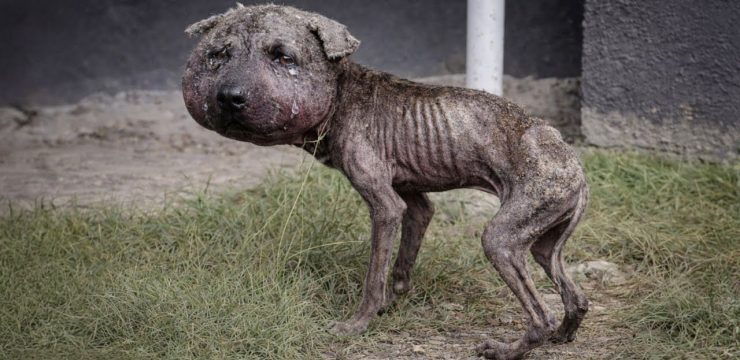
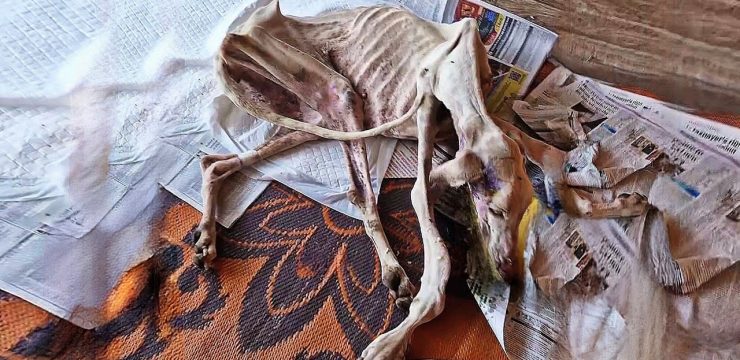
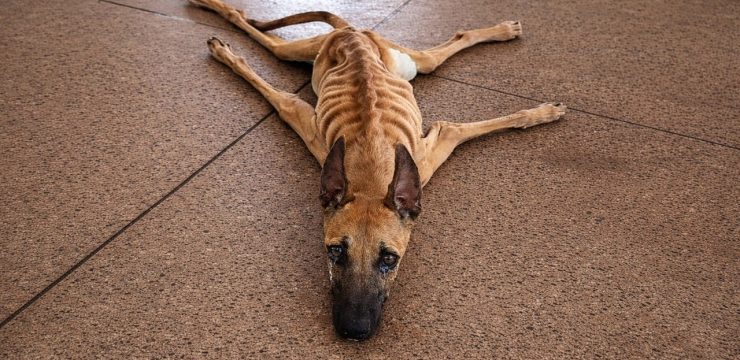
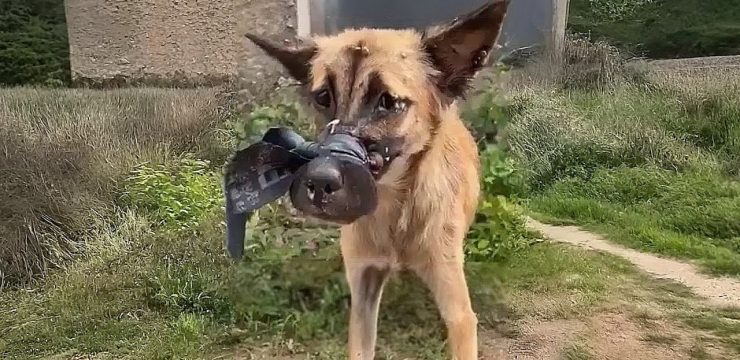
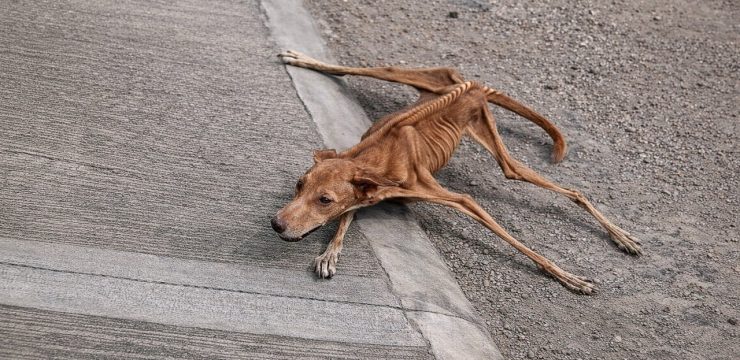
King had been thrown away when he could no longer help himself. He was unconscious, terribly weak, and almost unable to move. Yet the life others had abandoned was about to become precious to someone determined to give him a chance.
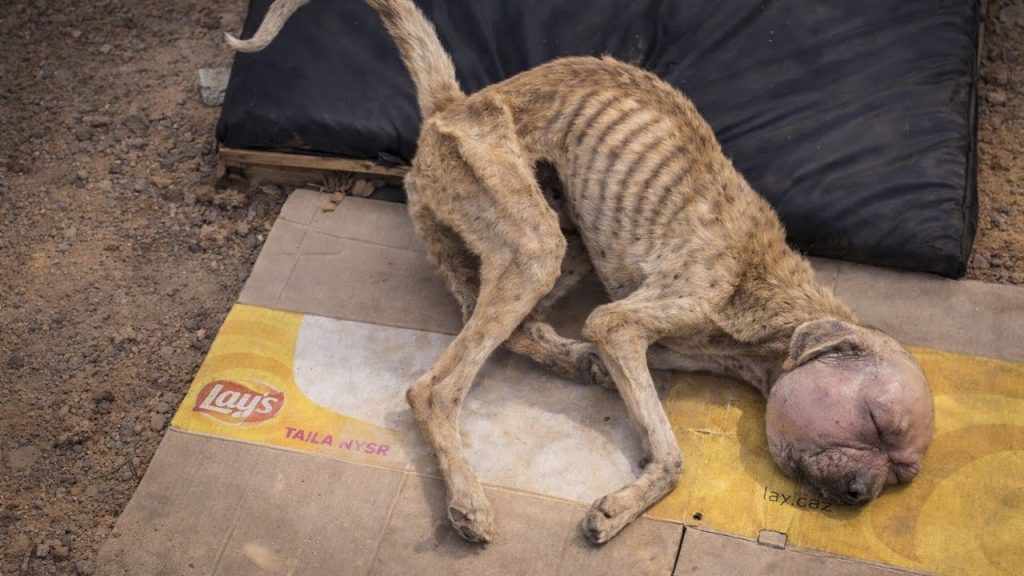
A kindhearted man discovered the dog in a trash container. There was no mistaking how serious his condition was. King needed help, and he needed it from someone willing to take responsibility for an animal whose future looked painfully uncertain.
The man brought him to a rescuer, who gave him the name King. It was a simple act, but it marked an important change. He was no longer just a suffering dog found among discarded things. He was an individual with a name, someone whose needs could no longer be ignored.
At the veterinary clinic, the news was difficult to hear. King was gravely ill. His rescuer contacted animal shelters and rescue centers, hoping to find additional help for him, but every place contacted declined to take him because his condition was so severe.
Those refusals left King’s rescuer facing an uncertain future alone. But after everything King had already endured, giving up on him was not an option.
The veterinarian identified a neurological condition and a serious calcium deficiency. His legs had become deformed, leaving him with major physical difficulties on top of his already fragile health. The prognosis was frightening: the veterinarian expected King’s body to grow weaker until he eventually died.
There was no reassuring promise of a full recovery. The medical plan was limited to medication and observation. King would have to be watched closely, and nobody could say that his body would respond in the way everyone hoped.
His rescuer understood how little time they might have together. Instead of turning away from the difficult news, this person chose to stay. Savings were spent on King’s care. Meals were offered, medicine was given as directed, and gentle conversation became part of the effort to surround him with comfort.
Those ordinary acts mattered, even without any guarantee of a happy ending. Food, attention, and a familiar caring presence could not erase a serious medical diagnosis. They could, however, mean that King would no longer face whatever happened next without someone looking after him.
At first, the hope was modest. If King could not recover, his rescuer wanted him to know some peace. After being found in a place where nothing living should have been left to suffer, he deserved simple warmth, patient attention, and the dignity of being cared for.
Then something began to change.
King’s condition, which had seemed so unstable, gradually improved. His body began to stabilize. The change was unexpected, especially after the veterinarian’s warning, and it gave the person caring for him a reason to hope for more than a comfortable goodbye.
His progress did not erase the seriousness of his condition. He still faced physical limitations, and his legs still needed special consideration. But stability was meaningful for a dog whose future had seemed so close to ending. It meant that the care he was receiving could continue, and that another chapter might be possible.
Eventually, the veterinary team agreed that King could leave the clinic. He was going home.
Home meant continued attention rather than the end of his challenges. His rescuer provided the special care he needed, making room for a dog whose movements were different from those of other dogs. King could now experience daily life in a setting where his comfort and well-being mattered.
He began to eat and sleep well. His enjoyment of life became increasingly apparent. He also tried to stand and join the other dogs in play, showing an eagerness to participate even while his body made ordinary movement difficult.
There is something deeply moving about that kind of effort. King did not need to move like every other dog for his happiness to matter. His attempts to join in were reminders that a physical limitation does not take away an animal’s need for companionship, stimulation, and the simple pleasures of being included.
One attempt involved wrapping bandages around King’s front legs to support his movement. The idea came from a practical need: he wanted to get around, and he required help to do it. Unfortunately, the bandaging did not work as well as hoped.
A wheelchair was purchased for him.
It did not mean that his earlier medical problems had simply vanished. Nor did it change the fact that King needed ongoing care. But the wheelchair offered him a more comfortable way to move around and take part in life beyond the limitations of his legs.
For a dog once found unconscious in the trash, that opportunity was extraordinary. The same animal who had seemed unlikely to survive was now being given a way to explore, play, and share everyday moments with the dogs around him.
King’s story is not about a sudden cure that made every difficulty disappear. It is about what happened when someone remained beside him through a frightening diagnosis, uncertain progress, and the practical challenges of caring for a dog with special needs.
The man who first discovered King made his rescue possible. The person who took him in, paid for his care, and adjusted to his needs helped make the life that followed possible, too. Their actions were different, but both mattered.
Today, King lives peacefully and happily with his new family. He remains an active part of his home, with the care and mobility support that help him enjoy his days. His ending is not the one his early circumstances seemed to promise.
He was once left among things someone no longer wanted. Now he has a safe place where his life is treasured. King never needed to be perfect, strong, or easy to care for to deserve that chance. He only needed someone to recognize that he was worth saving.