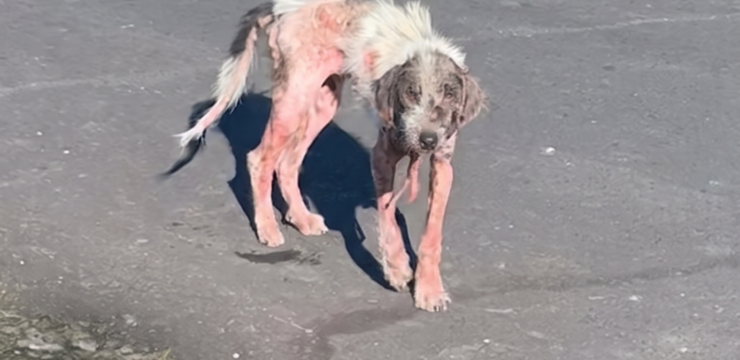
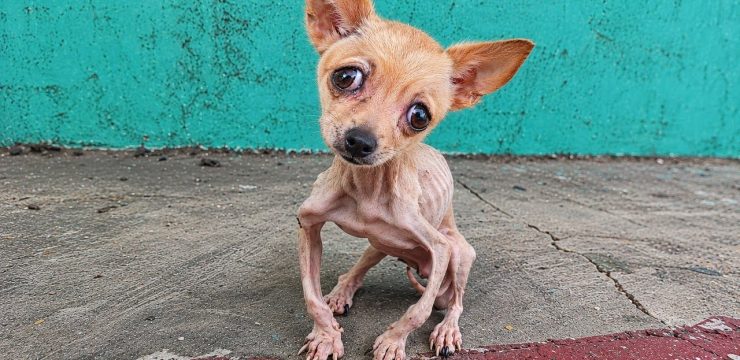
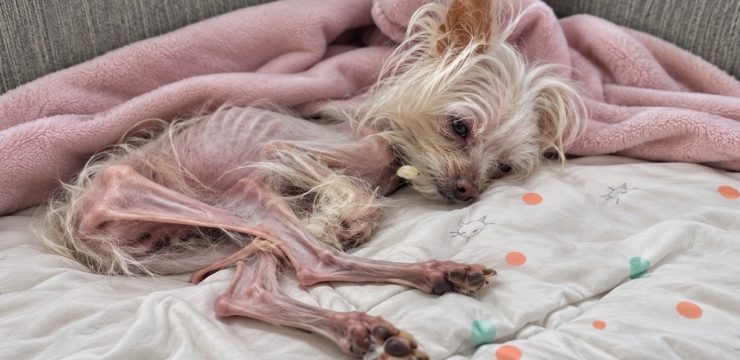
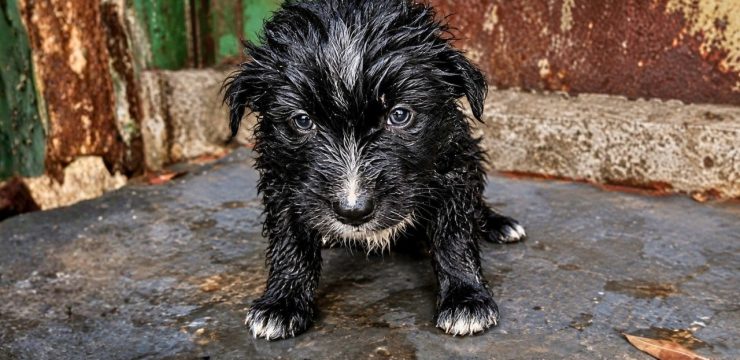
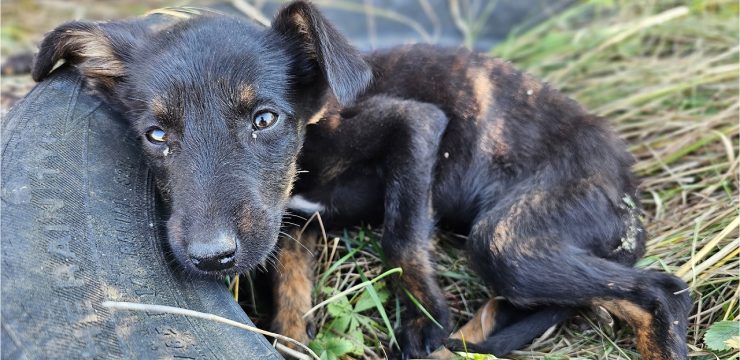
He could barely stand. His body trembled so badly that even the simplest movements were a struggle. Instead of helping him through an illness he could not control, his owner left him on the street.
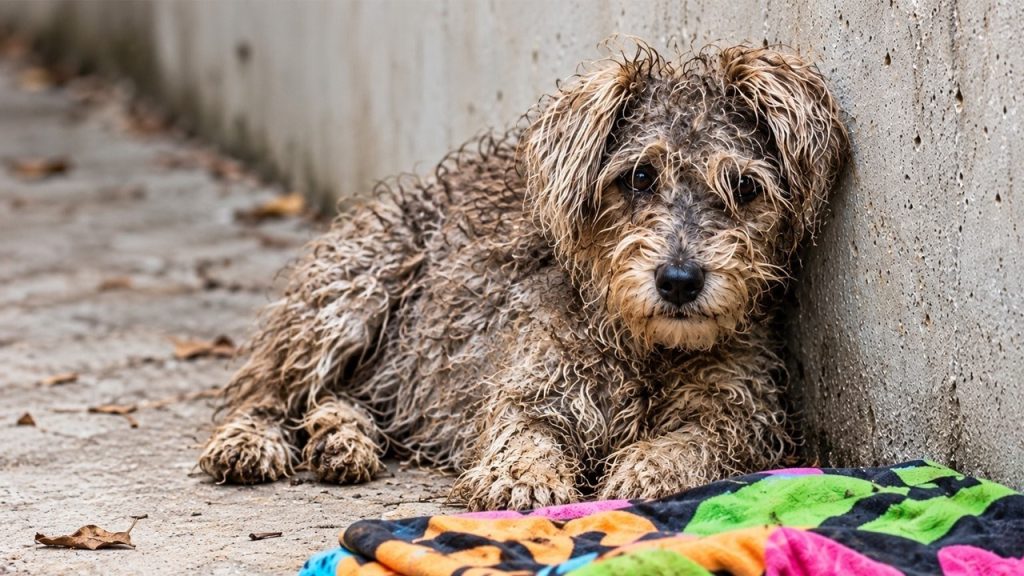
The neglected dog had a coat tangled with mats and coated in mud. Beneath that unkempt fur was a living creature who needed more than a place to rest. He needed someone willing to see past his condition and give him the care he had been denied.
A compassionate rescuer took him in. The first task was to wash away the dirt and work through the neglected fur. Bathing him helped reveal just how difficult his condition had become. Standing was hard. Moving was hard. Even eating, something most dogs do without a second thought, presented a serious challenge.
The dog would come to be called Scruff. It was a fitting name for his disheveled appearance, but it could never describe all that he was. His illness had changed what his body could do. It had not changed his need for kindness, safety, and a place where he belonged.
His rescuer knew that a bath and a comfortable environment could not solve the problem. Scruff needed medical answers, and getting them proved difficult. He was taken to three different veterinary hospitals before his condition was finally identified as a neurodegenerative disease.
That diagnosis offered an explanation for the troubling symptoms. It also made clear that Scruff’s needs were not ordinary. This was not simply a matter of cleaning him up and watching him regain his strength. His condition would remain part of his life, and caring for him would require attention and patience beyond what many families ever have to consider.
For a dog already abandoned because of his illness, that reality was especially painful. The very condition that should have brought him understanding had become the reason his owner walked away.
But Scruff was no longer alone in facing it.
His rescuer approached his care with determination and tenderness. Medication became part of the effort to help him manage his symptoms. Muscle relaxants were given to ease the effects of his condition, while soothing music helped calm his tremors enough for him to sleep peacefully.
Sleep can seem like such a small thing until it becomes difficult to find. The gentle music did not make his disease disappear. Neither did affection replace veterinary care. Together with medication and patient attention, however, those efforts helped make his life more manageable.
His story also raised a difficult question: How could someone leave a sick animal in such a vulnerable condition?
Authorities found the answer. Security footage helped them identify and locate Scruff’s original owner. Confronted about what had happened, the owner admitted abandoning him because of his illness.
There was accountability. The former owner was permanently banned from keeping pets, a consequence that acknowledged the seriousness of the abandonment. Yet the situation involved another animal whose welfare mattered just as much.
Scruff’s mother was still connected to that owner. She was successfully rescued and went on to be adopted into a loving home. The outcome did not erase what had happened to Scruff, but it meant that another dog was given the protection and family life she deserved.
For Scruff, the most important work continued in the ordinary acts of care that followed. There were medications to manage, exercises to maintain, and a body that needed encouragement without unreasonable expectations. His rescuers gave him that commitment, understanding that recovery with a lasting neurological condition could not be measured by wishful thinking.
Daily exercise became an important part of his progress. Alongside his medication and the steady love surrounding him, it helped him develop better mobility. The dog who had struggled to stand began moving with a freedom that once seemed far beyond his reach.
And then came a change that spoke more clearly than any description could.
Scruff could run.
Not merely shift his weight or manage the most basic movements, but run with joy. A dog who had been left on the street because his body failed him now had the strength and mobility to enjoy movement again.
His improvement was remarkable, but it was not the same as a cure. Scruff still had a lifelong condition. His progress did not cancel the responsibility of caring for him, nor did it guarantee that every challenge was behind him.
That distinction mattered to the people who had welcomed him into their care. Their original plan had been to foster Scruff, offering him protection and support without necessarily becoming his permanent family. But as they understood the patience his condition would require throughout his life, their plans changed.
They decided to adopt him.
There is something deeply moving about that decision. They knew Scruff would need more than affection on easy days. They understood that loving him meant accepting the ongoing work of caring for a dog whose needs might always be different. Rather than looking away from that responsibility, they chose to make him part of their family.
Scruff now lives happily with people who truly love him. His life is no longer defined solely by the street where he was abandoned or the illness that made him vulnerable. Those things remain part of his history, but they are not the whole of his story.
His mother has a loving home, too. Two animals once affected by one person’s choices now have families ready to care for them.
What makes Scruff’s journey so meaningful is not that love erased his disease. It did not. It is that compassionate people recognized his worth without demanding that he become a perfectly healthy dog first.
He deserved care when he could barely stand. He deserves it just as much when he runs.
A second chance does not always mean a life without difficulties. Sometimes it means having someone who stays, even when the difficulties remain.