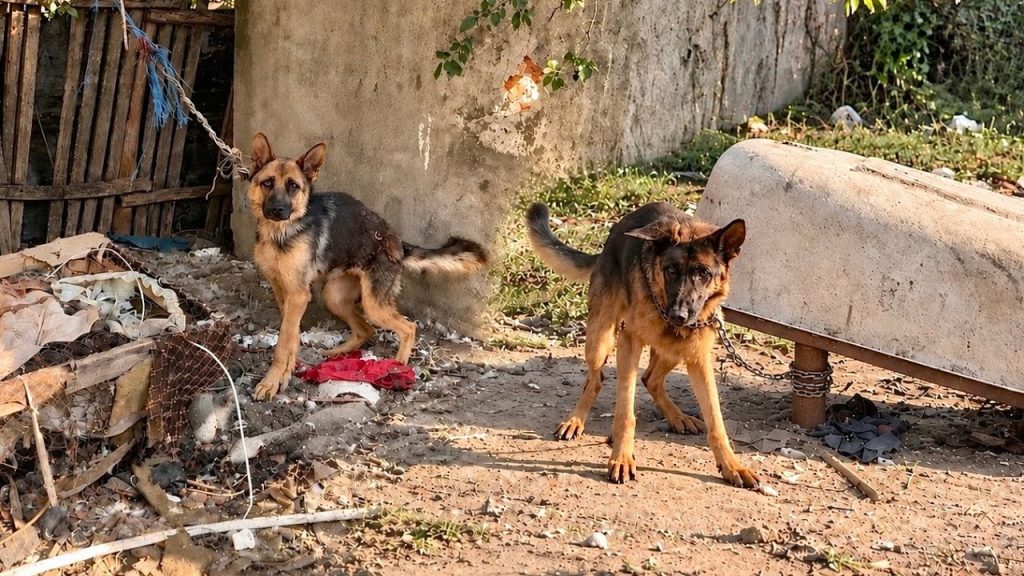
An urgent call brought rescuers to an aging house where the two dogs had been tethered for a long time. The yard was crowded with discarded belongings, broken materials, dry wood, and piles of trash. It was a difficult place to imagine any animal finding comfort, much less two large dogs who needed room to move, rest, and feel secure.
The rescuers first had to speak with the owners. Cooperation did not come easily. The owners were reluctant to let the dogs go, but eventually agreed to their removal. With that permission, the team could turn its attention to the animals waiting outside. They also took care to protect the family’s privacy, keeping the people at the property out of view.
One shepherd stood near an overturned bathtub, chained to a metal stake driven firmly into the ground. When a rescuer approached with food, the dog responded with a wagging tail and a friendly welcome. That small gesture made the scene especially moving. Although the dog had spent so long restrained, kindness was still met with warmth.
But a closer look revealed a serious injury. The chain around the dog’s neck had become painfully tight, cutting into the skin. The problem could not be solved by simply unclipping a leash. The metal was fixed around an already injured neck, and removing it would require careful work.
Behind the house, the second shepherd was tied near a deteriorating wooden fence, surrounded by more discarded items. Rope and metal chain held the dog in place. The restraint was so short that lying down to sleep was impossible. Even the ordinary comfort of stretching out on the ground had been denied.
The rescuers chose to free this dog first. Food helped make the approach calm, and the dog allowed the rescuer to work on the rope and chain fastened to the fence. Once the restraint was loosened and removed, the shepherd followed quietly out toward the road. Soon the dog was climbing into the rescue truck, leaving the cramped corner behind.
One was safe inside the vehicle. The other was still chained to the earth.
Back beside the overturned bathtub, the team faced a different kind of obstacle. The metal stake was lodged deep in the ground, holding the first shepherd in place. A rescuer moved the old bathtub aside to reach the anchor, then worked to twist and pull the stake free. It resisted. The effort demanded patience and strength, and the dog could not leave until the metal finally gave way.
At last, the anchor came out. The shepherd was free to walk away from the spot where the chain had held firm for so long. The rescuer guided the dog to the truck, where the other shepherd was already waiting. Both animals had been removed from the yard, but freedom from the property was only the beginning of their care.
At the veterinary facility, the injured dog’s neck required immediate attention. The metal links could not simply be slipped over the head without risking more harm. Working carefully, the rescuers and veterinary staff used heavy duty cutters to separate the links, one by one. The chain that had confined the shepherd was finally removed. It was a necessary step, but there was nothing triumphant about the painful injury underneath. Careful medical treatment mattered just as much as the escape from confinement.
Underneath it, the injury was clear. A deep, inflamed wound circled the dog’s neck, showing just how much damage the tight restraint had caused. The team cleaned and treated the area, then applied a protective bandage. The dog now had the chance to heal without the pressure of metal against injured skin.
The second shepherd needed care, too, even without the same visible neck wound. Both dogs were settled into clean, secure kennels and received the veterinary attention they needed. They were offered nourishing food, including fresh minced meat, along with gentle reassurance from the people caring for them.
For animals who had known such restricted lives, these changes mattered. There was space to rest. There were people paying attention to their needs. Food arrived without the dogs having to struggle against a chain to reach it. Their circumstances had changed from confinement and neglect to safety and steady care.
Recovery did not depend on a single dramatic moment. The injured neck needed treatment, and both shepherds needed time to regain their health. Their caregivers continued to provide support as the dogs grew stronger. The same animals who had once stood tethered among scraps and broken belongings were now being given the ordinary things every companion animal deserves.
In time, both German Shepherds recovered completely. Their energy returned, and their surroundings no longer limited every movement. Together, they ran and played in a spacious yard at the rescue facility. They also showed affection toward the rescuers who had helped them, drawing close with the easy enthusiasm of dogs finally able to move freely.
The contrast was remarkable. One dog had been unable to lie down; now there was room to run. The other had worn a chain that injured its neck; now that chain was gone, and the wound had healed. Their joy did not erase what they had endured, but it showed what became possible when someone stepped in to help.
Their journey ended not with a claim about an unknown future home, but with something real: two healthy dogs, safe together, free to play, and surrounded by care. They had been given back the simple comforts that should never have been taken away. Every animal deserves that much, and every act of compassion helps make it possible.