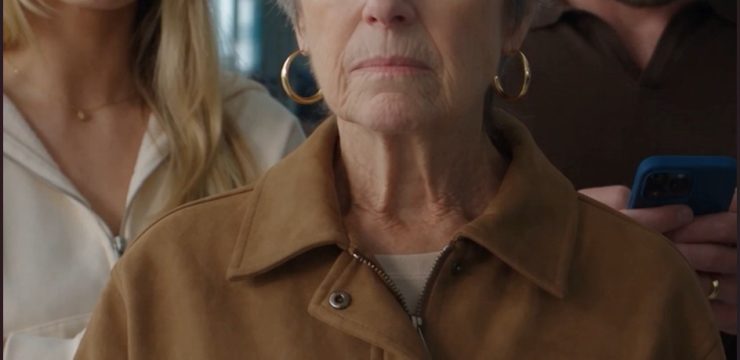
She had built a life designed to make people forget she had ever been poor.
The restaurant was the kind of place where the lighting was soft on purpose, where the wine cost more than most people’s weekly groceries, and where a woman like her could sit surrounded by laughter and candlelight and still feel completely alone. She had learned that trick early — how to fill a room with noise so the silence inside her couldn’t be heard.
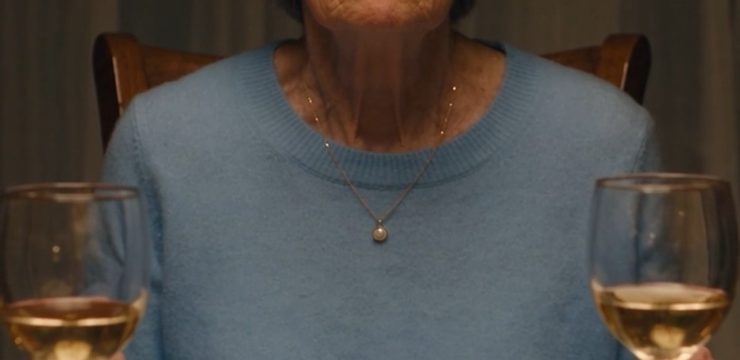
She wore pearls that night. She always wore pearls to these things. They made her feel armored.
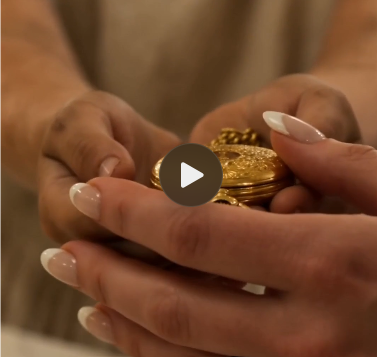
But beneath the silk sleeve of her dress, hidden against her wrist like a secret she had never been brave enough to throw away, was a small gold watch on a delicate chain. Old. Worn. The kind of thing that should have been replaced years ago.
She never replaced it.
Some things you hold onto not because they’re beautiful anymore, but because letting go feels like killing the last piece of who you used to be.
She was mid-sentence — something bright and forgettable about a summer trip — when the child appeared at the edge of the table.
Barefoot. Wide-eyed. Still as a held breath.
The conversation died around her.
She turned slowly, the way you turn when something in your chest already knows before your eyes do.
The little girl couldn’t have been more than six or seven. Her clothes were worn thin at the elbows, her hair damp from the rain outside. She wasn’t crying, but her lips were pressed tight together the way children press them when they are trying very hard not to.
In her small hands, she held a photograph.
She held it out without saying a word.
The woman took it.
The restaurant disappeared.
There are moments in life that don’t announce themselves. They don’t arrive with music or warning. They simply land in your hands, quiet and devastating, and the world around you stops making sense.
She stared at the photograph until the faces inside blurred beneath her tears.
She knew the young woman in that picture.
Of course she knew her.
There are some faces that grief never lets you forget, no matter how many years you stack on top of them. No matter how many new dresses you buy, how many parties you attend, how many careful lies you tell yourself about being healed. Some faces live permanently behind your eyes, waiting in the dark for a moment exactly like this one.
Her younger sister had been holding that baby in the photograph.
The same sister who had vanished the night their father died — the night the family fractured along fault lines that had been building for years. The same sister everyone called reckless. Too emotional. Too difficult. The one they blamed when things fell apart.
The one she had secretly blamed too, in the long hollow years that followed, because blame is easier than grief and far easier than guilt.
She gripped the watch so tightly that the chain pressed a red line into her palm.
“Who is your mother?” she whispered.
The little girl looked down at the floor, as if speaking the name aloud might make the whole room angry.
“Elena.”
The woman’s knees went weak beneath the table.
A waiter stepped forward immediately — they are trained to notice — but she waved him back with one hand. She did not want help standing. Not now. Not when a child with Elena’s eyes was standing barefoot beside her chair, carrying something too heavy for such small hands.
The girl reached into the pocket of her worn shirt and pulled out a folded napkin, soft and damp from being held too long in nervous fingers.
“She wrote this,” the girl said carefully. “She told me that if I got scared, I should find the woman wearing the watch.”
The woman unfolded it with trembling hands.
The handwriting was weak. Shaky at the edges in a way that made something inside her chest crack open.
But it was unmistakably Elena’s.
I tried to come back. They told me you hated me. They told me you threw away the watch. I kept mine all these years because I wanted our daughters to know we were once sisters — before money and silence and other people’s opinions made us strangers.
She covered her mouth with one hand.
Daughters.
Her eyes fell back to the little girl still standing patiently beside the table. Still waiting. Still afraid. Still holding a message that should never have been placed on shoulders so young and small.
Her voice, when it finally came, broke completely.
“Where is she?”
The girl turned and pointed toward the rain-dark street beyond the restaurant’s tall windows.
“In the old church,” she said softly. “She told me she wanted to see you before she sleeps.”
The woman did not take her purse.
She did not excuse herself to her guests.
She did not pause to consider what anyone watching might think.
She took the little girl’s hand and she ran — through the golden light of that expensive room, past the shocked faces of people who had never seen her move like that, past the carefully constructed version of herself she had spent two decades perfecting — and out into the cold rain beyond.
On the wet pavement, the child looked up at her.
“Are you mad at Mommy?”
She dropped to her knees right there on the sidewalk, silk dress and pearls and all, and pulled that little girl into her arms so tightly she could feel the child’s heartbeat against her own.
“No, baby,” she whispered, sobbing into her hair. “I’m just late.”
She opened the old watch in her palm one more time.
The photograph inside showed two sisters standing together before the world had driven a silence between them so deep it had lasted most of their lives.
And for the first time in more years than she could count, one of them was finally — finally — running back.