Nobody in that courtroom was prepared for what happened next.
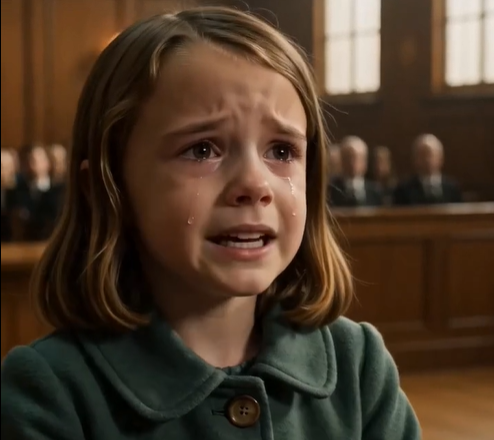
It started the way so many custody hearings do — cold, procedural, exhausting. A man standing before the bench, his future hanging by threads. A little girl sitting in the waiting area, clutching something small in her tiny fist, too young to fully understand the weight of the room but old enough to feel it pressing down on her chest.
The air inside smelled like old paper and quiet desperation.
The father had done everything right. He had worked double shifts, kept the apartment clean, made her breakfast every morning, braided her hair when he didn’t know how, learned because she needed him to. After her mother passed, he had become both parents at once — imperfect, exhausted, but wholly devoted. And still, here he was. Being judged. Being measured. At risk of losing the one thing left in his world that made him want to keep going.
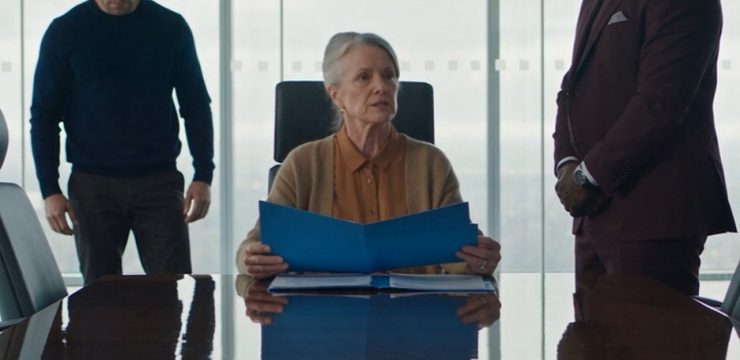
The judge was known for her composure. Decades on the bench had given her a face like still water — unreadable, unmoved, professionally detached. People respected her. Some feared her. She had seen every kind of story walk through those doors and had learned, over time, to keep her heart out of the equation.
That morning, she believed today would be no different.
Then the little girl walked in.
She had been allowed into the courtroom briefly, just a formality. She wore a dress that was slightly too big for her, her shoes were scuffed, and her eyes were red from crying she had clearly been trying to hold back. In her hand, she held a bracelet — small, delicate, a thin gold chain with a tiny charm that caught the courtroom light.
She walked up before the judge and held it out.
Her small arm was trembling.
The judge leaned forward instinctively, more out of courtesy than curiosity — until her eyes landed on the charm.
She went completely still.
The room felt the shift before anyone understood it.
“My mom gave me this,” the little girl said. Her voice was barely above a whisper, shaking with every word. “She said if Daddy was ever taken away from me… I should find you.”
The judge’s hand rose slowly to her mouth.
“She said to call you… Grandma.”
The word landed like something falling from a great height.
The bracelet — that tiny, delicate bracelet — was the one she had placed on her own daughter’s wrist the night she was born. She recognized the charm. She recognized the chain. She had chosen it herself, in a small shop, the week before her daughter arrived into the world.
Her daughter. Emily.
The same Emily she had turned away years ago when she chose to marry a man her mother believed was not good enough. The same Emily who had stopped calling. Who had built a life anyway, quietly and without apology. Who had loved that man, and had this child with him, and had apparently carried enough grace in her heart to send that child here — to a mother who had failed her — when she could no longer be there herself.
The little girl wiped her nose with her sleeve and kept going, because she had been brave this far and her mother had asked her to be.
“Mom said you’d know her. She said you’d know the bracelet.”
The judge’s composure — that legendary, years-built wall — cracked completely.
Her eyes filled with tears she had been refusing for longer than anyone in that room could guess. Her hands trembled as she reached out and took the bracelet. She held it like something sacred. Because it was.
The father stood near the front, his voice barely holding together. “She never told me where you were,” he said softly. “Only that someday… you would know her child.”
The judge looked at the little girl’s face.
The same eyes as Emily. The same chin. The same quiet, stubborn strength — the kind you don’t teach a child, the kind they’re simply born carrying from someone they love.
“What was your mother’s name?” the judge whispered.
“Emily,” the little girl said.
The judge closed her eyes. One breath — long, broken, grief-soaked — escaped her. The courtroom was absolutely silent. Not the silence of indifference, but the silence of people witnessing something they would carry with them for the rest of their lives.
A grandmother and granddaughter, finding each other inside the wreckage of time and pride and choices that couldn’t be undone.
When the judge opened her eyes, something in them had changed entirely.
She was no longer a judge in that moment. She was a mother. A grandmother. A woman reckoning with every year she had wasted and every door she had kept closed out of stubbornness she had dressed up as dignity.
She looked at the case file. She looked at the father — this man her daughter had chosen, this man who had braided a little girl’s hair and worked himself hollow trying to keep her safe and whole.
She looked at the little girl.
And then she said the words that no one in that courtroom expected to hear — the words that made several people in the gallery press their hands to their hearts, the words that made the father’s knees nearly buckle.
“This man was never the one who should have been punished.”
She wasn’t just ruling on a custody case.
She was acknowledging a lifetime of wrong turns. She was honoring a daughter who had forgiven her without ever saying so out loud. She was choosing, finally and too late and yet somehow just in time, to do the right thing — for the granddaughter she hadn’t known existed, and for the man her Emily had trusted with her whole heart.
Some reckonings don’t announce themselves.
They walk in wearing scuffed shoes, holding a bracelet in a trembling hand, and they change everything.