The ballroom had been glittering for hours — crystal chandeliers, silk gowns, the soft clink of champagne flutes — but nothing that evening could have prepared anyone for what happened when a girl in a pale pink dress reached out and took the hand of a beggar boy.
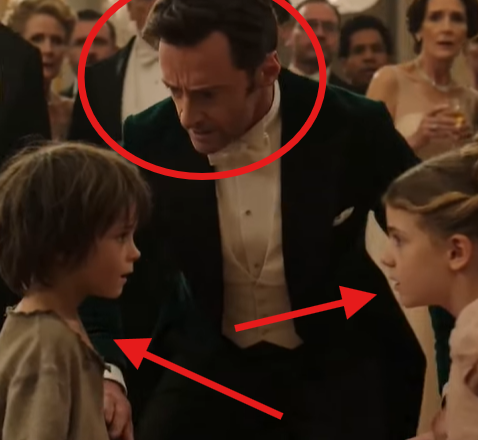
Her name was Elena. And for two years, everyone in that room had believed she would never walk again.
Her father, Richard, had pushed her wheelchair through every doorway, every hospital corridor, every tearful night when she cried herself to sleep asking why her body had betrayed her. He had sold his car to pay for specialist appointments. He had quit his second job to stay home and care for her. He had quietly, slowly, given up pieces of himself — piece by piece — so that she would never feel like a burden.
He loved her the way only a father can: fiercely, completely, and without condition.
So when Elena began to rise from that wheelchair — in the middle of a crowded ballroom, in front of hundreds of well-dressed strangers — Richard grabbed the handle and whispered the only words his shaking heart could manage.
“No, sweetheart… don’t.”
He was not telling her to stop because he didn’t believe in her. He was telling her to stop because he was terrified of watching her fall. He had watched her fall before. He knew what it cost her — the tears she tried to hide, the way she’d stare at the ceiling afterward with empty eyes.
But Elena did not sit back.
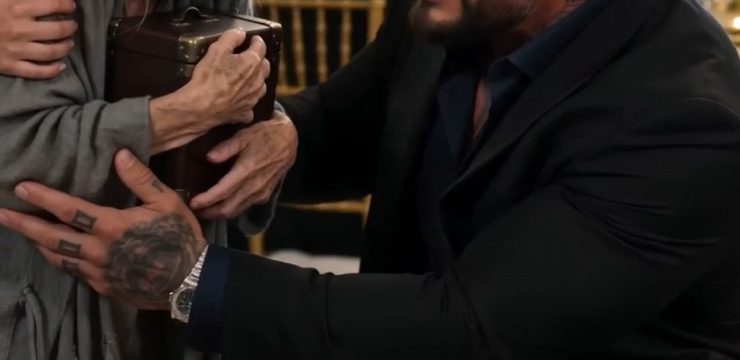
Her knees trembled beneath the soft fabric of her dress. Her fingers found the hand of the boy standing beside her — a boy who did not belong in this room, whose jacket was torn at the elbow and whose shoes had seen far too many miles of hard road. No one in that ballroom knew his name. He had arrived uninvited, quiet as a shadow, and no one had bothered to ask why he was there.
He had leaned close to Elena and said something so simple it nearly broke the room in half when she repeated it later.
“Listen to the music. Not the pain.”
From across the hall, a pianist had begun to play — something gentle, something patient, the kind of melody that doesn’t demand anything from you. It simply waits.
And Elena listened.
She rose one inch.
The crowd went silent the way crowds only go silent when something sacred is happening and everyone in the room somehow knows it at once.
She rose another inch.
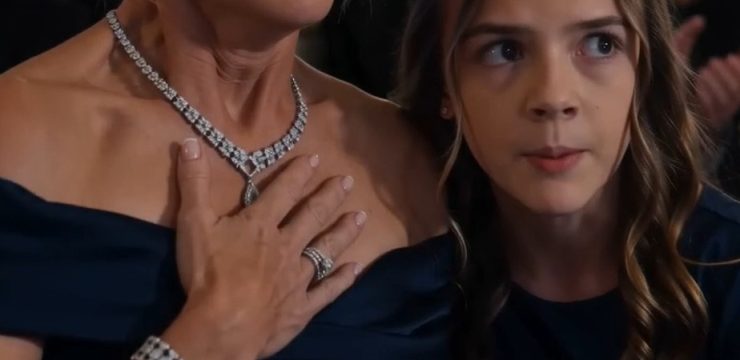
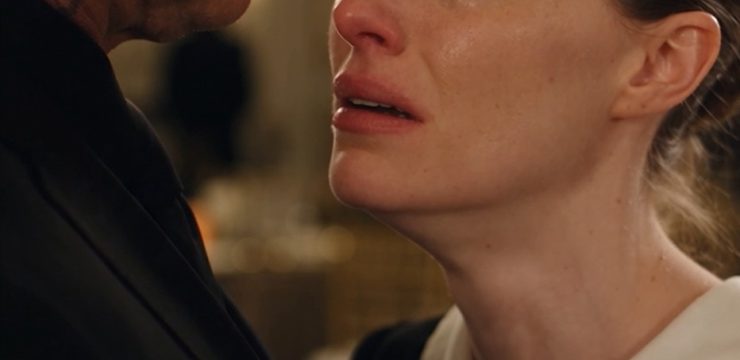
Richard covered his mouth with both hands. His eyes filled before he could stop them. Beside him, a woman in a silver gown stood near the chandelier, perfectly still, her expression unreadable — but her face had gone the color of ash.
“How?” Richard breathed. He wasn’t asking anyone in particular. He was asking the universe. He was asking every doctor who had ever handed him a grim prognosis. He was asking the two years of silence that had settled over his daughter’s life like a heavy curtain.
The boy turned to him with the kind of sadness that comes not from cruelty but from knowing too much.
“She was never unable to walk,” he said quietly.
The words landed like a stone dropped into still water.
Richard froze. His mind went back — over every appointment, every test result, every night he had sat on the edge of Elena’s bed and held her hand while she slept. He thought of every medication. Every dosage. Every small amber bottle on the nightstand that he had trusted without question because a doctor’s name was printed on the label.
The boy turned toward the crowd. He did not raise his voice. He did not need to.
He pointed at the woman in the silver gown.
“She was drugged.”
The silence that followed was the loudest thing Richard had ever heard.
The woman near the chandelier took one small step backward. Her champagne glass tilted in her hand. The color had completely drained from her face, and her eyes — those carefully composed, socially practiced eyes — had gone wide with something she could no longer control.
Fear.
Elena took one trembling step forward.
Then another.
The boy reached into the torn pocket of his jacket and withdrew a tiny glass vial, holding it up beneath the chandelier light so that every person in that room could see it clearly.
“I found this in her room.”
The vial caught the light. It turned slowly between his fingers. And in that moment, everything Richard thought he knew about the last two years — every sacrifice, every sleepless night, every prayer he had offered up in hospital waiting rooms — rearranged itself into a picture so devastating that his knees nearly gave way.
Elena had been kept from walking. On purpose. By someone who stood in this very room, dressed in silk and diamonds, smiling through the years as a father emptied himself out for a daughter who had been robbed of her own legs.
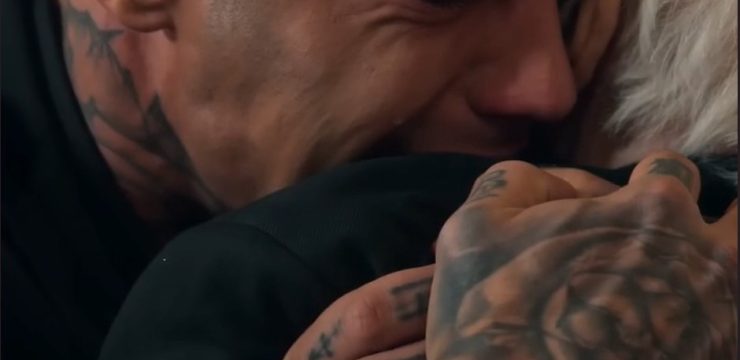
Elena crossed the ballroom floor slowly, her steps unsteady but real. When she reached her father, she wrapped her arms around him, and Richard finally let himself cry — not from grief, not from relief, but from the unbearable, overwhelming weight of a love that had been tested in ways no parent should ever have to endure.
The woman in silver did not move. There was nowhere left to go.
Some truths, once they are standing upright in the light, cannot be put back down.