She had rehearsed her smile so many times it no longer felt like lying.
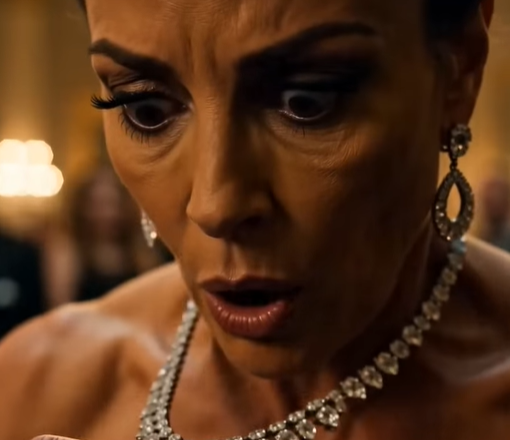
Standing at the center of the ballroom, surrounded by crystal chandeliers and the quiet clink of champagne glasses, she looked exactly like what she had worked decades to become — a woman of standing, of grace, of unquestionable respectability. Her gown was silk. Her jewelry was real. Her past was buried.
Or so she believed.
The chain slid through her fingers the moment the little girl spoke. And no one moved to catch it — not the waitstaff gliding across the polished floor, not the guests turning to look, not even the woman herself. Because what the child had just placed into the room was not an interruption. It was a reckoning.
The pendant was a small silver heart, split cleanly down the middle.
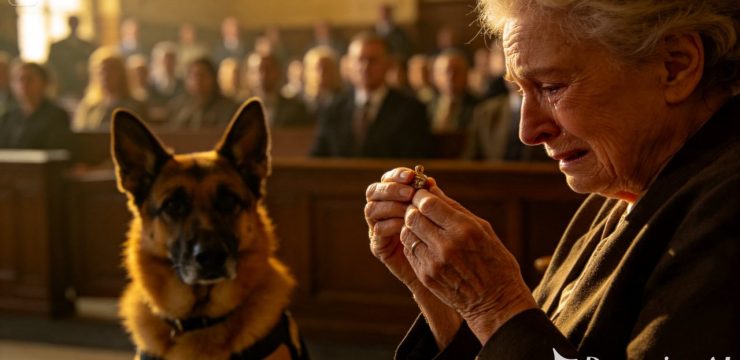
One half had belonged to a frightened young woman who made the most painful decision of her life in a back room while the rest of the world carried on without her. The other half had been tied gently around the neck of a baby girl — a baby she was told she would destroy simply by loving.
She had been young when it happened. Young, vulnerable, and completely alone in the way that only children of powerful families can be — surrounded by people and utterly abandoned. The man who fathered her child was considered wrong in every way her family measured worth. The pregnancy was treated not as a life beginning, but as a scandal requiring management. Her mother never raised her voice about it. Her father never looked her in the eye. They simply made arrangements, the way wealthy people make arrangements — quietly, efficiently, and without asking for her consent.
Money exchanged hands. Documents were handled discreetly. She was told the baby would be placed somewhere safe, somewhere loving, somewhere far enough away that no questions would be asked and no answers would be required of her.
She was told to move forward.
And she did.
She married well. She attended the right events. She gave generously to causes that made her name sound charitable in the mouths of people who mattered. She learned to carry herself as though grief were simply poor posture — something a woman of discipline would eventually correct.
But she kept half of a silver heart.
Because there are some things even the most practiced women cannot bring themselves to throw away.
Now the child was standing in front of her wearing the other half.
Her voice came out thinner than she intended.
“Your mother — who was she?”
The girl’s eyes were steady in the way that children’s eyes are when they have been coached by someone who loved them enough to prepare them for the hardest moment of their lives.
“She worked in the laundry room,” the girl said.
The room shifted.
Not dramatically. Not with gasps or raised voices. But in the quiet, terrible way a room shifts when everyone present suddenly understands that the story they thought they were witnessing is actually much darker than they assumed.
The baby had not gone to some warm household in a distant city. She had been quietly handed downward — passed into the invisible world of service, of labor, of people who exist in the same buildings as the wealthy without ever truly occupying the same world. She had been raised not in comfort but in the margins, by a woman who worked in the same estate world that the woman in silk now presided over.
The girl’s voice trembled only slightly.
“She said you cried when they took me.”
No accusation dressed in polished language could have cut as deeply as those eight plain words.
Because it was true. She had cried. She remembered it clearly — the kind of crying that happens when a person understands in their body what their mind has already agreed to surrender. She had wept, and then she had wiped her face, and then she had let them take the baby anyway.
Grief without action is not innocence. It is simply grief.
The guests standing in that gilded room were no longer watching a disruption at a social event. They were watching a woman be held accountable by the one person in the world she had never prepared herself to face.
She knelt.
Not from tenderness, not from theater — but because remaining upright above this child had become physically impossible.
“What was your mother’s name?” she asked.
The girl told her.
And she closed her eyes for one quiet second, because she knew that name. She had known it once, briefly, the way people know the names of those who serve them — fleetingly, without curiosity. A young worker who had quietly disappeared from the property sometime after the baby was gone. No one had followed up. No one had wondered why.
Until now.
“She said not to trust you too fast,” the girl continued softly.
A pause that held the weight of a lifetime.
“She said if you looked sorry before you looked scared… then maybe you were really my mother.”
That was the sentence that finally broke her — not in the dramatic way people expect to see a woman undone, not with a collapse or a cry that the guests could later describe to friends. It broke her in the small, quiet, devastating way that truth always arrives when it has been kept waiting long enough.
The chandeliers continued to glow. Soft music still filtered through the room. The polished floor still reflected the wealth of everyone standing upon it.
But none of it held any weight anymore.
Because the little girl everyone had dismissed at the ballroom door had not come hungry. She had not come asking for charity or sympathy or even an explanation.
She came carrying half a heart, worn around her neck by the woman who raised her — and she came to find out whether the woman wearing the other half had spent all these years choosing her money, or simply waiting for the courage to choose her daughter.