He had been sitting in his apartment for three days, staring at the same four walls, trying to convince himself that he had another option. He didn’t. The refrigerator was empty. His bank account was down to nothing. And the kind of pride that had carried him through decades of service — the kind that made him the first man through the door in the most dangerous situations — was now the very thing making it impossible for him to pick up the phone and ask for help.
So he did the only thing he could think of.
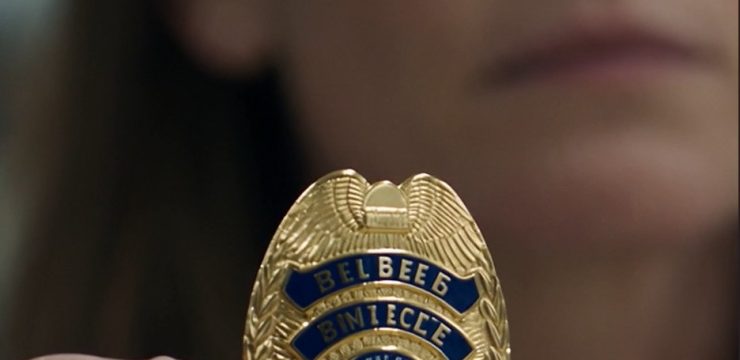
He reached into the small wooden box on his nightstand — the one he hadn’t opened in years — and he pulled out his gold medal.
His hands didn’t shake at first. But they did by the time he slipped it into his jacket pocket.
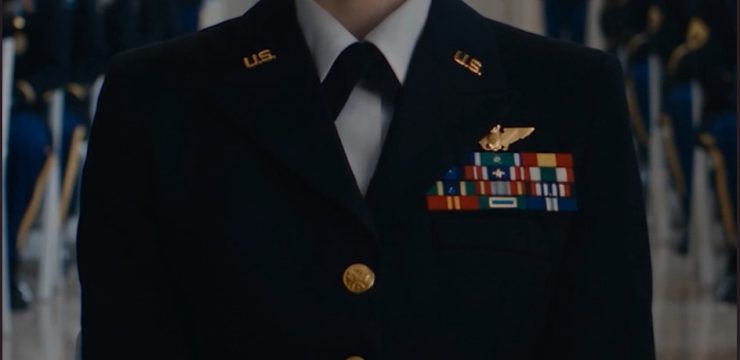
This man had once been a company commander. The kind of leader that soldiers talk about long after the mission is over — not because he gave the best speeches, but because he was always the last one out. He went in first. He came out last. More than once, he threw himself between danger and the men under his command, dragging the wounded to safety under conditions that would have broken most people. He was respected in a way that few men ever truly are — not because of his rank, but because of his character.
Then came the operation that changed everything.
An explosion. Darkness. Pain that he still can’t fully describe. And then a hospital room, where a doctor delivered the news in a quiet, clinical voice — as if a man’s entire future could be summarized in a single sentence. He would never walk again.
He was given his medal, a handshake, and a discharge from service. For the institution, the story was over. For him, it was only the beginning of a different kind of battle — one that no training had ever prepared him for.
Without the structure of service, he had nothing to anchor him. No family waiting at home. No network of civilians who understood what he had been through. He tried to find work, but doors closed on him one after another. His disability made him invisible to employers who saw limitation before they ever looked at the man. Slowly, without really deciding to, he stopped leaving his apartment. The outside world became something that happened to other people.
The one thing he held onto — the only object that still told him who he was — was that medal. He kept it in that wooden box like a relic, taking it out only on the nights when he needed to remember that he had once mattered.
But hunger doesn’t care about memories.
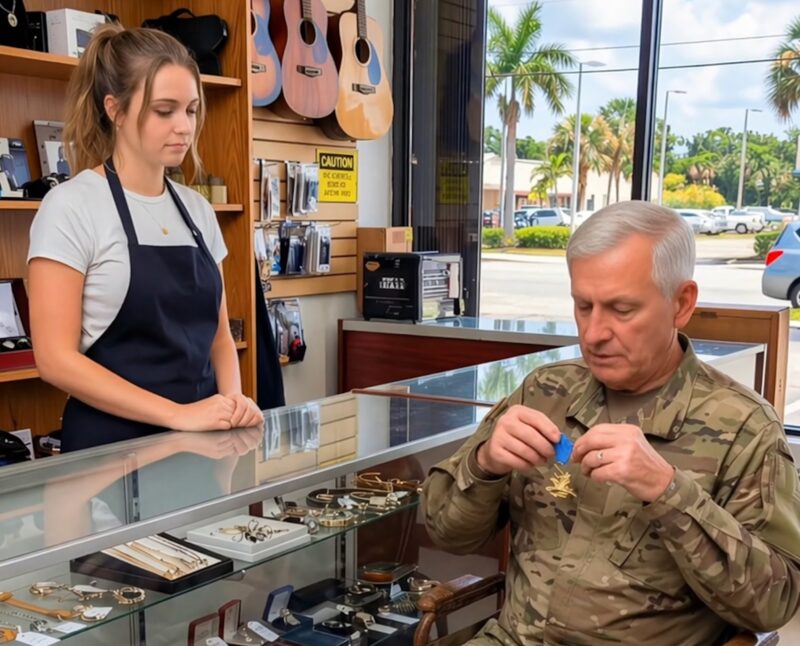
The jewelry store was just a few blocks away. He made the trip in his wheelchair, the worn-out wheels grinding against the pavement with every rotation. Inside, the store was bright and quiet — the kind of quiet that feels almost uncomfortable to someone used to chaos. Glass cases lined the walls, filled with things that belonged to a different kind of life.
The young woman working behind the counter noticed him the moment he came in. She didn’t rush over. She simply watched, giving him space.
He wheeled up to the counter and placed the medal on the glass. His fingers lingered on it for just a second longer than necessary.
“I’d like to sell this,” he said, keeping his eyes down.
She picked it up carefully, the way you handle something that clearly means more than its weight in gold. She studied it — the inscription, the detail, the wear on the edges from years of careful handling. Then she looked at him. Really looked at him. She noticed the way his jaw was set, the careful blankness in his expression that people wear when they’re trying very hard not to feel something.
“Did you earn this?” she asked softly.
He nodded once. “For my service.”
The store went still. Even the ambient noise from outside seemed to fall away.
She quoted him a price. He accepted it without negotiating — not because it was generous, but because it didn’t matter. What mattered was getting enough to fill a grocery cart.
But before he let go, he held the medal one last time. His thumb traced the face of it slowly, the way you say goodbye to something you know you’ll never see again. His composure held — barely — but the tears were there, quiet and contained, and he turned away so no one would see them fall.
“Alright,” he said. His voice was almost inaudible.
He pocketed the money with the same careful dignity he had carried through the entire transaction. Then he turned his wheelchair toward the door and moved through it without looking back.
The door swung shut behind him.
And then she ran.
“Wait — please, wait!”
She burst out onto the sidewalk, the medal in her hand, slightly breathless from the urgency of it.
He turned, confused and wary.
She held the medal out to him. Her eyes were steady, but her voice was thick with something she couldn’t quite contain.
“Take it back,” she said. “Things like this aren’t meant to be sold. They belong with the people who earned them.”
He stared at her, disbelief written across every line of his face.
“But the money—”
“The money is yours. Keep it.” She pressed the medal into his hands. “This isn’t a transaction. This is just… one person helping another.”
He couldn’t speak. His hands closed around the medal and held it like something fragile.
“I have a brother,” she continued. “He runs a small business — good people, real work, and he specifically hires people with disabilities because he believes the most important thing you can give someone is a chance.” She pulled a card from her apron pocket and held it out. “Let me connect you with him. Please.”
For a long moment, he was completely still.
Then the tears came — but they were different this time. They weren’t about loss.
“Thank you,” he whispered.
Standing on that sidewalk, holding his medal and a stranger’s phone number, he understood something that he hadn’t allowed himself to believe in a very long time.
His life hadn’t ended the day he lost the use of his legs.
Sometimes, the moment that changes everything doesn’t announce itself. It doesn’t come wrapped in ceremony or accompanied by a crowd. Sometimes it’s just a young woman running out of a jewelry store on an ordinary afternoon — deciding that one human being’s dignity was worth more than a completed sale.
And sometimes, that’s more than enough to bring a man back to life.