“Ma’am, get up.”
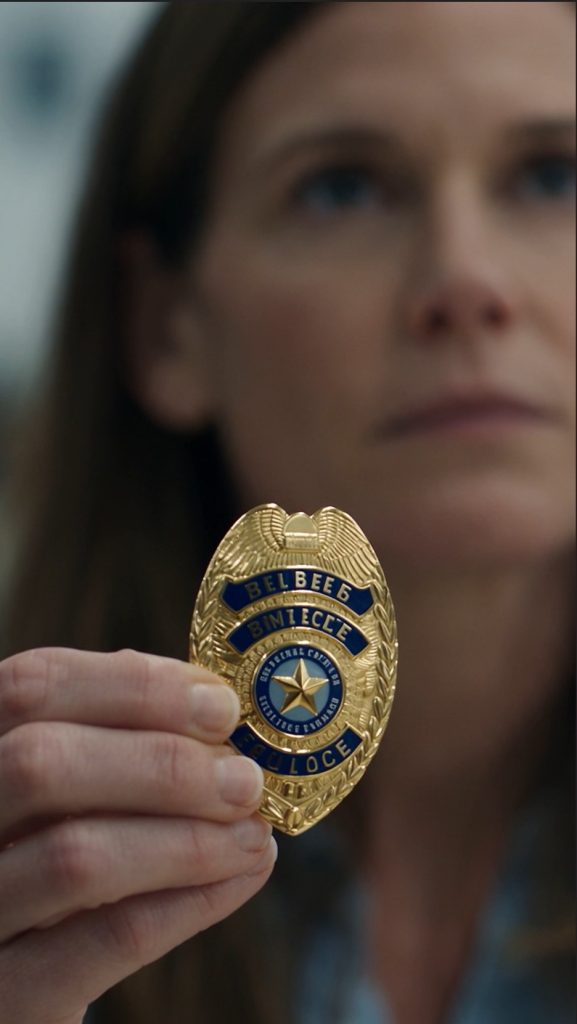
The command cut through the military cafeteria, silencing three nearby tables. An older woman sat motionless as a major gripped the back of her chair, apparently certain she had no right to be there.
But the way she looked at him suggested he had made a mistake he didn’t yet understand.
Major Ryan Stone stood over Helen Carter, his jaw tight with impatience.
“Why?” she asked quietly.
“This section is for officers.”
Sunlight streamed through the tall windows, mixing with the harsh fluorescent lights above the polished tables. Around them, military personnel carried lunch trays and coffee, pretending not to notice the confrontation.
Helen glanced at the empty chairs surrounding her.
“I was told I could sit here.”
Ryan gave a dismissive laugh. “By whom?”
She didn’t answer.
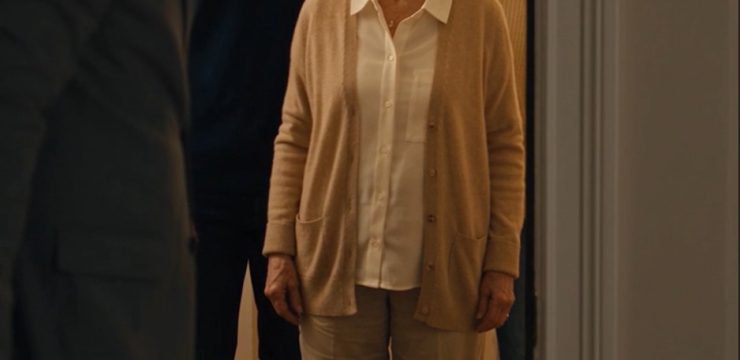
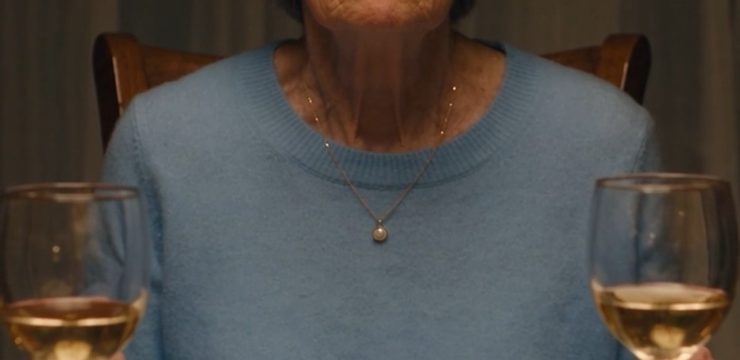
Her silver hair framed a composed face. She wore a simple blue button-down shirt, dark trousers, and comfortable black shoes. Nothing about her appearance revealed authority or rank.
But she wasn’t intimidated.
“You’re in the wrong area,” Ryan insisted.
Helen reached into her pocket and produced a visitor credential attached to a white clip.
“I was invited onto the installation.”
Before she could finish extending it, Ryan snatched the badge from her hand.
He examined it briefly, then dropped it onto her lunch tray beside a bowl of soup.
“A visitor badge doesn’t make you an officer.”
The plastic struck the tray with a sharp click.
Helen looked down, then slowly raised her eyes.
“Did I say it did?”
A young captain nearby lowered his coffee.
Ryan straightened. “Officers normally eat in this section.”
Helen folded her hands.
“I see officers eating throughout the room.”
“That’s not the point.”
“Then what is?”
Ryan’s expression hardened.
“Certain areas are reserved.”
Helen glanced toward two lieutenants eating with a civilian engineer. Farther away, another officer was having lunch with his teenage son.
Neither guest had been questioned.
“Reserved for whom?” she asked.
Ryan answered without hesitation.
“People who belong here.”
Something changed in the room.
A female lieutenant stopped opening her crackers. Another officer stared at his phone without moving his thumb.
Helen held Ryan’s gaze.
“Do I not belong here?”
He noticed the growing attention but refused to retreat.
“You’re making this unnecessarily difficult.”
“I’m sitting here eating lunch.”
Suddenly, Ryan grabbed her tray and dragged it across the table.
Her water glass tilted.
Helen caught it before it spilled.
“Major.”
There was a warning in that single word.
He ignored it.
“There’s another table near the kitchen.”
He pointed toward a cramped corner beside the swinging service doors. Workers hurried past constantly, and a rolling trash container stood nearby.
Helen followed his gesture.
“You want me to move there?”
“It would be better.”
“For whom?”
Ryan hesitated.
“For everyone.”
A heavy silence followed.
Helen rested her fingertips against the tray. She could have refused. Instead, she stood slowly, lifting her lunch with deliberate care.
Her visitor badge remained beside the soup.
Ryan stepped aside.
“Thank you.”
Helen looked directly into his eyes.
“Don’t thank me yet.”
Her voice was barely above a whisper.
She turned and walked away from the bright windows toward the kitchen.
Conversations cautiously resumed, though nobody sounded comfortable.
Then a chair scraped against the floor.
Lieutenant Sarah Bennett was rising from her seat.
“Ma’am…”
Ryan turned sharply.
“This doesn’t concern you.”
Sarah swallowed, glancing toward Helen.
“Major, maybe she can stay there.”
Ryan stepped between them.
“Sit down, Lieutenant.”
“Sir, I only meant—”
“Don’t interfere.”
His command echoed across the cafeteria.
Sarah slowly lowered herself into her chair, her shoulders rigid.
Helen stopped walking.
She had endured every insult without revealing anger. But watching Ryan silence the young lieutenant brought a change to her expression.
For the first time, something cold appeared behind her eyes.
And the silence that followed suggested this confrontation was far from over. 👇
Helen slowly lowered her tray onto the nearest empty table.
Then she turned around.
“Lieutenant Bennett,” she said, reading the name stitched above the young officer’s pocket. “Would you tell me why you tried to help?”
Sarah glanced nervously at Ryan.
“Ma’am, I thought you were being treated unfairly.”
Ryan took a sharp step forward.
“Lieutenant, that’s enough.”
Helen raised one hand.
“Major, she’s answering a question.”
“You have no authority to question my officers.”
Helen studied him for a moment.
“Then perhaps you should explain why answering an elderly woman’s question requires your permission.”
A faint sound came from one of the nearby tables. Someone had drawn a sudden breath.
Ryan’s face flushed.
He turned toward Sarah.
“You’ve made a serious mistake, Lieutenant. I’ll be discussing your conduct with your commanding officer.”
Sarah went pale.
Helen noticed the way her fingers tightened around the edge of the table.
“Are you threatening her career because she asked you to show someone kindness?”
Ryan looked directly at Helen.
“I’m enforcing standards. Something you clearly don’t understand.”
At that precise moment, the cafeteria doors opened.
A tall woman in a colonel’s uniform entered with a younger officer carrying a folder.
Colonel Evelyn Mercer, the installation commander, paused just inside the doorway.
Her eyes moved across the unusually quiet room.
Then she saw Helen.
The folder nearly slipped from the younger officer’s hands as Mercer hurried forward.
“General Carter?”
Ryan turned.
For one brief second, his expression registered confusion.
Then Mercer stopped in front of Helen and straightened instinctively.
“General, I apologize. I was told you’d arrived, but I didn’t realize you were already having lunch.”
Ryan’s face lost its color.
Helen gave Mercer a restrained smile.
“Colonel Mercer. You’re right on time.”
Mercer glanced at the untouched soup, the abandoned table, and the major standing rigidly beside them.
“Is something wrong?”
Ryan immediately squared his shoulders.
“Ma’am, there was a misunderstanding concerning seating arrangements. I was simply assisting this visitor.”
Helen looked at him.
“Is that what you believe happened?”
He swallowed.
“General, I wasn’t aware of your identity.”
The words hung between them.
Helen waited until he finally met her eyes.
“Would knowing my rank have changed how you treated me?”
Ryan’s mouth opened.
Nothing came out.
Mercer looked toward her accompanying officer.
“Please ask the duty officer to come here.”
Then she turned back to Helen.
“General, would you mind telling me what happened?”
Helen glanced toward Sarah.
“I think Lieutenant Bennett should have the opportunity to speak first.”
Sarah looked stunned.
“Me, ma’am?”
“Yes. You were willing to speak when you thought I was nobody important. I’d like you to finish.”
Ryan shifted uncomfortably.
Mercer’s expression sharpened.
“Lieutenant, you may speak freely.”
Sarah stood again.
Her voice trembled at first, but she described everything.
The visitor badge.
The soup tray.
The table beside the kitchen.
The warning that certain people didn’t belong.
When she reached the moment Ryan ordered her to sit down, her voice nearly disappeared.
“I thought someone should say something, ma’am.”
Ryan interrupted.
“Colonel, the lieutenant is leaving out her insubordination.”
Mercer turned slowly.
“Major Stone, you will remain silent until you’re asked to speak.”
A young captain rose from another table.
“Colonel, I witnessed the exchange too.”
He hesitated, his face tightening.
“I saw the major take the visitor badge from her hand and drop it on her tray.”
Then another officer spoke.
And another.
The cafeteria, which had been painfully silent when Helen needed someone to intervene, began filling with voices.
Ryan stared around the room.
The same people who had looked away minutes earlier were now describing what he had done.
Mercer listened without interrupting.
Finally, she asked him one question.
“Major, where is the written regulation that prohibits an authorized civilian guest from sitting at that table?”
Ryan hesitated.
“It’s an established practice, ma’am.”
“That’s not what I asked.”
He glanced toward the windows.
“I would need to verify the specific guidance.”
Mercer’s jaw tightened.
“Then you should have verified it before humiliating a visitor.”
Ryan looked back toward Helen.
“General, I sincerely apologize.”
Helen’s expression softened, but only slightly.
“You’re apologizing to me now because you’ve discovered who I am.”
She turned toward Sarah.
“Ten minutes ago, this lieutenant was the only person willing to defend someone she believed had no influence here.”
Ryan lowered his eyes.
Helen continued quietly.
“That is the difference between recognizing authority and understanding responsibility.”
Nobody moved.
Mercer instructed the duty officer to escort Ryan out of the cafeteria and informed him that he was being temporarily relieved of supervisory duties pending a formal inquiry.
His lips parted as though he intended to argue.
But when he looked around, nobody came to his defense.
He left without another word.
The swinging kitchen doors creaked behind Helen.
A cafeteria worker stood there holding a clean towel, watching the departing major.
Mercer turned to Helen.
“I am deeply sorry.”
Helen looked at Sarah, who was still standing beside her chair.
“Colonel, don’t let my rank become the only reason this incident matters.”
Mercer nodded slowly.
“It won’t.”
“And make sure Lieutenant Bennett isn’t punished for telling the truth.”
“You have my word.”
Only then did Helen sit down.
Her soup had gone cold.
Sarah approached cautiously.
“General, I didn’t know who you were.”
Helen almost smiled.
“That was rather the point, Lieutenant.”
Sarah stared at her hands.
“I should have stood up sooner.”
Helen shook her head.
“You stood up while everyone else was still deciding whether it was safe.”
The young lieutenant blinked rapidly.
“I was scared.”
“I know.”
Helen reached across the table and briefly covered Sarah’s trembling hand.
“Courage usually begins before the fear goes away.”
For the first time since the confrontation, Sarah managed a small, unsteady smile.
Across the cafeteria, the young captain approached.
“General Carter, I owe you an apology too.”
Helen looked up.
He swallowed.
“I saw what was happening. I knew it wasn’t right. But I stayed seated.”
For a moment, Helen said nothing.
Then she moved an empty chair away from the table.
“Sit down, Captain.”
He obeyed.
“An apology is a beginning,” she told him. “What you do the next time someone needs help will matter more.”
He nodded, unable to meet her eyes.
By the following morning, the incident had become part of a formal command investigation.
Security recordings confirmed the confrontation. Witness statements documented Ryan’s behavior, and a review of earlier complaints revealed that civilian employees and junior personnel had raised similar concerns about his treatment of them.
Several had remained silent afterward because they feared retaliation.
Sarah gave her official statement despite knowing Ryan might still attempt to damage her reputation.
She was not alone this time.
The captain testified. Two lieutenants corroborated her account. A civilian kitchen supervisor submitted a statement describing incidents that had previously gone unaddressed.
Over the following weeks, Ryan was given the opportunity to respond to the allegations.
But he could not explain away the recordings, the witnesses, or the pattern that emerged.
He was permanently removed from his leadership position and received a formal reprimand placed in his military record.
Following further administrative review, his military service ended.
The authority he had used to intimidate others was gone.
For Sarah, the news arrived quietly.
Colonel Mercer called her into her office and confirmed that no adverse action would be taken against her for speaking up.
Then she placed a handwritten note on the desk.
It was from Helen.
Never mistake someone’s silence for agreement. And never mistake your fear for weakness.
Sarah read it twice.
Then she carefully folded the paper and slipped it into her uniform pocket.
Several weeks later, the cafeteria gathered for a small ceremony.
There were no television cameras, no elaborate decorations, and no long speeches.
Helen had requested it that way.
Colonel Mercer stood beside a new wooden table positioned near the kitchen doors.
The rolling trash container had been moved, and the corner had been cleaned and brightened. Fresh flowers stood in a simple glass vase.
Sarah was there.
So was the young captain.
The civilian engineer, several kitchen employees, and officers from across the installation filled the nearby seats.
Mercer introduced Helen as retired Major General Helen Carter, a decorated officer whose career had included decades of military service and mentorship.
But Helen gently interrupted before the colonel could continue.
“Thank you, Colonel. There is someone I’d rather speak about.”
She reached into her bag.
Slowly, she removed an old photograph.
It showed a young girl sitting beside a woman wearing a cafeteria uniform.
Behind them were the same swinging service doors.
Helen’s fingers rested against the photograph’s worn edges.
“My mother, Grace Carter, worked in this dining facility for thirty-two years.”
The room grew still.
“She served thousands of meals to people whose names she never knew. She remembered who liked extra bread, who was homesick, and who needed a little kindness after a difficult day.”
Helen glanced toward the kitchen.
“When I was young, and she couldn’t find someone to watch me, I sometimes came to work with her.”
She smiled faintly.
“We ate together at a little table beside those doors.”
Sarah looked toward the corner.
Suddenly, she understood why Helen had stopped there that afternoon.
Helen continued.
“My mother never wore a military uniform. She never held a commission. But she taught me more about service than most people I’ve encountered throughout my career.”
Her voice grew quieter.
“She used to say that when someone was hungry, you didn’t ask what rank they held. You made room.”
No one spoke.
Helen looked at the table Ryan had ordered her to use as though it were a punishment.
“I came back because the installation invited me to take part in a dedication. Before the ceremony, I wanted to have lunch in the place where my mother spent so much of her life.”
She paused.
“And I wanted to remember her without anyone making a fuss.”
Colonel Mercer stepped forward and carefully removed the cloth covering a small brass plaque attached to the new table.
It read:
The Grace Carter Table.
There Is Always Room For One More.
Helen pressed her lips together.
For the first time that day, her composure almost broke.
The invitation had been arranged months earlier, after Helen donated funds toward improving the dining facility and recognizing its civilian workers.
She had asked that her mother’s name, rather than her own, appear on the dedication.
Sarah approached the table carrying two bowls of fresh soup.
“General,” she said softly, “would you mind some company?”
Helen looked at the second bowl.
Then at Sarah.
“I’d like that very much.”
The captain brought another chair.
A kitchen employee joined them, followed by two officers and the civilian engineer.
There was no reserved section.
Nobody checked anyone’s rank.
For a while, they simply ate together.
Helen listened as Sarah described her family, her reasons for joining the military, and how close she had come to remaining silent that afternoon.
“I’m glad you didn’t,” Helen said.
Sarah glanced at the photograph beside the vase.
“I think your mother would have liked this.”
Helen’s eyes filled.
“Yes,” she whispered. “I think she would.”
Outside, the late afternoon sunlight spilled through the cafeteria windows.
The kitchen doors continued swinging open and closed, carrying the familiar sounds of dishes, footsteps, and conversation.
Helen rested one hand on the old photograph.
Beside her, Sarah pulled out another chair for a young enlisted soldier who had been searching for somewhere to sit.
The soldier hesitated.
“Is this seat taken?”
Helen looked around the table, at the faces gathered close, and smiled.
“No,” she said warmly. “There’s always room for one more.”