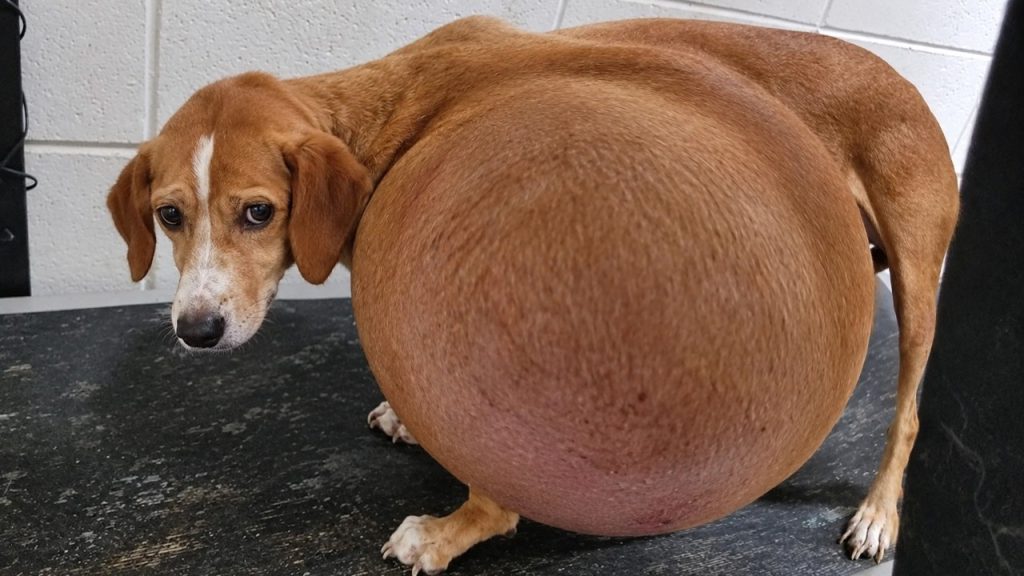
She was not simply carrying an unusual growth. The tumor had become a terrible physical burden, affecting something as basic as standing comfortably. Her condition made one painful point: this dog needed medical care, and she needed it urgently. The longer that weight remained, the longer her body had to struggle beneath it.
The surface of the tumor had also begun to break open and drain. The problem could no longer be ignored. A veterinarian explained an especially sad pattern seen in neglected animals: when a medical condition starts creating a mess, some owners decide that caring for their pet is too inconvenient. Instead of seeking treatment, they walk away.
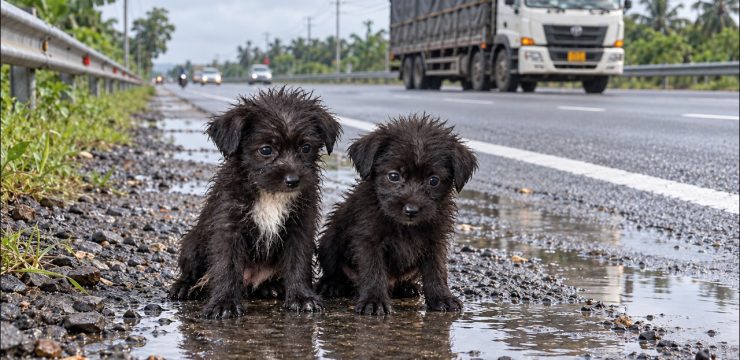
No one could know every thought behind Haddie’s abandonment. What was certain was that she had been left to face a frightening medical condition without protection. A dog cannot arrange an examination, ask about surgery, or explain what hurts. She depends on people to recognize when something is wrong and to respond with care rather than rejection.
For Haddie, that responsibility finally reached people who were willing to take it seriously. Her veterinary team examined the enormous mass and began facing the question that mattered most: could they remove it without placing her life in even greater danger? It required more than surgical skill. It would require careful planning around a risk that could not be seen from the outside.
The tumor was supplied by exceptionally large blood vessels. That made removal difficult. The veterinarian was deeply concerned about what could happen when those vessels were involved in surgery. Cutting away something so large was not as simple as separating unwanted tissue from the rest of the body. The blood circulating through it made the situation far more delicate.
Then came a troubling detail. The tumor held an estimated quarter of Haddie’s total blood volume. About twenty-five percent of the blood in her body was connected to the very growth that had made her life so difficult. Removing the mass without accounting for that loss could leave her in grave danger. The operation meant to free her might also be the operation she could not survive.
That realization shaped every decision. They were not just preparing to remove a tumor. They were preparing to protect Haddie through the loss of blood that removal could cause. Her blood type was tested, and the team made plans for a transfusion. Intravenous lines were prepared carefully, with attention to the challenges ahead.
One decision stood out. The surgeon chose to use blood from his own dog to help Haddie through the procedure. His pet became a donor for a dog who had already been let down by the person responsible for her care. In a story marked by abandonment, that quiet decision offered a striking contrast: one person had turned away, while another was willing to help with something deeply personal.
The gesture was moving, but it was also part of serious medical preparation. Haddie needed a team able to understand the danger, anticipate the blood loss, and act with care. Compassion alone could not remove the mass or protect her during surgery. The veterinarians needed their knowledge, their equipment, and a well considered plan. Their kindness mattered precisely because it was joined to action.
No one could promise that removing the tumor would also mean bringing Haddie through safely. With the preparations complete, the surgery began. The enormous tumor that had pulled down the front of Haddie’s body now had to be separated from her safely. The challenge centered on those large blood vessels and the amount of blood associated with the growth. There was no way to pretend this was an ordinary operation. The risk was real, and so was the determination to give her a chance.
Throughout the procedure, the medical team worked toward a single goal: removing the weight without losing the patient they were trying to save. The surgeon’s decision to provide donor blood helped support that effort. Every stage of the operation mattered because success could not be measured by the removal alone. Haddie had to make it through the surgery as well.
And she did. The operation succeeded, and the immense tumor was removed. The burden that had distorted her stance and overloaded her front leg was no longer attached to her body. It was a turning point, not proof that every difficulty had vanished, but a change in what Haddie carried. She had survived the procedure that once seemed so dangerous.
Her recovery brought a different kind of moment. Instead of seeing only the strain of that enormous growth, the people caring for Haddie could see a dog relieved of its weight. There were joyful, lighter moments as she recovered. The contrast was powerful: the same dog who had arrived with such a heavy burden was now moving forward without the tumor that had overwhelmed her body.
Recovery after major surgery is its own journey, and Haddie’s story does not need an invented perfect ending to be meaningful. What matters is what was actually achieved. A dangerous mass was removed. A dog who had been abandoned received thoughtful veterinary care. A surgeon offered help from his own beloved pet. And Haddie lived to experience the relief that followed.
Her story asks something simple of anyone who shares life with an animal. When a pet becomes ill, care may grow difficult, expensive, or inconvenient, but the animal’s need for kindness does not disappear. Haddie could not choose the people who failed her. She could only benefit from the people who finally chose to help. Their compassion gave her what abandonment had denied: a genuine second chance.