The humiliation lasted only seconds, but everyone nearby could see it. My grandchildren giggled nervously, Jessica’s cheerful voice carried through the airport, and I stood frozen, realizing my own family expected me to disappear.
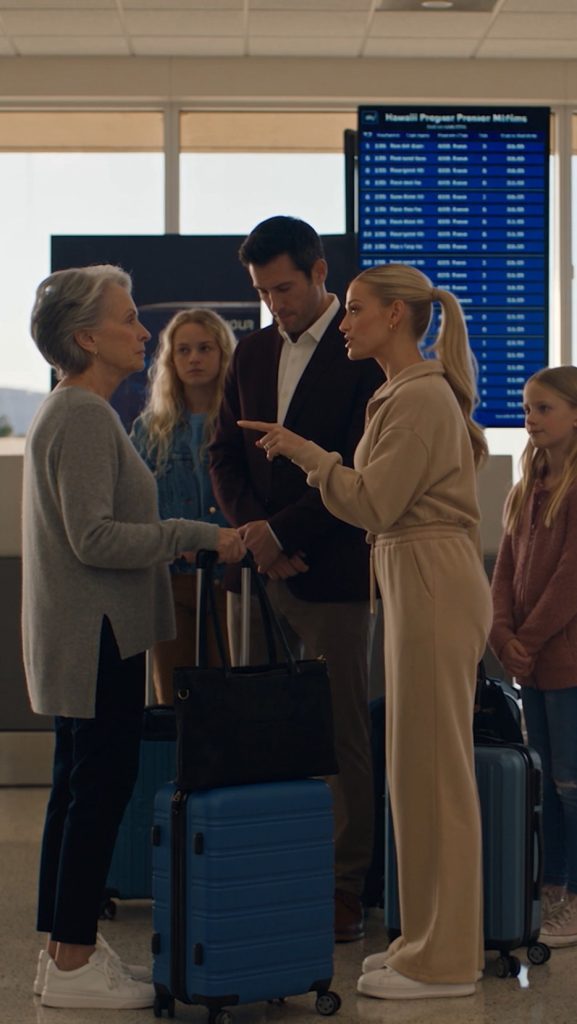
I didn’t argue. I simply nodded, turned around, and walked away, like a hired driver who had finished his job.
But once I was far enough from their gate, something inside me changed. I was about to make one quiet decision they would spend years begging me to undo.
And none of them knew it.
Only hours earlier, I had been almost unbearably happy.
My alarm rang at 3:30 a.m., although excitement had kept me awake most of the night. Ten beautiful days in Maui awaited us. My son, his wife, my two grandchildren, and me. Together.
I’m Dr. Margaret Hayes, sixty-seven, a retired cardiologist who spent forty years at Chicago Memorial Hospital. I built a successful Gold Coast practice, pioneered minimally invasive cardiac procedures, published more than fifty research papers, and testified in malpractice cases.
My career had made me wealthy. But money meant little compared with the people I loved.
My husband, Thomas, died of a heart attack when our son Kevin was only ten. I raised that frightened little boy alone, balancing hospital emergencies with school meetings and bedtime stories.
Now Kevin was thirty-eight, with his father’s broad shoulders and gray beginning to appear in his dark hair. He had been married to Jessica for ten years, and they had given me two grandchildren who meant everything to me.
For six months, I’d planned our Hawaiian vacation from my Lincoln Park brownstone.
I’d booked an exquisite resort in Wailea, complete with oceanfront suites, a children’s club, and a lazy river. There would be snorkeling, a traditional luau, a helicopter tour, and a journey along the Road to Hana.
The total cost was $47,000.
I considered every dollar worthwhile if it meant watching Tyler and Emma discover the Pacific Ocean.
Eight-year-old Tyler adored sea turtles, so I arranged a marine conservation excursion where he could learn about honu and watch volunteers tag turtles.
Six-year-old Emma loved princesses and dolphins. After carefully researching the facility, I booked a dolphin encounter and a special dinner where she could wear her beautiful blue dress. A tiny plastic tiara was already tucked inside my carry-on.
I had thought of everything.
Or so I believed.
That morning, I dressed in black leggings, my comfortable Northwestern sweatshirt, and the running shoes I wore along Chicago’s lakefront.
I checked my passport, wallet, and printed reservations twice. Forty years of medicine had taught me never to depend on one system.
At five, a black sedan arrived outside my house.
As we traveled along Lake Shore Drive, Chicago’s skyline shimmered against the dark waters of Lake Michigan. I watched the familiar buildings pass, imagining my grandchildren’s excitement when we landed.
Our Hawaiian Airlines flight departed at 8:15 for Honolulu, followed by a connection to Maui. I’d upgraded all five tickets to business class.
Everything was supposed to be special.
I reached O’Hare’s Terminal 3 at 5:45, passing crowded coffee counters and exhausted travelers.
Then I spotted them near the check-in area.
Kevin stood beside Jessica, thirty-five, impeccably dressed as always. Once a marketing professional at a tech startup, she now stayed home with the children, managing PTA responsibilities and family life.
Tyler wore the sea-turtle shirt I’d bought him. Emma looked adorable in her pink sundress covered with white hibiscus flowers.
Their matching carry-on suitcases stood beside them, decorated with little airplane stickers.
I felt my face brighten.
I started toward them, ready to embrace everyone.
Then I looked more carefully.
There was someone else standing with my family.
Someone I hadn’t planned for.
And that was where the morning I had imagined began to unravel. 👇
It was Patricia, Jessica’s mother, holding a boarding pass and wearing a cream-colored sunhat.
She looked almost as surprised to see me as I was to see her.
Before I could speak, Jessica stepped forward with an uncomfortable little smile.
“Margaret, we were going to call you.”
My fingers tightened around my suitcase handle.
“Call me about what?”
Jessica glanced at Kevin. He stared at the floor.
“We decided Mom should come instead. She’s been under so much stress lately, and honestly, six people would make everything complicated.”
For a moment, I couldn’t understand the words.
“Instead of whom?”
Nobody answered.
Then Jessica lowered her voice.
“Instead of you, Margaret. We thought you’d understand.”
Behind her, Patricia’s smile disappeared.
“Jessica,” she whispered, “you told me Margaret wanted me to take her place.”
Jessica ignored her.
“We figured you could enjoy some peace at home. Besides, you’ve already had plenty of vacations. The children need their other grandmother, too.”
I looked at Kevin.
The boy whose feverish forehead I had cooled through endless nights. The young man whose college tuition I’d paid while grieving his father. The son for whom I had never been too tired or too busy.
“Kevin,” I said quietly. “Did you know?”
His throat moved.
“Mom, we didn’t want to hurt your feelings.”
That answer hurt worse than Jessica’s words.
Tyler stopped fidgeting with his suitcase. Emma reached for my hand, but Jessica gently pulled her back.
“Come on, kids. Grandma Margaret understands.”
I looked at the two little faces staring up at me, then at my son, who still couldn’t meet my eyes.
And I nodded.
“Have a safe trip.”
I turned away before anyone could see my tears.
I walked past the crowded coffee shop, found a quiet seat near an empty departure gate, and placed my handbag on my knees.
Then I took out my phone.
My first call was to the travel concierge who had handled our reservations.
“Good morning, Dr. Hayes,” she answered brightly. “Are you excited?”
“I need to cancel the resort accommodations and every activity booked under my name.”
Silence.
“Dr. Hayes, your family is scheduled to arrive tomorrow.”
“I know.”
“There will be substantial cancellation penalties.”
I stared through the windows at a plane moving slowly across the runway.
“Please proceed.”
Next, I called my bank and removed Jessica’s access to the card I’d allowed her to use for family emergencies. I disputed unfamiliar charges and requested an immediate review of every recent transaction.
I didn’t cancel the tickets purchased in their individual names. Those were theirs.
But the hotel rooms, private excursions, transportation arrangements, and countless carefully planned experiences were reservations I had made and paid for.
I was no longer willing to provide them.
Twenty minutes later, my phone began ringing.
Jessica.
Then Kevin.
Then Jessica again.
I watched the screen illuminate and go dark.
Finally, Kevin sent a message.
“Mom, the hotel says our reservation has been canceled. Please call me. The kids are crying.”
I closed my eyes.
For years, I had mistaken being needed for being loved.
I would not make that mistake again.
By eight o’clock, I was back inside the sedan, traveling toward Lincoln Park beneath a sky that had turned pale blue.
At 9:17, Jessica left a voicemail.
“You’ve completely humiliated us! Do you understand how much you’ve ruined?”
I listened once.
Then I deleted it.
But that afternoon, another message arrived. This one came from my travel concierge.
“Dr. Hayes, during our cancellation review, we discovered modifications to your reservation that you may wish to examine.”
Attached were copies of several emails.
My stomach tightened as I read them.
Someone had contacted the resort weeks earlier, requesting that my suite be reassigned and another guest added. Additional charges had been directed to my saved payment method.
The messages claimed I had approved everything.
I hadn’t.
One instruction was particularly revealing.
“Please do not contact Margaret directly. Jessica is coordinating all changes on her behalf.”
There it was.
Not an awkward family misunderstanding.
A deliberate plan.
I forwarded the documents to my attorney.
That evening, my doorbell rang.
Kevin stood outside alone, still wearing the clothes he’d worn to the airport.
His face looked exhausted.
“Can I come in?”
I stepped aside.
We sat across from each other in the living room where he’d once built blanket forts with his father.
For several minutes, neither of us spoke.
Finally, I placed the printed emails on the coffee table.
“Did you know about these?”
Kevin read them slowly.
His expression changed.
“No.”
“Did you know Jessica intended to remove me from the vacation?”
He looked down.
“Yes.”
I felt something inside me go very still.
“How long?”
“Three days.”
“And you said nothing.”
He rubbed his face with both hands.
“I thought she’d talk to you. Then she said you had agreed.”
“You knew how much this trip meant to me.”
His eyes filled.
“I know.”
“No, Kevin. I don’t think you do.”
I stood and walked toward the mantel, where Thomas’s photograph had occupied the same place for twenty-seven years.
“When your father died, I was terrified of failing you. I thought if I worked hard enough, gave enough, protected you from enough disappointment, you would never feel abandoned.”
Kevin began crying.
“But I taught you something terrible instead. I taught you that I would absorb any injury as long as you called it family.”
He didn’t defend himself.
And for the first time that day, I believed he was finally listening.
Two days later, Jessica came to my house with Patricia.
My attorney was present.
Jessica entered carrying a folder, visibly furious.
“This has gone too far. Kevin says you’re accusing me of fraud.”
“I’ve asked my bank to investigate unauthorized charges,” I replied. “And I’ve asked my attorney to protect my accounts.”
Jessica laughed sharply.
“You’re seriously destroying our family over a vacation?”
Patricia turned toward her daughter.
“Jessica, stop.”
But Jessica kept talking.
“After everything I’ve done raising those children, I deserved one nice trip without being controlled by her money.”
The room fell silent.
Patricia’s hands began trembling.
“You told me Margaret couldn’t travel because of her health.”
Jessica looked away.
“You misunderstood.”
“No,” Patricia said. “You told me she specifically asked you to invite me.”
My attorney placed the reservation correspondence beside the transaction records.
Jessica stared at them.
For the first time, she had nothing prepared to say.
Patricia removed her sunhat and set it on the table.
“You made me part of humiliating a woman who paid for everyone else’s happiness.”
“Mom—”
“I paid for my own plane ticket because you said Margaret invited me. If I’d known what you were doing, I never would have gone.”
Jessica’s expression crumpled, then hardened again.
“This isn’t fair.”
Patricia stood.
“Neither was what you did.”
She walked out without looking back.
The silence she left behind was devastating.
The bank’s investigation eventually confirmed unauthorized charges associated with the altered arrangements. Jessica agreed, through counsel, to repay the disputed amount, and my attorney ensured she no longer had access to any of my accounts.
I never recovered all the money lost to cancellation penalties.
But I recovered something far more important.
The ability to say no without apologizing.
Kevin moved out of the family home several weeks later.
Their marriage had problems I hadn’t understood, and the airport betrayal forced him to confront how long he’d been avoiding them.
They eventually divorced.
Jessica faced the consequences of the dishonesty she had chosen. The financial comforts she had assumed would always be available were gone, and she had to rebuild her life without relying on my generosity.
I didn’t celebrate her downfall.
My grandchildren still loved their mother.
I refused to make them carry the weight of what the adults had done.
Months passed before Kevin and I could sit together without the airport hovering between us.
He began counseling. He took responsibility for the things he’d allowed, rather than blaming Jessica for every decision.
One Sunday, he arrived with groceries and asked whether I would teach him to make his father’s favorite chicken soup.
We chopped vegetables at the kitchen island while rain tapped against the windows.
“I remember Dad making this,” Kevin said.
“He always added too much pepper.”
Kevin smiled faintly.
Then his knife stopped moving.
“Mom, I’m sorry I watched them push you away.”
I looked at him.
“I know.”
“I should’ve stood beside you.”
“Yes,” I whispered. “You should have.”
He nodded, accepting the truth without asking me to soften it.
And somehow, that was the beginning of forgiveness.
The following summer, I traveled to Maui.
Not with an extravagant itinerary. Not with oceanfront suites or forty-seven thousand dollars’ worth of expectations.
Just a modest seaside rental, Kevin, Tyler, Emma, Patricia, and me.
Patricia paid her own way. Kevin contributed what he could. Nobody expected me to prove my love with a credit card.
One afternoon, Tyler finally saw a sea turtle gliding through the water.
He surfaced laughing so hard he could barely speak.
“Grandma! Did you see it?”
“I saw it, sweetheart.”
Emma collected shells along the beach and insisted I wear the tiny plastic tiara I’d saved from our first canceled trip.
That evening, while the sun turned the ocean gold, Tyler brought me a folded drawing.
“I made this before our other vacation,” he said.
I opened it carefully.
There were five figures standing beside the sea: Kevin, Tyler, Emma, Patricia, and me.
Above them was a bright yellow star.
Written beside it in uneven letters were the words:
“Grandpa Thomas Is Coming Too.”
My breath caught.
Tyler pointed at the star.
“Dad said Grandpa never got to see Hawaii with us. So I wanted him to come.”
Then Emma climbed into my lap.
“We were supposed to surprise you at the airport,” she whispered. “That’s why we were laughing. But Mommy said we couldn’t give it to you because you were going home.”
I held both children close.
All those months, I’d remembered their nervous giggles as one more wound.
Now I understood.
They hadn’t been laughing at me.
They’d been holding a secret made of love.
Across the beach, Kevin watched us, his eyes glistening.
Patricia quietly turned away to give us a moment.
I lifted my gaze toward the fading sky and thought of Thomas, of the frightened young mother I had once been, and of the woman who had finally learned she deserved kindness too.
Emma adjusted the crooked tiara on my head.
“Grandma, are you happy?”
I kissed her forehead.
“Yes, darling.”
And this time, there was nothing I needed to pretend.
As the last sunlight disappeared beneath the Pacific, my grandchildren nestled against me, my son sat quietly at my side, and the ocean moved gently toward the shore.
For the first time in years, I wasn’t trying to hold my family together.
We were simply there.
Together.
And that was enough.