The shove came without warning.
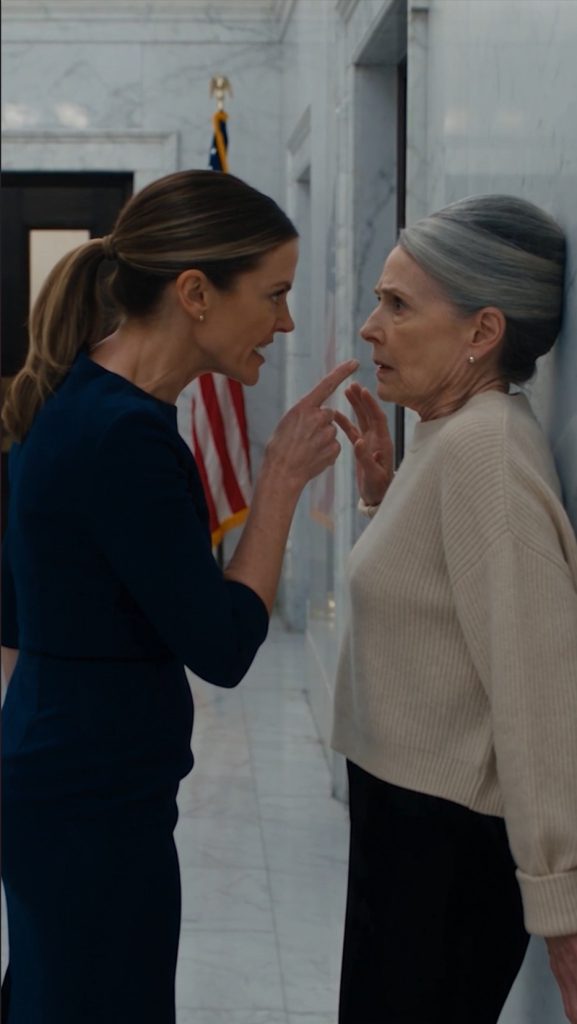
One second, I was standing beneath the cold courthouse lights. The next, my shoulder struck marble hard enough to send pain burning down my spine—and my daughter-in-law was staring at me as if I were something filthy she had found on the bottom of her shoe.
“Filthy old woman.”
My son heard every word.
He stood three steps away.
And did nothing.
The corridor outside Courtroom 4B seemed to freeze around us. A security officer straightened near the metal detector. Two attorneys stopped mid-conversation. A clerk clutched a stack of files against her chest, her eyes moving from me to Clara.
David stared at the polished floor.
That hurt more than the wall.
I had raised him alone after his father left. I had worked double shifts until my feet swelled inside my shoes, skipped dinners so he could eat, sat through every Saturday game, every school ceremony, every disappointment.
Years later, after his first legal internship, he had hugged me on these very courthouse steps.
“I’m going to make you proud, Mom.”
I remembered the warmth in his voice.
Now he couldn’t even meet my eyes.
Clara stepped closer.
Navy designer dress. Red lipstick. Perfect nails. Expensive perfume drifting through the sterile hallway.
Everything about her was polished.
Especially the smile.
“You’re an embarrassment to this family,” she said softly.
I pressed one hand against the marble and steadied myself.
My shoulder throbbed beneath my cardigan. A silver pin held my gray hair in its usual bun, slightly crooked now from the impact.
I wanted to fix it.
Instead, I looked at my son.
Clara noticed the people watching. Her chin lifted.
“You should’ve stayed home,” she said. “This hearing has nothing to do with you.”
Then she turned toward David.
“Get her out of here. She’s humiliating us.”
David finally opened his mouth.
For one foolish heartbeat, hope rose inside me.
Maybe he would remember the woman who had sat beside his bed when he had a fever.
Maybe he would remember the mother who had believed in him before anyone else did.
Maybe he would say, “Enough, Clara.”
His eyes stayed low.
“Mom…” he murmured. “Maybe you should wait downstairs.”
The silence that followed was unbearable.
Someone nearby shifted awkwardly. One attorney looked away. The clerk’s expression tightened.
I swallowed.
Then I nodded once.
“Of course.”
Clara smiled.
She thought she had won.
I walked away without another word.
Behind me, David followed his wife through the doors of Courtroom 4B.
Neither of them noticed the security officer straighten as I passed.
They didn’t see the clerk’s eyes widen.
They didn’t see the court officer at the far end of the hallway give me a quiet, respectful nod.
I reached an unmarked side door and opened it.
Inside was a private room I knew far better than Clara could possibly imagine.
I removed my cardigan and hung it neatly over a chair. In the small mirror above the desk, I repaired the silver pin in my hair and smoothed the front of my sweater.
Then I looked at the garment waiting beside me.
Black wool.
Heavy shoulders.
A piece of clothing weighted with years of arguments, confessions, ruined alibis, broken families, and people who had walked into courtrooms believing the quiet woman before them could be underestimated.
My fingers moved slowly across the fabric.
On the other side of the wall, chairs scraped across the courtroom floor.
An officer called everyone to order.
I slipped my arms into the black robe.
Then came a sharp knock.
“Helen?”
The clerk.
Something in her voice made me turn immediately.
“You need to see this before you go in.”
The door opened just far enough for her hand to appear.
She pushed an envelope toward me.
David’s name was written across the front.
In the corner was a case number.
I recognized it instantly.
My hand stopped.
Suddenly, the hearing felt very different.
David wasn’t sitting inside Courtroom 4B merely to support Clara.
And whatever was inside that envelope, someone had gone to extraordinary lengths to keep it off my bench.
Beyond the wall, the courtroom fell completely silent.
Then the side-door handle began to turn.
Nobody in that room was prepared for what came next. 👇
The handle stopped halfway.
“Judge Warren?” the bailiff said through the narrow opening. “They’re ready.”
I looked down at the envelope again.
There were three words stamped beneath the case number.
SUPPLEMENTAL WITNESS DISCLOSURE.
And below them, in black type, was my son’s full name.
David Michael Warren.
For a moment, all I could hear was the blood beating behind my ears.
The clerk stood beside me, pale and rigid. “It was found behind the filing cabinet in intake twenty minutes ago. The timestamp shows it was submitted yesterday.”
“Who handled it?”
Her lips tightened.
“Clara’s attorney’s office delivered the packet.”
I closed my eyes once.
Not because I was afraid of what the envelope contained.
Because I suddenly understood what I had to do.
If David was involved in the case, I could not sit on that bench.
Not for one minute.
Not even to hear enough to satisfy my own heart.
I handed the envelope back without opening it.
“Seal it.”
The clerk blinked.
“Judge—”
“Seal it, preserve the chain of custody, and notify the presiding judge. I’m recusing myself immediately.”
Her shoulders lowered as if she had been holding her breath.
Then I added, “And ask the security officer outside 4B to preserve the corridor footage.”
Her eyes flicked toward my shoulder.
I didn’t need to explain why.
When I stepped into the courtroom, everyone rose.
Clara rose last.
The change in her face was almost invisible at first.
Her smile remained.
But the color beneath her makeup disappeared.
David looked up.
Really looked at me.
His mouth opened.
“Mom?”
The word traveled through the courtroom like something fragile dropped on stone.
I walked to the bench.
Clara’s eyes followed the black robe, then my face, then the nameplate before me.
HON. HELEN WARREN.
Her perfect smile broke.
I had imagined moments of justice differently when I was younger. I used to think truth arrived like thunder.
It rarely does.
Sometimes truth simply stands up in a quiet room and lets everyone recognize it.
I remained standing.
“This court has received information creating a conflict requiring my immediate recusal from this matter.”
Clara turned toward David so sharply that one diamond earring flashed beneath the lights.
David had gone completely still.
“I have not reviewed the substance of that information,” I continued. “The presiding judge has been notified. This matter will be reassigned.”
Clara’s attorney rose.
“Your Honor, perhaps we could—”
“No.”
One word.
Nothing more.
He sat down.
Then I looked toward the bailiff.
“There is also a separate courthouse security matter that occurred outside this courtroom moments ago. It will be handled through the appropriate process.”
Clara’s fingers curled around the edge of her counsel table.
For the first time that morning, she looked at me without contempt.
She looked afraid.
I stepped down from the bench.
As I passed David, he whispered, “I didn’t know you were assigned to this.”
I stopped.
“You knew enough to let someone put her hands on me.”
His face folded.
I kept walking.
The reassigned judge arrived forty minutes later.
I did not return to the bench.
I sat in chambers with the door open while courthouse investigators collected statements. The security officer described the shove. The clerk described the insult. Two attorneys who had witnessed it stayed to give their names.
Clara’s cruelty, which she had performed believing I was powerless, had supplied its own witnesses.
But the envelope held something worse.
The presiding judge came to my doorway shortly before noon.
His expression told me before he spoke.
“Helen, David’s listed as a witness because he signed three financial authorizations connected to the disputed trust account.”
My hands went cold.
“Did he know?”
“We don’t know yet.”
He paused.
“Clara is accused of diverting funds from an elderly client’s settlement account. The supplemental filing includes emails suggesting she used David’s credentials after he refused to approve the final transfer.”
I stared at the window.
Rain had begun tapping faintly against the glass.
“So he tried to stop her.”
“At least once.”
“At least once,” I repeated.
That distinction mattered.
David came to my chambers twenty minutes later without Clara.
He looked ten years older.
His tie hung loose. His eyes were red, though I hadn’t seen him cry.
He stayed near the doorway.
“I should have told you.”
“Yes.”
“I thought I could fix it before anyone knew.”
“Yes.”
“She said it was temporary. Then she said the client had agreed. Then when I questioned her, she showed me documents.”
His voice cracked.
“I wanted them to be real.”
I looked at my son for a long time.
“And this morning?”
He lowered his head.
“She told me if I embarrassed her in public, she’d tell investigators I authorized everything.”
There it was.
Not innocence.
Not guilt.
Fear.
A grown man’s fear, dressed for court.
I stood slowly.
“You watched your wife shove a seventy-year-old woman into a wall because you were afraid of what she might say about you.”
His eyes filled.
“Yes.”
“And that woman happened to be your mother.”
His breath shuddered.
“Yes.”
I wanted to cross the room.
I also wanted him to feel every inch of the distance between us.
So I stayed where I was.
“You cannot repair this by being sorry, David.”
“I know.”
“No. You don’t.”
His chin trembled.
“You repair it by telling the truth when the truth costs you something.”
He looked toward the courtroom doors.
Then back at me.
For the first time that day, he stood straight.
“What if it costs me everything?”
I thought of double shifts. Empty dinner plates. Saturday games. A boy on courthouse steps promising to make me proud.
“Then tell it anyway.”
David testified that afternoon.
He admitted signing the first authorization without reading it carefully. He admitted ignoring inconsistencies because confronting Clara threatened his marriage, his reputation, and the life they had built.
Then he produced the emails he had saved.
Clara had ordered him to approve additional transfers.
He had refused.
She had threatened him.
And the missing filing had contained the messages proving it.
When Clara realized what he was doing, she rose from her chair.
“David.”
His shoulders jerked at the sound of her voice.
“Sit down,” the judge ordered.
Clara ignored him.
“David, look at me.”
Slowly, he did.
Her face was no longer polished. Her lipstick had smudged at one corner. A strand of hair clung to her cheek.
“You know what happens if you do this.”
David stared at her.
Then his eyes moved past her, through the open courtroom doors, to where I stood in the corridor.
He swallowed.
“Yes,” he said.
Clara’s expression changed.
Not fear this time.
Disbelief.
Because the thing she had counted on most was gone.
His silence.
Investigators found the rest quickly.
Altered authorization records.
Messages instructing an employee to backdate documents.
The original intake receipt proving the supplemental disclosure had been delivered on time.
And security footage showing a member of Clara’s legal team carrying the filing toward intake shortly before it vanished from the official packet.
By evening, the hearing had become something much larger.
Clara was escorted from the courtroom while investigators pursued the financial allegations and the evidence-tampering issue. The courthouse assault was documented separately.
She passed me in the corridor.
For one second, we were close enough for me to smell the same expensive perfume.
She looked at the robe over my arm.
Then at my face.
“You ruined me.”
I shook my head.
“No, Clara.”
My voice was almost gentle.
“I stopped protecting you from what you did.”
Her eyes flickered.
Then the officer led her away.
The corridor became quiet again.
No applause.
No triumph.
Just the soft machinery of consequences finally beginning to move.
David sat alone on a wooden bench beneath the courthouse clock.
I lowered myself beside him, leaving a careful space between us.
For a long time, neither of us spoke.
Then he noticed me rubbing my shoulder.
His face twisted.
“Mom.”
I looked ahead.
“I saw her do it.”
“I know.”
“And I looked away.”
“I know.”
He covered his face with both hands.
When he spoke again, the words came through his fingers.
“I’ve been looking away for years.”
That was the first apology I believed.
Not because it was eloquent.
Because it asked for nothing.
Months passed.
Clara’s professional life collapsed under evidence she had created herself. The financial case proceeded without me anywhere near it. David cooperated fully, accepted professional consequences for the authorization he had signed, and stopped trying to explain away the choices that had helped the deception survive.
He also began showing up at my house on Sundays.
At first, he stood awkwardly in the kitchen while I made coffee.
Then he started bringing groceries.
Later, he learned to stop bringing apologies every time he crossed the threshold.
One rainy Sunday, he noticed the old silver pin beside the sink.
“You still have that?”
“Of course.”
He picked it up carefully.
“I bought this for you.”
I turned.
“No, you didn’t.”
He smiled faintly.
“Yes, I did.”
I stared at him.
He was eleven when the pin appeared in my Christmas stocking. I had always assumed my sister had slipped it there after noticing I couldn’t afford anything for myself that year.
David rubbed his thumb over the worn silver edge.
“I saved lunch money for three months. Aunt Carol drove me to the shop.”
Something inside me went completely still.
“You skipped lunch?”
“Sometimes.”
“David.”
“I knew you were skipping dinner.”
His eyes met mine.
“So I thought we could be hungry together.”
The kitchen blurred.
All those years, I had remembered myself as the one who sacrificed.
The mother protecting the boy.
But the boy had been watching me, too.
He had seen more than I knew.
David stepped closer.
“I’m sorry I became someone who forgot how to see you.”
My throat tightened.
I held out my hand.
He placed the silver pin in my palm.
I closed my fingers around it.
Then, finally, I crossed the small distance between us.
He bent into my arms the way he had when he was a child.
Not neatly.
Not gracefully.
His shoulders shook against me, and my cheek pressed against his graying hair.
I did not tell him everything was forgiven.
Some wounds should not be lied about.
But I held him.
And he understood that staying was not the same thing as pretending nothing had happened.
The clerk who had rescued the missing filing received a formal commendation for preserving evidence and reporting the irregularity.
The security officer who had witnessed the shove stopped me one afternoon near Courtroom 4B.
“Shoulder doing better, Judge?”
“Much.”
He nodded.
Then, almost shyly, he said, “My mother would’ve liked you.”
I smiled.
“I suspect I would’ve liked her.”
A year after that morning, David met me on the courthouse steps.
The trees along the street had begun turning gold. Sunlight warmed the stone where rain had once darkened it.
He carried two coffees.
No suit.
No tie.
Just my son.
We sat together on the broad steps where, years before, he had hugged me after his first internship and promised to make me proud.
He handed me a cup.
“I used to think making you proud meant becoming important.”
I glanced at him.
“And now?”
He looked out at people moving through the courthouse doors.
“Now I think it means becoming someone who doesn’t look away.”
I said nothing.
I didn’t need to.
He reached over and adjusted the silver pin in my hair where it had slipped slightly loose.
His fingers were careful.
For one brief second, I saw every version of him at once—the hungry little boy, the ambitious young man, the frightened husband in Courtroom 4B, and the son sitting beside me now with no defense left between us.
Then he smiled.
Not Clara’s perfect smile.
His old one.
The one I remembered.
We stayed there until the courthouse clock struck five and the doors began closing behind us.
Then we rose together.
David took my empty coffee cup in one hand and offered me his other.
I looked at it.
Once, outside Courtroom 4B, he had watched me reach for a marble wall because nobody reached for me.
This time, I took his hand.
And we walked home.