“Get away from me. You’re just a server.”
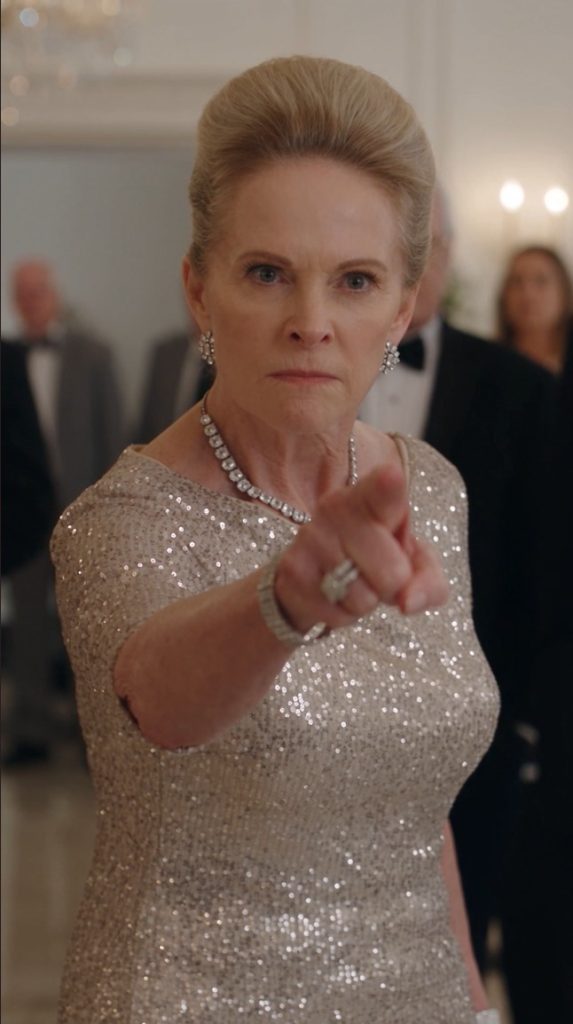
The words cut through the elegant ballroom, leaving a silence more uncomfortable than the insult itself. But what made the moment unbearable wasn’t the wealthy woman’s contempt. It was the sight of an elderly woman in a wheelchair, sitting helplessly between two strangers, while hundreds of people watched and did nothing.
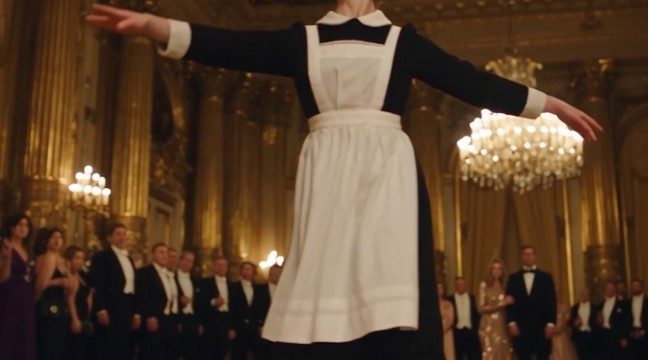
Celeste Varrone stepped backward, her diamond bracelet striking the delicate rim of a champagne flute. The sharp chime seemed unnaturally loud beneath the glittering chandeliers of Chicago’s Grand Romano ballroom.
Across from her stood Nora Vale, a young waitress whose hands had begun to tremble.
Yet she refused to move.
“Don’t reach toward her again,” Nora said quietly.
Her voice wasn’t loud enough to command the room, but something in its steadiness made several nearby guests turn.
The elderly woman beside her had asked for something simple.
A glass of water.
Celeste had ignored the request, as though the woman sitting directly in front of her were invisible. When Nora stepped forward to help, Celeste reacted as if the waitress had committed some unforgivable offense.
Now the wealthy guest was staring at Nora’s name badge with open disgust.
“Your position is carrying plates,” Celeste said coldly.
Nora felt the humiliation burn beneath her collar.
She knew exactly what her uniform meant in a room like this. The guests wore jewelry worth more than she earned in years, while she spent her evenings carrying trays through conversations she was never meant to join.
But Celeste knew nothing about the life waiting for Nora outside those golden doors.
Rent was due Monday.
Her car needed repairs she could barely afford.
And her younger brother was relying on the money she had promised to help cover his tuition.
Losing this job wouldn’t simply mean finding another place to work.
It could mean failing someone who trusted her.
For one terrible second, Nora considered stepping away. She could apologize, lower her eyes, and let the confrontation disappear before it cost her everything.
Then she looked down.
The elderly woman was still waiting.
Her hands rested quietly in her lap, and her expression carried the weary discomfort of someone who understood she had become the center of an argument she never wanted.
Nora picked up a glass of water and carefully placed it within her reach.
“There you go,” she whispered.
The woman looked up at her.
That small exchange was enough to make Celeste’s expression harden.
Before Nora could say anything else, her manager hurried across the ballroom.
His footsteps were brisk, his face tight with concern. Nora felt a brief, foolish rush of relief.
Surely he would ask what had happened.
Surely he would want to know why an elderly guest had been left asking for water while another guest humiliated an employee for helping her.
But he never asked.
His eyes went first to Celeste’s furious expression.
Then to Nora’s uniform.
In that brief glance, Nora understood that he had already chosen whose comfort mattered more.
“Move away from Mrs. Varrone,” he ordered.
Nora remained beside the wheelchair.
The manager stepped closer, lowering his voice. His words were meant for her alone, but the warning behind them was unmistakable.
“This ballroom contains our most valuable clients.”
Nora felt her stomach tighten.
She thought of Monday’s rent. Her broken car. Her brother waiting for the help she’d promised.
Then she looked at the elderly woman, still sitting quietly while everyone else decided whether she deserved to be noticed.
Nora raised her eyes to the man who controlled every shift she desperately needed.
“She’s a client too.”
For a moment, he said nothing.
Celeste stood watching, her expression unreadable.
And Nora realized that the next words spoken in that ballroom could cost her far more than her job.
The silence held, just before everything began to unravel. 👇
The manager’s fingers tightened around the folded seating chart in his hand.
“Then I suggest you remember who pays your salary,” he said.
Nora opened her mouth, but the elderly woman gently touched her wrist.
“May I have my glass, dear?”
Nora turned immediately, placing it carefully into her hands. The woman drank slowly, her fingers trembling against the crystal.
Celeste gave a humorless laugh.
“This is ridiculous. Are we really interrupting an entire charity evening over a waitress who doesn’t understand basic instructions?”
A few guests looked away.
Others continued watching, their champagne glasses suspended halfway to their mouths.
The manager leaned toward Nora.
“Kitchen. Now. We’ll discuss your employment after the event.”
Nora’s chest tightened.
She understood what that meant.
She had watched other employees disappear from the schedule after disagreements with important guests. There were never formal explanations, only apologies from supervisors and quietly emptied lockers.
But before she could move, the elderly woman spoke.
“What’s your name, young lady?”
“Nora. Nora Vale.”
The woman repeated it softly, as though committing it to memory.
“Thank you, Nora.”
Then she looked toward the manager.
“I’d like her to stay.”
Celeste’s expression sharpened.
“Mother, please. You’re making this worse.”
Nora went still.
Mother.
She looked between the two women, noticing for the first time the resemblance around their eyes.
The elderly woman lowered her glass.
“Am I, Celeste?”
The question was quiet, but something about it made Celeste straighten.
“Everyone is watching,” Celeste whispered.
“Yes,” her mother replied. “For once, they are.”
The manager cleared his throat.
“Mrs. Varrone, perhaps I can arrange for someone to escort your mother somewhere more comfortable.”
“She is perfectly comfortable,” Nora said before she could stop herself.
The manager turned sharply.
“That’s enough. Hand over your badge.”
A cold sensation moved through Nora’s body.
There it was.
The consequence she had feared from the beginning.
Her fingers rose toward the small badge pinned above her heart. For an instant, she thought of her brother sitting at their kitchen table, surrounded by textbooks, insisting he could manage another semester if she needed the money herself.
She remembered telling him not to worry.
Now she was about to break that promise.
Nora unclipped the badge.
Before she could surrender it, the elderly woman extended her hand.
“Give it to me.”
Confused, Nora placed it in her palm.
The woman studied the inexpensive plastic rectangle.
“Nora Vale,” she read aloud.
Then she looked directly at the manager.
“Your name, please.”
“Daniel Mercer.”
“Mr. Mercer, who instructed you to dismiss this employee?”
Daniel glanced toward Celeste.
The movement was small.
But everyone saw it.
Celeste’s cheeks reddened.
“Mother, this has gone far enough.”
The elderly woman looked at her daughter for a long moment.
“You told me this hotel treated every guest with dignity.”
“It does.”
“Then why did I have to ask three times for water?”
Celeste said nothing.
“And why is the only person who helped me losing her job?”
Daniel shifted his weight.
“Madam, we’re simply protecting the reputation of the establishment.”
The woman lowered her gaze to Nora’s badge.
“Whose reputation?”
Nobody answered.
At that moment, a silver-haired man in a dark suit approached from the far end of the ballroom. He had been standing near the stage, watching the confrontation with increasing concern.
“Mrs. Eleanor Varrone?”
The elderly woman turned.
“Yes, Richard.”
Richard Hale, chairman of the foundation hosting the evening, stopped beside her wheelchair.
“Is everything all right?”
Eleanor looked up at him.
“No. And I’d rather we didn’t pretend otherwise.”
Richard followed her gaze toward Nora, then Daniel.
“Tell me what happened.”
Celeste stepped forward.
“A misunderstanding involving an employee who became unnecessarily confrontational.”
Nora felt the words strike harder than the original insult.
She had spent the entire evening trying not to make trouble.
Now she was being described as the person who caused it.
Richard turned toward her.
“Is that accurate?”
Nora hesitated.
Daniel was watching her.
Celeste was watching her.
And beyond them stood an entire room of people whose influence could make finding another job painfully difficult.
She could still apologize.
She could still make things easier.
But Eleanor’s hand remained open on her lap, holding Nora’s badge.
“No,” Nora said.
Her voice shook.
“She asked for water. Mrs. Varrone ignored her, and when I helped, she told me I was only a server. I asked her not to reach toward the wheelchair again.”
Richard looked toward Celeste.
“Did you say those things?”
Celeste folded her arms.
“You’re going to take a waitress’s word over mine?”
From somewhere near the front tables, a woman answered.
“I heard it.”
An older guest rose slowly from her seat.
“So did I,” said a man beside her.
Another voice followed.
“She hasn’t exaggerated anything.”
The room began to stir.
Celeste looked around, searching the familiar faces for support.
Instead, she found people lowering their eyes.
Richard’s expression changed.
“Daniel, please return Miss Vale’s badge. She is not being dismissed for helping a guest.”
Daniel swallowed.
“Of course, sir.”
But Eleanor did not release the badge.
“Not yet.”
Richard crouched slightly beside her.
“What is it?”
Eleanor’s eyes moved toward the stage, where a large photograph of the Grand Romano’s founding family hung beside the evening’s fundraising display.
“Richard, would you tell everyone why we’re here tonight?”
He hesitated.
“To announce the expansion of the Varrone Foundation’s hospitality scholarship program.”
“And who established that foundation?”
“Your late husband, alongside you.”
Eleanor nodded.
“Tonight was meant to honor his belief that opportunity should never depend on what someone has in their bank account.”
Her voice grew thinner.
“He worked as a hotel porter when he was seventeen. For years, he told people that the first person who treated him with respect was a waitress who shared her dinner with him because he couldn’t afford one.”
Celeste stared at the carpet.
Eleanor looked at her daughter.
“You know that story.”
“Mother—”
“You’ve heard it since you were a child.”
Celeste’s lips tightened.
Eleanor continued.
“You asked me to appoint you chair of the scholarship committee. You said you understood what your father’s work meant.”
A terrible stillness settled over the nearest tables.
Richard slowly straightened.
Eleanor held out her hand to him.
“Richard, I brought something for tonight’s announcement.”
From the small bag attached to her wheelchair, she removed a folded envelope.
Inside was a letter.
“I was going to announce Celeste’s appointment.”
Her daughter looked up immediately.
For one brief moment, relief crossed her face.
Then Eleanor carefully folded the letter again.
“I cannot do that anymore.”
Celeste’s relief vanished.
“Mother, you can’t seriously be making this decision because of a glass of water.”
“No,” Eleanor said.
“I’m making it because you saw someone vulnerable and decided they didn’t deserve your attention. Then you saw someone powerless stand up for her and decided she deserved punishment.”
Celeste stepped closer.
“You’re humiliating me.”
Eleanor’s eyes filled, but her voice remained steady.
“I have spent years protecting you from embarrassment. I should have spent more time teaching you how to recognize someone else’s pain.”
Celeste looked toward Richard.
“Surely you aren’t going along with this.”
Richard’s jaw tightened.
“The trustees received complaints about your treatment of foundation staff during the last two events. We were prepared to discuss them privately.”
Celeste froze.
He continued.
“Tonight confirms that we cannot give you authority over a program intended to help people you openly look down upon.”
For several seconds, Celeste said nothing.
Then she looked at Nora.
“You’ve ruined everything.”
Nora felt her throat close.
She had never wanted revenge.
She had wanted an elderly woman to have water.
Eleanor answered before Nora could speak.
“No, Celeste. She didn’t ruin anything.”
Her daughter looked back.
“You did.”
Richard quietly informed Celeste that her committee appointment was withdrawn and that she would no longer represent the foundation at its events. The board would receive a full account of the evening, including the earlier complaints.
Celeste removed the foundation pin from her dress.
Her hand trembled as she placed it on the table.
Nobody reached to comfort her.
She looked once more at her mother, then turned and walked toward the ballroom doors.
The sound of her heels gradually disappeared beneath the distant music.
For the first time all evening, Eleanor seemed very old.
Her shoulders sank.
Nora crouched beside her.
“Are you okay?”
Eleanor managed a small smile.
“I’m not sure.”
Nora didn’t offer empty reassurance.
She simply stayed.
Richard turned toward Daniel.
“Miss Vale should receive a written apology. And I expect the hotel to review how its employees are treated when guests make complaints.”
Daniel nodded, his face pale.
Later, he approached Nora near the service corridor.
“I was wrong,” he said quietly.
Nora looked at him.
“You didn’t even ask me what happened.”
Daniel stared at his shoes.
“I know.”
“You were going to fire me because she was rich.”
He took a moment before answering.
“Yes.”
It was the first honest thing he had said to her all evening.
“I’ll make sure your shifts aren’t affected. And if you want to file a formal complaint, I won’t stand in your way.”
Nora nodded.
She wasn’t ready to forgive him.
But she appreciated that he had finally stopped making excuses.
When the charity evening ended, Eleanor was waiting near the lobby.
“Would you sit with me for a minute?”
Nora glanced at the clock.
Her shift had ended.
“Yes.”
They sat near the tall windows overlooking Chicago’s rain-darkened streets.
Eleanor studied her.
“Do you have family, Nora?”
“A younger brother.”
“Your parents?”
Nora looked down at her hands.
“Our mother passed away a few years ago. It’s mostly been the two of us since then.”
Eleanor nodded slowly.
“That must be difficult.”
“Some days.”
Nora smiled faintly.
“He’s worth it.”
Eleanor reached into her bag and took out a small card.
“Richard runs the scholarship program. Your brother is welcome to apply if he meets the requirements.”
Nora stared at the card.
“I wasn’t helping you because I wanted something.”
“I know,” Eleanor replied.
“That is precisely why I trust you to tell him about it.”
Nora swallowed.
“Thank you.”
Eleanor smiled.
“May I tell you something else?”
Nora nodded.
“When my husband first opened his hotel, he kept a photograph of that waitress who shared her dinner with him. He said she reminded him that kindness is often most meaningful when it costs the giver something.”
Eleanor glanced toward the ballroom.
“Tonight I kept thinking about her.”
A fragile silence followed.
Then she added something Nora hadn’t expected.
“That waitress’s name was Margaret Vale.”
Nora stopped breathing for a moment.
“My grandmother’s name was Margaret Vale.”
Eleanor turned toward her.
“Did she work in Chicago when she was young?”
“Yes.”
Nora’s eyes widened.
“She used to tell us stories about a boy who carried suitcases at a hotel. She said he became successful, but she never wanted anything from him.”
Eleanor pressed her fingers to her mouth.
For a long moment, neither woman could speak.
Then Eleanor gave a small, trembling laugh.
“All these years.”
Tears slipped down her cheeks.
“He never forgot her.”
Nora thought of her grandmother’s kitchen, of the extra chair she always kept near the table and the way she insisted that nobody should ever leave her home hungry.
She had died before Nora finished high school.
And now, in a ballroom filled with strangers, a simple glass of water had brought her memory back.
Eleanor reached for Nora’s hand.
“Your grandmother helped my husband when he had nothing. Tonight you helped me when everyone else was looking away.”
Nora wiped her eyes.
“She would have liked you.”
Eleanor smiled through her tears.
“I think I would have liked her very much, too.”
In the months that followed, Nora kept working, but things gradually became easier.
Her brother applied for the foundation scholarship and earned it through his grades and determination.
Daniel introduced written procedures requiring managers to hear employees’ accounts before disciplinary decisions. He never asked Nora to forget what had happened, and she respected him more for that.
Celeste’s removal became permanent after the trustees completed their review. Her mother kept a door open for a private conversation, but not for a return to authority she had abused.
And Eleanor became a familiar presence in Nora’s life.
Sometimes they met for coffee.
Sometimes Nora brought her brother along, and Eleanor listened to his enthusiastic descriptions of classes she barely understood.
One Sunday afternoon, Eleanor invited them to lunch.
Nothing elaborate.
Just soup, warm bread, and three people sitting around a small table beside a sunlit window.
Before they ate, Eleanor placed an old photograph between them.
A teenage hotel porter stood beside a smiling young waitress.
On the back, in faded handwriting, were six words.
For Margaret, who always made room.
Nora traced the edges of the photograph with her thumb.
Then she pulled an empty chair closer to the table.
Eleanor understood without being told.
They left it there throughout lunch, sunlight resting gently across its seat, while Nora’s brother passed the bread and their quiet conversation filled the room.
For the first time in years, Nora felt that the family she had lost had somehow found its way home.