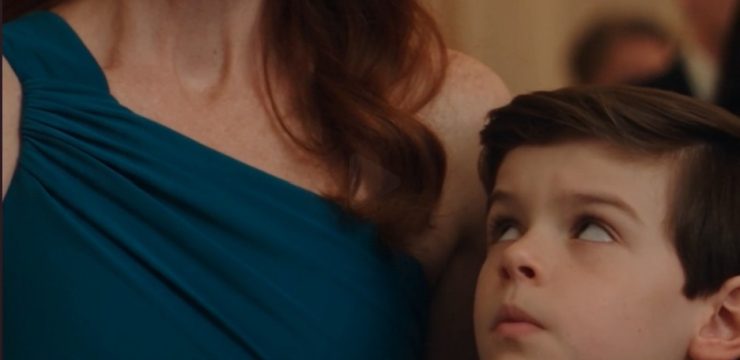
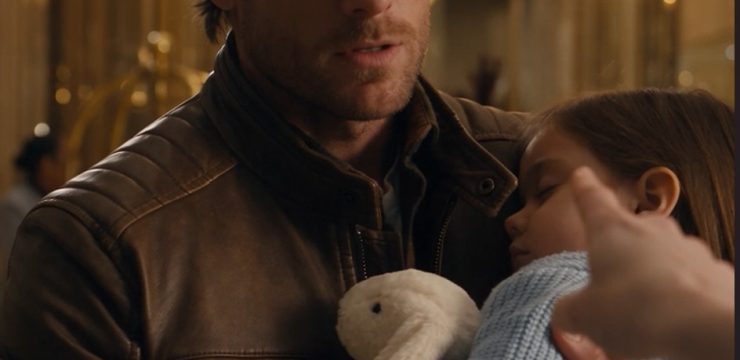
The red wine struck before anyone could move. It spread across my mother’s white blouse, caught in her hair, and splashed against my father’s face as laughter rose around the dinner table. The worst part wasn’t the spill. It was the silence of the man sitting beside me.
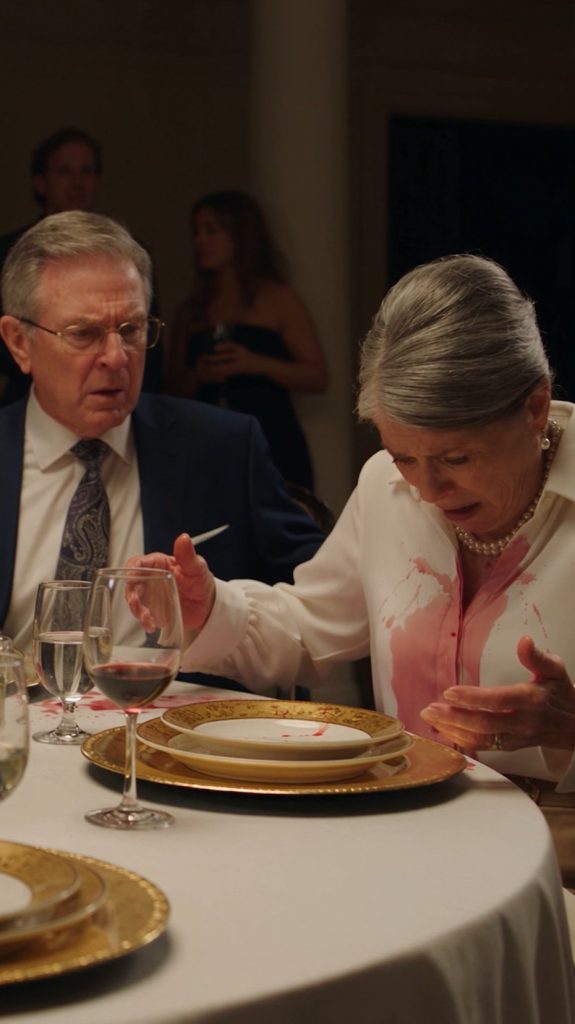
For a moment, my mother looked as though she had forgotten how to breathe. Her hands hovered above her lap, uncertain whether to touch her ruined blouse or wipe the wine sliding down her neck.
My father took off his glasses slowly. He reached for a napkin and cleaned the lenses, one careful movement at a time, as if staying composed might spare my mother another humiliation.
Across the table, Madison still held the empty crystal glass. She made no attempt to help. Instead, my sister-in-law tilted her head and smiled.
“Oops,” she said. “Guess some people just don’t belong around expensive things.”
More laughter followed. The kind that tells you no one considered what just happened an accident worth regretting.
I turned toward my husband.
Daniel was staring at his plate. He hadn’t reached for a napkin, hadn’t asked whether my parents were all right, hadn’t even looked at his sister.
For three years, I’d watched him do this. A cutting remark at dinner, a look meant to make me feel small, another insult dismissed as a joke. And every time we drove home, he’d tell me he understood. Next time, he promised, he would speak up.
There was always a next time.
But now my parents were sitting across from me, wearing the evidence of his family’s cruelty, and he was still waiting for the moment to pass.
“Daniel,” I said quietly, “you have five minutes to fix this.”
The laughter stopped. His eyes lifted at last, and for a second I saw how badly he wanted me to take the words back.
I didn’t.
“Apologize to my parents. Tell Madison to apologize, too. And tell your family that the way they’ve treated us for the past three years ends tonight.”
Daniel’s jaw tightened. He glanced around the table before looking at me, as if the people who had been laughing were the ones he needed to protect.
“Claire, don’t make a scene.”
Something inside me went very still.
My mother’s eyes dropped to the stain spreading across her blouse. My father folded the damp napkin beside his plate. Neither of them asked me to defend them; that made it harder to bear.
I took out my phone and checked the time.
“If you can’t do those things,” I said, keeping my voice level, “the next place we’ll see each other is divorce court.”
Madison let out another laugh. But Daniel didn’t join her.
He knew this wasn’t about a single glass of wine. He remembered those drives home, the apologies he offered when no one else could hear them, and how easily his promises disappeared by the next family gathering.
What Madison didn’t know was that six months earlier, I’d begun quietly looking into a $28,000 charge connected to her and the company.
I hadn’t told anyone at that table what I’d uncovered afterward. I had carried that knowledge into dinner, hoping I would never have to use it.
Now I watched Daniel’s face as he weighed his family against the woman he’d promised to stand beside.
My phone screen glowed in my hand.
Four minutes and twelve seconds remained.
Daniel was still in his chair.
And no one at that table understood what his next choice might bring into the open. 👇
Daniel’s fingers tightened around his fork until his knuckles whitened. He looked toward his father, then his mother, searching their faces for permission to do something he should never have needed permission to do.
Madison folded her arms.
“Are we seriously letting Claire threaten everyone over a little spilled wine?”
My father pushed his chair back slightly.
“We should go,” he murmured to my mother.
That nearly broke me.
My father was the kind of man who apologized when someone bumped into him. Even now, soaked in someone else’s cruelty, he was trying to leave without inconveniencing anyone.
“Dad, please stay seated.”
He looked at me, and I saw something beneath his composure that I had rarely seen before.
Shame.
Not because of what Madison had done, but because he believed his presence had made my marriage harder.
Daniel finally spoke.
“Madison, maybe you should apologize.”
Maybe.
One small word, and three years of broken promises seemed to settle between us.
Madison rolled her eyes.
“Fine. Sorry your parents can’t take a joke.”
My mother flinched. Daniel said nothing.
I checked my phone again.
Two minutes and nineteen seconds.
“Daniel,” I whispered, “look at my mother.”
He did.
Her hair was still wet. Wine had collected along the collar of her blouse. She was holding a napkin against her chest, trying to make herself smaller.
“Would you let someone treat your mother like this?”
His eyes moved away.
“That’s different.”
“No,” I said. “It isn’t.”
His father set down his glass with a sharp click.
“Enough. Claire, you’re embarrassing this family.”
I looked around the table.
The expensive silverware. The polished wood. The faces of people who had mistaken money for permission to humiliate others.
Then I looked at Daniel.
“I’m giving you one last chance.”
His voice dropped.
“Please don’t do this here.”
The remaining seconds disappeared.
When my phone reached zero, I placed it facedown beside my plate and stood.
Daniel reached for my wrist.
“Claire—”
I stepped away before he could touch me.
“You made your choice.”
My mother rose unsteadily. My father helped her with her coat, carefully holding the damp fabric away from her skin.
We were almost at the dining room door when Madison spoke again.
“Good. Maybe next time Daniel can marry someone who understands what kind of family she’s joining.”
I stopped.
Not because her words hurt anymore.
Because I realized she still believed herself untouchable.
I turned toward Daniel’s father.
“There’s something you should know about your company’s accounts.”
Madison’s smile disappeared.
I noticed. So did Daniel.
“Six months ago,” I continued, “I found a twenty-eight-thousand-dollar payment listed as consulting expenses. Daniel had asked me to check some figures in an expense report, and the transaction didn’t match the supporting paperwork.”
His father frowned.
“What are you talking about?”
“The payment went to a consulting business registered under Madison’s name. The invoice described a supplier campaign that never happened.”
Madison’s chair scraped against the floor.
“That’s confidential company information!”
Her father looked at her.
“Madison?”
She laughed, but this time the sound came out thin.
“It was a reimbursement. The accounting department knows about it.”
“Then they should have no trouble explaining it,” I said.
I took my phone from the table.
“I sent the documents to the company’s outside accountant and legal counsel this morning. Including the invoice, the business registration, and the correspondence from the supplier who confirmed they never ordered those services.”
The room seemed to lose its air.
Daniel stood.
“Claire, you reported my sister?”
“I reported a transaction that appeared fraudulent. I was going to do that regardless of what happened tonight.”
Madison stepped toward me.
“You have no idea what you’ve done.”
Her father raised one hand.
“Madison. Sit down.”
She stopped immediately.
For the first time all evening, someone in that family had told her no.
I didn’t stay to watch them argue.
Outside, the night air was cold enough to sting. My father opened the car door for my mother while Daniel hurried down the steps behind us.
“Claire, please. Just talk to me.”
I turned.
His face looked different beneath the porch light. Younger, somehow. Frightened.
“I didn’t know about the money,” he said.
“I believe you.”
Relief crossed his face.
Then I added, “But you knew about everything else.”
He opened his mouth.
Nothing came out.
“You watched them hurt me for three years. Tonight you watched them hurt my parents. And when I asked you to protect us, you asked me to be quiet.”
His eyes filled.
“I thought if I didn’t make things worse, eventually everyone would get along.”
“You kept things peaceful for yourself, Daniel. We paid for that peace.”
He lowered his head.
I climbed into the car beside my mother.
My father drove without turning on the radio. At the first red light, my mother reached across the seat and took my hand.
Her fingers were cold.
“I’m sorry,” she whispered.
I turned toward her.
“Mom, you have absolutely nothing to apologize for.”
She looked down at her stained blouse.
“I kept thinking if we were polite enough, they’d eventually accept us.”
My father gripped the steering wheel.
“I should have spoken up.”
“No,” I said, my voice breaking. “I should never have let you sit through that.”
My mother squeezed my hand.
“We came because we wanted to be with you. Not because we needed their approval.”
That was when I finally cried.
Not loudly. Not dramatically.
Just the exhausted crying of someone who had spent years pretending she wasn’t being hurt.
I stayed at my parents’ house that night.
The next morning, Daniel called eleven times.
I answered once.
“I need some time,” I told him.
“I love you.”
I closed my eyes.
“I know. But love without courage wasn’t enough to keep me safe.”
He didn’t argue.
Three weeks later, the independent accounting review confirmed what I had discovered.
The consulting business belonged to Madison. The supposed services had never been delivered, and the money had been transferred into an account she controlled.
At a meeting with the company’s attorney, Madison tried to describe everything as an administrative misunderstanding.
Her father sat across from her, looking older than I remembered.
The accountant placed the records on the table and calmly explained the payment trail.
Madison stopped talking.
Daniel was there as well.
When the attorney asked whether he had known about the transaction, he answered no. Then he looked toward me.
“My wife found the discrepancy. I should have taken her concerns seriously sooner.”
It was the first time I’d heard him tell the truth about his own failure without immediately asking me to forgive it.
The company terminated Madison’s employment, removed her financial authority, and pursued recovery of the money.
The matter was referred to investigators.
Months later, Madison pleaded guilty to charges arising from the fraudulent payment. She was ordered to repay the funds and faced a court-imposed sentence.
Her father’s company survived, but he could no longer pretend that his daughter’s behavior was harmless.
When the court proceedings ended, he approached me outside.
“I owe your parents an apology,” he said.
“Yes,” I answered. “You do.”
He nodded.
I didn’t offer to arrange it.
That responsibility belonged to him.
Daniel and I separated permanently.
He attended counseling and began confronting patterns in his family that he had spent his life avoiding. He apologized to my parents directly, without explanations or requests for understanding.
My father listened.
My mother thanked him for coming.
Neither promised forgiveness.
When our divorce papers were finalized, Daniel and I met once at a quiet café.
He looked exhausted, but there was no resentment in his face.
“I kept thinking you’d always be there,” he said. “I confused your patience with permission.”
I stared into my coffee.
“I wanted us to work.”
“I know.”
For a moment, I remembered the man I’d married. The gentle mornings, the private jokes, the ordinary happiness that had once seemed strong enough to survive anything.
Losing him still hurt.
That didn’t mean leaving had been wrong.
He slid the signed documents across the table.
“I hope you’re happy, Claire.”
“I hope you become someone who doesn’t need another person to be humiliated before he finds his voice.”
He nodded slowly.
We said goodbye without embracing.
And I walked away without turning around.
Over the following months, my parents’ house became familiar to me in ways I’d forgotten.
The kitchen window caught the early sunlight. My father still listened to old music while making breakfast. My mother still left a cup of tea beside my favorite chair without asking whether I wanted one.
I found an apartment nearby and began building a life that belonged entirely to me.
Some evenings were lonely.
But loneliness was different from the silence I’d lived with during my marriage.
One Sunday, I came over for dinner and found my mother ironing a white blouse.
I recognized it immediately.
The wine stains were almost gone, although a faint pink shadow remained near the collar.
“Mom,” I said softly, “why haven’t you thrown that away?”
She smiled.
“Because you gave it to me.”
I frowned.
Then she opened a drawer and took out a small photograph.
I was barely eighteen in the picture, standing beside her with a shopping bag in my hand.
And suddenly I remembered.
With my very first paycheck, I’d bought my mother that blouse. It had cost more than I could comfortably afford, but I’d insisted she deserved something beautiful.
She had worn it to my graduation.
Later, to my wedding.
And finally, to the dinner where my marriage had begun to end.
“I thought you wore it because you wanted to impress Daniel’s family,” I whispered.
My mother shook her head.
“I wore it because you were going to be there.”
My throat tightened.
She ran her fingertips over the faint stain.
“This blouse has been with me on some of the most important days of your life. I’m not throwing it away because someone tried to make one of those days ugly.”
My father appeared in the doorway carrying three plates.
“Dinner’s ready,” he announced.
My mother set down the iron.
Before following him, she turned and held my face between her hands.
“You didn’t ruin anything that night, sweetheart. You finally stopped allowing other people to ruin what mattered.”
I held her tightly.
For the first time in years, I didn’t feel the need to apologize for needing comfort.
That evening, we ate around the small wooden table where I’d grown up.
There were no crystal glasses. No expensive silverware. No careful calculations about which words might upset someone.
My father told a terrible joke.
My mother laughed so hard she had to put down her fork.
And I laughed with them.
Later, when the dishes were washed and the evening sunlight stretched across the kitchen floor, I noticed my mother’s white blouse hanging beside the window.
The faint pink stain was still there.
But in the warm light, it no longer looked like evidence of humiliation.
It looked like something that had been hurt, carefully tended, and given another chance to be beautiful.
My mother came to stand beside me.
“Tea?” she asked.
I smiled.
“Please.”
And as my father pulled out the third chair, I realized that for three years I’d been fighting to earn a place at someone else’s table.
All along, there had been a chair waiting for me here.
And this time, I knew I belonged.